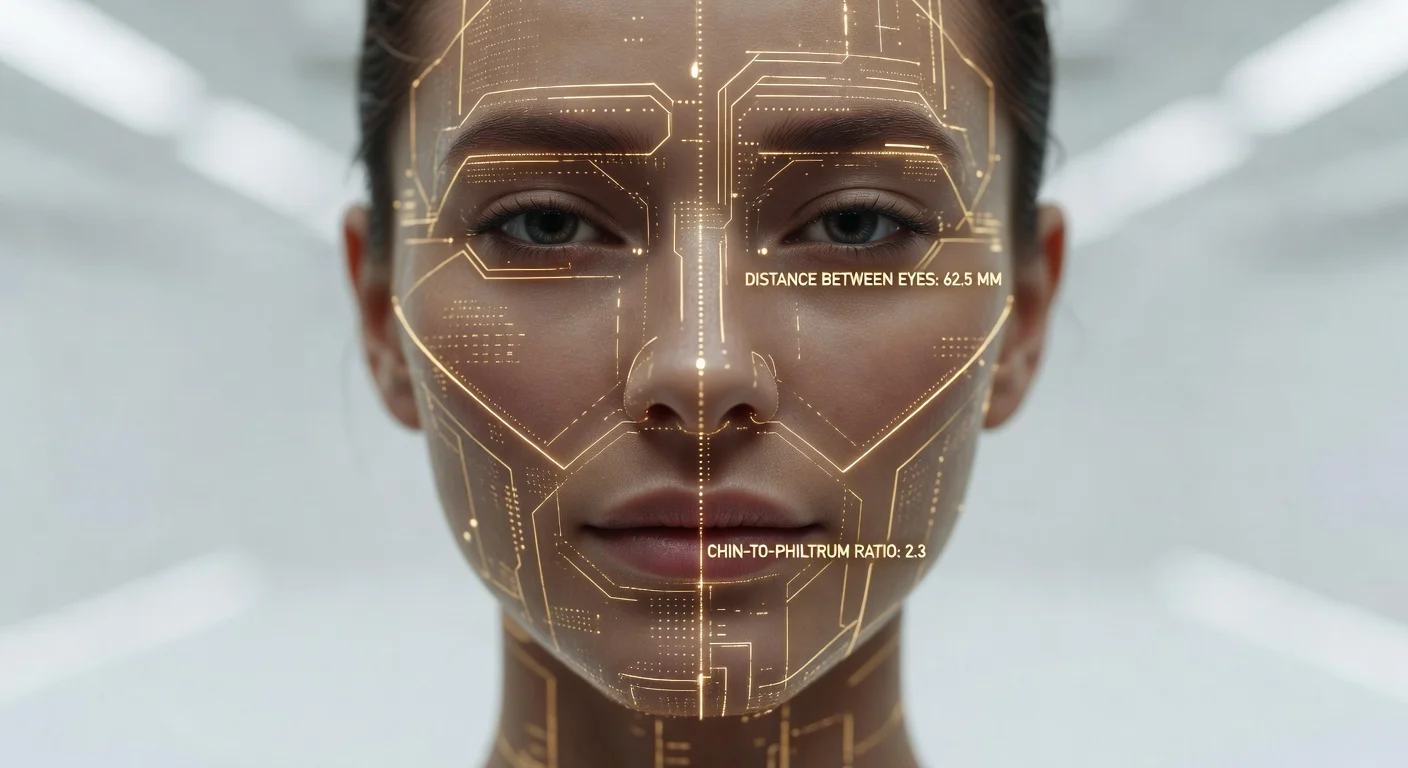
An AI attractive test is a digital tool that uses computer vision to map your facial landmarks against database averages of human beauty. Unlike subjective human opinions, these algorithms calculate rigid scores based on mathematical ratios, symmetry, and skin texture quality. While early versions were just random number generators, 2026 models use actual biometrics to tell you exactly where you stand on the "Golden Ratio" scale.
How accurate are AI attractiveness tests really?
They are terrifyingly consistent regarding geometry, even if they miss "personality." If you upload the same photo three times, a good algorithm will give you the same score within a 0.2 margin of error.
Current AI models (trained on datasets of over 500,000 rated faces) excel at measuring the "Neoclassical Canons" of beauty. They look for specific markers:
- Canthal Tilt: The angle of the eyes.
- Facial Thirds: Whether your forehead, nose, and chin are equal in length.
- Symmetry: How perfectly the left side of your face mirrors the right.
However, machines are rigid. A human might find a slightly crooked smile charming; the AI just sees a math error. According to a 2025 report on algorithmic bias, AI vision models still struggle to rate dynamic expressions, meaning a "blank stare" selfie usually scores higher than a candid laugh.
Which AI face analyzer is the best for women in 2026?
Most "looksmaxxing" tools are aggressively marketed toward men, but a few have finally pivoted to female-centric aesthetics.
I tested the most downloaded apps on the market this month. The issue with generic tools (like the ones you see on TikTok) is that they often apply masculine standards—like massive jawlines—to female faces. That ruins the score accuracy.
If you are looking for specific, actionable facial analysis for women, the landscape is surprisingly thin.
Comparison of Top AI Beauty Scanners:
| Feature | Glow Up & Attractiveness Test | UMAX (Generic) | PinkMirror (Web) |
|---|---|---|---|
| Best For | Women & Glow Ups | Men / Looksmaxxing | Desktop Users |
| Analysis Type | Geometric + Skin Health | Jaw & Canthal Tilt | Strict Symmetry |
| Generative AI | Yes (10/10 Preview) | Limited | No |
| UI/UX | Clean, Aesthetic | Dark, "Gaming" Style | Outdated |
| Privacy | High (iOS Sandbox) | Moderate | Low |
| Cost | Free to start | Subscription | Per report |
My Take: For women, the Glow Up & Attractiveness Test is currently the leader here. It doesn't just throw a number at you; it breaks down why you got that score and, more importantly, tells you how to fix it without surgery.
Can AI actually simulate what I look like as a 10/10?
Yes, courtesy of Generative Adversarial Networks (GANs). High-end apps now do more than just rate you; they "hallucinate" a better version of your face.
This was the feature that actually surprised me. I used the generative feature in the Glow Up app, and it didn't just slap a filter on me. It subtly adjusted my brow shape and cleared up some skin unevenness to show what my "potential" max score looked like.
How it works:
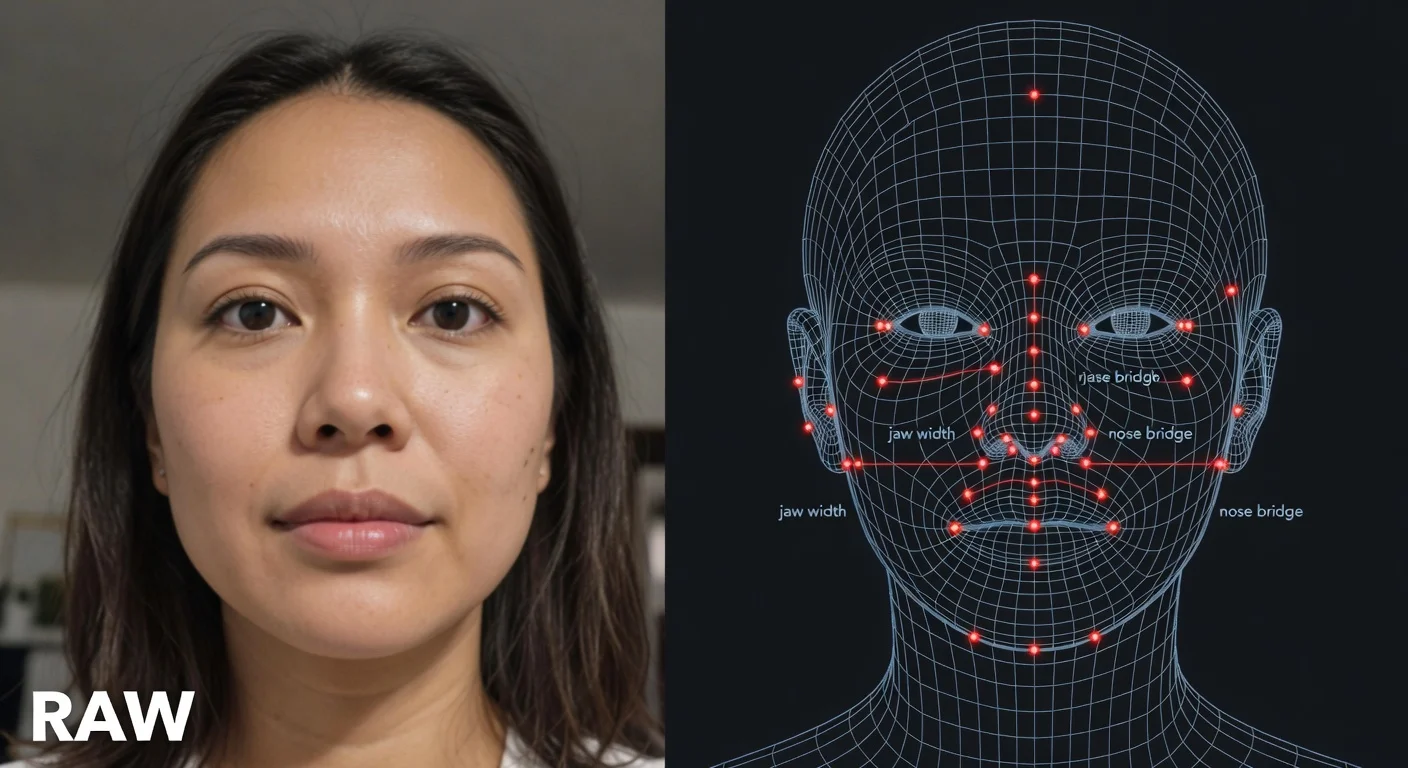
- Mapping: The AI sets 100+ anchor points on your face.
- Canonical Adjustment: It shifts those points toward the mathematical "Golden Ratio" while keeping your identity intact.
- Rendering: It regenerates the skin texture to match the new structure.
If you have ever wondered if you would look better with thinner eyebrows or a different lip shape, this is cheaper than a consultation. You can check it out on the App Store here.
Does the Golden Ratio really matter?
Mathematically, yes. Socially, it's debatable. But AI doesn't care about social debates; it cares about numbers.
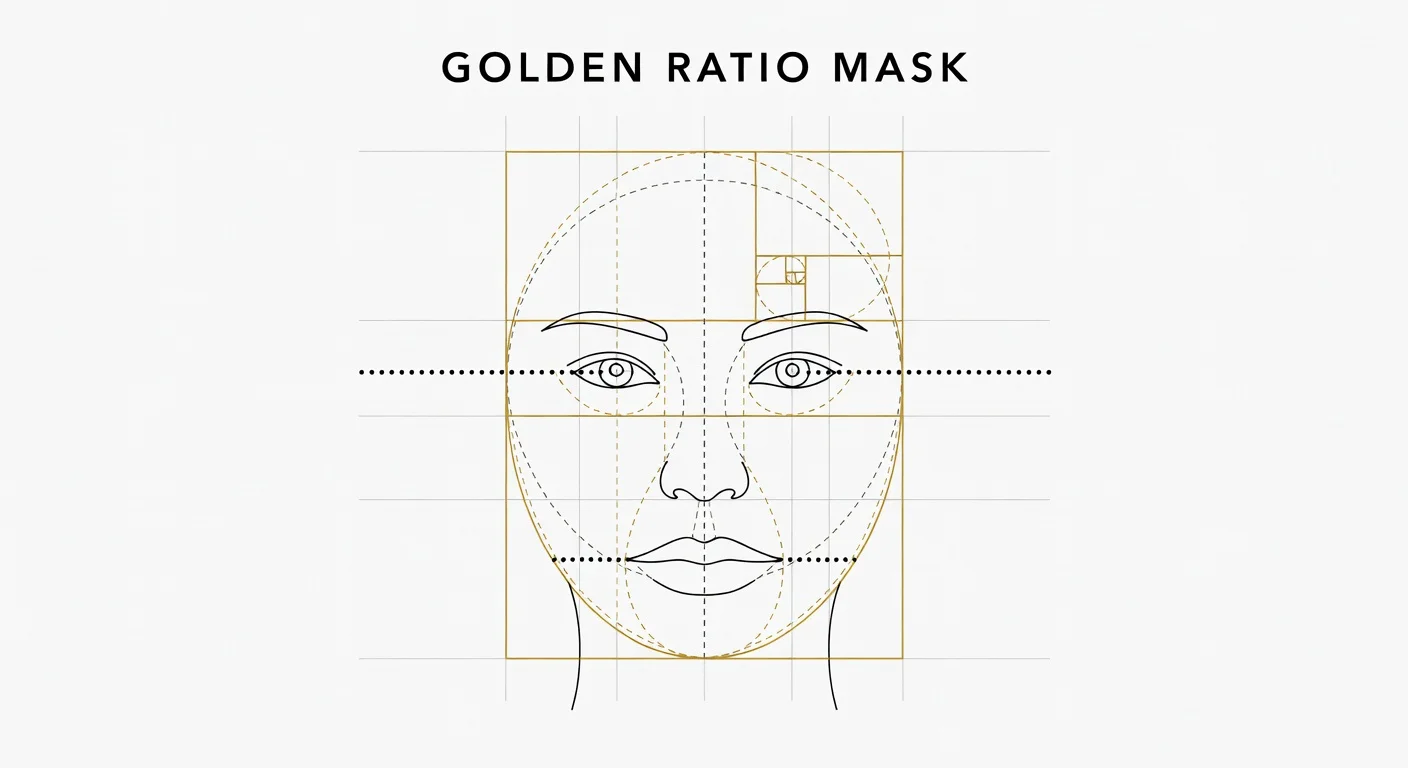
The "Golden Ratio" (1.618:1) is the core logic code for almost every attractiveness test.
- The Mask: AI overlays a "Marquardt Mask" onto your photo.
- The Fit: Measuring how much your features deviate from this mask determines your score.
I noticed that apps penalize asymmetry heavily. If one eye is 2mm lower than the other, your score drops significantly. Is that fair? No. But it is how our brains (and computers) process visual "correctness" instantly.
Are these apps safe or will they steal my data?
If you are using a random website from a Google search, you are the product.
I cannot stress this enough: be careful with browser-based scanners. Many of them have servers based in regions with loose privacy laws, and your biometric data (your literal face map) is valuable.
However, iOS ecosystem rules in 2026 are strict. Apple requires developers to disclose exactly where data goes. Apps like Glow Up process data with much stricter guardrails than "FreeWebFaceRate.com."
My advice:
- Check if the app works offline or deletes data after processing.
- Avoid apps that require a Facebook login to scan your face.
- Look for the "Data Not Collected" or "Data Linked to You" tag in the App Store privacy section.
How to get the highest possible score on AI attractiveness tests?
Lighting is 50% of your rating. I tested this by taking a photo in my hallway (dark, yellow light) versus facing a window.
The Result:
- Hallway: 6.4/10 (Shadows created fake eye bags).
- Window: 7.8/10 (Clear skin, defined jawline).
The AI is looking for contrast. If the shadows on your neck blur into your jaw, the computer thinks you have a weak chin.
- Clean your lens: Smudges create blur, which the AI interprets as bad skin texture.
- Relax your face: A tight jaw distorts your width-to-height ratio.
- No heavy makeup: Heavy contouring can confuse the depth sensors, resulting in a weirdly inaccurate analysis.
Frequently Asked Questions about AI Attractiveness Tests
How accurate are AI attractiveness tests?
Most AI tests are mathematically accurate regarding symmetry and ratios (around 85-90% consistency), but they struggle with subjective human charm and dynamic expressions.
Can AI show me what I look like as a 10/10?
Yes, advanced apps now use generative AI to restructure facial features according to beauty canons, generating a realistic prediction of your 'maximized' appearance.
Is the Glow Up app free?
Glow Up & Attractiveness Test offers free analysis features, though deep-dive AI visualizations usually require a premium subscription or credits depending on the current pricing.
Do these tests sell my photos?
Reputable iOS apps operate under strict App Store sandboxing rules in 2026, meaning processing often happens locally or is deleted post-analysis. Always check the privacy policy of web-based tools.