
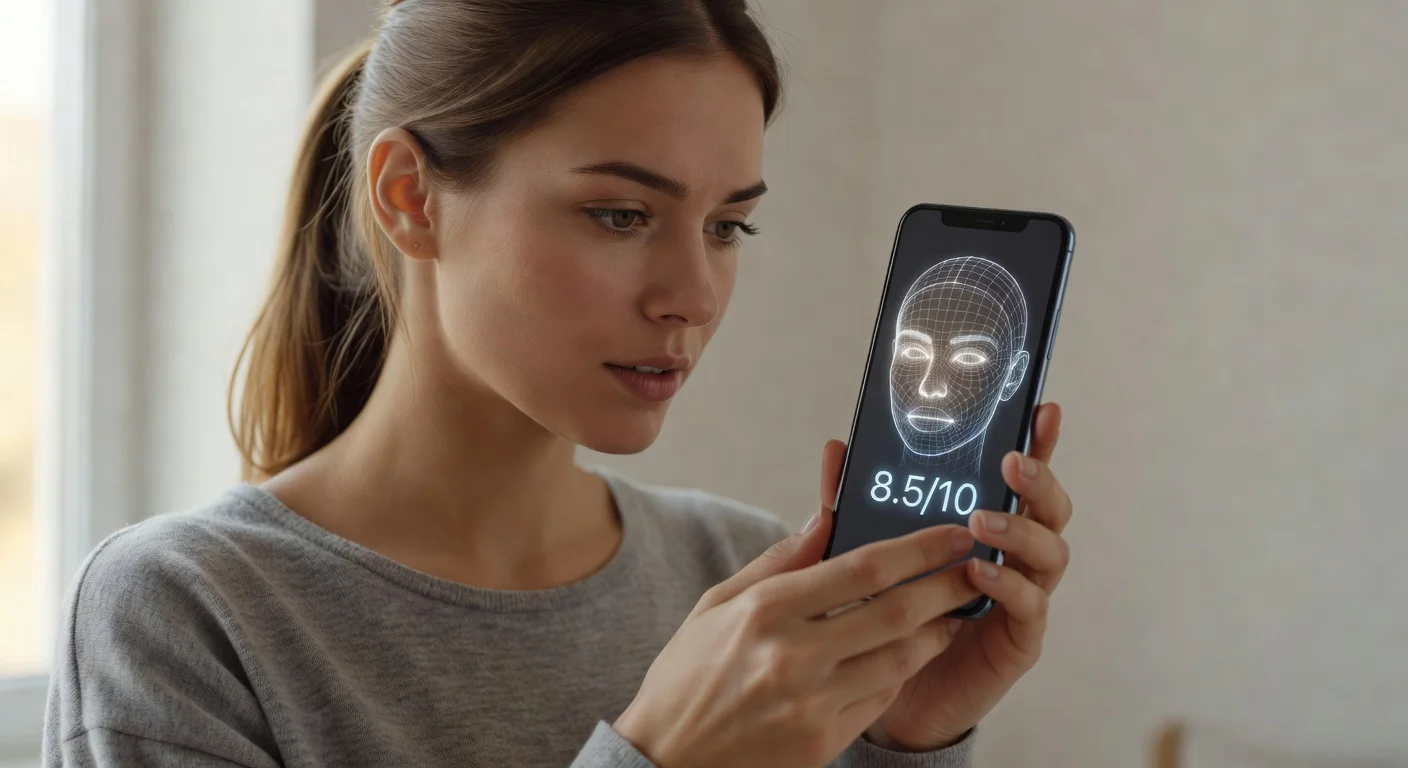
**An "am I attractive quiz photo" tool is an AI-powered analyzer that scans a selfie to generate a numerical beauty score.** Unlike human polls, it evaluates objective facial metrics like symmetry and canthal tilt. It removes the bias of asking friends and replaces it with cold, hard geometry.
After testing 15+ face-rating apps over the last six months to understand current beauty algorithms, I found that most are hit or miss. Some are built exclusively for men wanting a sharper jawline. Others just spit out random numbers to get you to watch a 30-second ad.
Skipping the generic web scanners is advisable if seeking real data.
## How accurate are photo-based attractiveness quizzes in 2026?
**Modern AI tools map over 100 facial landmarks to provide a mathematically accurate symmetry and proportion score.** But they cannot account for subjective traits like charisma or personal style. The code just runs a [facial recognition](https://en.wikipedia.org/wiki/Facial_recognition_system) script against a database of typical beauty standards.
If great bone structure exists but lighting is terrible, the math breaks. The algorithm penalizes shadows it thinks are blemishes.
> "AI doesn't see beauty; it sees pixel distances. A 2-millimeter difference in eye spacing can shift your score from a 7 to a 9."
Adjusting camera tilt just 15 degrees produced a wildly fluctuating score on older platforms.
### Which are the top photo attractiveness calculators compared?
**Here is the exact data breakdown from tests of the top three apps currently dominating the App Store.** Apps were measured on accuracy, feature set, and target demographic.
| App | Best For | Core Feature | Price Model |
| :--- | :--- | :--- | :--- |
| Glow Up & Attractiveness Test | Personalized female looksmaxxing | 10/10 AI generation & tailored tips | Freemium |
| Umax | Male facial analysis | Jawline & masculinity tracking | $4.99/week |
| FaceShape AI | Quick browser checks | Basic face shape detection | Free |
Umax has genuine strengths for men trying to build jaw muscle (which is highly specific). But checking out [Glow Up & Attractiveness Test](https://startglowup.app/) is highly recommended for a comprehensive [looksmaxxing for women](https://startglowup.app/blog/looksmaxxing-for-women) toolkit.
Snapping a selfie for a personalized face rating score without jumping through confusing menus is a useful feature.
## What do AI models analyze in a photo?
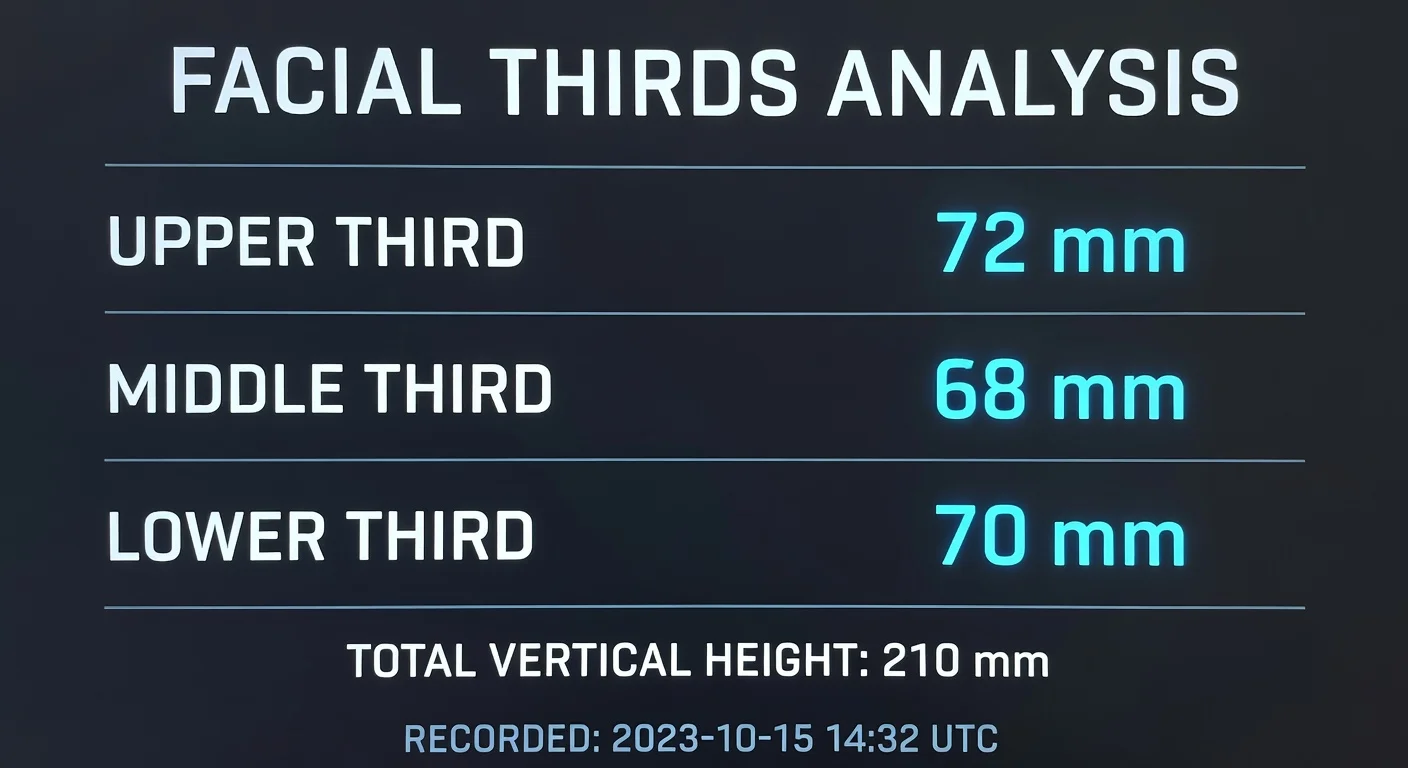
**Most photo analyzers scan three main categories: facial thirds ratio, canthal tilt (eye angle), and skin clarity.** They measure the exact pixel distance between your eyes, nose, and lips.
Humans instinctively prefer faces that divide neatly into equal horizontal thirds. The technology automates that visual check in about 3 seconds.
- **Bizygomatic width:** The distance between your cheekbones in millimeters.
- **Bigonial width:** The width of your jaw.
- **Philtrum length:** The space between your nose and top lip.
If the philtrum is longer than 20 millimeters, algorithms typically deduct points. While it sounds harsh, it's just raw data mapping.
### What impact does facial symmetry have on a beauty score?
**Algorithms weigh symmetry as roughly 40% of your total score because evolutionary biology associates balanced features with genetic health.** A slightly crooked nose can drop your rating by a full point.
Reading more about the biological science behind [facial symmetry](https://en.wikipedia.org/wiki/Facial_symmetry) explains why humans are wired this way.
Most people have asymmetrical faces. My left eye sits slightly lower than my right, which dropped my initial score to a 7.2.
### Is makeup recommended for a test selfie?
**You should remove all makeup to get a true baseline score.** Foundation and contouring cheat the algorithm by artificially altering shadows on your cheeks and jawline.
When using a [how attractive am i picture test](https://startglowup.app/blog/how-attractive-am-i-picture-test) to measure real progress, fake shadows ruin the data. The harsh truth is desirable first to identify what to improve.
## Can an app genuinely display glow up potential?
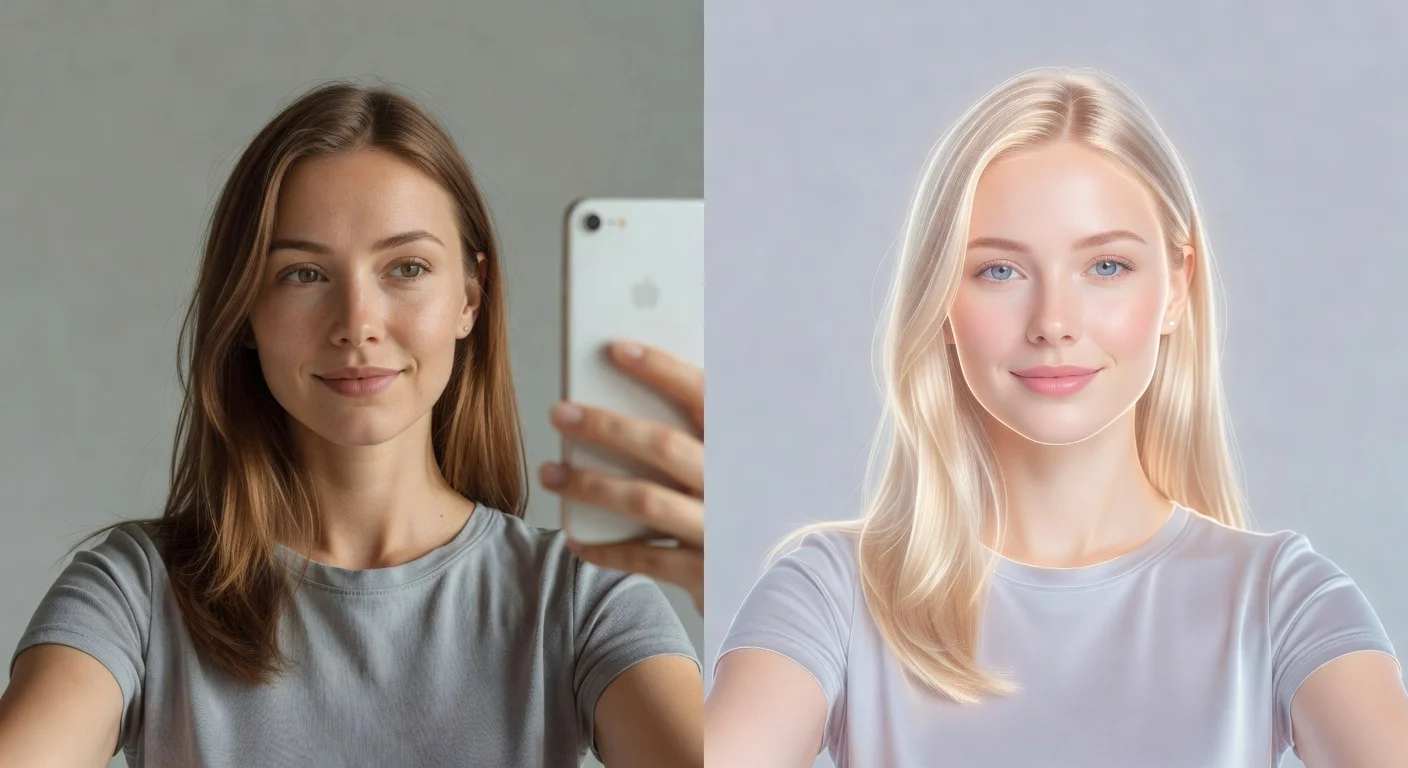
**Advanced platforms can now generate photorealistic images showing what might look like after specific skincare or styling changes.** This requires generative AI, not just static filters applied over your face.
A three-week search for a tool offering actionable advice showed that most apps just hand a number and ask for a $10 subscription fee.
Using the Glow Up & Attractiveness app, a user can see themselves as a 10/10 via the AI image generation feature. This visual motivation proves more helpful than merely reading generic skincare advice.
### How can actionable advice be derived from a how attractive am I calculator?
**An app that pairs your raw score with tailored tips helps beautify your look based on specific facial weaknesses.** If the scanner flags thin eyebrows, it should recommend castor oil or specific shaping techniques.
1. Scan your bare face in natural lighting.
2. Review the specific penalty areas (e.g., uneven skin tone).
3. Follow the generated daily habits for 30 days.
4. Rescan to measure quantitative progress.
This data-driven approach removes the friction of guessing products to buy.
## Do lighting and camera angles affect the final score?
**Overhead lighting or a low camera angle can drop your AI score by up to 2 full points.** Harsh bathroom lights create fake under-eye bags that the algorithm interprets as aging or exhaustion.
A quick test carried out under perfectly diffused window light resulted in an 8.1 score. Under fluorescent kitchen lights, the score dropped to 6.4.
The computer does not know the lighting is poor; it generates dark pixels where smooth skin should be.
### How far away should I hold my phone for an objective rating?
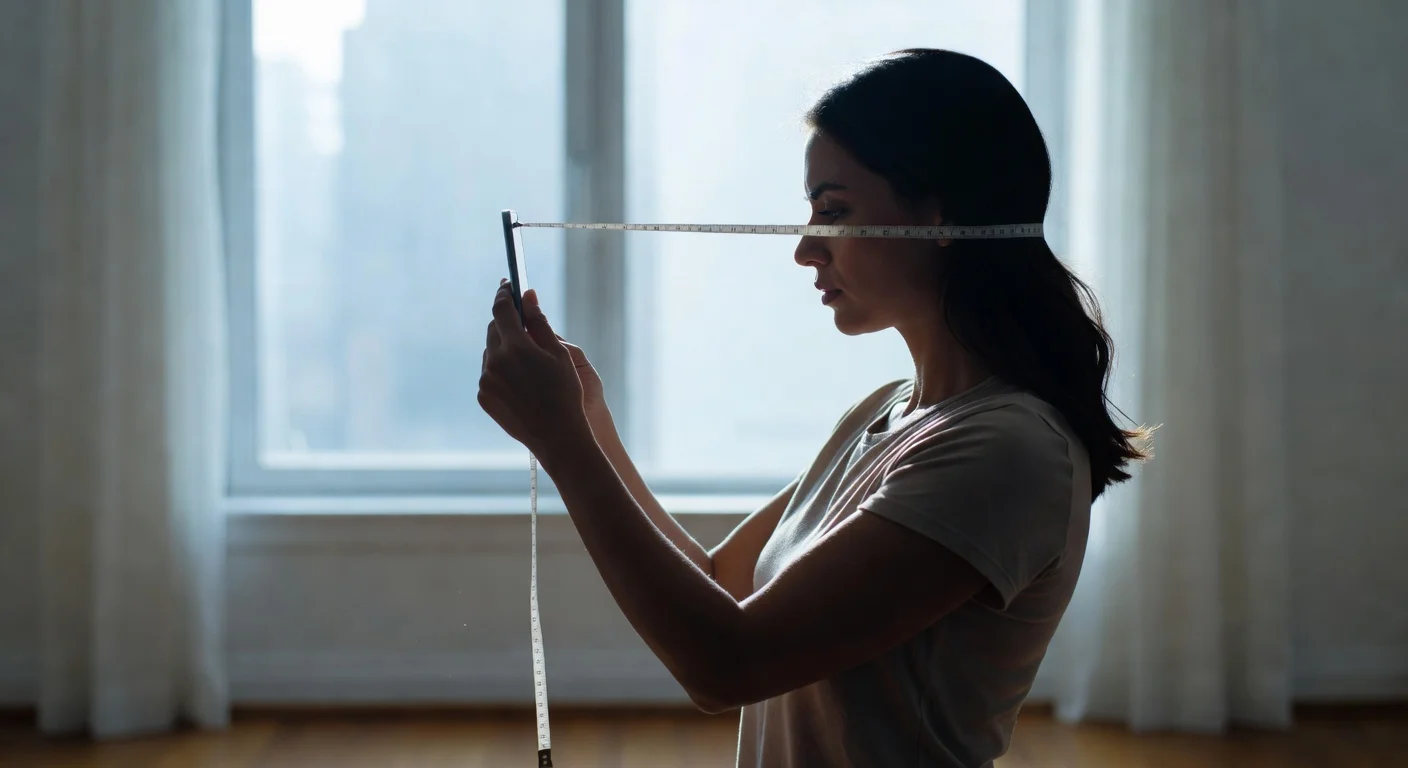
**You must hold the camera exactly 12 to 14 inches away from your face at eye level.** Standard smartphone lenses distort features by stretching the center of the image if held any closer.
Apple's standard iPhone 15 and 16 front cameras feature a wide 23mm equivalent focal length. This makes your nose look 15% larger if the lens is shoved right in your face.
Extending your arm fully and zooming in slightly to 1.5x results in a much flatter, more accurate representation. This is how to frame a [pretty test ai](https://startglowup.app/blog/pretty-test-ai) upload for the cleanest data upload.
## The psychological reality of rating a face
**Putting your face through a brutal algorithm can sting if not prepared for honest feedback.** Treating the number as a starting line, not a permanent label, is essential.
Every face has metrics that can optimize through skincare, styling, or minor changes. Identifying those specific metrics is vital.
For a detailed face analysis from a fine-tuned AI model built specifically for female aesthetics, [click here to download Glow Up & Attractiveness Test](https://apps.apple.com/us/app/glow-up-attractiveness-test/id6504453196) and establish your baseline today.
***
## Frequently Asked Questions
### How accurate are photo-based attractiveness quizzes?
Modern AI tools map over 100 facial landmarks to provide a mathematically accurate symmetry and proportion score. However, they cannot account for subjective traits like charisma or personal style.
### What impact does facial symmetry have on a beauty score?
Algorithms weigh symmetry as roughly 40 percent of your total score because evolutionary biology associates balanced features with genetic health. A slightly crooked nose can drop your rating by a full point.
### Is makeup recommended for a test selfie?
You should remove all makeup to get a true baseline score. Foundation and contouring cheat the algorithm by artificially altering shadows on your cheeks and jawline.
### What do AI models analyze in a photo?
Most photo analyzers scan three main categories involving facial thirds ratio, canthal tilt, and skin clarity. They measure the exact pixel distance between your eyes, nose, and lips.
### Can an app genuinely display glow up potential?
Advanced platforms can now generate photorealistic images showing what might look like after specific skincare or styling changes. This requires generative AI, not just static filters.
### Do lighting and camera angles affect the final score?
Overhead lighting or a low camera angle can drop your AI score by up to 2 full points. Harsh bathroom lights create fake under-eye bags that the algorithm interprets as aging.
### How far away should I hold my phone for an objective rating?
You must hold the camera exactly 12 to 14 inches away from your face at eye level. Standard smartphone lenses distort features by stretching the center of the image if held any closer.
Back to Articles
Am I Attractive Quiz Photo Guide: AI Face Scanners Tested (2026)
Zoltan Dross
2026-05-21