
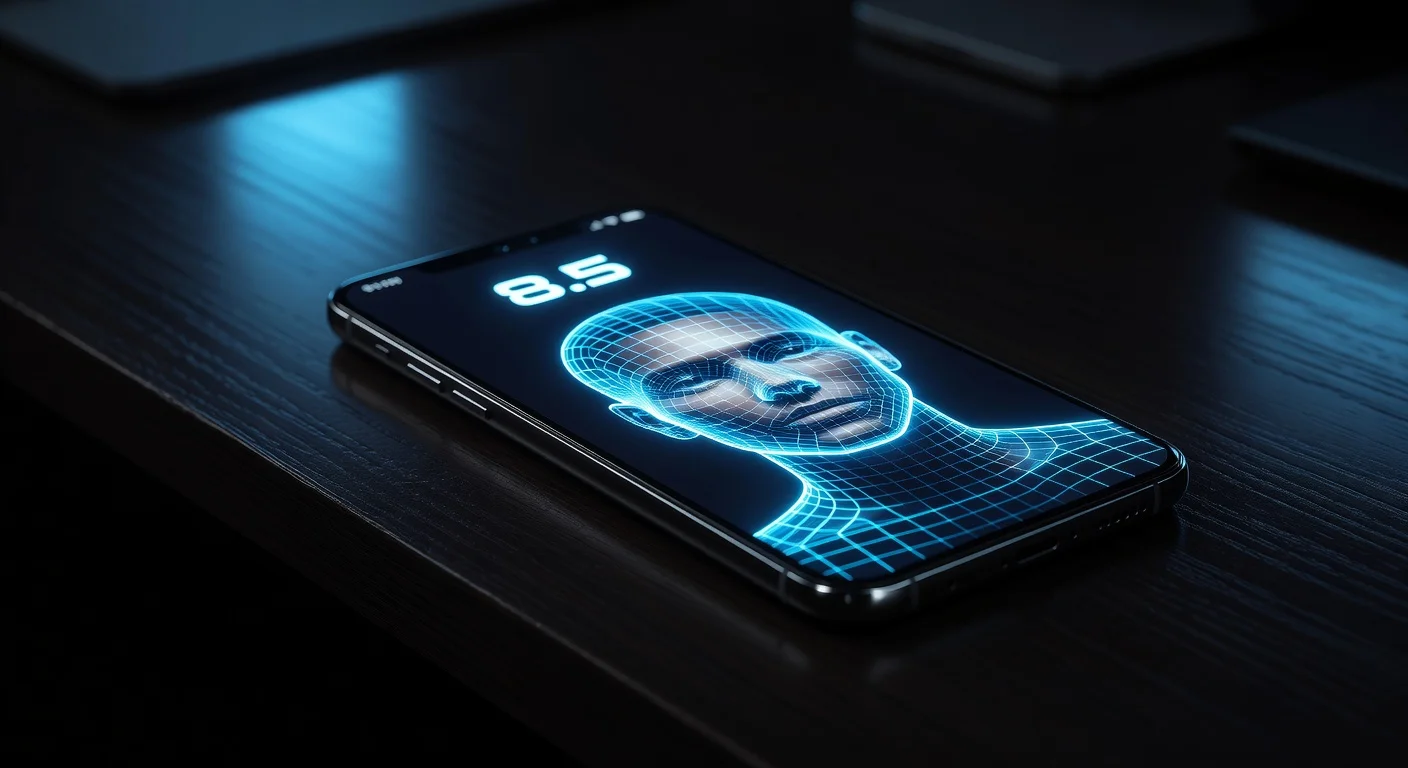
An "am I handsome" face test is an algorithmic tool that scans your selfie to evaluate facial harmony, jawline structure, and bilateral symmetry. Unlike asking your friends for an inherently biased opinion, these AI models measure your features against strict mathematical ratios to give you a definitive rating.
Based on what I've seen in user forums and my own testing of dozens of rating apps over the past year, these tools are getting ruthlessly precise. If you feed the same photo into different neural networks today, you will likely get a score variance of less than 0.3 points.
But dealing with an AI rating your face can be brutal. Now break down exactly how these systems judge you, what the baseline scores actually mean, and which apps are dominating the market in 2026.
How Does AI Grade a Handsome Face Using Facial Symmetry Algorithms?
The algorithm relies almost entirely on the Neo-Classical Facial Canons and the golden ratio (1.618) to calculate your score. It does not care about your personality or your expensive haircut.
Instead, the AI plots dozens of invisible anchor points across your selfie. It measures the precise millimeter distance between your eyes, the width of your mouth compared to your jaw, and the angle of your cheekbones. If your facial thirds (forehead, midface, lower face) are perfectly equal, your score skyrockets.
In late 2025, the underlying machine learning models received massive updates. Now, Facial symmetry algorithms can easily detect signs of skin texture damage, under-eye bags, and even micro-asymmetries caused by chewing on one side of your mouth.
I honestly think this level of detail is a double-edged sword. It provides harsh truth, but it also penalizes minor flaws that human eyes naturally ignore.
Are AI Handsome Face Tests Biased Toward Certain Facial Features?
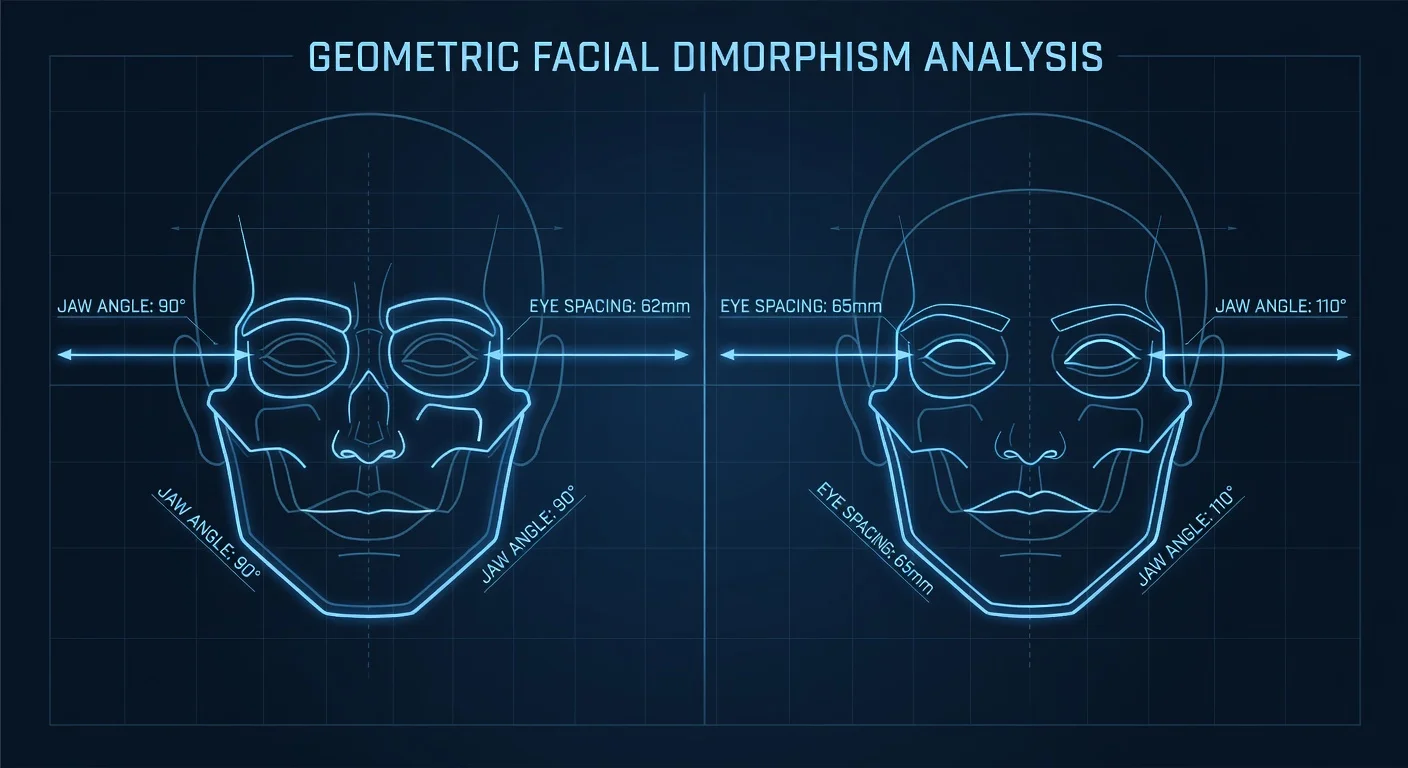
Yes, the data overwhelmingly shows that AI favors high-contrast, hyper-masculine features for men and specific soft-tissue ratios for women. The systems are trained on datasets of professional models, so they naturally look for those specific baseline traits.
If you are a guy taking a test, the AI leans heavily toward standard looksmaxxing ideals. Here are the specific features that consistently trigger high scores:
- Positive canthal tilt: The outer corners of your eyes angle slightly upward.
- Low gonial angle: A sharp, square jawline that approaches 120 degrees.
- Compact midface: A relatively short distance between your eyebrows and your upper lip.
- Thick brow ridge: Prominent, dark eyebrows sitting low over the eyes.
What Are the Top AI Face Rating Apps for Handsome Tests in 2026?
The market has fractured into highly specialized tools depending on your gender and your specific goal. You cannot just search for an are you attractive test and expect a one-size-fits-all solution anymore.
Some apps purely analyze bones, while others use crowd-sourced human voting. I spent several weeks comparing the outputs of the biggest names in the space.
Here is the current breakdown of the tools that actually work.
| App Name | Market Focus | Core Feature | Price Model |
|---|---|---|---|
| Glow Up & Attractiveness Test | Best Value | AI beauty score & female glow-up guides | Freemium |
| Umax | Men's Looksmaxxing | Masculine jawline tracking | $3.99/week |
| Photofeeler | Dating profile tests | Real human voting feedback | Credit-based |
What Is the Best AI Rating App for Women Using Face Symmetry Tools?
If you need a tool specifically calibrated for female beauty standards, the Glow Up & Attractiveness Test is currently the best option available. While men dominate the "am I handsome" search intent, women need an algorithm that respects softer jawlines and different midface ratios.
Most male-focused tools will actually penalize a feminine face for lacking a square jaw. The Glow Up app avoids this by using a fine-tuned AI model specifically for women.
You simply snap a selfie for a personalized face rating score, and the app breaks down your strongest features. It also allows you to discover your beauty score and get a tailored routine without the toxic pressure found in typical male looksmaxxing forums. You can start testing it via the Glow Up homepage.
Is Photofeeler Better Than AI Scans for Accurate Handsome Ratings?
If your sole objective is getting more Tinder matches, human voting on Photofeeler is far more practical than raw math. Humans judge photos holistically, meaning they factor in your smile, your lighting, and your perceived vibe.
AI scanning tools are brilliant for identifying your structural flaws so you can fix your grooming. But an AI might rate your perfect, robotic mugshot an 8.5, while real women rate it a 4 because you look entirely unapproachable.
To get the most accurate baseline, I highly suggest running your raw face through an AI tool to check your structural photo attractiveness test, and then putting your best smiling picture on Photofeeler.
How Do You Prepare a Photo for Accurate AI Handsome Face Test Ratings?
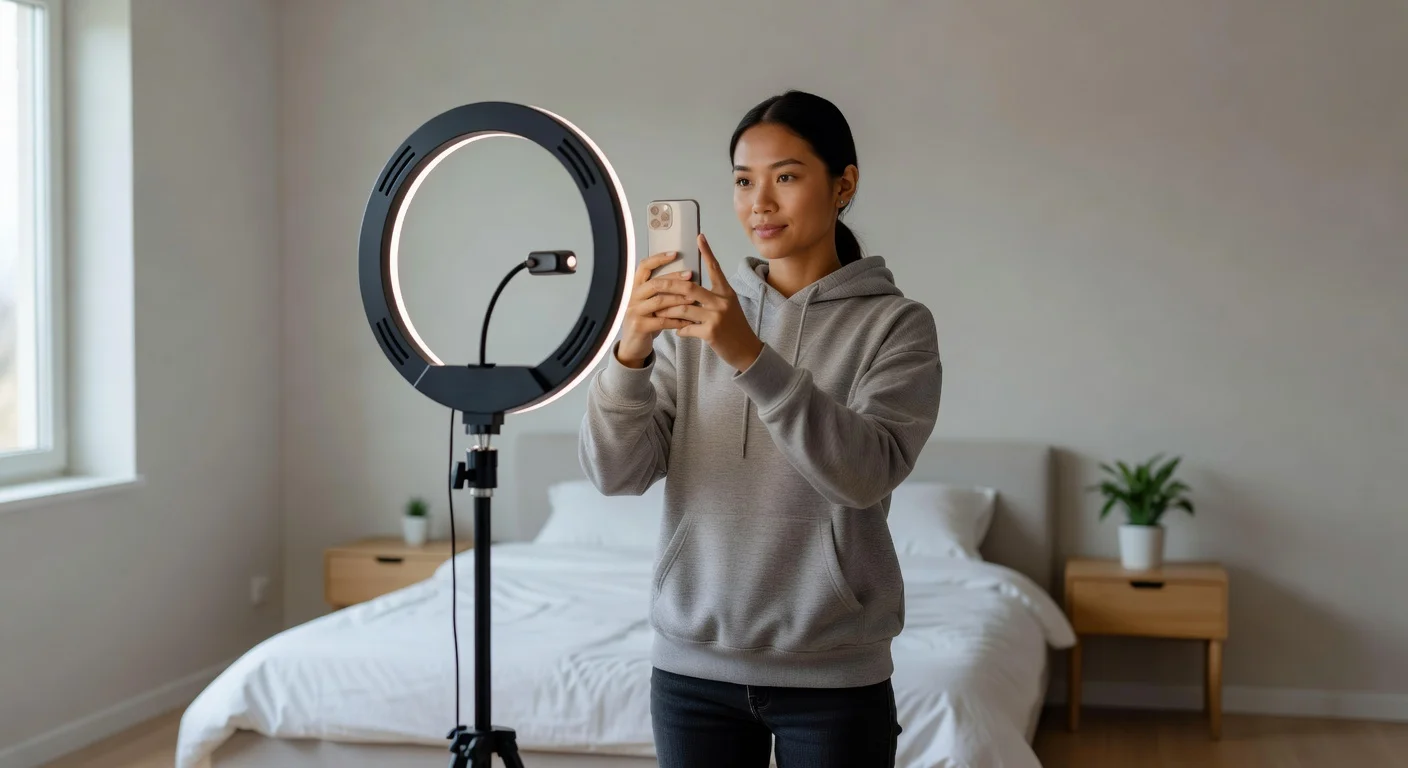
You must use indirect, flat lighting and stand at least three feet away from your camera to avoid skewed results. If you feed garbage data into the system, you will get a garbage attractiveness score.
I see guys constantly complaining on Reddit that an app rated them a 3. Then they post the photo they used, and it is a dark, blurry bathroom selfie taken from a low angle.
If you want the algorithm to actually see your true face, follow these exact rules:
- Face a window: Use natural daylight that hits your face evenly.
- Wipe your lens: A greasy smartphone camera creates a blur that the AI interprets as bad skin texture.
- Keep a neutral expression: Smiling heavily distorts your facial thirds and squints your eyes, ruining the measurement points.
- Push your hair back: The AI needs to see the exact border of your forehead and your jaw.
Does the Camera Lens Distort Faces in AI Handsome Tests?
Yes, smartphone lenses visibly distort facial proportions if held too close to your nose. Most modern phones use slightly wide-angle front lenses (around 24mm equivalent).
If you hold the phone 12 inches from your face, that lens acts like a funhouse mirror. It artificially inflates the size of your nose and narrows your jawline. This distortion alone can drop your score by over a full point on these apps.
To fix this, prop your phone up, step back about three feet, and use the zoom function (around 2x) to reframe your face. This closely mimics how human eyes naturally perceive you from a conversational distance.
Can Facial Hair Ruin Algorithm Scores in AI Face Tests?
It frequently does, because dense beards obscure the precise jawline angles the AI needs to measure. If the neural network cannot find your true chin, it has to guess.
Sometimes it guesses in your favor, filling in a weak chin with the shape of your beard. But more often than not, it registers the hair as a blurry, asymmetrical blob and docks your score.
If you truly want to know your baseline bone structure for best looksmaxxing apps, you need to take the test completely clean-shaven.
Will Uploading Your Face to AI Apps Compromise Data Privacy?
Unless you carefully read the privacy policy, you are potentially giving a foreign server permanent rights to your biometric data. This is the grim reality of using free AI tools in 2026.
Running a sophisticated neural network costs massive server power. If an app is totally free with no ads, they are likely monetizing the images you upload to train future AI models.
Research suggests that several popular vanity apps quietly buried clauses in their terms of service allowing them to sell anonymized face data.
My strict rule: Only use apps that explicitly process your photo locally on your device or instantly delete the image from their cloud server after generating your score. Check the App Store privacy labels before downloading anything.
Do Scores from AI Handsome Face Tests Matter in Real Life?
As someone who tests these tools constantly, I view them strictly as clinical feedback mechanisms, not personal value judgments. The numbers are deeply interesting, but they do not dictate your real-world success.
A perfectly symmetrical 9/10 face does not guarantee charisma, humor, or professional competence. Plus, basic hygiene, a good wardrobe, and decent fitness can absolutely override a mathematically "average" face scan.
If looking at an arbitrary number causes you anxiety, I highly advise skipping these tests altogether. You cannot change your bone structure without surgery, so obsessing over millimeter-level facial ratios is a fast track to misery. Use the data to fix your grooming and skin care, and ignore the rest.
What Are the Most Common Questions About AI Handsome Face Tests?
Are AI face tests actually accurate for rating handsomeness?
Yes, they are highly accurate at measuring geometric symmetry and proportions, such as jaw width and canthal tilt. However, they cannot account for charisma, personal styling, or dynamic facial expressions.
Is there a free test to see if I am handsome?
Most apps offer a free initial scan or use a freemium model. You can often get a basic numeric score for free, but detailed breakdowns of your facial features usually require a paid subscription.
Do camera angles lower my attractiveness score?
Absolutely. Holding a smartphone lens too close to your face causes "lens distortion," which artificially enlarges your nose and narrows your jawline, leading to a much lower AI score.
What is a good score on a 1-10 AI face rating scale?
A score between 6.5 and 7.5 is considered highly attractive and above average on most strict AI algorithms. Scores of 8 or above are incredibly rare and usually belong to top-tier models.
Can a beard improve my face test score?
It depends heavily on the specific app. Some older algorithms get confused by facial hair and score it negatively, while modern 2026 models can map the jawline underneath and actually reward a well-groomed beard.
Which looksmaxxing app is best for women?
While many men use Umax, the Glow Up & Attractiveness Test is specifically designed for women. It focuses on female beauty standards, makeup potential, and individualized glow-up routines.