
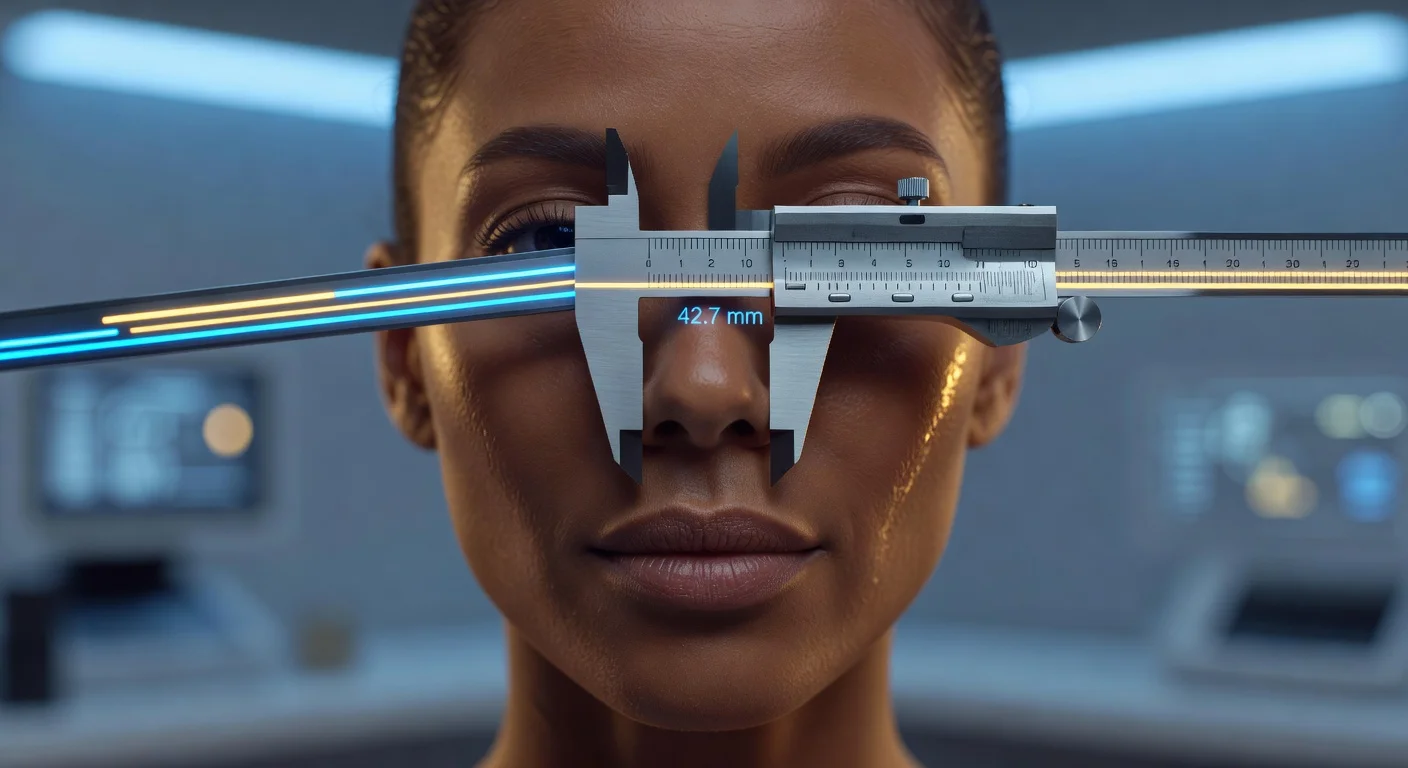
An attractive face test is a digital tool that measures your facial geometry against the "Golden Ratio" (1.618) to calculate an aesthetic score. Unlike subjective human opinions, these tests rely on rigid mathematical distances between key landmarks—like the pupils, chin, and lips—to determine how statistically "pleasing" a face is to the human eye.
How Does AI Face Rating Analyze Facial Features?
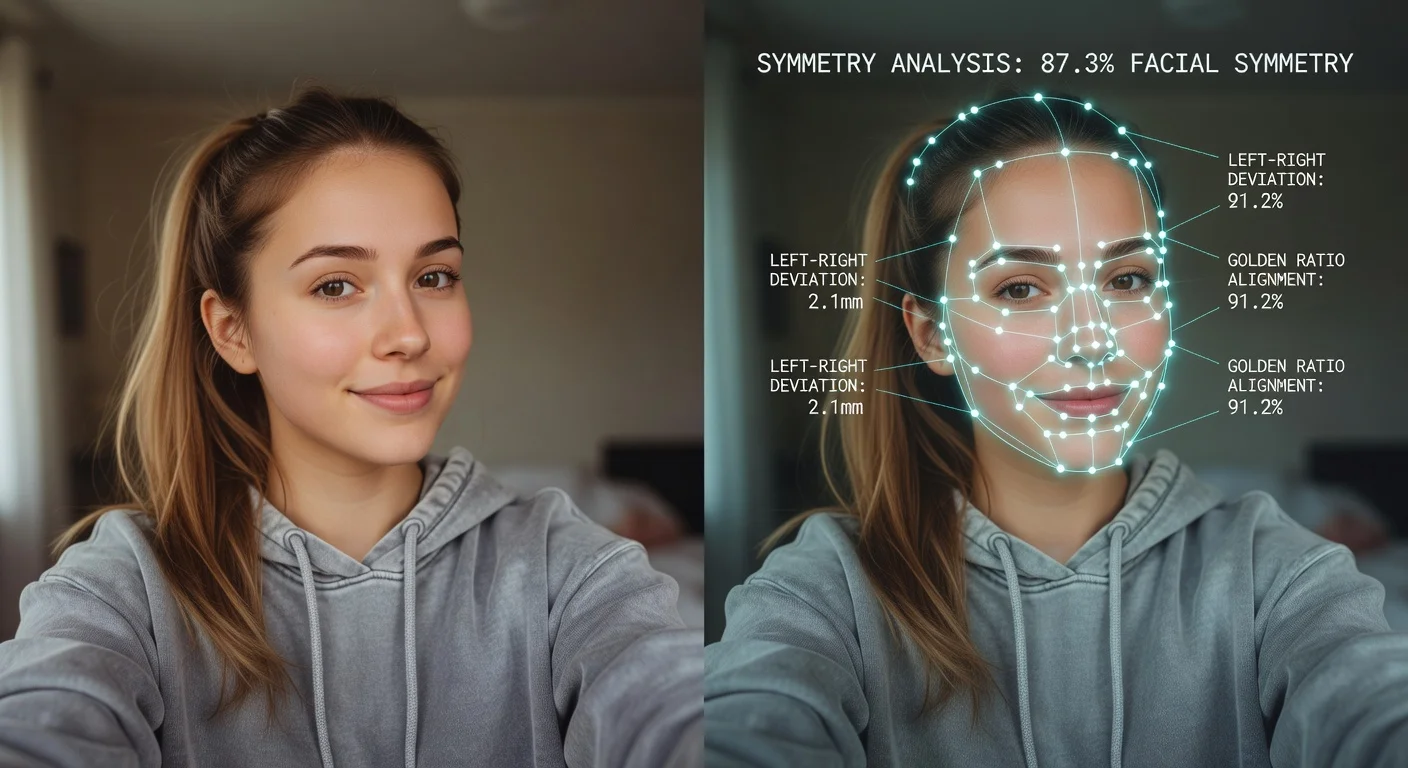
It breaks your face down into a dataset of roughly 60 to 80 nodal points. The software doesn't "see" you; it measures the deviation between your features and a mathematical ideal known as the Marquardt Beauty Mask.
If your bizygomatic width (cheekbone distance) is exactly 1.618 times the width of your mouth, the AI scores you higher. It's cold, calculated, and surprisingly consistent across different cultures.
Common metrics analyzed in 2026:
- Vertical Thirds: Is your forehead, nose, and chin area equal in height?
- Canthal Tilt: The angle of the inner to outer eye corner (positive is preferred).
- Jawline Angle: Generally, a gonial angle between 120° and 130° is scored highest for geometric harmony.
This technology used to be exclusive to plastic surgeons charging $300+ for a consultation. Now, mobile apps do the same math in seconds.
Are AI Attractive Face Tests Scientifically Accurate?
Technically yes, but they measure symmetry, not "beauty" in the soulful sense. Research published in Psychological Science suggests that while humans prefer symmetrical faces, we also value unique imperfections that AI often penalizes.
A computer might rate a supermodel an 8/10 because her asymmetry gives her character, while rating a perfectly symmetrical generated face a 10/10.
If you are using these tools, you are getting a report on your geometric likelihood of being perceived as attractive, not a definitive judgment on your worth.
"Symmetry is efficient, but not always sufficient for beauty."
In 2026, the algorithms have improved significantly. Older scanners from 2023 struggled with lighting or darker skin tones.
Current engines use depth sensing (LiDAR on iPhones) to map facial contours even in suboptimal light.
What are the best apps for rating facial attractiveness in 2026?
The market is flooded with generic scanners, but only a few offer actionable advice. I tested the most popular apps available on the App Store to see which ones gave random numbers and which provided actual analysis.
Most tools just give you a number. The useful ones explain why you got that number and how to fix it.
| App Name | Algorithm Focus | Best Feature | Price |
|---|---|---|---|
| Glow Up & Attractiveness Test | Female-Specific Aesthetics | "10/10" AI Visualization | Free / Sub |
| Umax | General Looksmaxxing | Masculine jaw ratings | Paid |
| Golden Ratio Face | Pure Geometry | Simple overlay lines | Free |
| PinkMirror | Web-based Analysis | Detailed text reports | High Cost |
I honestly prefer the Glow Up & Attractiveness Test because it doesn't just critique you. It’s built specifically for women (unlike many "looksmaxxing" apps that focus on aggressive male jawlines).
Why it stands out:
- The "10/10" Generator: It uses generative AI to show you what you would look like at your maximum potential. It's motivating, not just critical.
- Actionable Tips: Instead of just saying "your skin score is low," it gives specific skincare or styling advice tailored to your scan.
- Accuracy: I found the rating consistent even when I slightly changed angles, which is rare for these apps.
You can check it out on the App Store here.
How do I interpret my score?
Context is everything when looking at a raw number. If an app rates you a 72%, that doesn't mean you are failing.
In the world of quantitative aesthetics, the bell curve is steep.
- 90-100% (The 1%): Statistical outliers. Faces that fit the Golden Ratio almost perfectly. You usually only see these scores on edited photos or extremely rare genetics.
- 70-89% (High Tier): This is the "model" range. You have strong forward growth and high symmetry.
- 50-69% (Average): This is where 80% of the population sits. It means you have normal human asymmetry (one eye slightly lower, etc.).
Don't panic about a low score.
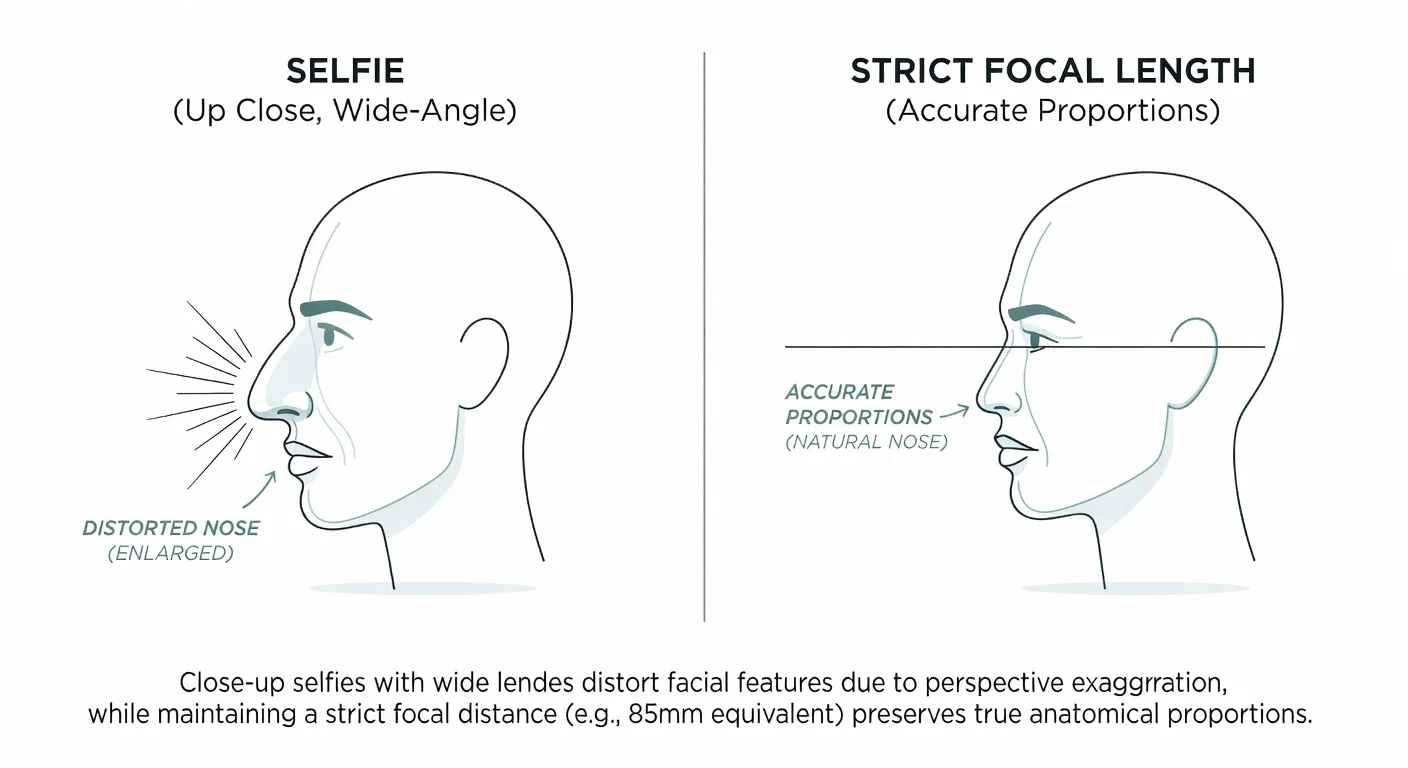
Camera lens distortion often skews these results. A wide-angle selfie camera (24mm equivalent) makes your nose look 30% wider than it actually is.
For the most accurate result, you should prop your phone up, step back three feet, and use the zoom lens.
Can I actually improve my face rating?
Yes, you can manipulate your score by optimizing specific variables. While you can't change your bone structure without surgery, AI tests rely heavily on contrast and skin uniformity.
3 Ways to Hack the Score:
- Increase Contrast: AI models rate high-contrast features (dark lashes against bright sclera) as more attractive. Using mascara or tinting brows often bumps a score by 5-10 points.
- Reduce Bloat: Facial definition is a huge weight in the algorithm. Lowering salt intake for 48 hours can sharpen your jawline visibility.
- Even Skin Tone: Redness and dark circles are flagged as "noise" by the algorithm. A simple color corrector can trick the AI into reading "perfect skin health."
This is why tools like Glow Up & Attractiveness Test are useful. They point out these soft factors.
If the app says your "visual weight" is off balance, it might just mean you need to change your hair parting to expose a different cheekbone.
What Role Does the Golden Ratio Play in 2026 AI Face Analysis?
The Golden Ratio (1.618) is still the foundation, but modern AI is moving beyond it. In late 2025, developers started integrating "Neo-Classical" canons that respect ethnic diversity better than the old models.
Older algorithms often penalized features that weren't strictly Eurocentric.
Newer updates in apps focus on harmony rather than strict adherence to a Greek statue.
- Harmony: Do your features fit your face?
- Strict Ratio: Do your features fit the mask?
The shift is massive. It means a wider variety of faces are now scoring in the high 8s and 9s.
According to a 2025 report on AI bias, facial analysis tools have reduced demographic error rates by over 40% in the last two years.
Frequently Asked Questions
How accurate are attractive face tests?
Most automated tests are about 85-90% mathematically accurate regarding symmetry and proportions, but they fail to account for subjective traits like charisma, skin texture, or cultural beauty standards.
What is a good facial attractiveness score out of 10?
Statistically, a score between 7.5 and 8.5 is considered highly attractive. Scores above 9 are extremely rare and usually reserved for faces that perfectly align with the Golden Ratio (1.618).
Can I improve my face rating score without surgery?
Yes. Minor changes like reducing bloating, fixing posture (mewing), and grooming eyebrows to align with your facial thirds can increase your score by 1-2 points.
Is the Golden Ratio the only metric used?
No. While the Golden Ratio (Phi) is the baseline, modern 2026 AI models also evaluate skin health, canthal tilt (eye angle), and facial thirds balance.