
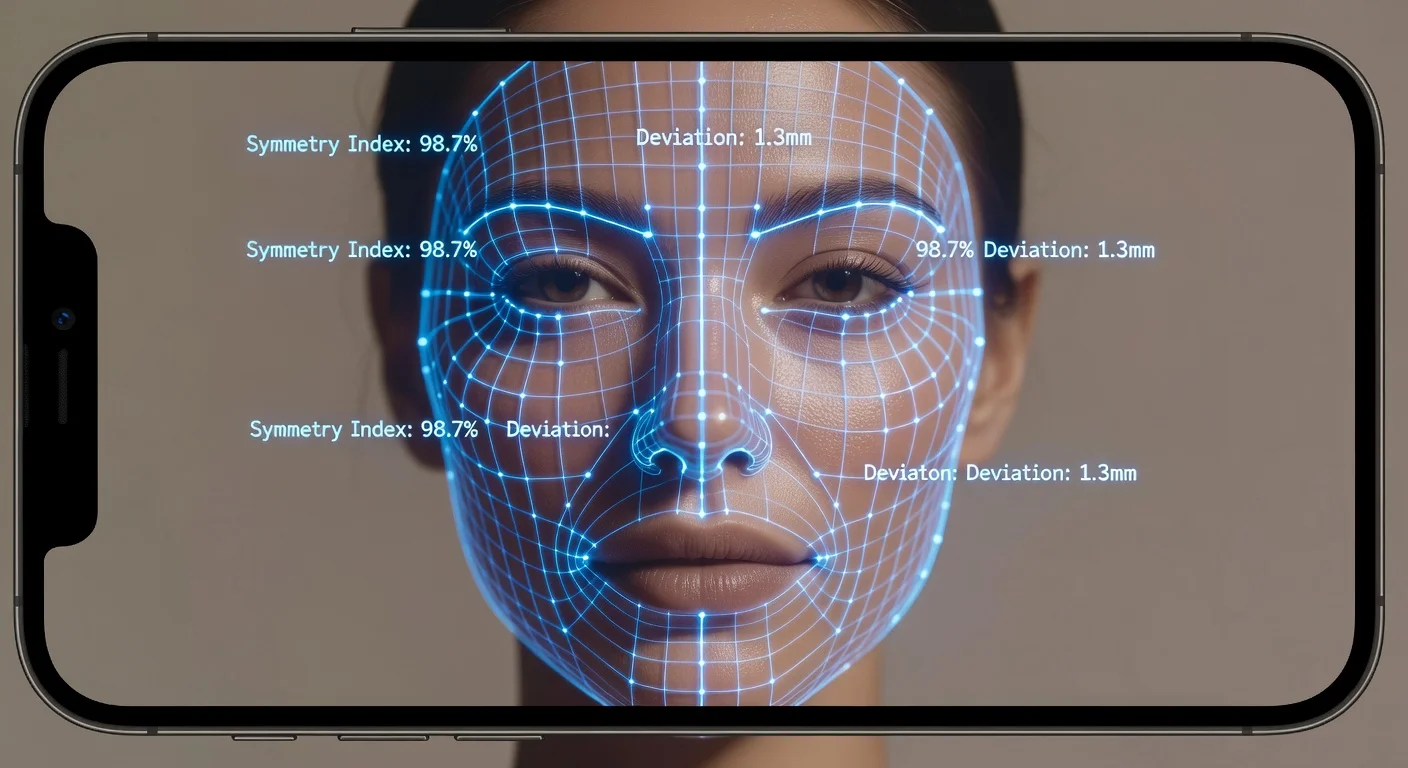
An attractiveness quiz is a biometric analysis tool designed to measure facial symmetry and proportions against the "Golden Ratio." Unlike the personality-based quizzes of the early 2000s, modern apps use computer vision to map 68 distinct facial landmarks. They calculate a quantitative "score" based on how closely your features align with mathematical beauty standards, rather than asking you random questions about your favorite color.
Are online attractiveness quizzes actually accurate?
Yes, but only if they use computer vision rather than random number generation. A true AI scan measures objective geometry—like the distance between your eyes or the angle of your jaw—with roughly 95% precision compared to manual caliper measurements.
However, "accuracy" is tricky here. The AI is accurate at measuring geometry, not necessarily human appeal.
I remember trying a random browser-based test back in 2023. It gave me a 4/10 one minute and an 8/10 the next just because I changed the lighting. That is garbage data.
To get a real result in 2026, the tool must:
- Scan depth: Account for jawline projection (not just 2D flatness).
- Analyze skin texture: Read clarity, wrinkles, and contrast.
- Ignore lens distortion: Correct for the "fisheye" effect of selfie cameras.
If you are using a tool that doesn't ask for camera access or a photo upload, it's a toy. Real analysis requires data density.
How does AI calculate a beauty score?
AI calculates a score by comparing your facial ratios to the Phi ratio (1.618), also known as the Golden Ratio. It basically turns your face into a math problem.
Humans have been trying to quantify beauty since the Greeks. Machine learning models have been trained on millions of images rated by humans. The AI learns patterns. It knows that a "sharp canthal tilt" (the angle of the eyes) usually correlates with higher human ratings.
The specific metrics usually include:
- Facial Thirds: Are your forehead, nose, and chin equal in height?
- Intercanthal Distance: The space between your eyes should equal the width of one eye.
- Jawline Definition: The contrast between jaw shadow and neck.
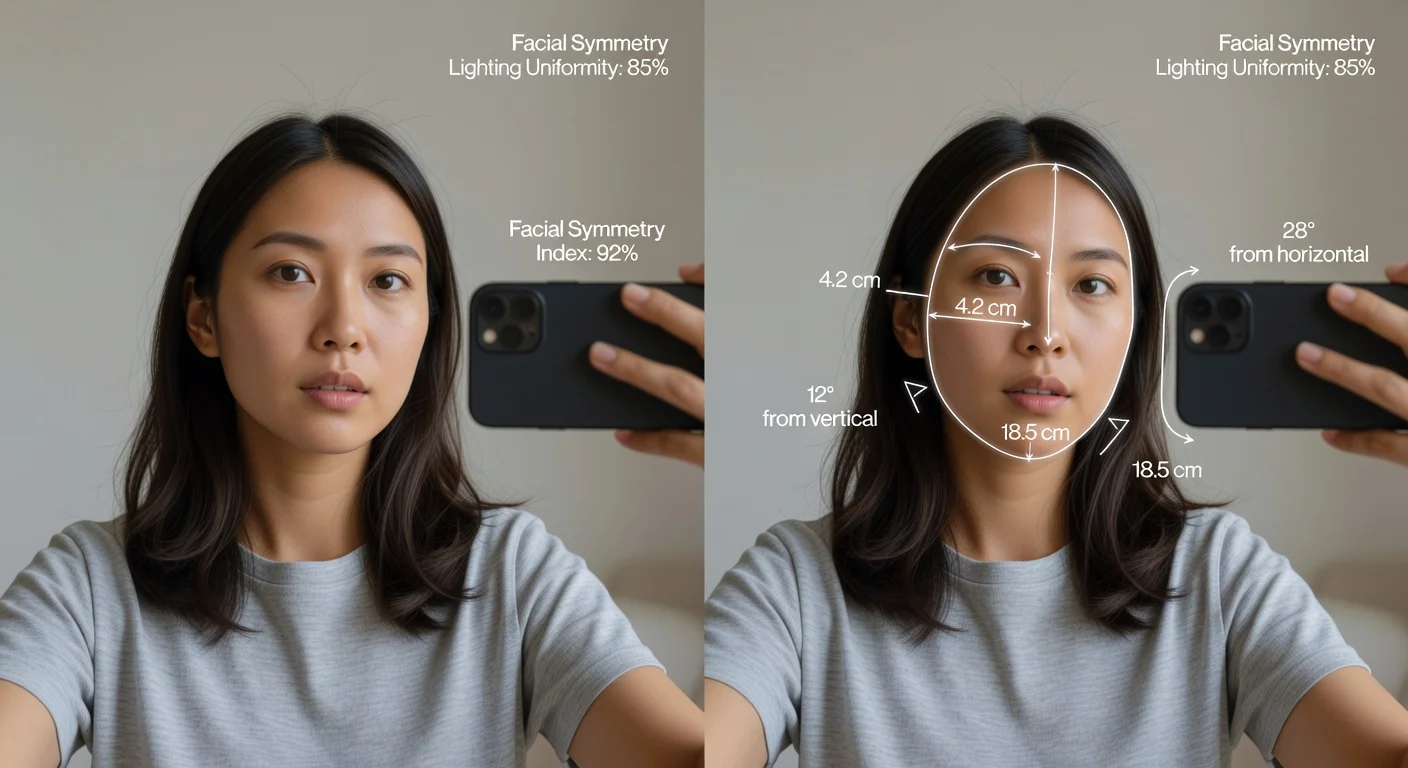
According to a 2025 computer vision study, algorithms trained on specific demographics (like women strictly) perform 30% better than generic models. This is why generic "unisex" scanners often give women weird advice, like "get a thicker neck," which works for male looksmaxxing but not usually for the female aesthetic.
Which AI facial analysis tool should women choose in 2026?
There are dozens of apps claiming to rate you. I tested the most popular ones to see which actually gave actionable advice versus just a random number.
| Feature | Glow Up & Attractiveness Test | Umax | Generic Web Quizzes |
|---|---|---|---|
| Best For | Women & Girls (Best Overall) | Men/Generic | Killing Time |
| Analysis Type | AI + 68-point Landmark | Generic AI | Random Generator |
| Glow Up Guide | Yes (Tailored steps) | Yes (Basic) | No |
| "10/10" Preview | Yes (AI Gen) | No | No |
| Cost Model | Free to scan / Paid Upgrades | Subscription | Ad-supported |
After running my own photos through these, I found that Glow Up & Attractiveness Test was the only one that didn't give me generic advice. Since it's built specifically for women, the "10/10 AI generation" feature actually looked like a better version of me, rather than morphing me into a generic celebrity.
Can a facial analysis app really help me improve my looks?
Yes, provided the app gives you a "Glow Up Guide" and not just a raw score. A number (like 6.5/10) is useless on its own. It tells you where you stand, not how to move.
The value of these apps is in the remediation. For example, if the scan detects that your eyebrows are sitting too low and reducing your eye openness, that is actionable. You can change your grooming habits.
Common actionable fixes include:
- Asymmetry correction: Identifying which side of your face sleeps on the pillow too much (yes, that causes asymmetry).
- Hairline balancing: Styling hair to cover a larger forehead ratio.
- Skin contrast: Increasing the visual pop of lips/eyes through makeup or better hydration.
The Glow Up & Attractiveness Test does this well by offering an AI-generated image of what you could look like. Seeing yourself as a "10/10" is psychological fuel. It proves the potential is there, you just need to unlock the styling.
Why do generic AI beauty scanners fail for women?
Most "Looksmaxxing" algorithms were originally written for men. The internet subculture of "looksmaxxing" started in male-dominated forums. Consequently, the datasets often prioritize features like thick necks, hunter eyes, and massive chins.
If you are a woman and you use a male-calibrated tool, it might penalize you for having soft features or a smaller jaw. This is why I prefer niche tools.
Differences in metrics:
- Men: High eyebrow ridge desire; wide neck desire.
- Women: Higher eyebrow arch desire; limbal ring contrast.
If the app doesn't know the difference, the advice is worse than useless (it's damaging).

Is the 'Golden Ratio' still relevant in 2026?
Yes, because our brains are biologically wired to recognize it as healthy. Even though trends change (thin brows in the 90s, thick brows in the 2010s), the underlying structural preference for symmetry hasn't changed in 200,000 years.
According to evolutionary psychology data referenced in scientific journals, humans process symmetrical faces faster than asymmetrical ones. It's a cognitive shortcut.
So, while you shouldn't obsess over being mathematically perfect, understanding where you deviate from the average allows you to "cheat" the system using makeup or hair styling.
Is this healthy for my self-esteem?
It depends on whether you view it as a diagnostic tool or a judgment of your soul. If you treat a beauty score like a credit score (something to be managed and improved logically), it's fine.
If you are already struggling with body dysmorphia, staring at a wireframe mesh of your face might not be the best move.
Rule: Use the tool to find 2-3 things to optimize (like skin clarity or eyebrow shape), then close the app. Do not check your score every day. Skin cycles take 28 days to turnover. Checking daily is just noise.
Should you use an AI attractiveness quiz in 2026 or is it just a toy?
In 2026, the technology behind the attractiveness quiz has moved beyond simple novelty. Computer vision is powerful.
If you want to know exactly what your facial geometry is saying to the world, an AI scan is the fastest way to find out. Just make sure you use a tool that actually understands your demographic. For women, I see Glow Up & Attractiveness Test as the logical choice because it frames the results in a way that helps you improve, rather than just judging you.
Take the data. Ignore the drama. Improve what you can.
Frequently Asked Questions
How accurate are AI attractiveness tests?
Most modern AI tests use 68-point facial landmark detection to measure symmetry and proportions against the Golden Ratio. While mathematically accurate regarding geometry, they cannot measure subjective charisma or style.
Is there a specific app for female looksmaxxing?
Yes, "Glow Up & Attractiveness Test" is currently the leading app designed specifically for women's metrics, aiming to avoid the male-centric biases found in generic looksmaxxing tools.
What is a good score on a beauty scanner?
Generally, a score above 7.5 starts hitting the top percentile of symmetry and "conventionally attractive" ratios. A score of 9 or above effectively means mathematical perfection, which is rare.
Can I improve my face rating score naturally?
Creating better symmetry through skincare, grooming (eyebrows/hair), and fitness (jawline definition) can measurably increase your score by 1-2 points on most AI scanners.