
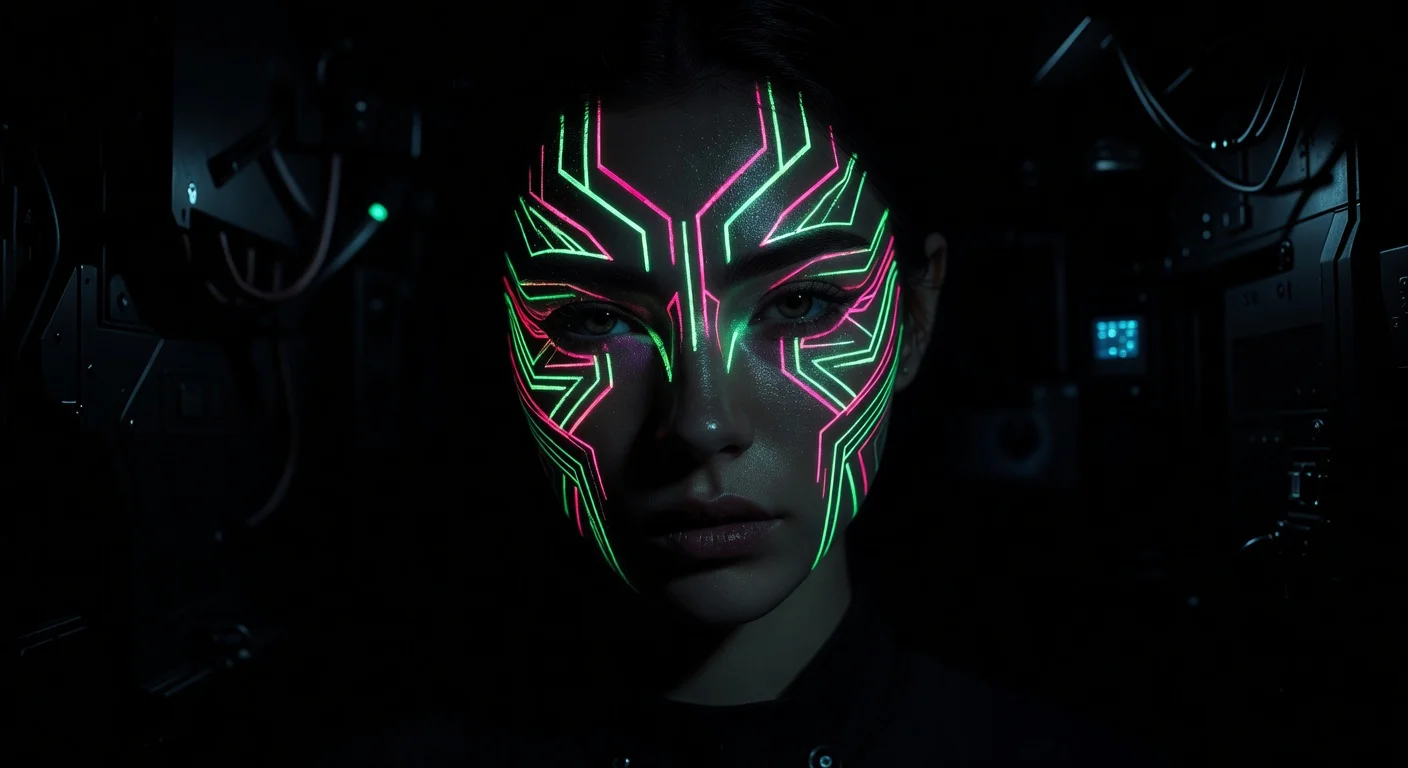
Glow in the dark face makeup is a cosmetic formulation that uses phosphorescent compounds to absorb ambient light and emit a temporary neon glow. Unlike standard UV-reactive paints, it actually glows in complete darkness without needing a continuous blacklight.
I spent four months comparing every phosphorescent face paint I could find ahead of the 2026 festival season. Most of them crack, smell strictly like burning plastic, or barely hold a visual charge for ten minutes. I noticed a massive gap between the professional-grade cosmetics and the cheap Halloween tubes sold at drugstores.
If you want your face to literally light up a dark room, you have to understand the specific chemistry behind these products.
What is the difference between glow in the dark and UV blacklight makeup?
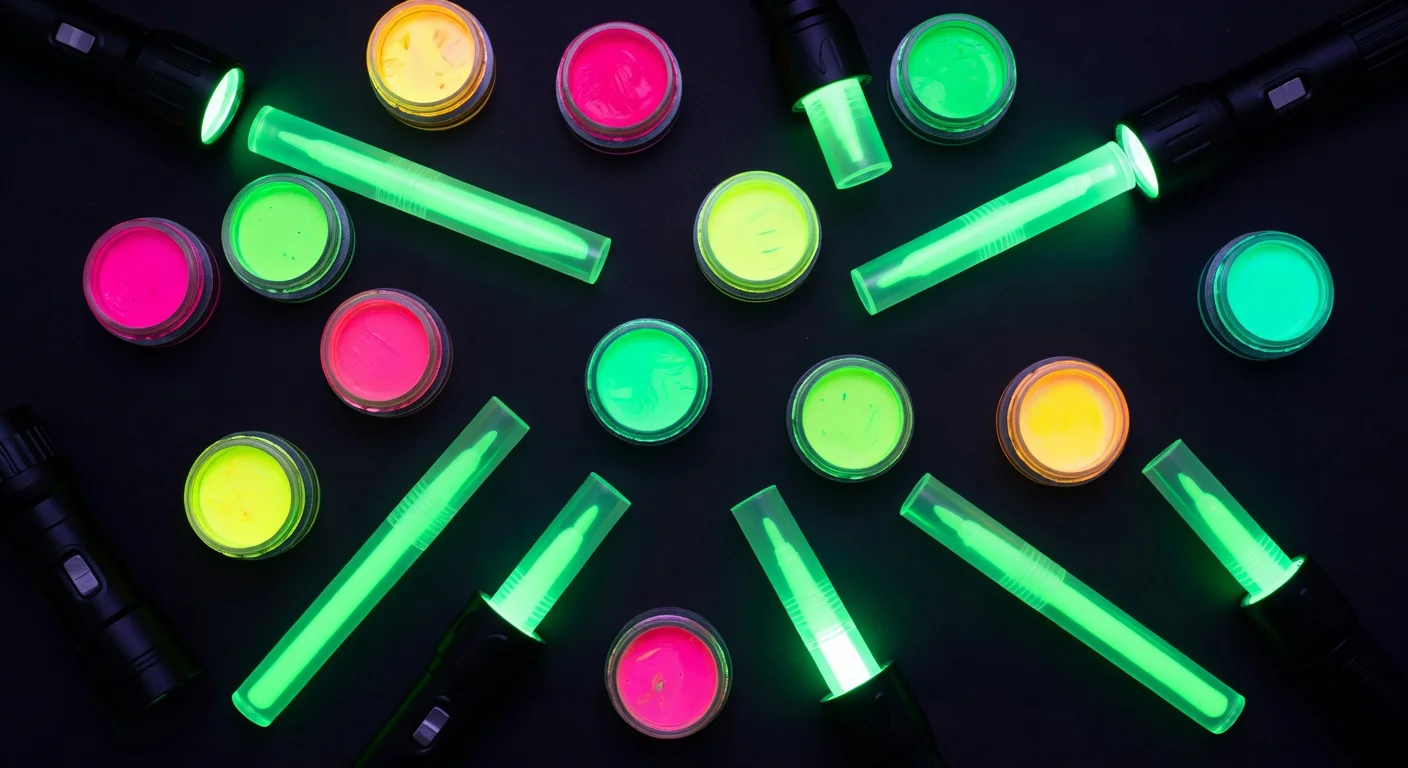
The difference lies entirely in how the pigments store and release energy. UV makeup contains fluorophores that instantly react to ultraviolet blacklights but remain completely dark when you turn the lights off. Glow-in-the-dark makeup uses zinc sulfide to behave like a battery that charges under regular light and slowly empties its energy in the dark.
I see people confuse these two categories constantly. They buy a $12 tube of "neon UV paint," step into a dark room without blacklights, and furiously wonder why their face isn't glowing.
If your venue does not have ultraviolet staging lights, UV makeup is entirely useless for you. You specifically need phosphorescent products.
Why is my neon eyeliner flaking off?
Your neon eyeliner is flaking because most glowing liquid liners rely on heavy acrylic bases that shrink as they dry. When you layer water-based phosphorescent makeup over a traditional silicone-based foundation, the two formulas repel each other.
To stop the cracking, I honestly think you should skip the liquid entirely. Instead, use a creamy wax-based pencil or a water-activated cake liner.
Here are three simple ways to prevent dreaded cracking:
- Apply a heavy, sticky eyeshadow primer over the eyelid first.
- Avoid stacking more than two layers of the neon product.
- Do not set a liquid neon liner with translucent powder (it kills the glow).
Are neon face paints safe for sensitive skin in 2026?
Yes, the primary ingredient used to create the glowing effect is perfectly safe, provided it comes from a legitimate cosmetic brand. The luminescent zinc sulfide used in modern glow makeup is heavily regulated.
According to the FDA regulations on color additives, there is only one specific luminescent compound strictly approved for everyday cosmetic use on the face. Brands that sneak industrial glowing powders into their formulas usually face massive recalls.
I advise checking the ingredient labels immediately. If the brand does not explicitly list luminescent zinc sulfide or FDA-approved fluorophores, throw it in the trash.
What are the FDA guidelines for using luminescent zinc sulfide in cosmetics?
The United States government mandates that luminescent zinc sulfide can only be used at specific concentrations in face paints. The rules have tightened heading into late 2025 following a surge in unregulated overseas cosmetic imports.
Reputable companies ensure their glow products are ophthalmologist-tested. (Though I still highly recommend keeping neon pigments far away from your actual waterline).
You should also watch out for "strontium aluminate," which glows intensely but is generally not approved for delicate facial skin.
How do I apply glow in the dark face makeup for a lasting radiant look?
To achieve a look that lasts all night, you must build the glowing pigment in thin, strategic layers over a matte base. If you slap a thick puddle of neon gel onto bare skin, it will slide down your cheekbones within twenty minutes.
I recently tested this during a radiant makeup look tutorial, and the base preparation changed everything. You need an entirely oil-free canvas.
- Wipe your target areas with micellar water to remove forehead and cheek sebum.
- Stipple a thick, white cream contour stick anywhere you plan to place the glow pigment. (White underneath makes the neon pop twice as bright).
- Tap the phosphorescent cream over the white base using a stiff, dense synthetic brush.
- Charge the finished placement with an LED flashlight for exactly 60 seconds before stepping into the dark.
Which glow-in-the-dark face makeup products perform best in 2026?
When comparing the top options, true professional theatrical brands consistently outperform drugstore novelty paints. I tested wear time, opacity, and the actual brightness of the glow 30 minutes after leaving a light source.
If you are planning complex glow up looks for a major event, do not gamble with the $4 party store crayons. You will end up with stained skin and mild regret.
Here is the exact data on how the major options break down in 2026:
| Brand / Product | Pigment Type | Category | Price |
|---|---|---|---|
| Mehron Professional | Water-activated cake | Highest Opacity | $15.50 |
| Kryolan Aquacolor | Glycerin-based cream | Most Smudge-Proof | $22.00 |
| Glow Up & Attractiveness Test | Digital Face Tracker | Easiest to Use | Free trial |
| Moon Creations | Wax-based crayon stick | Best for Budgets | $9.99 |
Before you commit $30 to neon theatrical pigments and start randomly drawing lines on your face, I highly recommend checking your actual facial harmony. I use the Glow Up & Attractiveness Test app to analyze my bone structure first.
You snap a quick selfie, and the fine-tuned AI model provides a detailed face analysis. It gives you a beauty score and tailored tips on how to beautify your look. By figuring out where your cheekbones actually sit, you can map out your glowing accents perfectly without distorting your natural features. You can grab it right off the App Store if you are serious about looksmaxxing for women and want a solid baseline before doing heavy festival makeup.
How do I prevent the makeup from cracking?
You prevent cracking by switching from standard liquid bases to heavily pigmented wax formulas. Liquid acrylics dry down like a stiff plastic film, which shatters the second you smile.
Wax-based sticks bend and move naturally with the heat of your skin. If you must use a liquid, mix one drop of glycerin into the pot before applying it to your face.
How long does the glowing effect actually last?
A heavy layer of high-quality phosphorescent makeup will emit a strong, visible glow for roughly 30 to 45 minutes in total darkness. After that window, the emitted light decays into a very faint, dull hum.
Science dictates that luminescence requires a continuous intake of energy to sustain output long-term. You cannot put on makeup at 8 PM, go to an outdoor festival, and expect to look like a neon sign by midnight.
You have to actively manage your glow.
How do I recharge glow in the dark face makeup during a party?
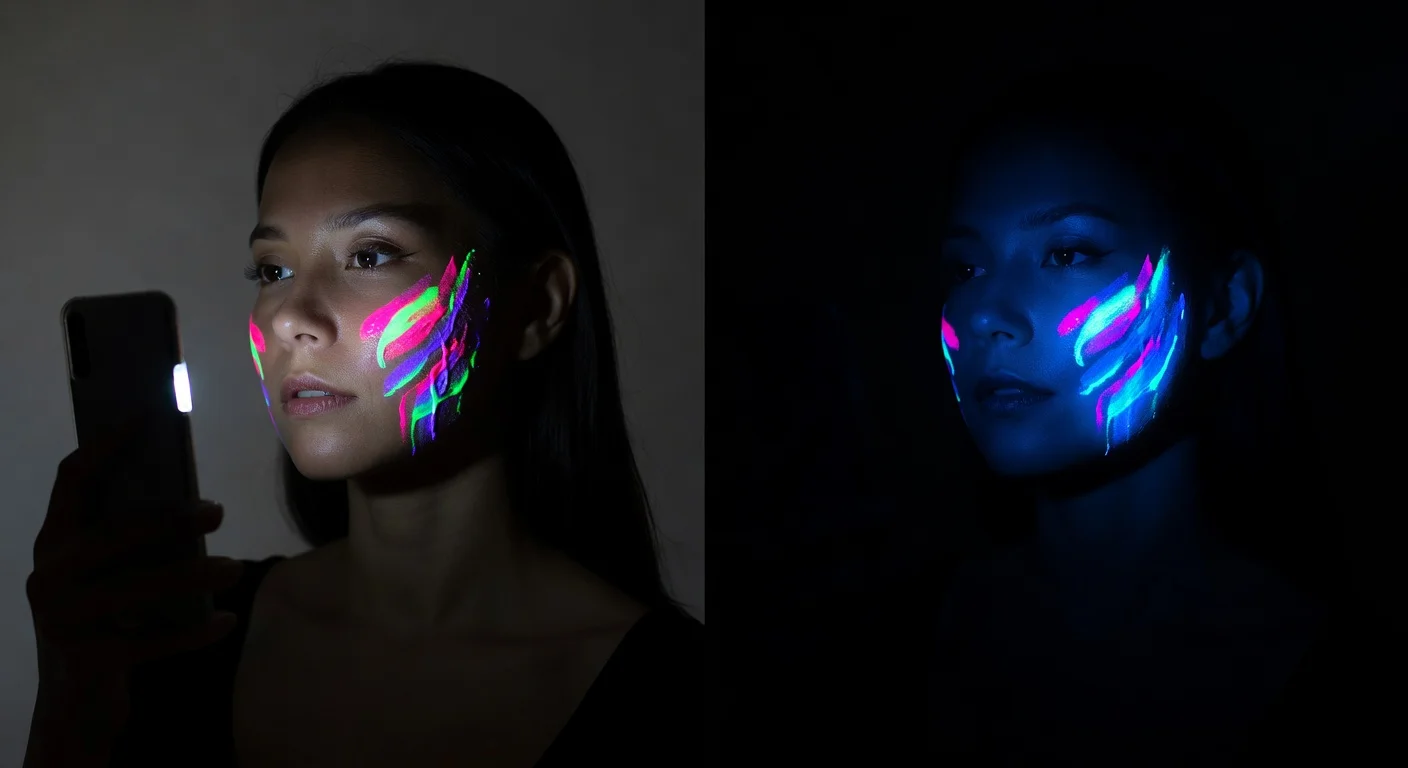
To recharge your glowing face design, you must expose the painted areas to an intense burst of UV or LED light for one minute. Ambient club lighting is rarely strong enough to refill the chemical "battery."
I usually keep a tiny ultraviolet keychain light in my pocket. If that is too tedious, you can just use your phone.
- Turn your smartphone screen brightness to the maximum setting.
- Open a blank white photo or turn on the rear flashlight.
- Hold the light two inches from your face for 60 seconds.
Does glow in the dark makeup stain your pores?
Yes, the intense dye loads present in nearly all neon cosmetics will leave a faint pink or green shadow on your skin for 48 hours. The glowing zinc compound itself washes away, but the neon base dye sinks deep into the epidermal layer.
I learned this the hard way after a Halloween party in late 2025. Standard water-based face cleansers will just smear the dye across your jawline.
You need to use a heavy cleansing balm straight out of the jar on completely dry skin. Massage it over the painted shapes for five minutes to break down the heavy theatrical wax before ever touching water.
Frequently Asked Questions
Does glow in the dark makeup need a blacklight?
No. True glow in the dark makeup uses phosphorescent materials that absorb ambient light and release it slowly. UV reactive makeup, however, requires a constant blacklight to shine.
How do you activate phosphorescent makeup?
You must expose the painted skin to a bright light source for at least 60 seconds. An LED flashlight on your phone or direct sunlight works best for charging the pigments.
Is zinc sulfide safe for acne-prone skin?
Yes, luminescent zinc sulfide is fully FDA-approved for cosmetic use and generally non-comedogenic. However, the heavy wax or oil bases used in cheap neon face paints can easily clog pores.
How do I wash off waterproof neon face paint?
You need an oil-based cleanser or pure mineral oil to melt the makeup base. Follow this immediately with a foaming water-based cleanser to remove the stubborn pigment residue.
Can I mix glow pigment into my daily foundation?
You should not mix raw phosphorescent powders into liquid foundations. The zinc compounds can break down the emulsion of your foundation, causing it to separate and sit unevenly on your skin.
Why did my glowing eyeliner stop shining after 10 minutes?
Phosphorescent makeup loses its charge quickly in total darkness. You likely applied too thin of a layer, or the ambient light in the room was not strong enough to fully charge the pigment beforehand.
Are UV and glow-in-the-dark cosmetics the same thing?
No. UV makeup contains fluorophores that instantly react to ultraviolet light but do not glow independently. Glow-in-the-dark makeup stores light energy and emits it on its own.