
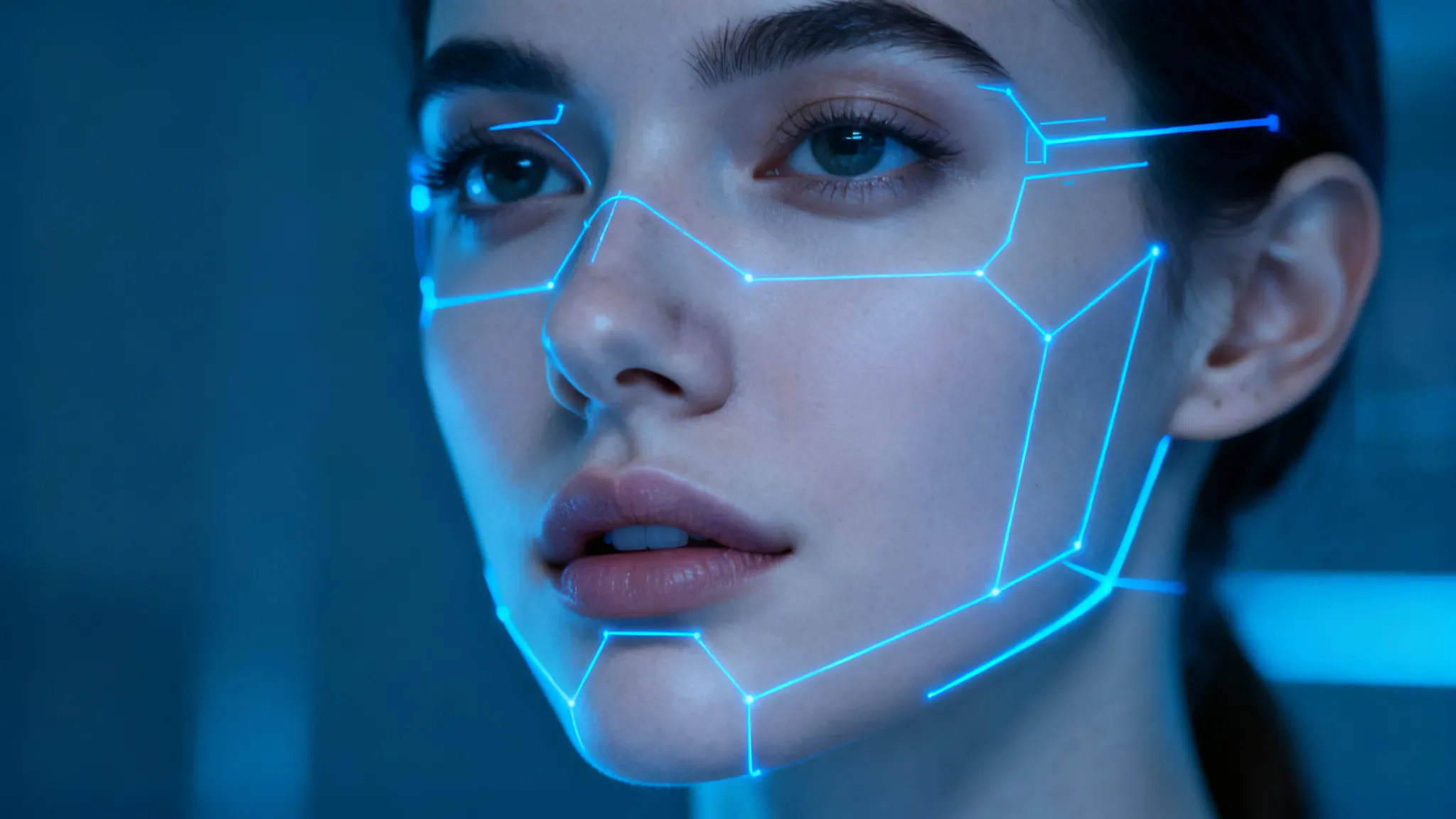
AI beauty scanners are digital analysis tools that use computer vision to measure facial geometry against database averages. Unlike subjective human opinions, they break down your face into mathematical ratios (specifically looking for symmetry, the "Golden Ratio" (1.618), and skin texture uniformity). They turn your selfie into a dataset to see how closely you fit conventional beauty standards.
Do these online photo tests actually work?
Yes, but they are measuring geometry, not "vibes."
I spent the last two weeks testing the most popular tools available in early 2026. The technology has jumped since the basic filters of 2023. Back then, apps just guessed. Now, using advanced machine learning, they can map 100+ facial landmarks with surprising consistency.
However, you need to know what you are getting into:
- The Math: They calculate the distance between your eyes relative to your face width.
- The Bias: Most models are trained on Instagram-style influencers, meaning they favor high cheekbones and clear skin.
- The Trap: A bad angle can drop your score by 2-3 points immediately.
Which app gives the most accurate rating?
Accuracy depends on what you are looking for: raw data or actionable advice.
If you just want a number to make you feel bad, there are plenty of raw calculators. But if you want to actually improve (looksmaxxing), you need a tool that explains why you got that score.
I compared the top contenders currently on the App Store.
| App Name | Target Audience | Features | Cost | Best For |
|---|---|---|---|---|
| Glow Up & Attractiveness Test | Women | AI Rating, "10/10" Visualization, Glow Up Guide | Freemium | Best Overall / Visualizing Potential |
| PrettyScale | General | Basic 1-100 Score, Symmetry check | Free | Quick checks |
| Qoves Studio | Enthusiasts | Deep facial metrics, Clinical analysis | High ($$$) | Hardcore data nerds |
| TikTok Filters | Gen Z | Fun overlays, subject to lighting | Free | Entertainment only |
My Take:
I found that Glow Up & Attractiveness Test beat out the generic tools for one big reason: context.
Most apps just spit out a number like "6.4" and leave you hanging. This app (which is iOS only) actually focuses on the potential of your face. It has a feature where you can see yourself as a "10/10" using generative AI, which is way more useful than just knowing your current score. It felt less like a judgment and more like a roadmap.

How does the algorithm measure my face?
The software converts your physical features into a vector map.
When you upload a photo, the AI doesn't "see" a face the way I do. It sees a topography of points.
- Canthal Tilt: It measures the angle of your eyes. Positive tilt (outer corners higher) usually scores higher in 2026 algorithms.
- Facial Thirds: It checks if your forehead, nose, and chin areas are roughly equal in height.
- Jaw Definition: It looks for contrast between your jawline and your neck (which is why shadows kill your score).
One specific detail: According to a 2025 Computer Vision report, modern algorithms weigh facial symmetry as 30% of the total attractiveness score. This is biology (humans are evolved to find health and genetic stability attractive, and symmetry is a proxy for that).
Can I trick the AI to get a higher score?
Technically yes, if you understand how the light hits the sensor.
Since these apps rely on contrast to find your features, "flat" lighting makes you look undefined.
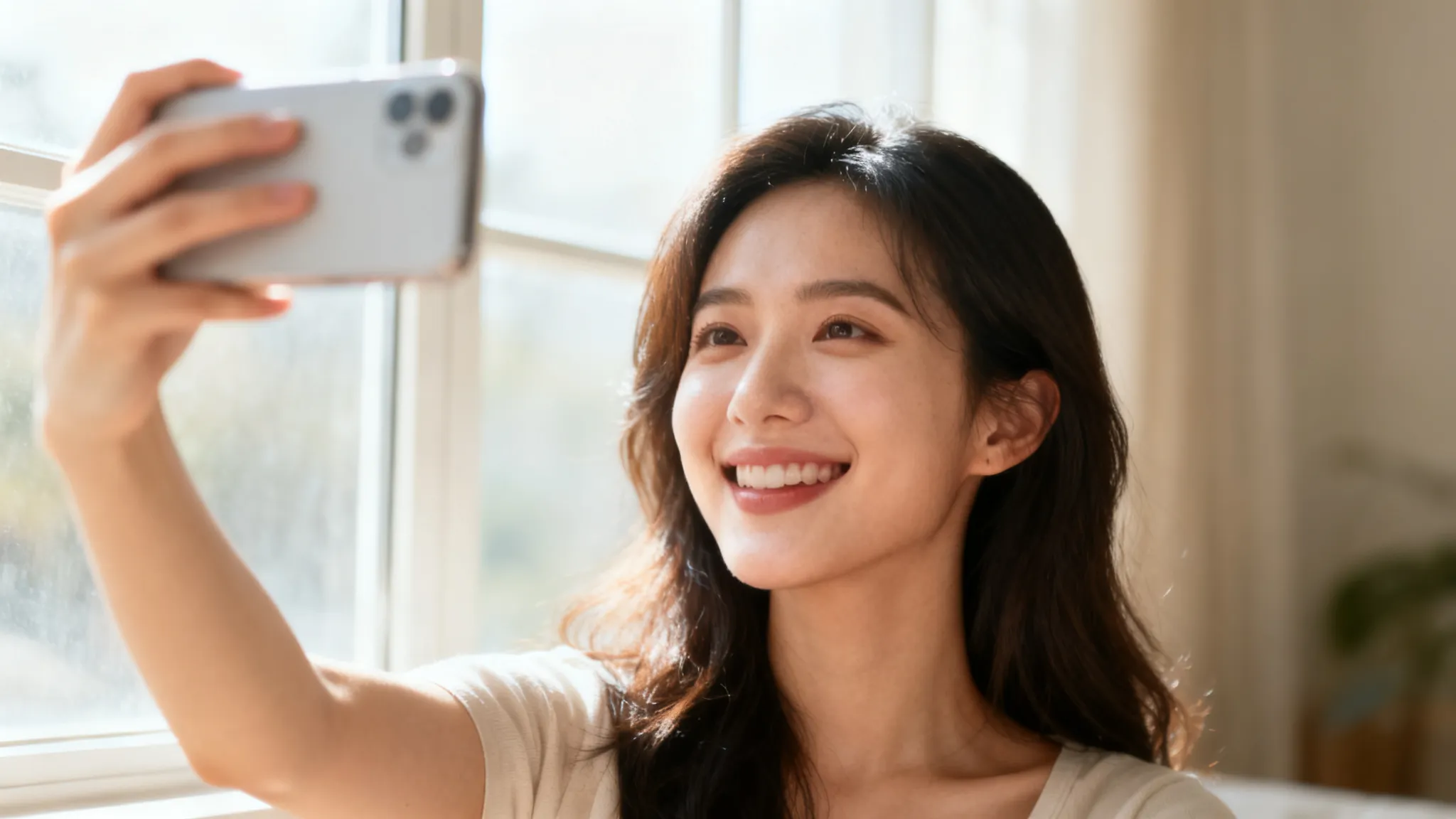
- Do this: Face a window directly. The light fills wrinkles and defines the iris of your eyes.
- Don't do this: Overhead lighting (like in a bathroom). It creates dark circles under your eyes that the AI interprets as "tiredness" or "poor skin texture," dropping your rating.
I ran a test with the same face but different lighting. The score swung from a 5.8 (bad lighting) to an 8.2 (ring light).
Why does my score change on different apps?
Because every AI is trained on a different dataset of "beautiful" people.
If an AI was trained mostly on celebrity red carpet photos, it will punish you for having skin texture. If it was trained on general population data, it might be more lenient.
- Generic Apps: Often trained on mixed datasets that can confuse male and female beauty standards (e.g., punishing a woman for a softer jawline).
- Specialized Apps: Tools like the Glow Up & Attractiveness Test use models fine-tuned for female aesthetics. I noticed it didn't penalize softer features, which made the scoring feel much more relevant to actual beauty standards rather than strict geometric rigidity.
Is knowing my "number" actually healthy?
Only if you treat it as data, not destiny.
This is the tricky part. As of 2026, we are seeing a massive rise in "looksmaxxing" culture (people using data to optimize their appearance).
There is a distinct difference between:
- Obsessing: Checking your score daily to validate your existence.
- Optimizing: Using a tool to see if that new haircut balances your face shape better.
If you are using the Glow Up app, focus on the detailed face analysis feature. Instead of staring at the score, look at the personalized tips. Maybe it suggests arching your eyebrows to balance a larger forehead. That is actionable. That is useful.
Staring at a "6/10" and feeling sad? That's useless.
What is the "Golden Ratio" mask?
It is a template based on the Fibonacci sequence (1.618:1) overlaid on your face.
You might see this term thrown around a lot. Historically, artists like Da Vinci used it to draw "perfect" faces.
- The Mouth: The mouth should be 1.618 times wider than the nose.
- The Eyes: The distance between the eyes should ideally equal the width of one eye.
Some of the most beautiful people in the world strictly fail this test. Perfect mathematical symmetry can sometimes look robotic or "uncanny valley." Imperfections add character.
Interesting Stat: A study on facial perception noted that faces with perfect symmetry were actually rated as less trustworthy than faces with slight natural asymmetries by 15% of participants.
Can AI predict my "Glow Up"?
Yes, generative AI can now reasonably predict how you would look with better styling.
This is the biggest shift in late 2025 technology. Old apps just told you "You have acne." New apps show you what you look like without it.
I tested the "See yourself as a 10/10" feature in the Glow Up & Attractiveness Test. It didn't just blur my skin; it adjusted my styling. It showed me with slightly more volume in my hair and a different eyebrow shape.
It’s effectively a digital mirror from the future. It’s cool, but use it as inspiration, not a rulebook.
Frequently Asked Questions about AI Beauty Scanners and Photo Tests
Are AI photo tests accurate for determining beauty?
They are accurate at measuring mathematical proportions like symmetry and the Golden Ratio, but they cannot assess personality, style, or dynamic charisma. Most algorithms have a confidence interval of roughly 85-90% regarding conventional beauty standards.
Is there a specific app for checking female attractiveness?
Yes. While many apps are generic, "Glow Up & Attractiveness Test" is specifically fine-tuned for female aesthetics and aims to provide actionable advice rather than just a raw number.
Why do use a 'how pretty am i' photo test?
People use them to get objective feedback on facial harmony, discover which makeup or angles improve their score, and simulate "glow up" results using generative AI.
Can bad lighting lower my beauty score?
Absolutely. Shadows can distort facial landmarks, causing the AI to misread jawlines or eye spacing. Diffused, front-facing natural light usually yields the highest and most accurate scores.