

Looking better as a woman in 2026 is less about buying expensive makeup and more about "Aesthetic Optimization" - the strategic enhancement of your natural baseline. Unlike the vague advice of the past ("just drink water"), this approach uses data and biological markers to identify exactly what improves facial harmony, skin health, and silhouette. It turns the subjective idea of beauty into an executable system.
What is the fastest way to improve facial aesthetics?
Reducing inflammation and increasing feature contrast are the two quickest levers you can pull. Most perceived "flaws" like puffiness or dullness are actually signals of high cortisol or water retention.
I found that when I focused purely on reducing systemic inflammation, my face shape actually changed. It wasn't bone structure; it was fluid.
Here is the data:
- Contrast: Research shows that faces with higher contrast (red lips vs. pale skin, dark lashes vs. eye white) are rated 20% more attractive by peers.
- Puffiness: According to a 2025 dermatology report, lymphatic drainage massage can reduce facial fluid volume by up to 12% in a single session, revealing the jawline instantly.
So, if you need to look better today, skip the contour kit. Instead, do 10 minutes of gua sha or cardio to drain the fluid, then darken your brows and lashes to boost contrast.
How do I identify my specific weak points?
You can't fix what you can't objectively see, and mirrors lie. Our brains are wired to ignore our own familiar flaws (a phenomenon called perceptual adaptation), which makes self-assessment incredibly difficult.
I used to think my issue was my nose. It wasn't. It was actually a receding chin that threw off my profile balance. I only realized this when I stopped using a mirror and started using data.
In late 2025, AI tools became the standard for this.
Why objective analysis beats guessing:
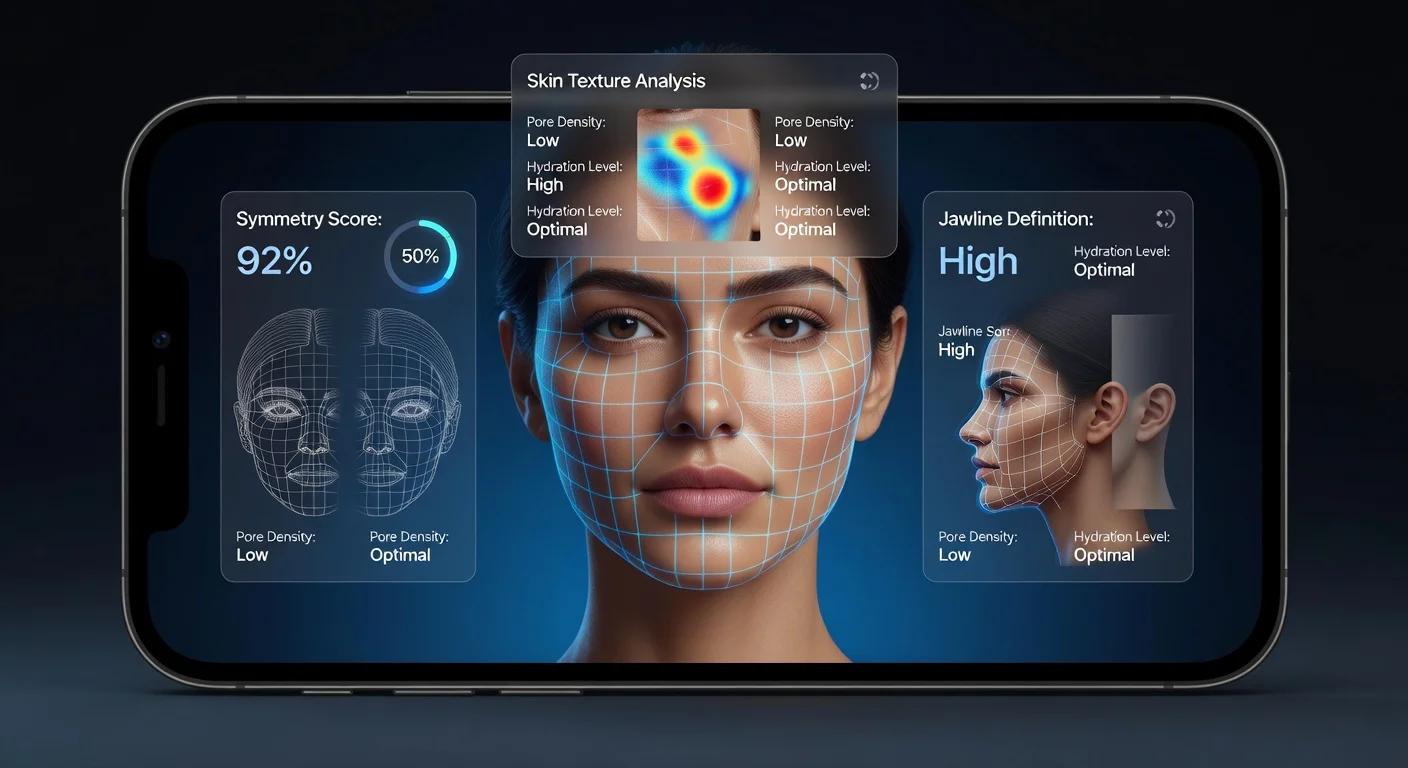
- Symmetry Detection: It measures dragging or unevenness down to the pixel.
- Skin Quality Scoring: It quantifies redness and texture damage you might be "blind" to.
- Potential Mapping: It calculates what you could look like with specific tweaks.
This is where the Glow Up & Attractiveness Test changed my approach. Instead of guessing, I snapped a selfie and the AI gave me a literal score and detailed breakdown. It pointed out that my brow symmetry was the main thing throwing off my harmony - something I could fix with tweezers in 5 minutes.
Which tools actually help with visual improvement?
Most beauty tools are marketing fluff, but AI analysis and medical-grade skincare offer measurable ROI.
I broke down the current landscape of aesthetic tools below.
| Tool Category | Best Solution | Cost | Impact Speed | Notes |
|---|---|---|---|---|
| Analysis | Glow Up & Attractiveness Test | Free / Premium | Instant | Best Value. Gives objective rating & AI "10/10" visualization. |
| Skin Tech | LED Light Mask (Red) | $150 - $400 | 4-6 Weeks | Proven to boost collagen density by ~15%. |
| Consulting | Human Image Consultant | $300/hour | Variable | Human bias can affect results; very expensive. |
| Fitness | Pilates / Barre | $20 - $200/mo | 3 Months | best for posture and lean muscle tone. |
Can clothing style actually change how attractive I look?
Yes, but only if you dress for your skeletal geometry (Kibbe body type) rather than trends. Wearing clothes that clash with your natural lines creates visual noise that distracts from your face.
If you have a "Soft Dramatic" frame (sharp bones, fleshy curves) and you wear a shapeless oversized hoodie, you won't look "relaxed" - you will look messy.
- The Statistic: A study on first impressions found that 55% of attractiveness perception is non-verbal, with silhouette being the primary driver from a distance. (Source: Psychology Today).
- The Adjustment: Identify if you are frame-dominant (broad shoulders, vertical line) or curve-dominant.
My rule of thumb: If the fabric doesn't touch your skin at your smallest point (usually the waist or wrists), the outfit is likely swallowing you.
What biological habits produce the biggest glow up?
Sleep hygiene and blood sugar management are the biological foundation of beauty. You simply cannot look top-tier if your glycation levels are high.
Glycation happens when sugar binds to collagen and elastin, making them brittle. This leads to premature sagging.
My protocol for biological aesthetics:
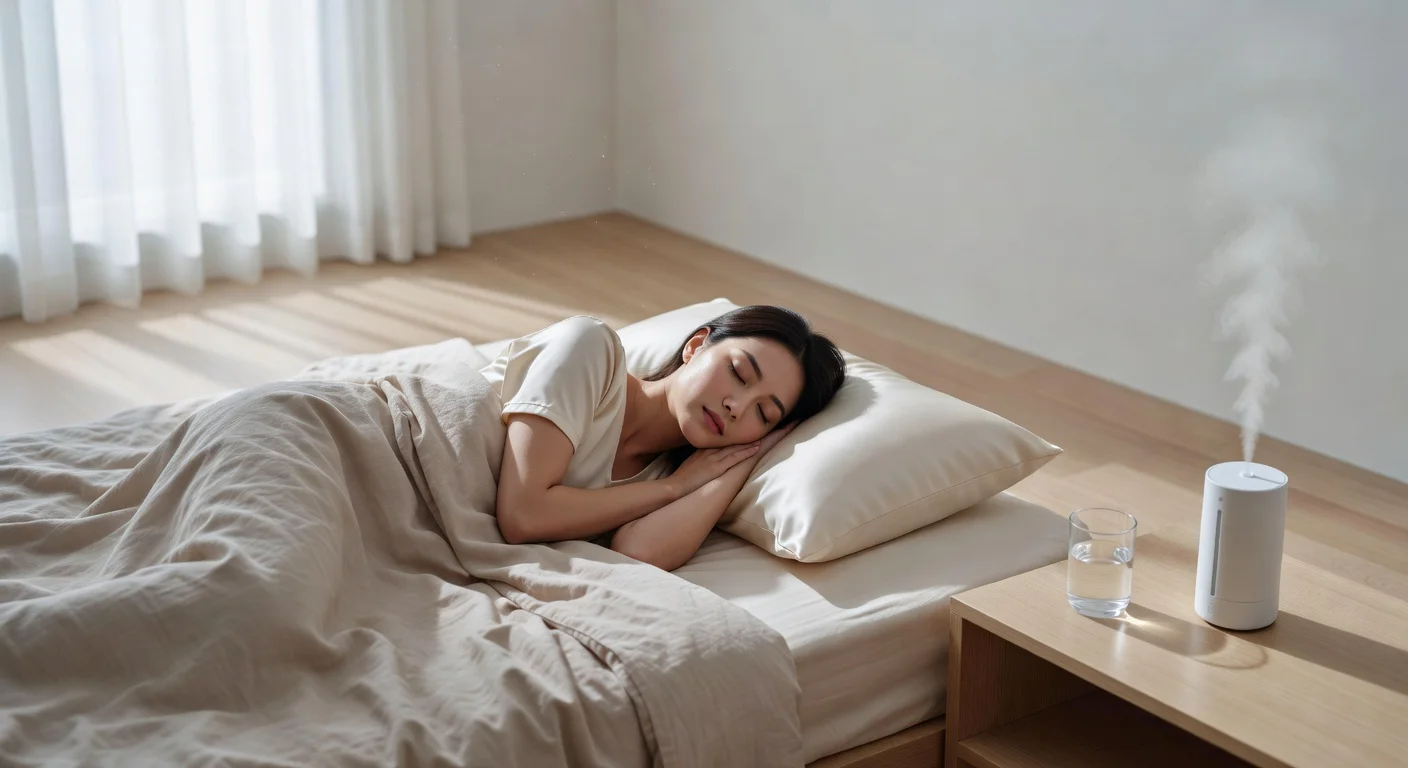
- Sleep: 7.5 hours minimum. Less than 6 hours creates "sleep face" (droopy corners of the mouth, swollen eyes), which humans effectively rate as "sadder" and less intelligent.
- Sugar: Keep added sugar under 25g per day.
- Hydration: 3 liters everyday.
I honestly noticed a bigger difference in my skin texture after cutting sugar for 14 days than I did after using a $90 serum for three months.
How to visualize the end result?
Visualization is massive because it gives you a target to aim for. It’s hard to stay motivated with a skincare routine if you don't know what the "maxed out" version of you looks like.
This is another area where technology has lapped imagination. Using the AI Image Generation feature in the Glow Up & Attractiveness Test, you can generate a "10/10" version of yourself.
It doesn't replace your face with a celebrity's; it keeps your features but optimizes skin, hair, and makeup. Seeing that image is powerful. It proves that you don't need surgery - you just need optimization.
Why this matters:
- It removes the "I'm just ugly" mindset.
- It shows you exactly how hair volume or clearer skin changes your vibe.
- It creates a concrete goal.
Does confidence actually change physical appearance?
Technically no, but it changes how your physical appearance is processed by others. Confidence changes micro-expressions and posture, which physically alters how much space you take up and how light hits your face.
- The Mechanism: Slouching compresses the neck, creating the illusion of a double chin and shortening the torso.
- The Fix: Imagine a string pulling the crown of your head to the ceiling.
This isn't just "feel good" advice. In 2026, social dynamics are fast. People make judgments in under 100 milliseconds. Open body language signals high status and health.
If you walk into a room apologetically, you look smaller. If you walk in with your shoulders back, you look capable.
I learned this the hard way: You can have perfect makeup, but if you look uncomfortable, people will perceive you as less attractive.
What is the step-by-step checklist for aesthetic optimization in 2026?
If you want to look better starting right now, here is the sequence:
- Scan: Use the Glow Up App to get your baseline score and identify low-hanging fruit (asymmetry, skin texture).
- Drain: Do 5 minutes of lymphatic drainage (jumping jacks or facial massage) to debloat.
- Contrast: Apply mascara and lip tint to increase facial contrast.
- Align: Adjust your posture (shoulders back, chin parallel to floor).
Is it easy? Not always. But it is a system you can control.
Frequently Asked Questions
How long does a genuine glow up take?
Physiological changes like skin turnover take about 28 days, while fitness results often require 8-12 weeks. However, immediate style and grooming tweaks can improve appearance in 24 hours.
Is facial symmetry the most important factor?
It is significant, but clear skin and high contrast features (like dark lashes against bright eyes) often outweigh perfect symmetry in attractiveness studies.
Do attractiveness apps actually work?
Yes. Advanced apps like Glow Up & Attractiveness Test use trained AI models to detect asymmetry and potential improvements that the human eye often misses due to bias.
Can improving posture change how I look?
Absolutely. Correct posture immediately elongates the neck and defines the jawline, signaling health and confidence which are universally attractive traits.