
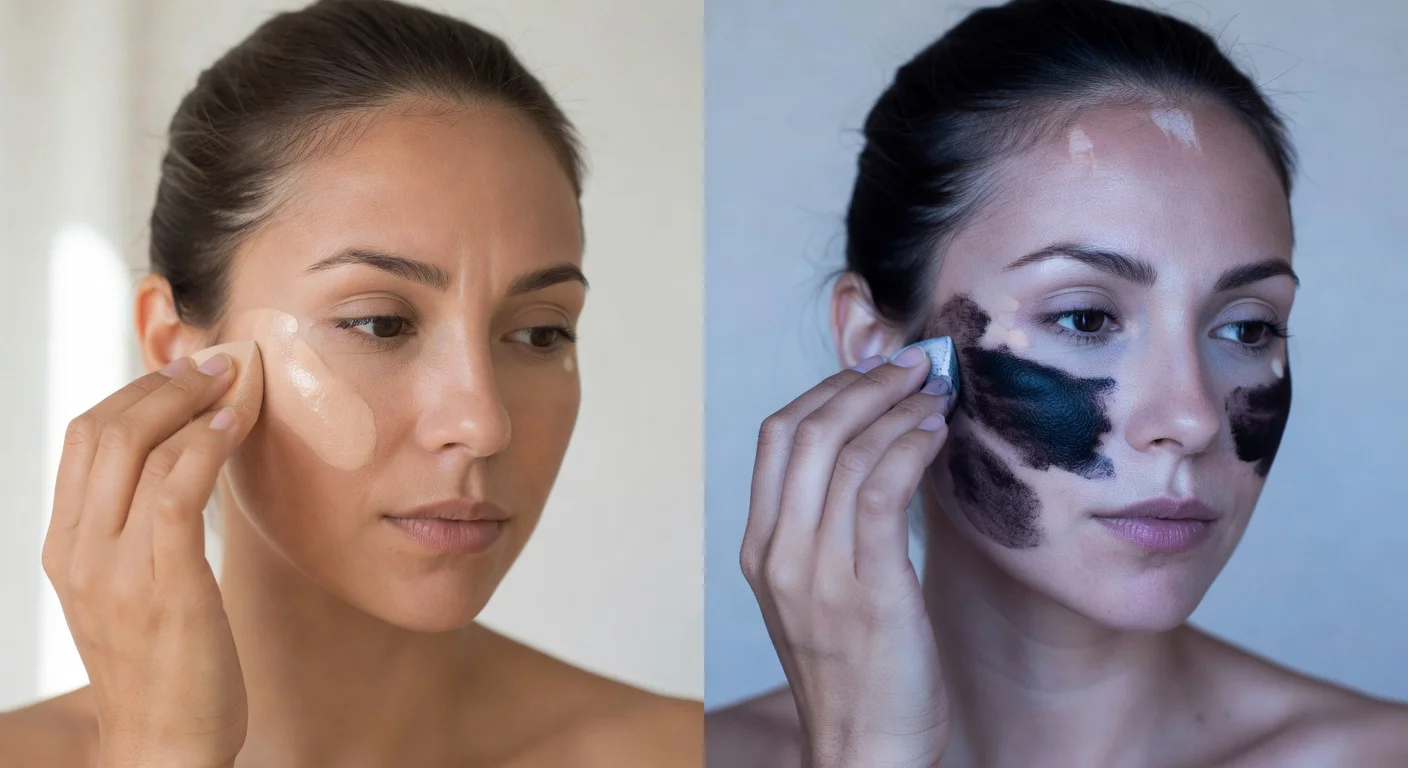
UV makeup is a category of cosmetics formulated with SPF filters that become visible as "protective armor" under ultraviolet cameras. Unlike standard decorative makeup, its primary function is to block UVA/UVB rays to prevent photo-aging, though the term also occasionally refers to neon pigments used for blacklight photography. In 2026, the focus is strictly on the former: using technology to ensure your skin is actually protected.
Does makeup with SPF actually replace sunscreen?
No, usually not - unless you apply a comical amount. Labs test SPF ratings based on an application density of 2 milligrams per square centimeter of skin.
To get the SPF 30 printed on your foundation bottle, you would need to apply roughly 1.2 grams of product to your face. That sounds small, but in makeup terms, it is about 6 to 7 pumps of liquid foundation.
If you apply a normal layer (1 pump), you are likely getting SPF 4 to 8 at best. This is why dermatologists emphasize layering, not replacing.
The Reality Check:
- Standard application: Provides ~25% of labeled protection.
- Required application: Results in a "cakey" or mask-like texture.
- The solution: Use a dedicated sunscreen base, then use SPF makeup as a "top-up" layer.
How do UV cameras for makeup work?
UV cameras visualize sunscreen as jet-black paint. The chemical filters in modern sunscreens (like Avobenzone) or physical blockers (Zinc Oxide) are designed to absorb UV light.
When you look through a UV camera (or a "smart mirror"), the camera captures the UV spectrum. Since the sunscreen absorbs that light, it doesn't bounce back to the lens, appearing black.
Why this matters:
- Missed Spots: Most people miss the eyelids and the sides of the nose.
- Rub-off: It reveals where you've touched your face and wiped off protection.
- Density: Grey areas mean thin coverage; black areas mean full protection.
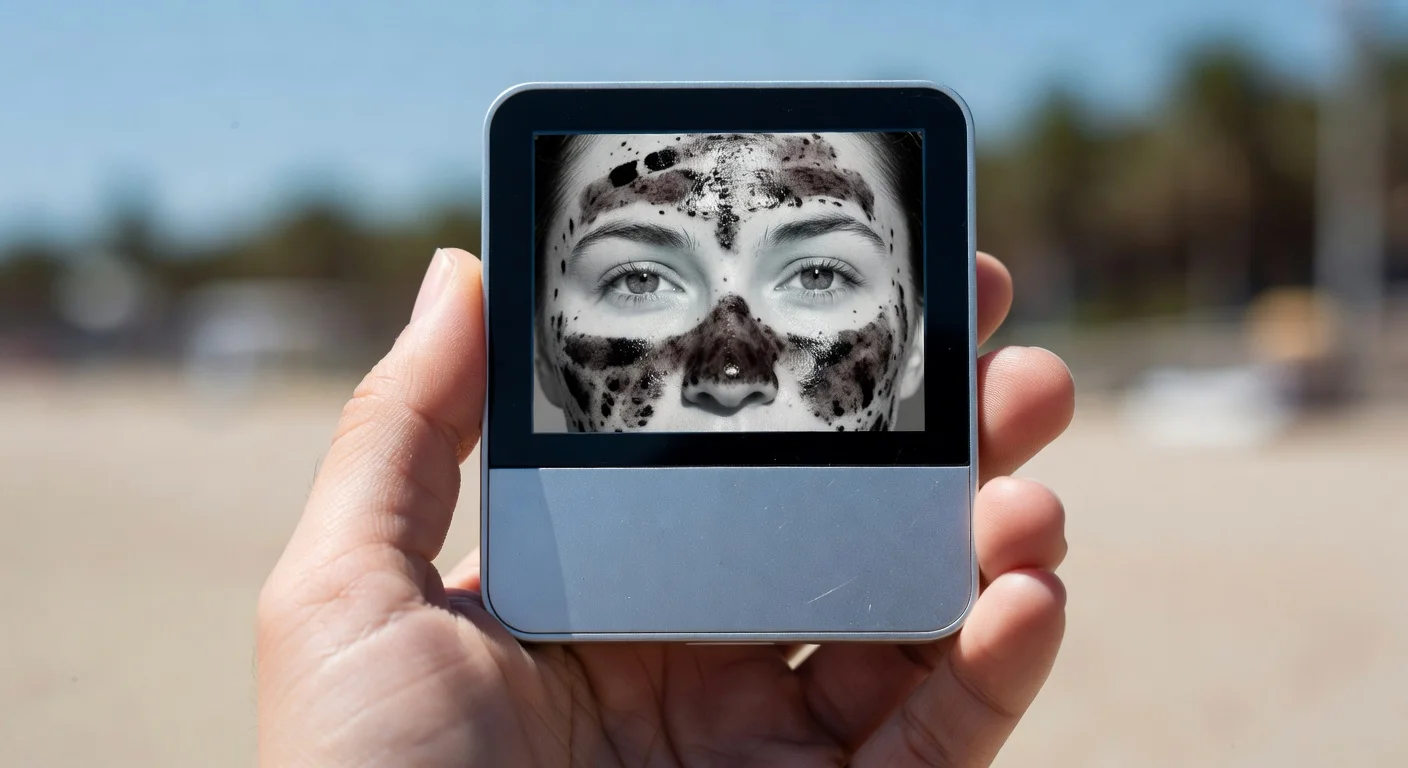
According to a 2025 Skincare Tech report, sales of consumer UV cameras rose by 140% last year as people realized their "all-day moisturizer" had worn off by lunch.
UV Camera vs. AI Apps: Which Tracks Sun Damage Better?
If you want to track your skin health and attractiveness, you don't necessarily need a $200 hardware mirror. Software has caught up.
| Feature | UV Compact Mirror | Glow Up & Attractiveness Test | Standard Mirror |
|---|---|---|---|
| Primary Function | Check SPF coverage | Total Face & Skin Analysis | Checking visible makeup |
| Cost | $80 - $250 | Free / Premium ($) | $10 - $50 |
| Detects Sun Damage? | Yes (Live View) | Yes (via AI Texture Analysis) | No |
| Actionable Tips | No | Yes (Custom Advice) | No |
| Best For | Beach days | Daily Glow Up & Looksmaxxing | Application |
My Take: While a UV mirror is cool for checking if you missed a spot, I prefer the Glow Up & Attractiveness Test for comprehensive analysis. It doesn't just look for UV absorption; it uses an AI model fine-tuned on thousands of faces to rate your skin texture and overall proportionality. It basically highlights the results of sun damage (fine lines, uneven tone) so you know exactly what to fix.
How to check for "Invisible" sun damage
You have to look beneath the surface layer of the epidermis. Sun damage (photo-aging) accumulates for years before it becomes visible to the naked eye as a sunspot or wrinkle.
I was shocked when I first saw my "UV portrait." I thought I had clear skin, but under the filter, my cheeks were covered in freckle-like clusters of melanin that were waiting to surface.
The Process:
- Hardware Route: Use a UV camera attachment for your phone (brands like Pavise or Fenchilin).
- Software Route: Use scanning apps.
- The Fix: Once you identify the damage, you start a regimen of Retinol (night) and Vitamin C (morning).
If you aren't sure if your current routine is working, I'd recommend running a scan on the Glow Up & Attractiveness Test. It gives you a specific score for your skin quality. You can log a scan today, start using better UV makeup, and scan again in 30 days to see if your score improves.
What are the best UV-blocking ingredients in 2026?
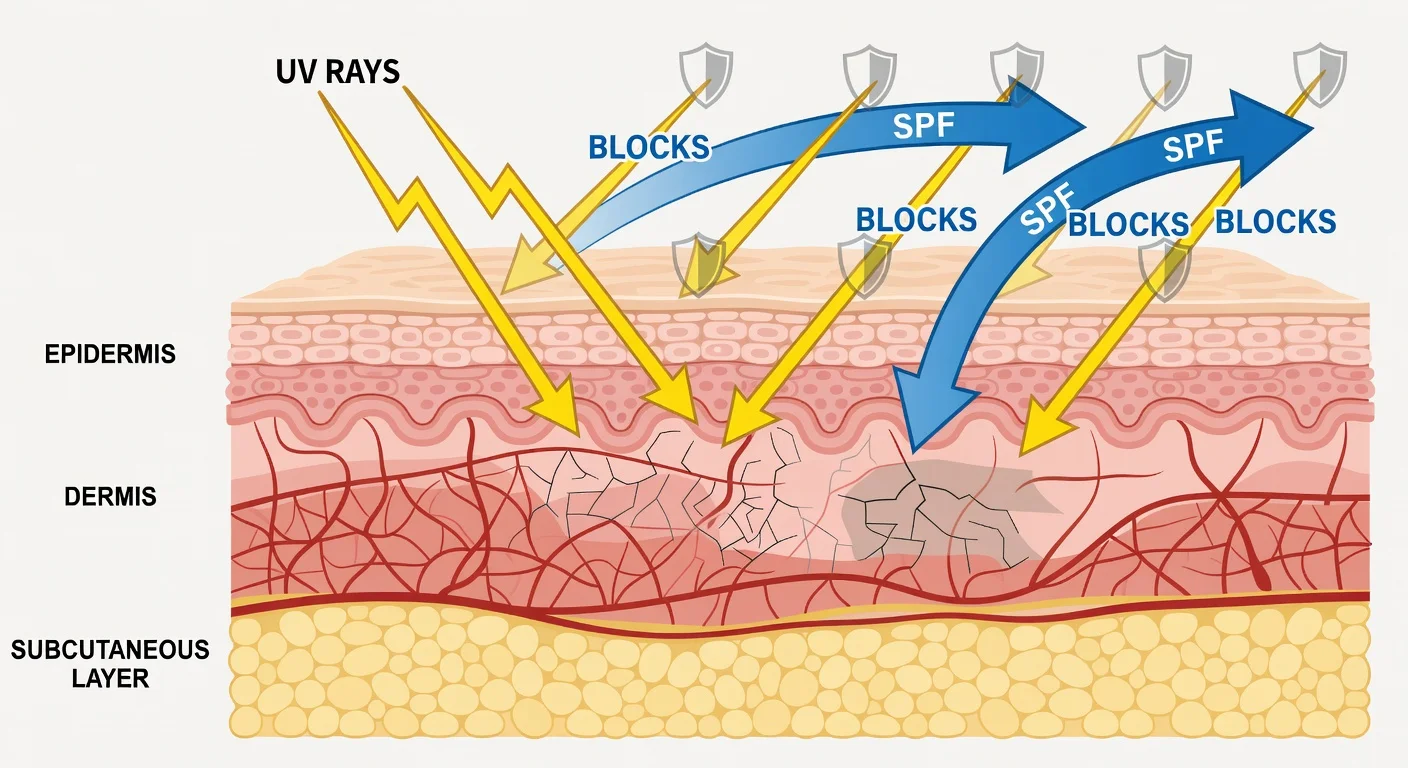
Not all filters are created equal. Since regulations shifted in late 2025 regarding reef safety and absorption rates, the market has split into two distinct camps.
1. Mineral Blockers (The Reflectors)
- Ingredients: Zinc Oxide, Titanium Dioxide.
- Pros: Works instantly. Less irritating for sensitive eyes.
- Cons: often leaves a "white cast" (though micronized versions are better now).
2. Chemical Filters (The Absorbers)
- Ingredients: Avobenzone, Octisalate, Tinosorb S.
- Pros: Elegant texture. No white case.
- Cons: Can sting eyes. Needs 15 minutes to activate.
My advice: If you have acne-prone skin (which I struggle with), stick to Mineral. It's inert and less likely to cause a breakout.
How to Maximize SPF Layering for Long-Term Skin Protection?
If you use UV protection correctly, you are essentially investing in your future face. But application matters more than the price of the product.
The "Two-Finger" Method:
- Squeeze two strips of sunscreen along your index and middle finger.
- Apply this base layer before any makeup.
- Wait roughly 3 to 5 minutes for it to set (film formation).
- Apply your foundation or tint.
Note: If you use a beauty blender (sponge), be careful. Damp sponges can lift off the sunscreen layer you just applied. I prefer using my fingers or a stippling brush to press the product in rather than dragging it.
Plus, if you are serious about improving your looks (Looksmaxxing), tracking progress is non-negotiable. You can't manage what you don't measure. That's why I keep the Glow Up app on my home screen. It helps me verify that my skincare efforts are actually moving the needle on my attractiveness score.
Can I settle for SPF 15?
Honestly, no.
Most dermatologists agree that below SPF 30, the protection curve drops off significantly.
- SPF 15: Blocks ~93% of UVB rays.
- SPF 30: Blocks ~97% of UVB rays.
- SPF 50: Blocks ~98% of UVB rays.
The gap between 93% and 97% sounds small (4%), but it actually represents a doubling of the radiation hitting your skin. If you are outside for 60 minutes, that difference is massive in terms of cellular damage.
Bottom line: Aim for SPF 50 if you are using makeup, because you are likely under-applying it anyway.
Common Questions About UV Makeup and SPF Protection
Does makeup with SPF provide enough UV protection?
Generally, no. Dermatologists recommend applying 2mg of product per square centimeter of skin. To get the labeled protection from a foundation, you would need to apply 7 to 14 times the normal amount.
How does a UV camera show makeup coverage?
UV cameras perceive sunscreen as jet black because the chemical filters absorb UV light. If your face looks completely black on the screen, you are fully protected. Lighter spots indicate missed areas.
Can I mix sunscreen into my foundation?
Not recommended. Mixing alters the chemical distribution of the filters, potentially creating gaps in protection (known as the 'Swiss Cheese' effect) and lowering the overall SPF efficacy.
What is the difference between UV paint and UV makeup?
UV paint is neon pigment that fluoresces (glows) under blacklight for artistic effect. UV makeup usually refers to daily cosmetics formulated with sun-blocking ingredients to prevent photo-aging.