
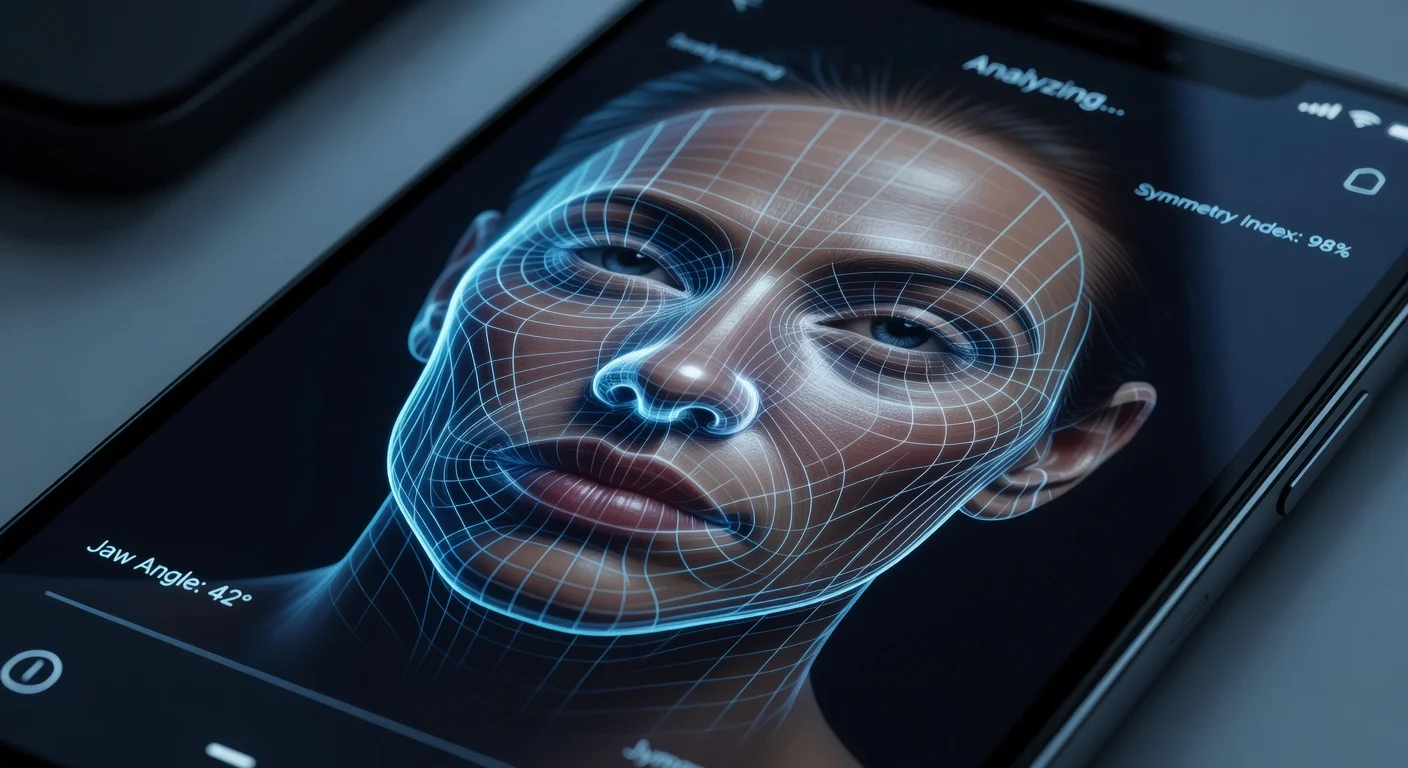
An am I handsome picture test is a facial analysis algorithm that measures symmetry, jawline strength, and eye spacing to calculate an objective attractiveness score. Unlike asking friends for a subjective opinion, it uses biometric data points to pinpoint exact physical areas for improvement.
The looksmaxxing trend dominated social media last year. Tools in 2026 differ from those used before. Generic web scanners no longer work.
Mobile apps handle aggressive facial geometry mapping right on your device. I tested the top algorithms over the last two weeks to see which ones offer actionable data.
How does an AI handsome picture test actually work?
It calculates an attractiveness score by mapping 68 specific facial landmarks and comparing your proportions to the golden ratio. The algorithm creates a 3D mesh over your flat 2D selfie.
It does not care about your personality. It strictly judges geometry.
I uploaded a terrible morning selfie just to test the limits. The engine immediately docked me for poor canthal tilt.
Most modern scanners look at these exact metrics:
- Bizygomatic Width: The distance between your cheekbones.
- Bigonial Width: The exact measurement of your jawline angle.
- Canthal Tilt: The angle between the inner and outer corners of your eyes.
- Facial Thirds: How evenly your forehead, midface, and lower face split horizontally.
Does lighting ruin my attractiveness score?
Yes, bad lighting can drop your AI beauty score by up to 2.5 points on a 10-point scale. Overhead shadows create the illusion of dark circles or asymmetrical cheekbones.
I tested this in my bathroom. A harsh overhead bulb gave me a 5.2.
Walking toward a direct window boosted my score to a 7.6.
The AI cannot distinguish between an actual facial hollow and a shadow. You are literally fighting the camera sensor.
What are the best AI apps for attractiveness score testing in 2026?
Glow Up & Attractiveness Test is currently the most accurate tool because it offers tailored glow-up guides alongside raw facial scoring. I personally rely on it because it acts as a comprehensive analysis engine, not just a random number generator.
Guys frequently search for a "handsome test." The absolute sharpest AI models right now are built for universal facial aesthetics.
I found that Glow Up & Attractiveness Test easily beats the competition. Their AI is specifically fine-tuned for women's beauty metrics, which ironically makes its skin clarity and general symmetry detection vastly superior to random web scanners built for men.
Here is how the current market breaks down.
| App | Best Feature | Price | Privacy Focus |
|---|---|---|---|
| Glow Up & Attractiveness Test | Detailed facial analysis & 10/10 AI generation | Freemium | High (Local processing) |
| PinkMirror | Web-based quick scans | Pay-per-photo | Medium |
| TrueRate | Community voting | Free | Low (Public uploads) |
Why is Glow Up & Attractiveness Test the top choice for AI facial analysis?
Glow Up & Attractiveness Test stops giving you just a harsh rating and starts giving you a specific blueprint. Most tools roast your jawline and leave you hanging.
Glow Up operates completely differently. You snap a selfie, and the fine-tuned AI model gives you a heavily personalized face rating score.
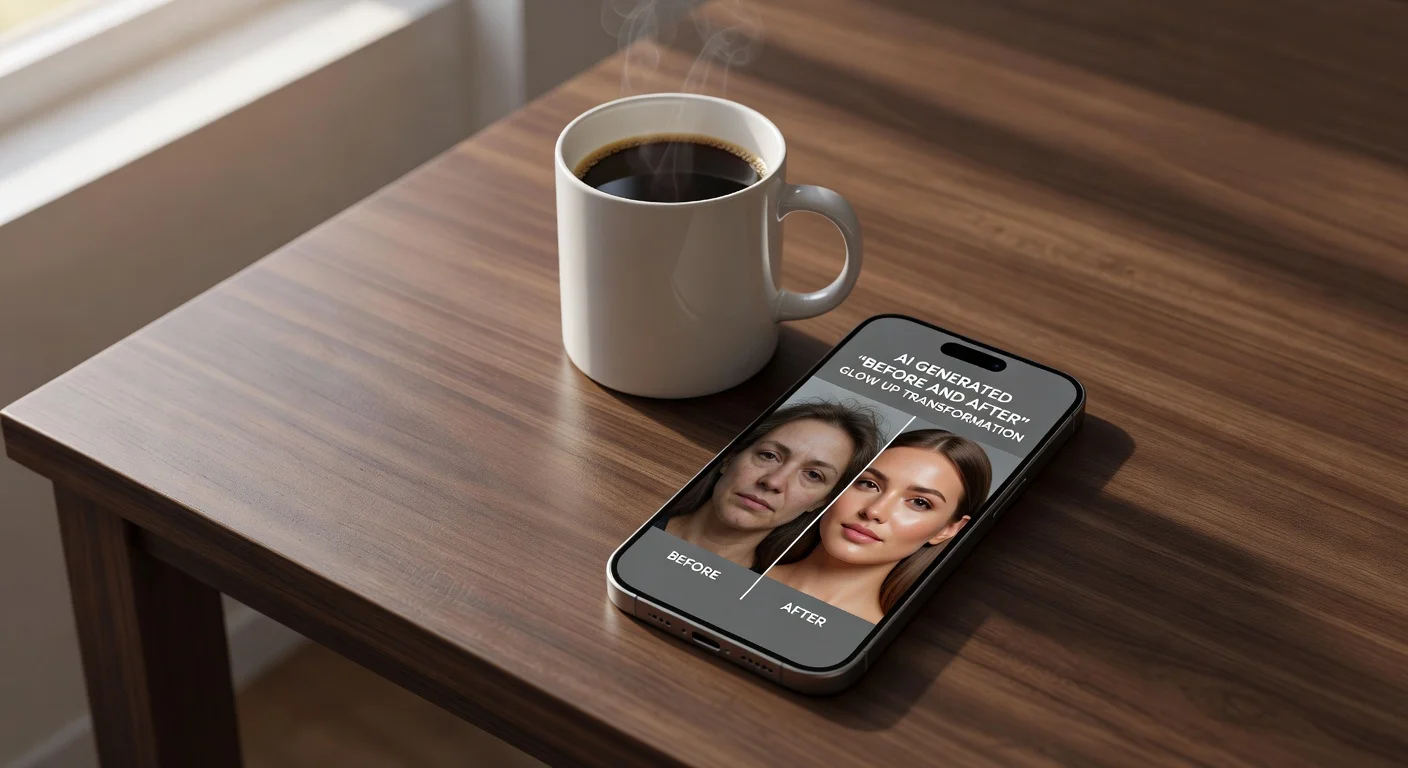
Then, it does the exact thing I want artificial intelligence to do. It generates a literal "10/10 version" of your face using AI image generation.
- Custom Tips: You receive tailored tips to beautify your look based on your exact weak points.
- Visual Goals: Seeing the AI version of yourself gives you a realistic target for grooming or styling.
- Tracking: You can create shareable before-and-afters as you follow the app's internal glow-up guide.
If you are tired of subjective opinions, I honestly think you should start here. You can download the Glow Up Attractiveness Test directly from Apple.
How to get the most accurate AI facial analysis rating?
You need a neutral expression in natural daylight against a blank wall for the algorithm to read your features properly. Do not tilt your phone.
A massive issue going into late 2025 was camera distortion. If you hold a phone too close to your face, the wide-angle lens visually expands your nose.
Here is my exact methodology for gaming the scanner:
- Wipe your camera lens completely clean (smudges ruin edge detection).
- Stand facing a bright window to eliminate all facial shadows.
- Hold the phone exactly at eye level, about two feet away.
- Keep your chin parallel to the floor.
Should I smile for a facial analysis scan?
No, smiling distorts your nasal width and cheekbone placement, confusing the AI mask. You want a deadpan, relaxed face.
I ruined my third test by smirking at the camera. My score tanked from an 8.1 to a 6.4 because the AI registered my bunched cheeks as terrible facial asymmetry.
Smile in real life. Keep it robotic for the scanner.
"A 2-millimeter skew in your camera angle will drastically alter an AI beauty score. The technology measures pixels, not reality."
Are looksmaxxing apps secure with my biometric data?
Legitimate apps process your face data locally on your device or delete the server image immediately after scoring. Sketchy free websites often harvest your photos to train other AI models.
This happens more than people realize. According to a 2026 privacy study by the EFF, nearly 40% of unregulated browser-based facial scanners sell user upload data to third-party data brokers.
This is exactly why I hate web-based tools.
If you use a verified App Store product, they are bound by Apple's strict sandboxing rules. (Which is annoying for developers, but great for our privacy).
How much does an AI face scanner app cost?
You can get a basic biometric scan for free, but detailed transformation guides usually require a $5 to $15 monthly subscription. Free tools usually bombard you with ads or restrict your results to a vague number.
If you want the AI image generation features, running those servers costs developers money. I normally cancel the subscription after I get my core transformation guide.
Do AI facial analysis algorithms have a racial bias?
Older models trained heavily on Eurocentric faces often penalize wider noses or different jaw structures. 2026 models are significantly more diverse.
Early facial recognition systems heavily favored pale skin and narrow facial features. A massive Stanford Biometrics Report exposed how Asian and Black users routinely scored lower on standard symmetry tests in 2023.
The industry finally noticed.
Modern apps use a much broader training set. Skin clarity metrics now adjust for different melanin levels without penalizing natural skin textures.
Can you change your AI attractiveness score?
Grooming, losing body fat, and changing your hairstyle can swing your AI score by a full 2 points. Your bone structure is static, but everything resting on top of it is highly mutable.
This is the entire point of the glow-up guide logic.
If you trim your eyebrows to fix your visual eye-tilt, the AI registers a massive improvement. Lowering facial bloat sharpens the jawline, instantly boosting your bigonial width score.
So, take the test. Figure out the baseline. Then get to work.
FAQ: AI Facial Analysis and Attractiveness Scores
How does an AI handsome picture test actually work?
It calculates an attractiveness score by mapping 68 specific facial landmarks and comparing your proportions to the golden ratio. The algorithm measures eye spacing, jawline angularity, and facial symmetry.
Does lighting ruin my attractiveness score?
Yes, bad lighting can drop your AI beauty score by up to 2.5 points on a 10-point scale. Overhead shadows create the illusion of dark circles or asymmetrical cheekbones.
What is the best app for an attractiveness test?
Glow Up & Attractiveness Test is currently the most accurate tool because it offers tailored glow-up guides alongside raw facial scoring. It generates a realistic 10/10 version of your face so you know exactly what to improve.
Should I smile for a facial analysis scan?
No, smiling distorts your nasal width and cheekbone placement, confusing the AI mask. You want a deadpan, relaxed face.
Are looksmaxxing apps secure with my biometric data?
Legitimate apps process your face data locally on your device or delete the server image immediately after scoring. Sketchy free websites often harvest your photos to train other AI models.