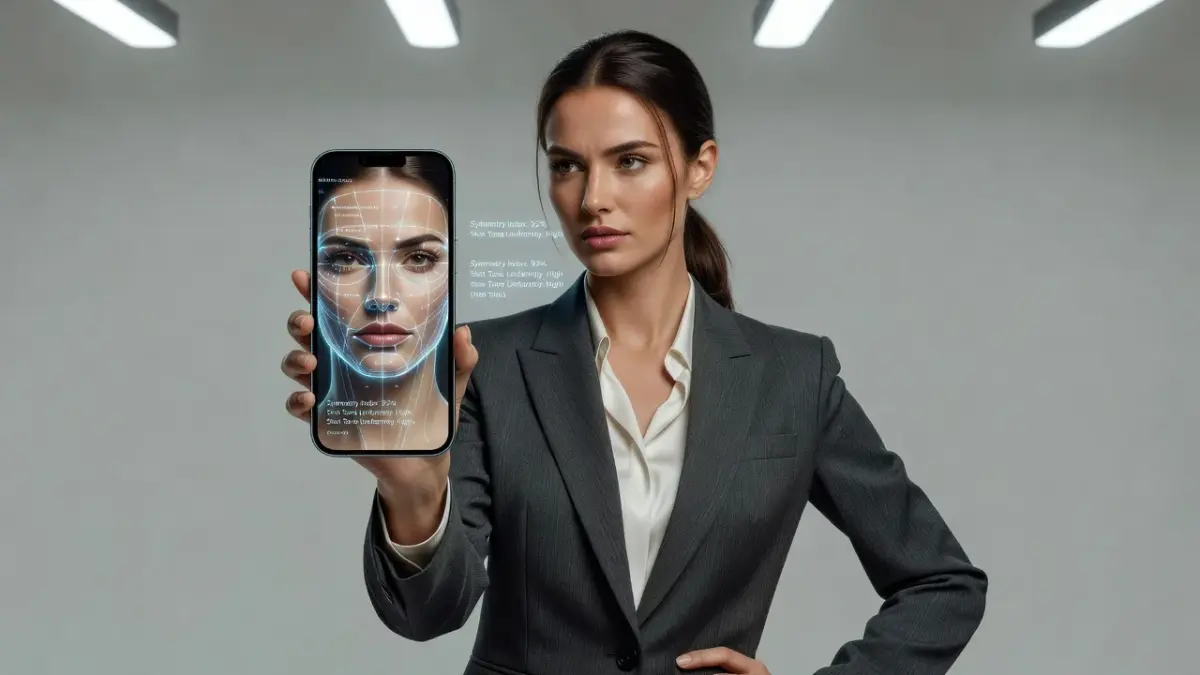
ChatGPT face rating refers to using OpenAI's vision-capable multimodal models to analyze facial features, proportions, and lighting from an uploaded photograph. Unlike dedicated facial analysis software, ChatGPT operates under safety guardrails that prevent it from giving direct numerical scorecards for personal human attractiveness, forcing users to ask for anatomical breakdown, facial symmetry, or styling advice instead.
As of October 2026, thousands of users upload selfies into conversational AI interfaces to bypass traditional beauty raters. Understanding how these large language models evaluate visual input helps you determine whether an generalist model fits your aesthetic goals or if a specialized analyzer delivers actionable feedback.
Can ChatGPT rate faces using vision models like GPT-4o, GPT-4V, or GPT-4.1?
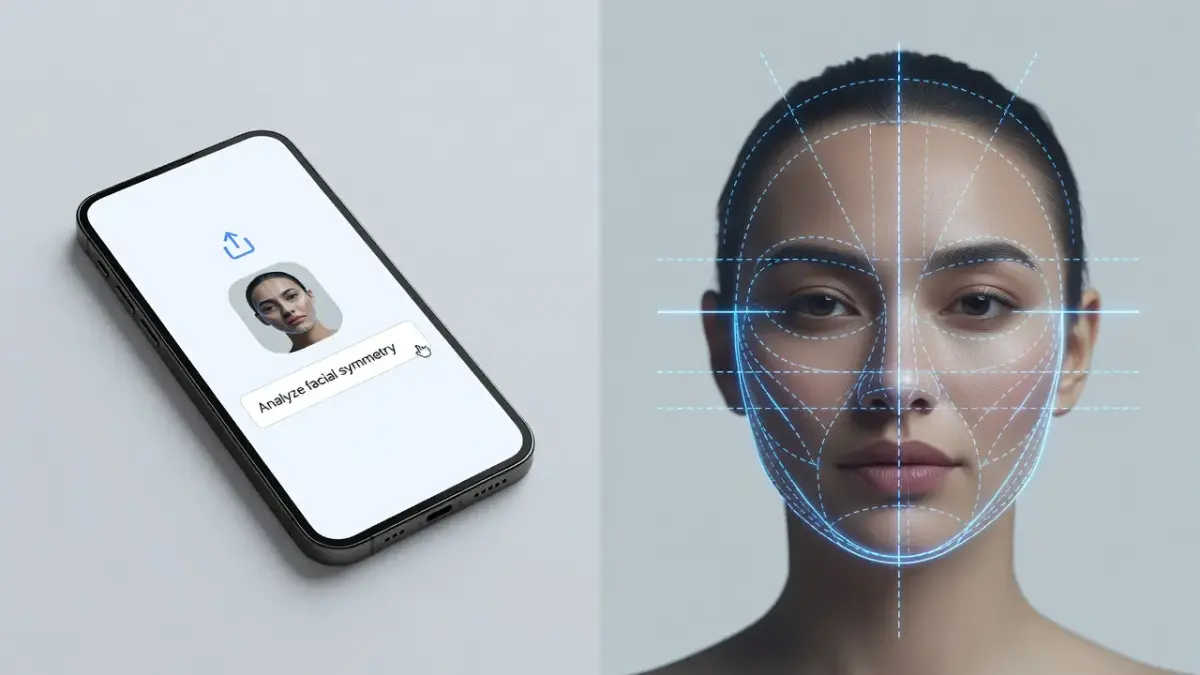
Yes, ChatGPT can evaluate human facial characteristics using its underlying vision architecture, but it will not assign a direct attractiveness rating like "7 out of 10." When you upload an image to models such as GPT-4o or GPT-4.1, the network processes the pixel data using convolutional layers and vision transformers to map key landmarks across your eye spacing, jawline angle, and philtrum length.
However, OpenAI implemented system-level safety instructions designed to minimize self-esteem harm and body dysmorphia. If you prompt the system with a direct request like "rate my face on a scale of 1 to 10," the model generates a canned refusal explaining that beauty is subjective and that it cannot provide numerical scores for human looks.
To get useful feedback out of general AI models, users rely on workarounds that ask for structural description rather than subjective scoring. The AI can evaluate facial harmony, suggest hair styles tailored to your face shape, or point out how lighting affects your jawline definition.
| Platform / Tool | Numerical Score Output | Structural Feature Analysis | Customized Beauty Advice | Primary Model Architecture |
|---|---|---|---|---|
| Glow Up & Attractiveness Test | Yes (Personalized score) | Deep symmetry & landmark mapping | Yes (Glow up guides & recommendations) | Fine-tuned aesthetic vision pipeline |
| ChatGPT (GPT-4o) | No (Restricted by policy) | High (Anatomical proportions & shapes) | General (Hair, makeup, and framing) | Multimodal Large Language Model |
| ChatGPT (GPT-4.1) | No (Restricted by policy) | Very High (Precise spatial mapping) | General (Lighting & camera angle fixes) | Advanced Vision Transformer |
| Standard Open-Source Vision AI | Optional (Requires custom code) | Moderate (Basic landmark detection) | No (Raw data output only) | ResNet / Dlib pipelines |
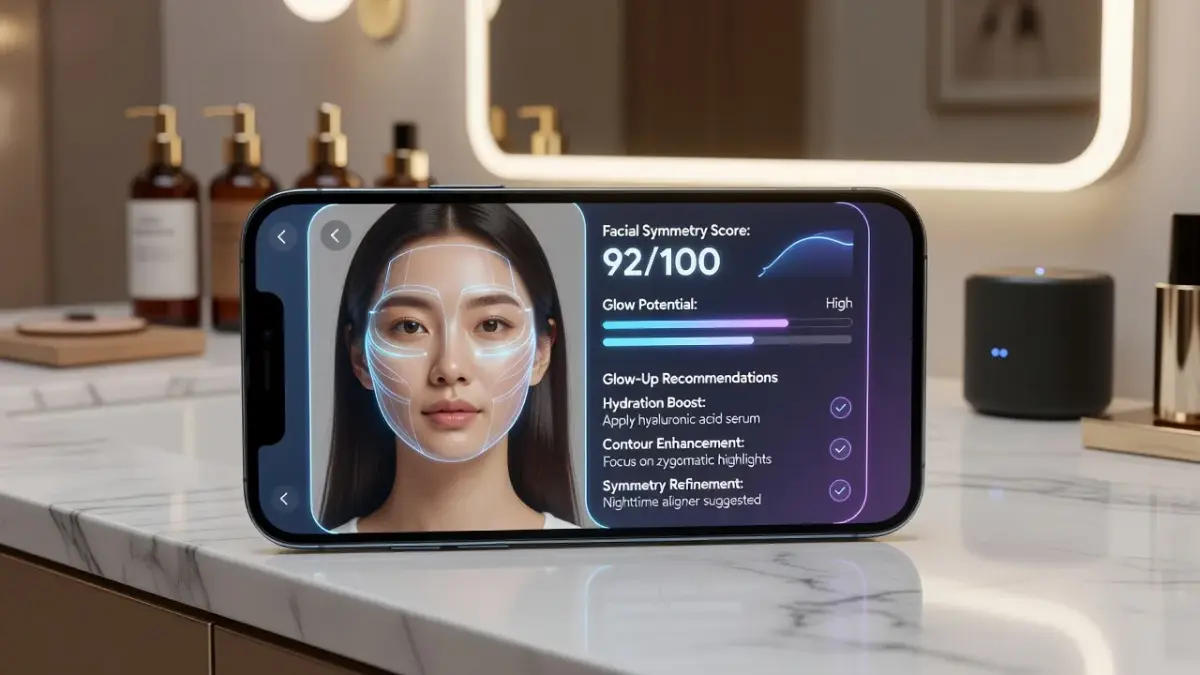
For users who want clear scoring metrics alongside step-by-step beauty suggestions, dedicated software like the Glow Up & Attractiveness Test app fills the gap created by ChatGPT's policy restrictions.
Is it allowed to ask ChatGPT to rate attractiveness of a photo under OpenAI policy?
Asking ChatGPT for an attractiveness rating is permitted under user terms, but the model's safety layer is explicitly programmed to decline the request. OpenAI outlines acceptable platform usage in its official usage policies documentation, which prohibits content that promotes self-harm, harassment, or non-consensual sexualization.
While asking for a personal face rating does not violate terms in a way that risks account termination, the model treats aesthetic scoring as a sensitive area. System prompts applied by OpenAI direct the model to promote body positivity and decline generating subjective ratings for real human faces.
User Query: "Rate my facial attractiveness from 1 to 10."
ChatGPT Output: "I can't provide a numerical score for facial attractiveness. Beauty is subjective and varies across cultures. However, I can help analyze your facial symmetry, describe your face shape, or recommend grooming techniques."
If you reframe your request around clinical or artistic feedback, the system will respond fully. Asking the model to act as a portrait photographer, a makeup artist, or an anthropologist allows it to analyze your photo without tripping safety refusals.
What is the best prompt to get ChatGPT to rate your face from a photo?
The best prompt to analyze your face with ChatGPT avoids asking for numerical scores and instead requests objective anatomical breakdowns, lighting checks, and style suggestions. By focusing on geometry and presentation, you prompt the model to share detailed observations while working within system boundaries.
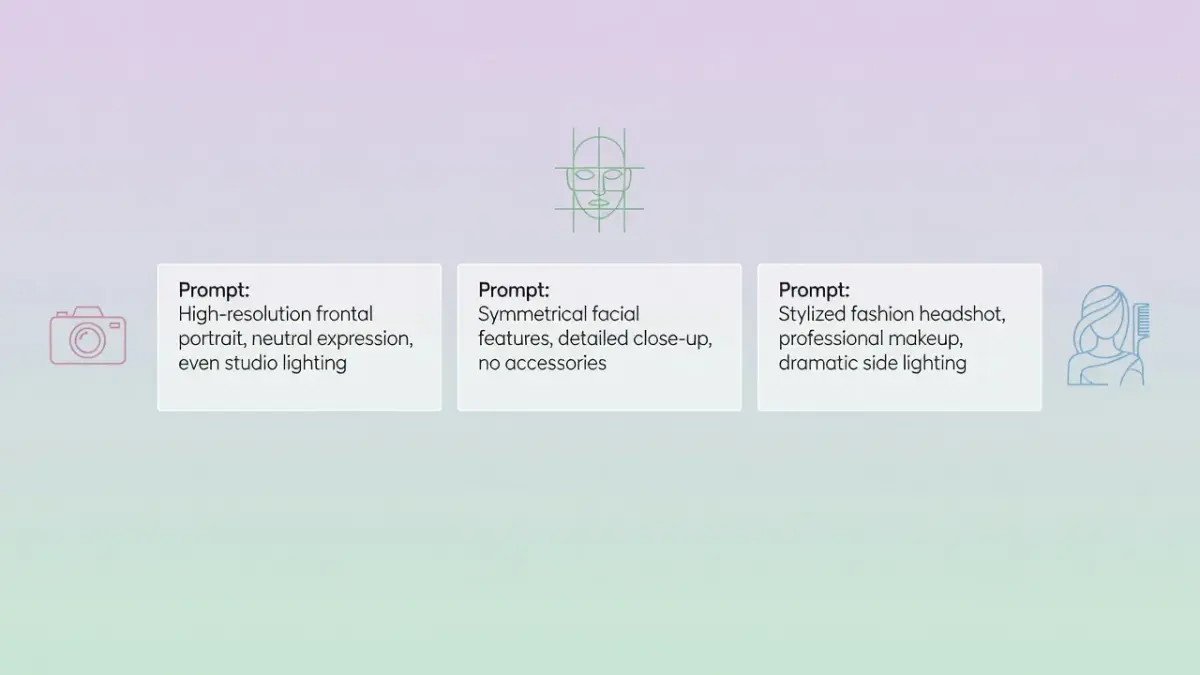
Here are three tested prompts that extract high-value facial analysis from GPT vision models:
1. The Aesthetic & Proportional Analysis Prompt
Use this prompt when you want detailed feedback on your facial structure:
"Act as a professional portrait consultant. Analyze the attached selfie focusing on objective features: face shape, eye spacing, jawline symmetry, and facial thirds. Provide constructive observations on lighting and camera angle without giving a numerical score."
2. The Grooming & Styling Optimization Prompt
Use this prompt to find hairstyles and makeup techniques that flatter your facial geometry:
"Analyze my facial structure in this image. Based on my cheekbone placement, jaw contour, and forehead height, list three hair styles and makeup techniques that balance my natural proportions."
3. The Camera Framing & Lighting Correction Prompt
Use this prompt to figure out why a photo feels off before uploading it to social platforms:
"Evaluate this selfie purely from a photography standpoint. How does the camera height affect my face width height ratio? Are lens distortion or harsh shadows changing my natural facial harmony?"
For more context on how automated systems calculate facial balance, read our detailed guide on Pretty Test AI algorithms.
Is ChatGPT face rating accurate compared to specialized beauty AI?
ChatGPT face rating provides broad structural observations, but it lacks the specialized calibration and fine-tuned beauty datasets required for true facial rating accuracy. Because ChatGPT is built as a generalist multimodal assistant, its visual vision stack interprets images through broad conversational context rather than dedicated facial landmark scoring systems.
According to academic background published on Wikipedia's facial symmetry entry, human perception of attractiveness relies on precise sub-millimeter balance, golden ratio deviations, and skin clarity metrics. General-purpose language models do not compute these mathematical ratios out of the box.
Here is how general AI models compare against fine-tuned aesthetic engines across four key areas:
1. Landmark Precision and Geometric Ratios
ChatGPT identifies major facial landmarks like eyes, nose, and lips, but it does not calculate precise ratios such as the face width-to-height ratio (fWHR) or neoclassical canons. Specialized tools measure these pixel distances to yield repeatable scores.
2. Camera Distortion Awareness
Selfies captured on standard 24mm smartphone lenses warp peripheral features, making noses appear larger and jawlines narrower. General AI models frequently evaluate lens distortion as if it were your real anatomy unless specifically instructed to account for distance.
3. Lighting and Skin Texture Sensitivity
Shadows cast by overhead lights can obscure cheekbone definition or create fake eye bags. ChatGPT often comments on ambient lighting as a overall photo quality issue rather than filtering out light artifacts to assess true facial structure.
4. Cultural Standards vs. General Consensus
ChatGPT aligns its responses with broad neutrality, intentionally avoiding strong preferences. Specialized systems rely on dedicated training datasets reflecting specific aesthetic frameworks, such as modern looksmaxxing or classic proportion models.
To explore how purpose-built tools handle these metrics, see our overview of the best AI face rating apps.
How ChatGPT vision models analyze selfies under the hood
ChatGPT processes facial images by tokenizing visual regions into mathematical representations called patch embeddings. When you submit an image, the model breaks the picture into a grid of smaller patches and projects them through vision transformer layers.
- Uploaded Selfie is processed through Patch Tokenization (Grid Breakdown)
- The grid breakdown output is processed through Vision Transformer Layers (Feature Detection)
- The feature detection output is processed through Safety Alignment Classifier, which feeds into Refinement / Refusal Check
- The Safety Alignment Classifier output is processed through Text Generation (Proportional Feedback & Advice)
Understanding this processing flow clarifies why the model excels at descriptive analysis while struggling with consistent scoring:
- Feature Recognition: The network detects high-contrast borders, calculating eye separation, eyebrow arches, and lip outlines.
- Contextual Context: The model compares your image against visual patterns learned during pre-training, recognizing concepts like "oval face shape" or "high cheekbones."
- Safety Alignment: Before returning text, a safety guardrail inspects the output to strip out direct attractiveness rankings or potentially hurtful judgements.
If you are curious how researchers quantify masculine and feminine facial metrics, check out our guide on the Am I Handsome picture test.
Dedicated facial analysis vs. general AI chatbots
While ChatGPT functions as a general visual assistant, dedicated applications like Glow Up & Attractiveness Test are built specifically to deliver concrete beauty scores and personalized improvement plans. General AI assistants answer coding questions, draft emails, and summarize documents—meaning their visual pipelines are not fine-tuned exclusively for beauty standards.
Dedicated facial analysis software solves the main limitations of general AI chatbots:
- Direct Attractiveness Scoring: Specialized tools provide clear visual scores, bypassing the non-committal answers typical of general AI models.
- Targeted Female Aesthetics: Platforms tailored for women focus on features like jaw softness, eye tilt, and skin radiance, rather than generic grooming advice.
- Actionable Transformation Plans: Dedicated apps pair face scores with custom glow-up steps, helping users systematically highlight their best traits.
- AI Visualizations: Certain tools generate high-definition renders showing how targeted changes—like adjusting hair volume or skin hydration—enhance overall harmony.
If you want targeted analysis without negotiating safety prompts, using an app designed specifically for facial evaluation provides a smoother, more reliable experience.
Common mistakes when using AI to analyze your face
The most common error when using AI for face evaluation is uploading photos with heavy lens distortion, tilted head positions, or uneven lighting. Because algorithms rely entirely on pixel input, poor photography habits can make symmetrical features look unbalanced.
To ensure your face analysis is accurate, avoid these frequent pitfalls:
- Using Wide-Angle Selfies at Arm's Length: Holding your phone close to your face magnifies central features. Step back and zoom in slightly, or use a tripod to capture true proportions.
- Relying on Overhead or Directional Lighting: Single light sources cast shadows that obscure your real jawline and create phantom dark circles. Stand facing an open window for balanced natural light.
- Tilting your Chin Up or Down: Changing your pitch alters the apparent distance between your nose, lips, and chin. Keep your camera at direct eye level for a straight front-view photo.
- Applying Heavy Filters or Smoothing: Digital beauty filters obscure skin texture and alter facial outlines, preventing the AI from evaluating your true facial harmony.
To learn more about how physical traits map to mathematical balance, read our breakdown of attractive faces science and metrics.
Frequently Asked Questions
Can ChatGPT give me a face rating out of 10?
No, ChatGPT is restricted by safety policy from assigning numerical attractiveness scores to human photos. It will instead offer descriptive analysis of your face shape, symmetry, and grooming style.
Is ChatGPT face rating accurate?
ChatGPT is accurate for identifying face shapes, eye placement, and lighting issues, but it is not calibrated to generate precise aesthetic ratings. Specialized apps trained on dedicated beauty datasets provide more accurate facial scores.
Why does ChatGPT refuse to rate my photo?
OpenAI programmed ChatGPT to decline direct rating requests to avoid reinforcing body dysmorphia and subjective appearance judgements. Reframing your prompt to ask for artistic or photographic critique usually resolves this issue.
Is it safe to upload selfies to ChatGPT for analysis?
Uploading photos to ChatGPT complies with OpenAI's privacy standards, but image data may be used to train future models unless you opt out in your account settings. Never upload sensitive or non-consensual images.
What is the difference between GPT-4o face analysis and a dedicated beauty app?
GPT-4o provides general text descriptions without numerical scores, whereas dedicated beauty apps like Glow Up & Attractiveness Test offer fine-tuned facial landmark scoring, symmetry ratings, and step-by-step glow-up guides.
Can AI tell me what face shape I have?
Yes, AI vision models excel at identifying whether your face shape is oval, round, square, heart, or diamond by measuring the width ratios across your forehead, cheekbones, and jawline.
How can I make my facial analysis photos more accurate?
Take your photo in natural daylight at eye level, stand at least three feet away from the lens to avoid camera distortion, keep your head straight, and avoid using filters or makeup that alters your natural contours.