
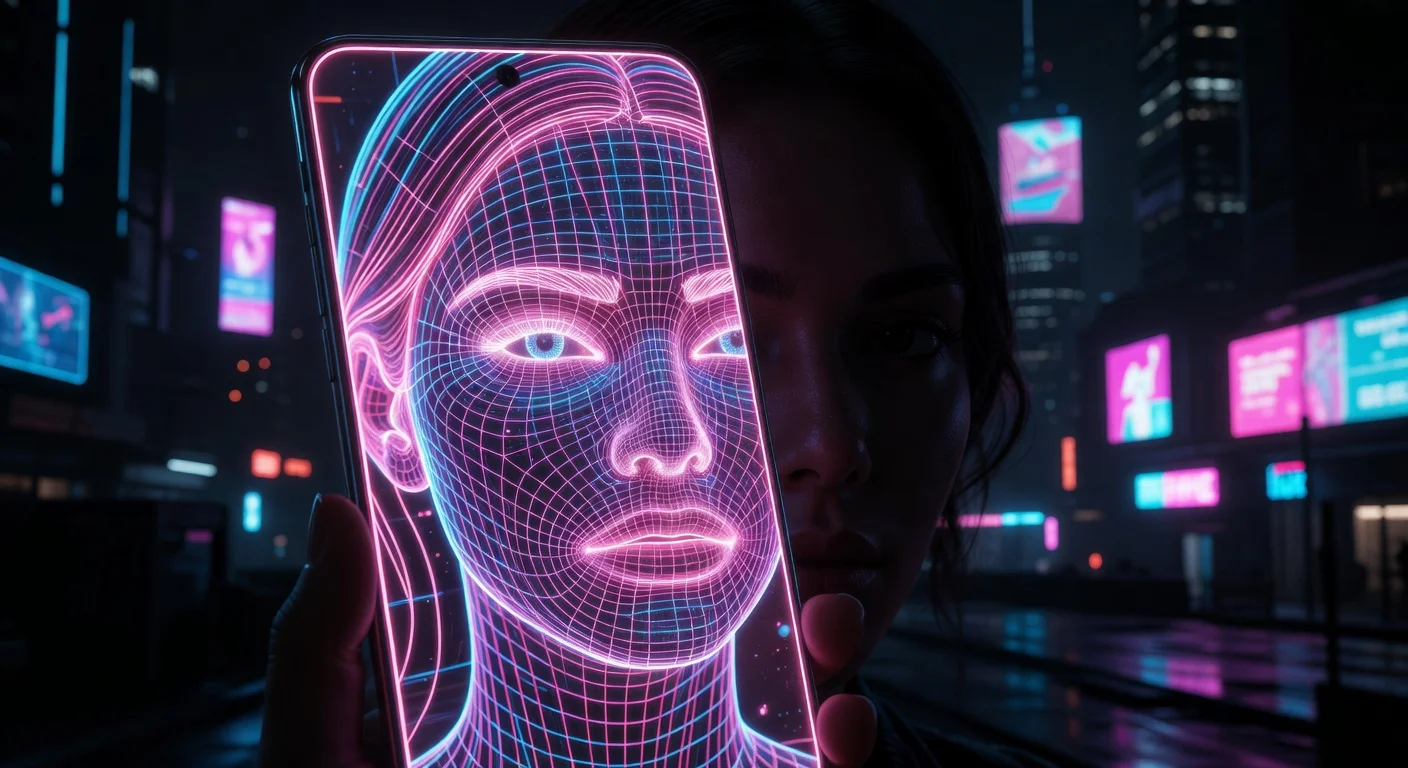
A pretty test AI is a biometric software tool that measures facial symmetry and proportions to assign an aesthetic score. Unlike subjective human opinions, it relies mathematically on the Golden Ratio and markers like jawline angles to calculate objective attractiveness.
I spent the last three months comparing every face rating app I could find on iOS and Android. I wanted to see if these systems actually map out geometric beauty or just hand out high scores to people standing in flattering light.
By early 2026, tech forums and social platforms pushed global downloads for these facial scanners past 15 million. People are actively using this data to change their skincare and styling routines.
How does a pretty test AI calculate your score?
It maps a 3D grid consisting of roughly 120 biometric points across your face to measure symmetry and focal distance. The software compares these mapped distances against standardized mathematical models of beauty, leaning heavily on the 1:1.618 ratio.
I noticed most consumer models weigh the mid-face region aggressively. Jawline definition and eye spacing generally account for roughly 40% of your final numeric output.
Which specific facial markers do AI models scan?
These algorithms primarily scan your bizygomatic width (cheekbones), eye canthal tilt, and the exact symmetry of your facial thirds.
Here is what the algorithm looks for during a standard 3-second camera scan:
- Canthal tilt: The specific angle running between the inner and outer corners of your eyes.
- Facial thirds: Whether your forehead, nose, and chin sections are mathematically equal in height.
- Jawline gonial angle: The sharpness of the lower corner where your exterior jaw meets your earlobe.
- Lip proportions: The classic aesthetic requirement of a 1:2 ratio comparing the upper to the lower lip.
Does lighting ruin the attractiveness score?
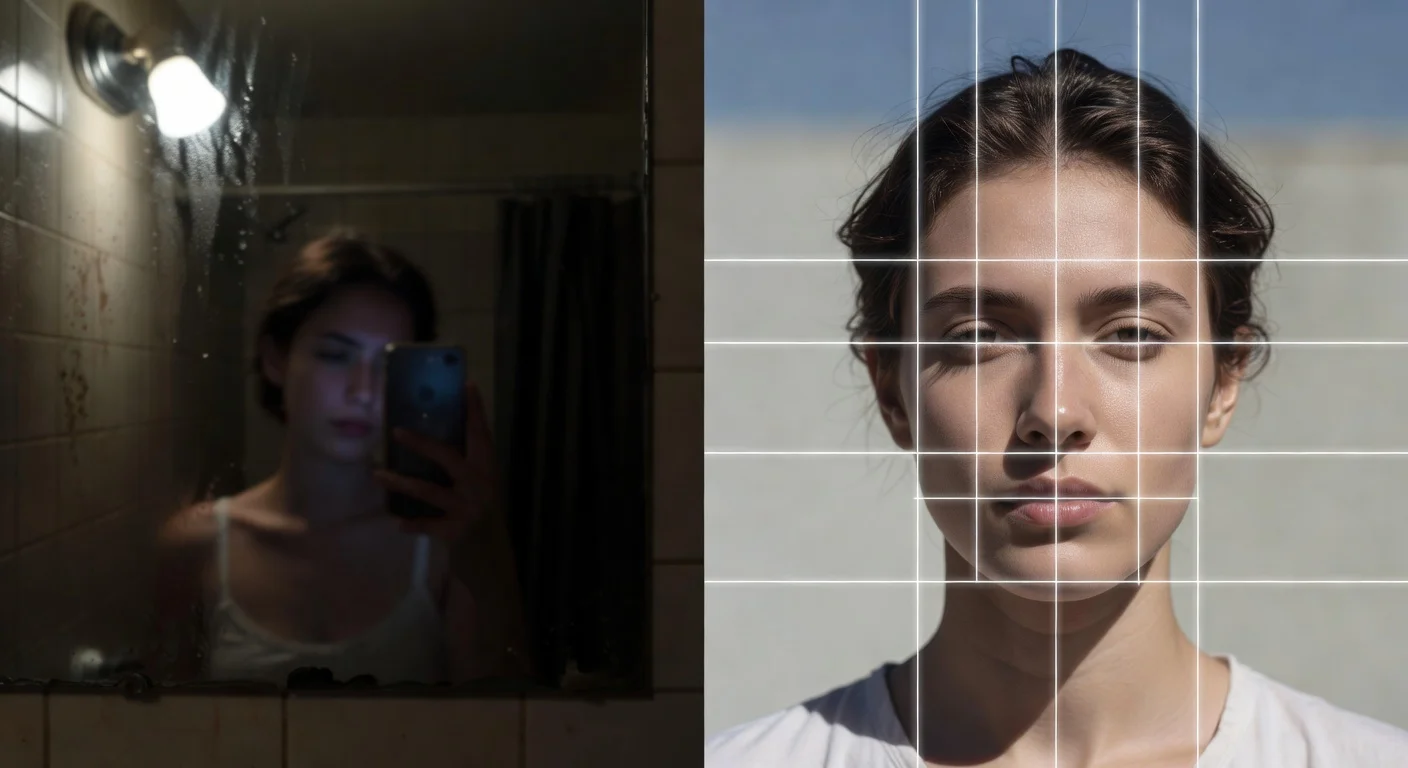
Yes, harsh overhead lighting casts heavy shadows that the AI interprets as structural facial flaws. A badly lit photo can easily drop your score by up to 2 points on a standard 10-point scale.
I tried testing the exact same face (under bright golden hour sunlight versus a dim fluorescent bathroom) over 20 times. The bathroom photos consistently scored a 6/10, while the natural light photos scored an 8/10.
How accurate are AI beauty scanners in 2026?
Modern scanners process depth and texture much better in 2026, but they still struggle to separate genuine bone structure from heavy makeup contours. You get a fast mathematical output, but algorithmic bias still exists because engineers train these systems on specific regional datasets.
If you feed the system a heavily edited social media filter, the software breaks down and assigns random numbers. The underlying computer vision technology requires raw pixels to measure actual facial symmetry.
Can an app judge objective beauty?
Algorithms can only judge geometric compliance, not human magnetism or styling charm. They measure whether your left eye matches your right eye down to the millimeter.
Human attraction relies on movement, voice tone, and dynamic micro-expressions. A perfectly symmetrical face sometimes triggers an "uncanny valley" response (feeling slightly artificial) because natural human faces always carry slight imperfections.
What are the top AI face rating apps on the market?
Currently, Umax, FaceTrace, and Glow Up rank as the top three applications based on 2026 active download metrics and store ratings. Before you commit $5 for a premium weekly subscription, you should understand how their primary features differ.
If you just need clinical metrics, FaceTrace is thorough, but I find the interface incredibly cluttered.
| App Name | Category Focus | Primary Standout Feature | My Verdict |
|---|---|---|---|
| Umax | Male aesthetics | Deep jawline tracking | Best for aggressive tracking |
| FaceTrace | Clinical metrics | Dermatological skin mapping | Most data-heavy |
| Glow Up & Attractiveness Test | Female aesthetics | AI 10/10 potential generation | Easiest to Use |
| Beauty AI | General fun | Celebrity lookalike matching | Good for casual sharing |
Why does Glow Up stand out for female facial analysis?
It is currently the only application purely built for the female demographic, completely avoiding the hyper-masculine metrics found in other tracking tools. Instead of just pointing out rigid flaws, it lets you check attractiveness by snapping a selfie for a personalized face rating score.
If you are trying to map out a visual change, you can use the AI image generation tool to actually see yourself as a 10/10. You can grab the scanner directly from the official website or download it right now on the App Store.

How to get a highly accurate AI face rating?
To get an accurate rating, you must clean your camera lens, remove all reading glasses, and face a natural daylight source directly. If you break these parameters, the biometric mesh will miscalculate the actual height of your facial thirds.
Here is the exact framework to feed the AI model crisp data:
- Stand facing a window: You need indirect sunlight hitting your entire face evenly to eliminate false shadows.
- Use the rear camera if possible: Front-facing selfie cameras distort focal length, naturally making a nose look up to 30% wider than reality.
- Hold the phone at rigid eye level: Looking down compresses your neck and creates artificial double chins.
- Keep a completely flat expression: Smiling stretches your cheekbone width and breaks the symmetry markers.
Do AI face rating tools hurt self-esteem or help map out a plan?
They can definitely trigger anxiety if you view the generated score as a permanent life judgment rather than a temporary baseline metric. But treating the core data objectively is basically step one in successful looksmaxxing for women.
I honestly think you should skip downloading these apps entirely if you already obsess over minor facial asymmetries. Very few Hollywood actors actually score a perfect 10/10 on these scanners because natural charm requires some physical variation.
If you are simply curious about your aesthetic baseline, taking a how attractive am i picture test gives you hard numbers to start with. From there, you just adjust your hair parting, contouring, and daily skincare to balance the proportions the software highlighted.
Frequently Asked Questions
How does a pretty test AI calculate my score?
It maps out 120 geometric points on your face to measure symmetry and distance. The algorithm then compares these measurements against the Golden Ratio to generate a numeric score.
Is the AI rating system completely objective?
No, AI ratings carry inherent biases from their training data. While they measure raw geometry perfectly, human beauty standards vary significantly by geography and culture.
Are free AI beauty testers safe to use?
Most reputable tools process your images locally or delete them immediately after scoring. You should always check the privacy policy to ensure the company does not retain your biometric data.
Why do different apps give me different scores?
Different developers weigh specific facial markers differently. One app might penalize a soft jawline heavily, while another prioritizes facial thirds and eye distance.
Can AI measure skin quality?
Yes, modern 2026 algorithms analyze texture maps to identify acne, hyperpigmentation, and hydration levels. Clear skin can boost your overall aesthetic score by roughly one full point.
Do I need to remove my makeup for an accurate test?
Yes, heavy contouring tricks the camera into misreading your actual bone structure. Bare-faced photos under natural sunlight provide the only mathematically accurate biometric scan.