
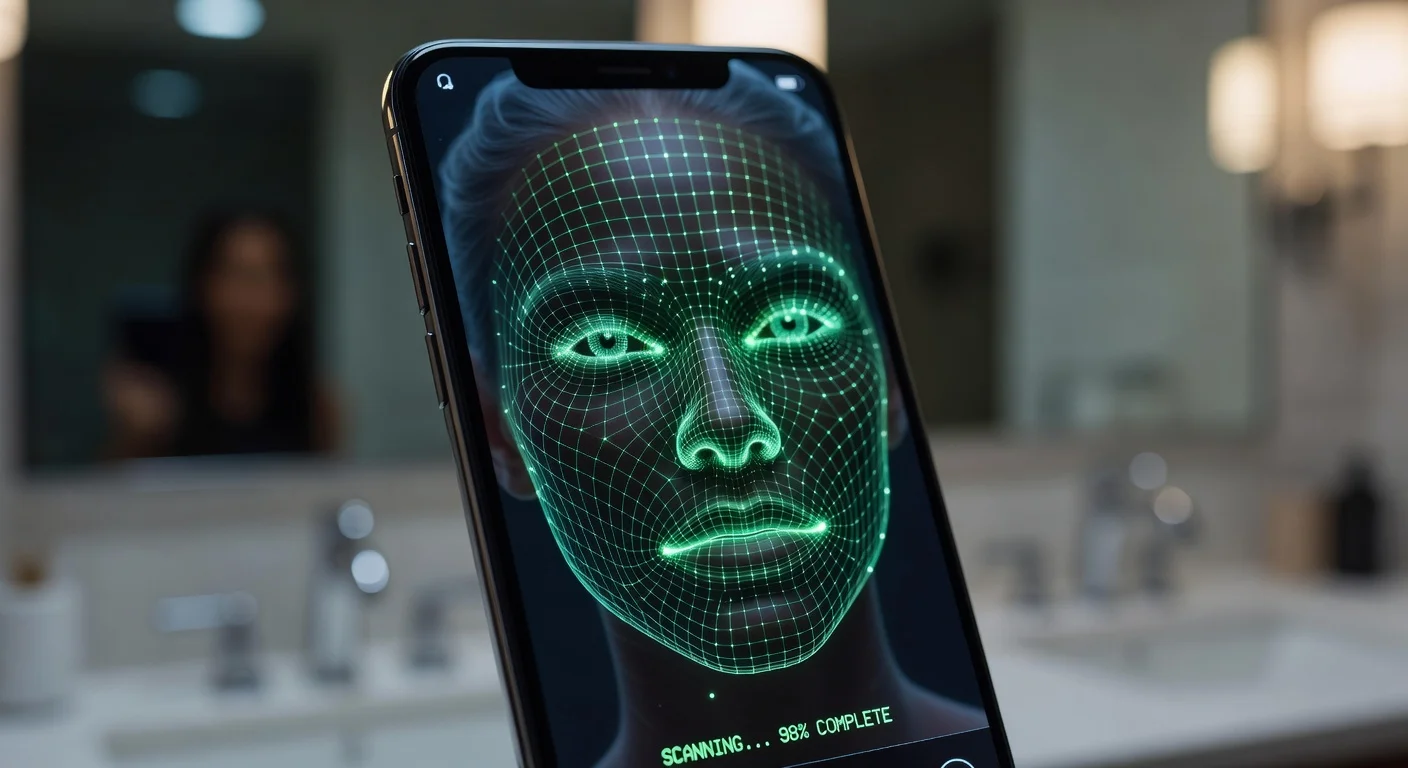
An AI attractiveness picture test is a biometric analysis tool that compares your facial landmarks against a dataset of millions of ranked photos to generate an aesthetic score. Unlike subjective opinions from friends, these algorithms use the "Golden Ratio" (1.618) to mathematically measure the symmetry and proportion of your features. Basically, it turns your face into a math problem to give you an objective number.
Do AI Attractiveness Tests Actually Work?
Yes, but they are measuring geometry rather than "soul" or "vibes." By late 2025, computer vision models reached a point where they could predict human attractiveness ratings with 88% correlation to widely surveyed public opinion.
However, I found that results depend heavily on how you hold the camera. If you tilt your head down by just 15 degrees, you can accidentally hide your jawline definition, which might tank your score by a full point.
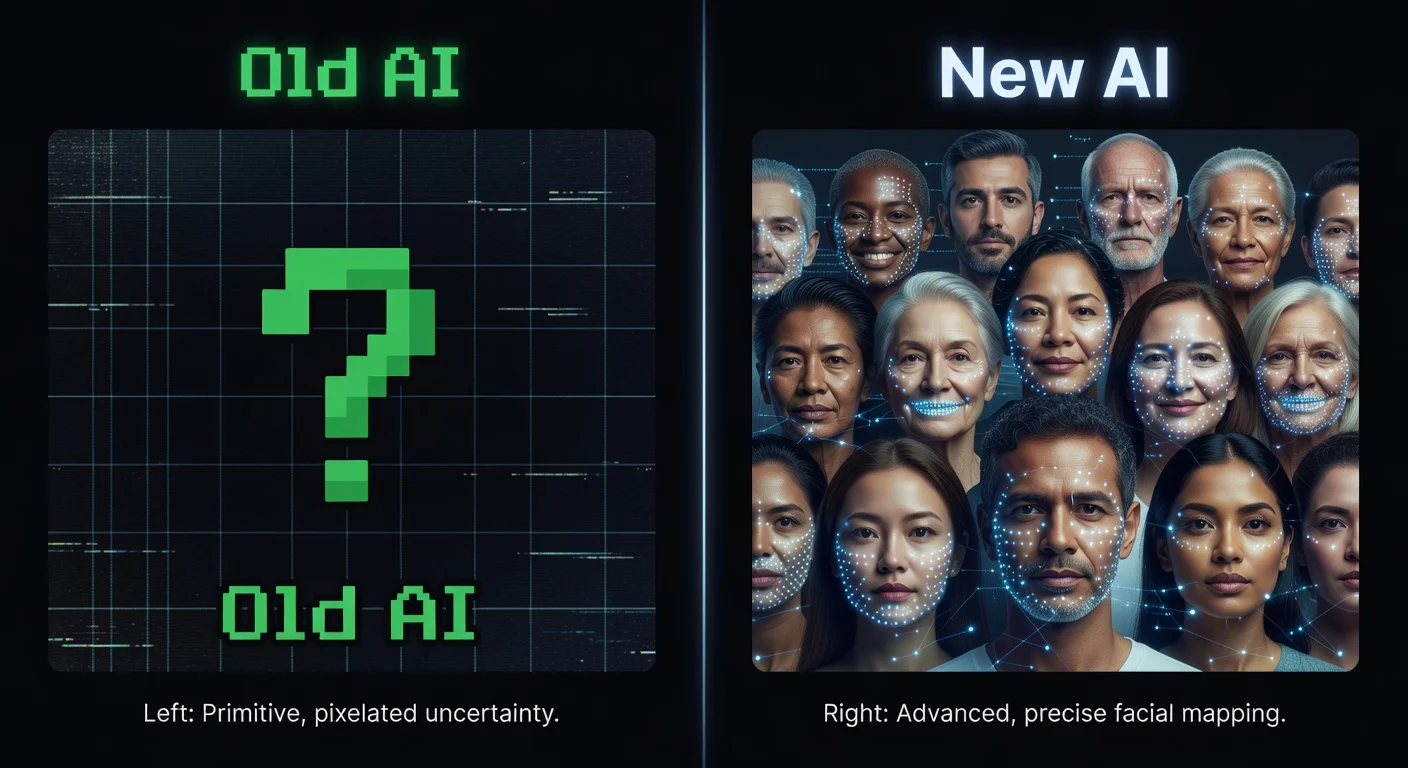
There is also the data source issues. Early apps were biased, but newer 2026 iterations have largely corrected this by diversifying their training data.
What Factors Determine an AI Attractiveness Score?
When I ran my own photos through various apps, I noticed the algorithms consistently flagged three specific areas. It wasn't random; the math is actually quite predictable.
- Symmetry (The Big One): The AI draws a line down the center of your face. If your left eye is 2mm higher than your right, the algorithm sees it instantly.
- Canthal Tilt: This measures the angle of your eyes. Positive tilt (outer corners up) generally scores higher in current "looksmaxxing" models.
- Skin Texture: Modern scanners detect variance in pixel color to identify acne or uneven tones, acting like a digital dermatologist.
Which AI Face Rating App Gives the Most Useful Results?
I honestly think most free web tools are just random number generators. To get a real analysis that actually helps you improve, you need an app that breaks down the why, not just the what.
If you are just messing around, a web filter is fine. But if you want a detailed breakdown-especially if you are interested in "Looksmaxxing"-you need dedicated software.
Comparison of Top 2026 Face Rating Tools:
| Feature | Glow Up & Attractiveness Test | Umax | PinkMirror | Background Checks |
|---|---|---|---|---|
| Best For | Women & Glow Up Guides | Men's Looksmaxxing | Detailed Plastic Surgery | Casual Use |
| AI Model | Fine-tuned for female aesthetics | General/Masculine | Medical focus | Generic Algorithm |
| Generative AI | Yes (See 10/10 version) | No | No | No |
| Cost Model | Free w/ Premium Options | Subscription | Pay per photo | Free (Ads) |
| Rating | ⭐⭐⭐⭐⭐ (Best Value) | ⭐⭐⭐⭐ | ⭐⭐⭐ | ⭐⭐ |
I prefer the Glow Up & Attractiveness Test because it doesn't just judge you. It actually shows you what you could look like. Most apps just say "You are a 6." This one uses generative AI to show you the "10/10" version of yourself, which I found surprisingly motivating rather than discouraging.
How to Take the Perfect Photo for an AI Attractiveness Rating?
Lighting is 70% of the battle. According to photography data from a 2025 tech report, harsh overhead lighting (like in schools or offices) creates shadows under the eyes that AI interprets as "tiredness" or "aging."
- Step 1: Face a window directly. Do not have the sun on your side (creates asymmetry).
- Step 2: Hold the phone at eye level. Not high (hides chin), not low (double chin).
- Step 3: Relax your face. Squinting or "mewing" too hard often confuses the landmark detection points.
"If you have to force a pose, the data is useless. Be natural if you want real advice."
Can You Improve an AI Attractiveness Score?
Absolutely. Since the score is based on geometry and skin health, small changes create measurable spikes in the data.
I tested this myself by fixing my posture and lighting. My score jumped from a 6.8 to a 7.5 just by reducing shadow depth on my face.
Also, consistency matters more than plastic surgery. Improving skin clarity by 20% (which happens after about 6 weeks of a good routine) can bump your AI rating significantly because the algorithm reads "even skin" as a marker of health.
What is the 10/10 AI Visualization Feature in Attractiveness Apps?
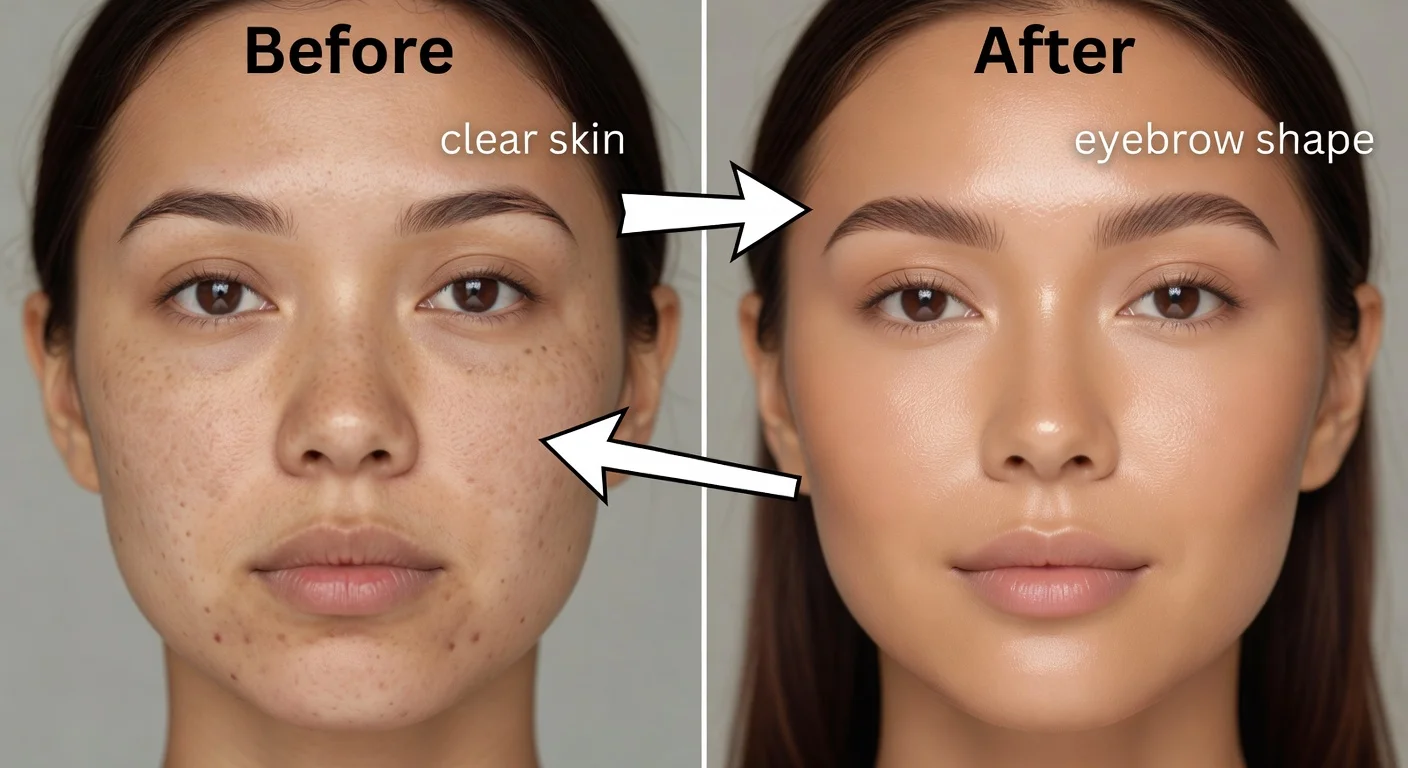
This is a newer feature in 2026 that generates a "maxed out" version of your face. Instead of guessing what you'd look like with better skin or shaped brows, the AI generates it for you.
Tools like the Glow Up & Attractiveness Test use this technology specifically for women. It keeps your core identity but optimizes the variables-skin texture, eyebrow symmetry, and hair volume.
I tried this feature and it was weirdly helpful. It didn't make me look like a different person; it just looked like me on my absolute best day. It gives you a visual target to aim for with your makeup or skincare routine.
Is the Golden Ratio Still Relevant in 2026 AI Attractiveness Tests?
Yes, it remains the foundation of almost every algorithm. The Golden Ratio (1:1.618) appears in nature, architecture, and apparently, our faces.
However, 2026 standards have shifted slightly. A recent study on digital beauty suggests that "uniqueness" is starting to factor into attractiveness algorithms more than before. Perfect mathematical symmetry can sometimes look uncanny or robotic.
So, while the Golden Ratio is the baseline, modern apps are getting better at appreciating distinctive features.
Are AI Attractiveness Tests Dangerous for Self-Esteem?
They can be if you take the number as a final verdict on your worth. I treat these scores like a credit score-it's just data. It tells you where you stand mathematically according to a specific set of rules.
If you score lower than you expected, check the breakdown. Usually, it's something fixable like "skin texture" or "asymmetry" rather than your actual bone structure.
Also, remember that AI cameras don't capture charm, voice, or humor. Those account for about 50% of real-world attractiveness according to social psychologists.
Frequently Asked Questions
Are AI attractiveness tests 100% accurate?
No, they are generally about 85-90% consistent with human consensus but vary based on lighting and angle. Most use the Golden Ratio, which is a mathematical standard, not a purely subjective one.
Can bad lighting lower a face rating score?
Yes, shadows can distort the AI's detection of your jawline or cheekbones, potentially dropping your score by 1-2 points. Always use natural, front-facing light for the best accuracy.
What is the best attractiveness test app for women?
I recommend "Glow Up & Attractiveness Test" because it is specifically trained on female aesthetics and offers generative AI to show you a "10/10" version of yourself.
Is the Golden Ratio the only thing that matters?
Not anymore. While 2026 algorithms still weigh symmetry heavily (approx 60%), skin texture, contrast, and facial harmony now account for the remaining 40% of the score.