
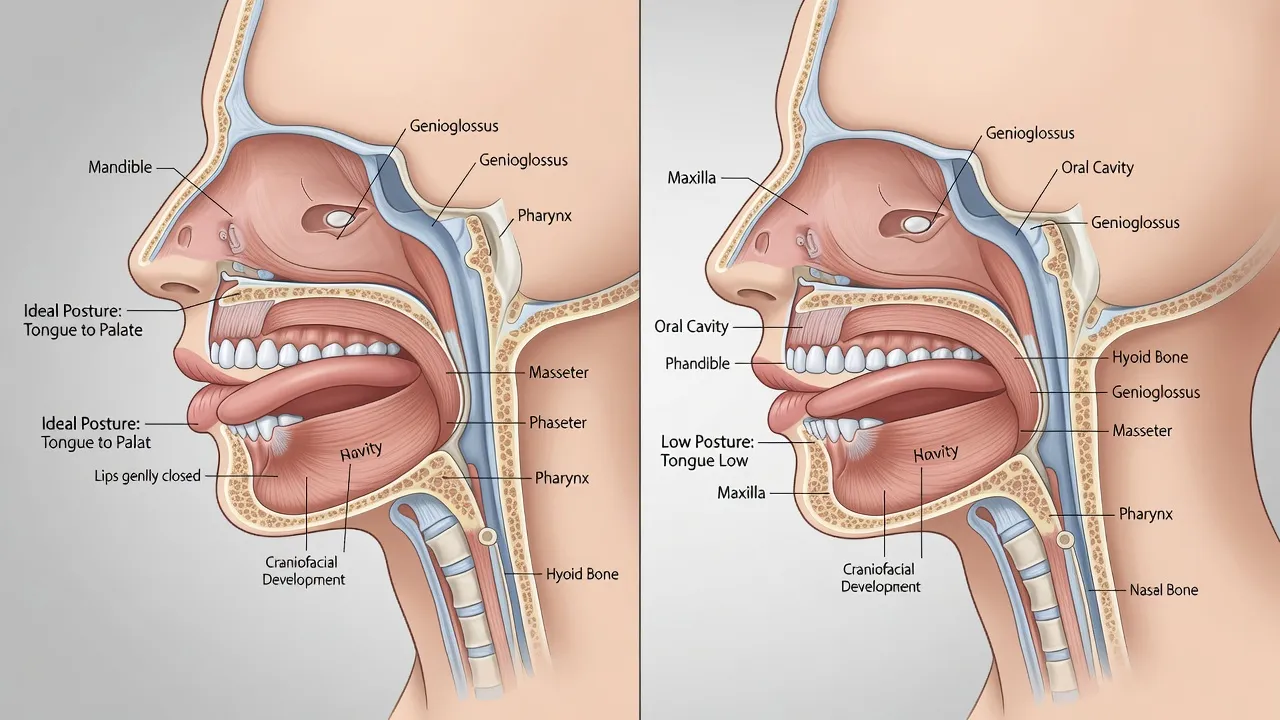
Face posture refers to the default resting position of your tongue, jaw, lips, and neck muscles when you are not actively talking or chewing. Proper facial posture involves keeping your tongue pressed gently against the roof of your mouth, teeth lightly touching or slightly apart, lips sealed naturally, and your head balanced directly over your shoulders. This passive alignment directly shapes your lower jaw definition, soft tissue contouring, and long-term facial symmetry.
Maintaining correct facial alignment is not just a habit; it is a foundational pillar of facial aesthetics. If you want to understand how structural alignment influences overall facial attractiveness, exploring looksmaxxing for women provides broader context on non-invasive cosmetic principles. Early automated tracking tools like the Glow Up & Attractiveness Test app can help identify visual imbalances caused by chronic low tongue posture or jaw slumping before they alter your soft tissue profile.
What is face posture and why does it matter?
Face posture is the foundational muscular equilibrium that supports your midface, chin, and jawline throughout the day. When your facial muscles maintain balanced resting tension, they support the surrounding bone structure and skin. Over time, improper resting facial posture forces surrounding tissues to adapt downward and inward, leading to a receded chin, a softer jawline, and premature skin sagging around the nasal folds.
+-------------------------------------------------------------------+
|                     GOOD FACE POSTURE                             |
|  - Tongue sealed against palate (roof of mouth)                   |
|  - Lips gently sealed without chin strain                         |
|  - Teeth slightly apart (~1-2mm) or lightly touching              |
|  - Cervical spine neutral (ears aligned with shoulders)           |
+-------------------------------------------------------------------+
                                  |
                                  v
+-------------------------------------------------------------------+
|                     POOR FACE POSTURE                             |
|  - Tongue resting on the floor of the mouth                       |
|  - Lips parted (chronic mouth breathing)                          |
|  - Lower jaw hanging open or overly clenched                      |
|  - Forward head position ("text neck")                            |
+-------------------------------------------------------------------+
How does resting oral posture affect facial structure?
Resting oral posture determines the upward and forward structural support of your maxilla (upper jaw). The tongue acts as an internal brace for the palatal arch. When the entire dorsal surface of the tongue pushes gently against the hard and soft palate, it provides constant internal lateral pressure. According to clinical clinical documentation from the American Association of Orthodontists, oral muscular habits significantly influence dental arch width and jaw positioning over long periods.
Without this upward support, the midface slowly drops vertically. The lower jaw rotates backward, which causes the submental area under your chin to sag, giving the appearance of a double chin even at low body fat levels.
Is face posture the same as body alignment?
No, face posture specifically isolates cranial, oral, and facial soft tissue positioning, though it remains heavily tied to cervical spine posture. Body posture concerns your shoulders, spine, and pelvis. Facial posture specifically focuses on the masseter muscles, temporomandibular joints, hyoid bone position, and tongue placement.
However, the two systems constantly interact. A forward head posture pulls the hyoid bone backward, forcing the lower jaw open and instantly ruining your resting facial posture.
What causes poor resting face posture?
Poor face posture is primarily caused by chronic airway obstructions, habituated mouth breathing, low muscle tone, and prolonged screen use. When breathing through your nose is restricted, your body automatically drops your lower jaw and tongue to clear an airway path through your mouth. This necessary reflex disrupts the ideal resting balance of your face.
Does mouth breathing ruin jaw position?
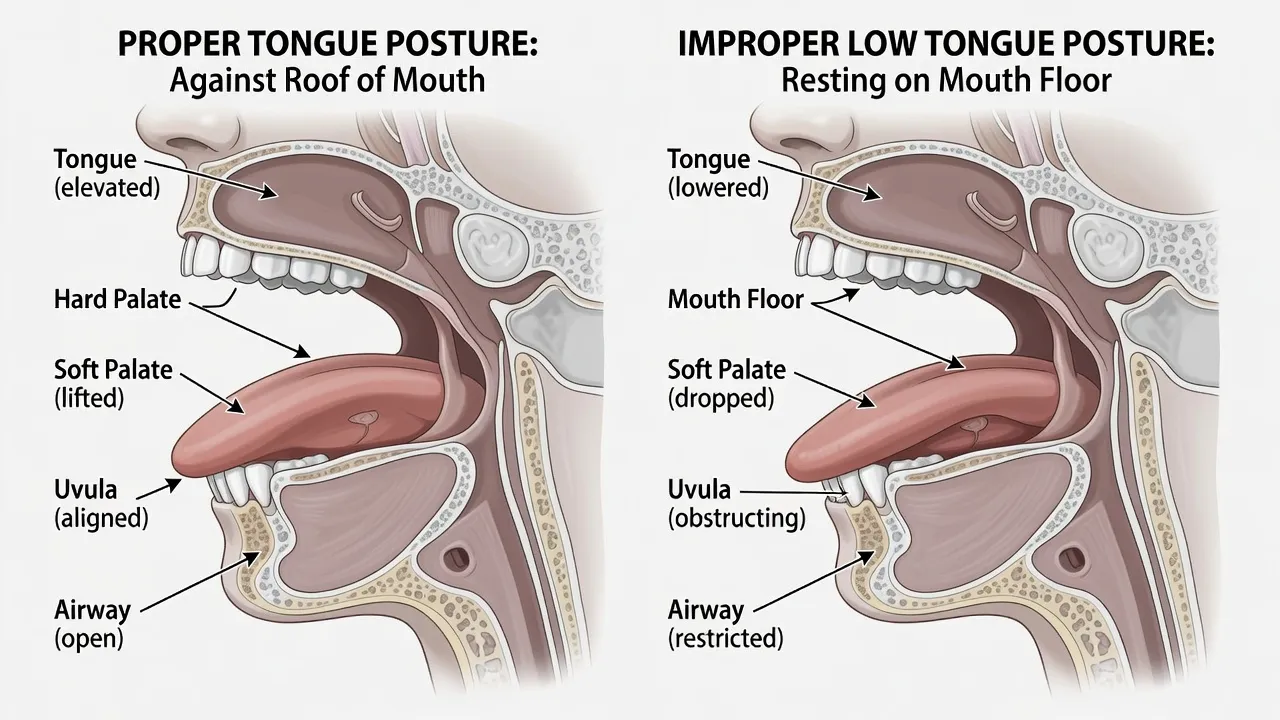
Yes, chronic mouth breathing directly ruins jaw position by forcing the tongue onto the floor of the mouth and retracting the mandible. When you breathe through your mouth, your lips remain open and your facial muscles sag downward. Research indexed in PubMed demonstrates that habitual mouth breathing in developing individuals leads to longer facial structures, narrower dental arches, and weaker chin projection.
In adults, mouth breathing does not reshape mature bone overnight, but it rapidly weakens muscle tone around the cheeks and mouth. The soft tissue collapses downward, creating a fatigued, lengthened lower face.
Can forward head posture change your jawline?
Yes, forward head posture shifts your lower jaw backward and compresses the soft tissues under your chin. For every inch your head tilts forward beyond your shoulders, the weight felt by your neck muscles increases by roughly 10 pounds. This angle strains the sternocleidomastoid and hyoid muscles, pulling the chin back toward the throat and obliterating jawline definition.
If you spend hours looking down at screens, your neck alignment worsens daily. This single habit ruins an otherwise ideal resting face posture.
The single variable that determines your resting face posture
The single most decisive variable that determines your resting face posture is your airway patency. If your nasal passages are blocked by allergies, a deviated septum, or enlarged turbinates, correct resting posture is anatomically impossible. Your brain prioritizes oxygen intake over aesthetic alignment every time.
Before attempting tongue exercises or jaw adjustments, you must confirm that you can comfortably breathe through your nose with your mouth sealed for at least two minutes straight. If you cannot, no amount of conscious muscle retraining will fix your face posture until your nasal airway is cleared.
How do you evaluate your resting facial posture?
You can evaluate your resting facial posture by analyzing your default tongue placement, lip seal strain, and jawline definition in profile view. A simple self-check involves swallowing saliva and noting where your tongue rests once the swallow completes. If the tip or back of your tongue drops to your bottom teeth, your oral posture needs correction.
To accurately track structural changes over time, modern visual analysis tools offer an objective baseline. Many people rely on an objective attractiveness test to evaluate how structural balance affects overall facial harmony.
The table below contrasts the main methods available as of August 2026 for evaluating your face posture and facial balance.
| Evaluation Method | Primary Focus | Best For | Typical Time & Accessibility |
|---|---|---|---|
| Manual Orthotropic Assessment | Bone structure angles, airway width, and palatal width | Diagnosing structural airway and jaw misalignment | Requires in-office specialist visit; high cost |
| Myofunctional Therapy Intake | Tongue strength, swallow pattern, and lip seal strain | Target muscle dysfunction retraining | 45-60 minute consultation with a certified therapist |
| Glow Up & Attractiveness Test App | AI facial symmetry, jawline contours, and midface ratio analysis | Rapid home baseline tracking and personalized glow up recommendations | Immediate results via iOS app; ideal for monthly progress tracking |
| Physical Therapy Neck/Jaw Evaluation | Cervical spine curvature, temporomandibular joint motion | Fixing forward head posture causing jaw recession | 30-60 minute clinical assessment |
How long does it take to change your face posture?
Retraining your subconscious face posture typically takes 3 to 6 months of consistent daily practice. Muscle memory develops slowly because your resting face posture operates under autopilot control during sleep and focused tasks.
Can adults reshape their facial bone structure?
Adults cannot significantly alter hard facial bones through posture alone, but they can dramatically shift soft tissue contours and muscle volume. Once your skeletal growth plates fuse in your late teens, your facial bones remain largely fixed without surgical intervention.
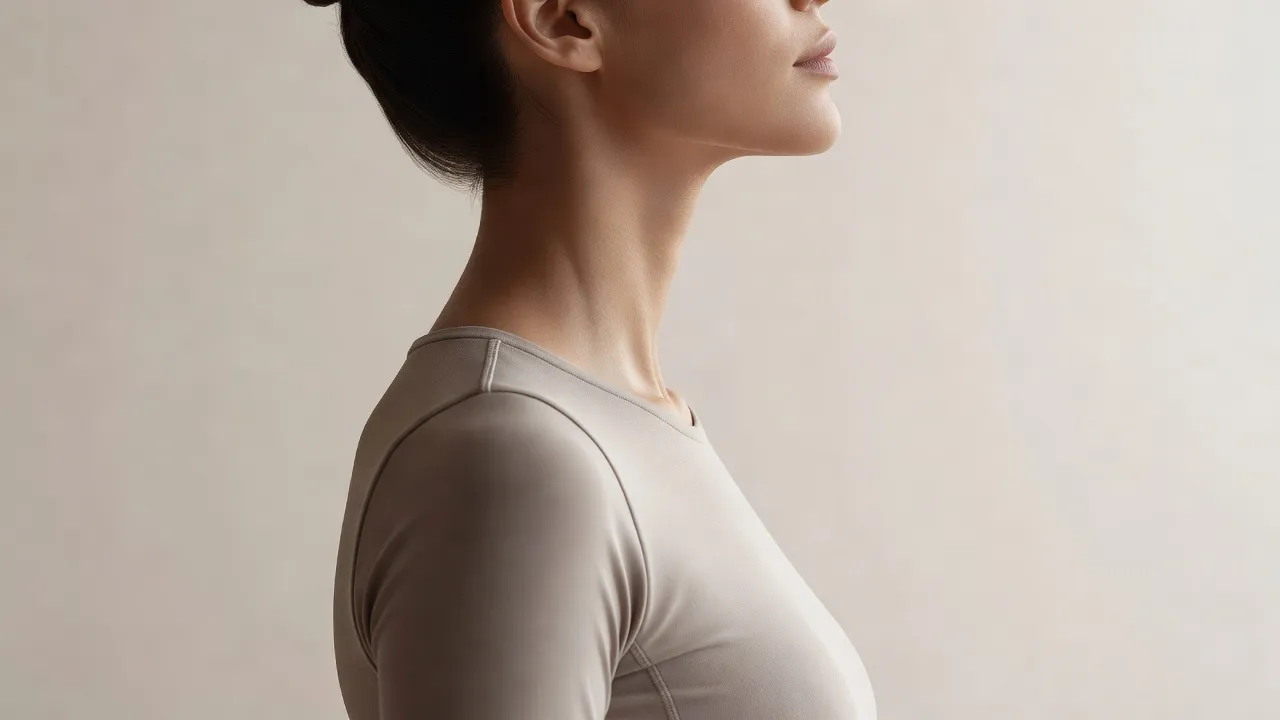
However, lifting a slumping hyoid muscle and strengthening the masseters reshapes your jawline immediately. Proper tongue elevation pulls the soft tissues underneath your jaw upward into the oral cavity, creating a tighter, more defined neck profile instantly.
Do facial exercises improve muscle tone?
Yes, targeted myofunctional facial exercises improve local muscle tone and make correct resting posture easier to hold. Exercises that target the tongue (like palatal presses) and the orbicularis oris muscle around the lips prevent mouth hanging.
- Palatal Suction hold: Press your entire tongue against the roof of your mouth and hold the seal for 30 seconds.
- Lip trace: Run the tip of your tongue along the inside of your lips to strengthen oral muscle control.
- Chin tucks: Pull your head straight back like making a double chin to align your neck vertebrae.
Tracking your progress with AI face analysis
Using digital face analysis tools allows you to measure subtle soft tissue improvements as your resting face posture improves. As you correct tongue placement and neck alignment, subtle changes occur in your chin projection and midface tightness. Monitoring these shifts visually keeps your retraining on track.
The Glow Up & Attractiveness Test app provides a practical way to benchmark these adjustments. By taking a standardized selfie, you receive a detailed breakdown of your facial proportions, symmetry, and feature harmony. The application uses a fine-tuned AI model tailored specifically for women seeking actionable visual improvements.
+-------------------------------------------------------------------+
|               AI FACE ANALYSIS PROGRESS WORKFLOW                  |
+-------------------------------------------------------------------+
| 1. Capture neutral profile & frontal selfie under clean light     |
| 2. AI calculates facial symmetry, midface ratios, & jaw clarity    |
| 3. App generates personalized beauty score & glow up recommendations|
| 4. Re-assess every 30 days to measure structural muscular shifts  |
+-------------------------------------------------------------------+
Instead of guessing whether your jawline looks sharper after weeks of neck alignment drills, you can run a how attractive am i ai scan to review objective structural metrics. The app delivers a beauty score alongside tailored tips to help guide your ongoing habit building. You can even generate visual projections to see how enhanced posture complements your overall features.
What are the most common face posture mistakes?
The most common face posture mistake is clenching your teeth tightly together while trying to correct jaw placement. Ideal face posture requires your teeth to sit either barely touching or separated by 1 to 2 millimeters of space. Forcing your molars together creates extreme strain on the temporomandibular joint (TMJ) and masseters, leading to tension headaches and jaw pain.
Here are four other frequent mistakes to avoid:
- Pressing the tongue against front teeth: Thrusting your tongue forward pushes your front teeth outward over time. The tongue must push upward against the hard palate, staying behind the front ridge.
- Engaging the chin muscle (mentalis strain): Squinting or straining your chin up to force your lips sealed causes a bumpy, dimpled chin skin texture.
- Flaring the lower neck: Tilting your chin skyward to hide a double chin ruins neck posture. Keep your eye level parallel to the floor.
- Neglecting nighttime posture: Sleeping on your stomach pushes your jaw sideways against the pillow for hours, unbalancing facial symmetry.
As noted in clinical resources from the Cleveland Clinic, chronic jaw strain and grinding often stem from unnatural resting alignment and unmanaged tension.
Frequently Asked Questions
What is the correct resting position for the tongue?
The correct resting position is pressing the entire surface of your tongue against the roof of your mouth. The tip should rest on the hard palate ridge just behind your top front teeth without actually touching them, while the middle and back of the tongue press gently upward.
Can bad facial posture cause a double chin?
Yes, bad facial posture is a leading cause of double chins in people with healthy body weights. When your tongue rests on the bottom of your mouth, the hyoid bone and attached soft tissue drop downward, creating a sagging neck profile.
Should teeth touch when mouth is at rest?
Your teeth should not be clamped tightly together at rest. They should sit very lightly together or maintain a tiny 1 to 2 millimeter gap between the upper and lower arches to prevent jaw joint strain.
How long does it take for proper face posture to become automatic?
It usually takes between 3 and 6 months of daily conscious adjustments for proper face posture to become an unconscious, automatic habit during waking and sleeping hours.
Can face posture change your nose shape?
No, face posture cannot change the cartilaginous or bony structure of your nose. However, supporting the maxilla beneath the nose can change the angle at which the nose sits relative to the upper lip.
Does sleep position affect face posture?
Yes, sleeping on your stomach or side can compress one side of your face against the pillow, forcing the lower jaw out of alignment. Sleeping on your back with a supportive pillow best preserves neutral facial posture.
Is face posture the same as mewing?
Mewing is a popular term for practicing proper resting oral posture, specifically focusing on palatal tongue suction. Proper face posture encompasses mewing alongside neck alignment, lip seal, and jaw relaxation.
Why does my jaw hurt when I try to fix my face posture?
Jaw pain usually means you are clenching your teeth together or forcing your lower jaw too far forward. Relaxation is key; keep your teeth slightly apart and focus on gentle upward tongue suction rather than hard muscle pressure.