

Getting a strong jawline requires reducing submental body fat, hypertrophying the masseter muscles, and correcting resting tongue posture. While underlying bone structure sets your baseline aesthetic, most adults reveal a significantly sharper mandibular contour within 3 to 6 months of targeted diet, mastication training, and postural adjustments. For individuals constrained by genetic bone recession or deep subplatysmal fat, clinical interventions offer secondary structural solutions.
| Action Step | Daily Effort | Timeline for Results | Estimated Cost | Primary Structural Impact |
|---|---|---|---|---|
| 1. Facial Assessment | 5 minutes | Immediate | Free | Identifies whether fat, muscle, or bone limits your jawline. |
| 2. Mastication Exercises | 15–20 minutes | 8–12 weeks | $0 – $30 | Builds masseter muscle width at the rear angle of the jaw. |
| 3. Anti-Bloat Protocol | Daily habit | 3–7 days | $0 | Removes subcutaneous water retention masking the jaw bone. |
| 4. Tongue Posture (Mewing) | All day (resting) | 6–12 months | Free | Elevates the hyoid bone to instantly tighten submental skin. |
| 5. Clinical Interventions | 1–2 procedures | Immediate to 3 months | $1,200 – $10,000+ | Removes deep fat pockets or extends short mandibular bone structure. |
How do diet, weight loss, sleep, and hydration affect jawline definition?
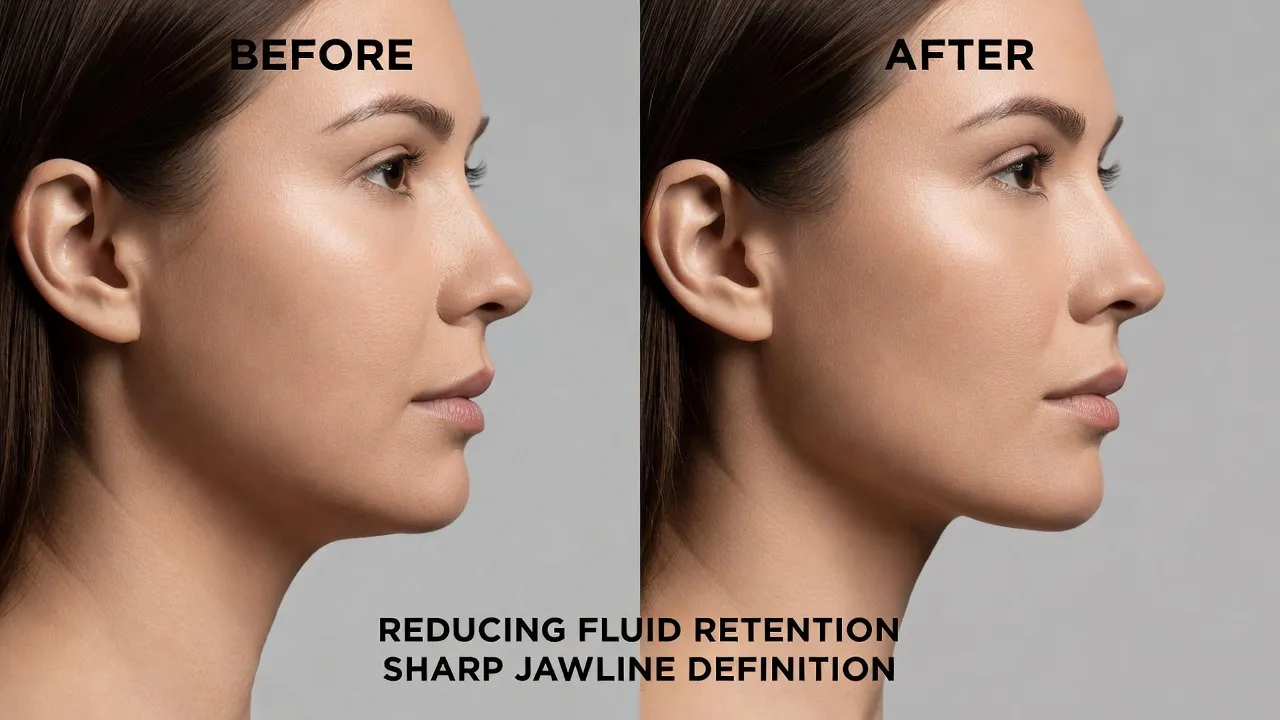
Diet, weight loss, sleep, and hydration directly control the thickness of the soft tissue layer covering your mandibular bone. Even if you have robust jaw genetics, elevated body fat or high sodium intake hides the bone beneath a layer of fat and fluid.
- Overall body fat percentage: Subcutaneous fat sits directly over the jaw bone and beneath the chin. For women, jawline visibility typically sharpens around 18–22% body fat, while men notice peak definition below 14%.
- Sodium and fluid balance: Consuming high sodium levels causes systemic fluid retention that collects quickly in the cheeks and submental neck region. Drinking at least 3 liters of water daily prompts your kidneys to excrete excess sodium, reducing facial puffiness within 48 hours.
- Alcohol consumption: Alcohol dehydrates the body, forcing tissue to hold onto fluid while simultaneously causing vasodilation. If you struggle with puffy morning cheeks, cutting out evening drinks eliminates alcohol face bloat and restores baseline sharpness rapidly.
- Sleep quality and cortisol: Chronic sleep deprivation elevates cortisol levels, promoting facial fluid retention and fat storage around the neck. Aim for 7 to 9 hours of quality sleep to maintain lower baseline systemic inflammation.
How to reduce a double chin or submental fat for a stronger jawline?
You reduce submental fat by maintaining a systemic caloric deficit, performing targeted lymphatic drainage, or opting for clinical fat-dissolving procedures. Spot reduction through diet alone is biologically impossible, meaning your body burns submental fat only when overall body fat drops.
Submental Fat Layering
| Fat Layer | Location | Treatment Options |
|---|---|---|
| Superficial Subcutaneous Fat | Surface layer | Calorie deficit, Kybella, Liposuction |
| Deep Subplatysmal Fat | Beneath the platysma | Neck lift surgery only |
If lowering your body mass index (BMI) does not clear the submental area, you are dealing with one of two non-dietary issues: poor hyoid bone position or deep subplatysmal fat. The Mayo Clinic emphasizes that systemic weight loss reduces superficial fat stores across the body, but genetics dictates where fat leaves first.
Superficial fat sits right under the skin and responds well to caloric deficits or deoxycholic acid injections (Kybella). Deep subplatysmal fat sits beneath the neck muscles; exercise, diet, and surface-level injections cannot reach this layer.
Do masseter exercises or chewing gum help define the jawline?
Yes, chewing hard gum or doing targeted masseter exercises increases the physical volume of the jaw muscle, creating a wider and more angular lower face. The masseter muscle is one of the strongest muscles in the human body relative to its size, and it responds to progressive resistance training just like a biceps or quadriceps muscle.
A medical study published on PubMed regarding masticatory muscle hypertrophy confirms that increased chewing workload leads to measurable masseter muscle enlargement. Building this muscle pushes the skin outward at the gonial angle (the corner of your jaw below the ear), giving the appearance of a broader, stronger jaw base.
Chewing Progression Protocol:
- Week 1-2: Standard Mastic Gum (15 mins/day)
- Week 3-6: Hard Resistance Gum (20 mins/day)
- Week 7+: Maintenance (3x/week)
However, overtraining the masseter muscles brings real structural risks. Excessive chewing of tough silicone jaw exercisers can stress the temporomandibular joint (TMJ), leading to jaw popping, tension headaches, and chronic joint clicking.
Does mewing help strengthen the jawline?
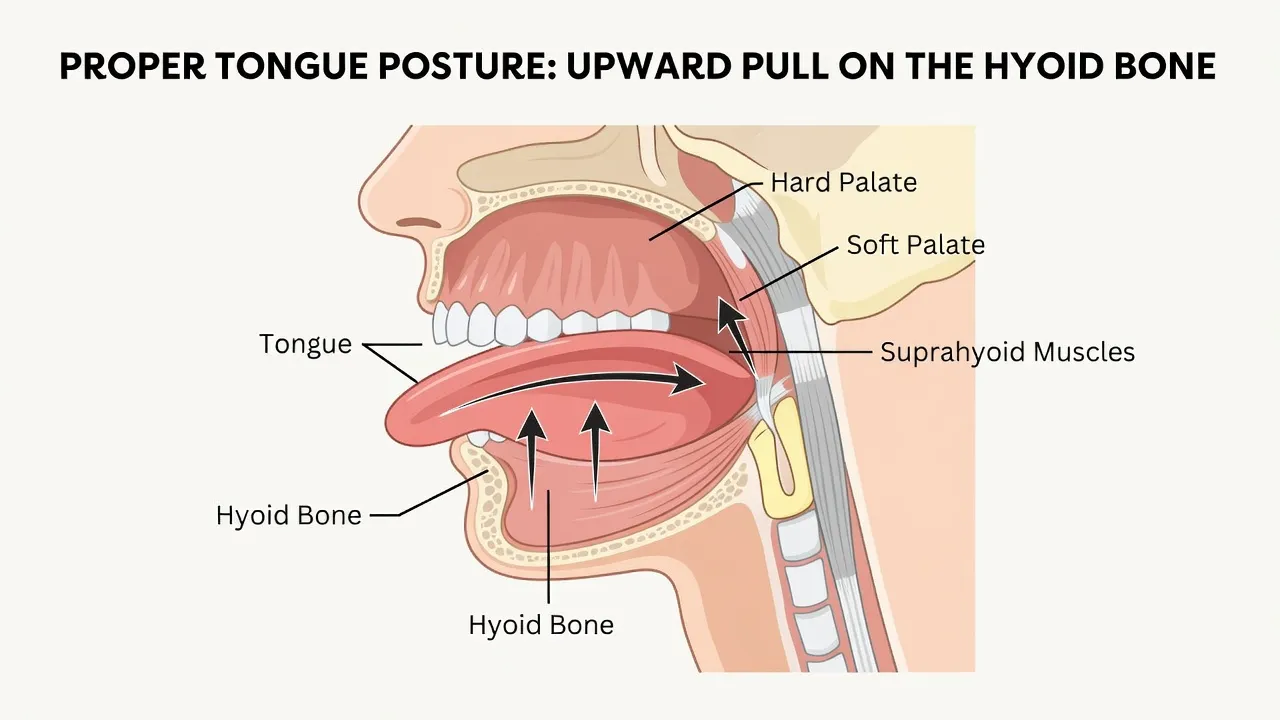
Mewing improves submental tightness instantly by lifting the hyoid bone, but it does not change adult bone structure without underlying growth cues. Mewing is the practice of resting your entire tongue—including the posterior third—flat against the roof of the mouth with your lips closed and teeth lightly touching.
| Tongue Placement | Result |
|---|---|
| Tip of tongue pushing front teeth | Causes dental flared teeth |
| Entire tongue suctioned to palate roof | Pulls submental neck tissue tight |
When you suction the back of the tongue to the hard and soft palate, the floor of the mouth lifts upward. This immediately pulls loose submental skin snug against the underside of the jaw, creating an instant optical improvement in your face side profile.
While postural correction changes soft tissue alignment immediately, claims that mewing reshapes adult jaw bones within months lack rigorous clinical backing. For adults whose growth plates have fused, tongue posture works primarily as a software fix that maximizes your existing skeletal structure rather than rebuilding bone.
How do jawline exercises compare to surgery for improving the jawline?
Jawline exercises work gradually on soft tissue and muscle size, whereas surgical options alter underlying skeletal bone and deep subplatysmal fat permanently. Choosing between natural protocols and clinical intervention depends heavily on whether your bottleneck is muscular thickness, skin laxity, or structural bone deficiency.
| Treatment Modality | Primary Target | Expected Result Timeline | Longevity | Key Structural Limit |
|---|---|---|---|---|
| Masseter Chewing | Masseter Muscle | 8 to 12 weeks | Temporary (requires maintenance) | Cannot fix a recessed chin bone. |
| Tongue Posture (Mewing) | Hyoid Muscle / Floor of mouth | Immediate (postural) | Permanent (if made a habit) | Does not remove genuine excess fat. |
| Submental Liposuction | Subcutaneous Fat | 1 to 3 months (post-swelling) | Permanent (if weight is maintained) | Ineffective against deep subplatysmal fat. |
| Chin Implant / Genioplasty | Mandibular Bone | Immediate (surgical recovery: 2-4 wks) | Permanent | High cost and surgical risk. |
| Dermal Jaw Fillers | Subcutaneous Layer | Immediate | 9 to 18 months | Can look unnatural if overfilled. |
Surgical intervention carries higher costs and physical recovery times, but it bypasses genetic limitations that exercise cannot overcome. As of August 2026, statistics published by the American Society of Plastic Surgeons indicate that chin augmentation and submental contouring remain among the fastest-growing facial procedures for both men and women seeking permanent angularity.

Step 1: Assess your facial structure to identify your specific jawline bottleneck
Before starting any physical routine, you must analyze whether your jawline is limited by high body fat, under-developed muscle, or a recessed chin bone. Trying to build muscle when your main issue is fluid retention will yield zero visible changes.
- Pinch test: Pinch the skin underneath your chin. If you can grab more than half an inch of soft tissue, superficial submental fat is your primary target.
- Clench test: Place your fingers on the back corners of your jaw and bite down hard. If you feel a firm, thick flex under your fingers, your masseters are already well-developed. If the flex feels thin or flat, jaw exercise will help.
- Profile alignment check: Look at your profile in a mirror. Draw an imaginary vertical line down from the base of your lower lip. If your chin tip sits more than a few millimeters behind that line, bone recession is your main constraint.
To skip the guesswork, use an objective digital scan. Uploading a clear photo to the Glow Up & Attractiveness Test app provides a detailed face analysis using a fine-tuned AI model. The scanner evaluates your facial proportions, highlights soft tissue bottlenecks, and gives you a personalized face rating score to track structural changes over time.
Step 2: Implement a daily mastication routine to build a strong jawline
To execute an effective exercise for strong jawline development, chew hard resistance gum for 15 to 20 minutes every other day. Treating masseter training like weightlifting prevents jaw joint fatigue while forcing muscle fibers to adapt and grow.
- Select the right medium: Standard chewing gum breaks down too fast to provide adequate resistance. Use natural mastic gum crystals or food-grade silicone jaw exercisers designed for controlled resistance.
- Maintain balanced bilateral chewing: Alternate sides every 60 seconds. Chewing exclusively on your dominant side creates asymmetrical masseter muscles, causing your lower face to look uneven.
- Control the chew speed: Do not bite down rapidly. Use a slow, 2-second concentric bite, pause for 1 second at maximum clench, and take 2 seconds to release.
- Limit frequency to avoid TMJ pain: Rest your jaw every second day. Masseter muscles require recovery time to repair and expand. If you experience clicking, ear popping, or joint soreness, stop the routine immediately.
Incorporating a dedicated face exercise for strong jawline growth into your routine yields noticeable angle width at the back of the jaw within two to three months. If you are exploring broader aesthetic improvements, modern frameworks for looksmaxxing for women blend structural training with skin and bone frame optimization.
Step 3: Optimize water intake, sodium ratio, and sleep to eliminate facial bloat
Eliminating excess fluid retention sharpens your existing bone structure within three to five days without losing a single pound of fat. Subcutaneous water bloat acts like a soft cushion that obscures the sharp margin of the mandibular bone.
Anti-Bloat Daily Schedule:
- Morning: 16oz Water + Electrolytes (Low Sodium)
- Afternoon: Dandelion Tea
- Evening: Potassium-Rich Meal (Avocado/Spinach)
- Balance sodium with potassium: Potassium works as a natural antagonist to sodium, pulling excess fluid out of extracellular space. Aim for 3,500–4,700 mg of potassium daily from foods like bananas, spinach, and avocados.
- Drink dandelion root tea: Dandelion root acts as a mild, natural diuretic that helps flush temporary fluid buildup beneath the cheeks.
- Incorporate facial massage: Use a gua sha tool or your knuckles along the jawline, sweeping firm pressure from the center of the chin upward toward the earlobes to drain lymph fluid.
- Sleep elevated: Use an extra pillow to keep your head slightly elevated above your heart. This simple gravity tweak prevents interstitial fluid from pooling in your face overnight.
Step 4: Correct tongue posture and resting jaw mechanics
Mastering proper face posture elevates the floor of your mouth and creates a tight, smooth neck line immediately. Correct oral posture is not an active workout; it is a permanent resting habit you must maintain 24 hours a day.
- Find the "N-Spot": Say the word "sing" or make the "N" sound. The position where the roof of your mouth meets the tip of your tongue is your forward anchor point.
- Flatten the posterior tongue: Lightly swallow while keeping your lips sealed. Feel the back portion of your tongue flatten against the soft palate.
- Maintain gentle suction: Create a subtle vacuum in your mouth by swallowing saliva while keeping the tongue sealed to the roof. This suction holds the tongue in place without active muscle strain.
- Check tooth contact: Your upper and lower teeth should rest lightly together or sit a millimeter apart. Never clench your teeth together tightly while resting, as this wears down enamel and stresses the jaw joint.
Step 5: Evaluate advanced non-surgical or clinical interventions if structural limits apply
If genetic bone recession or deep fat pockets limit your results, clinical interventions offer predictable structural enhancement. When natural methods hit a ceiling, non-invasive and surgical options fill the gaps.
- Hyaluronic acid jaw fillers: Injecting high-density dermal filler directly along the mandibular edge adds temporary width, projection, and sharpness lasting 9 to 18 months.
- Deoxycholic acid (Kybella): Injected directly into the double chin, this compound destroys superficial fat cells permanently over a series of two to four treatment sessions.
- Submental liposuction: A plastic surgeon inserts a tiny cannula to physically remove submental fat cells. Recovery takes roughly one week, yielding a sharply defined neck-jaw angle.
- Sliding genioplasty or chin implant: For recessed chins, a surgeon either moves the lower chin bone forward or secures a biocompatible implant over the bone. This expands the jawline perimeter and pulls slack neck skin tight naturally.
I strongly recommend maxing out natural body fat reduction, muscle development, and posture habit changes before spending money on invasive cosmetic procedures.
How AI facial analysis helps you track your jawline glow up
Tracking subtle jawline improvements visually is difficult because daily mirror checks make incremental progress invisible. Using objective technology removes personal bias and proves whether your mastication and diet routines are actually working.
- Baseline Photo Scan
- 30-Day Protocol Execution
- Follow-up AI Scan
- Compare Symmetry & Angle Depth
The Glow Up & Attractiveness Test app on iOS gives you a standardized way to measure facial progress over time:
- Objective ratings: You snap a quick selfie and receive a detailed face analysis based on fine-tuned AI aesthetic models.
- Actionable insights: Discover your beauty score and unlock your glow up potential by following personalized tips that address your specific face geometry.
- Before-and-after creation: Generate shareable visual progress cards to track changes in chin projection, cheek fat, and submental tightness across 30, 60, and 90-day intervals.
Monitoring your progress with an AI face rating tool keeps you accountable while ensuring that your efforts yield measurable visual gains.
Frequently Asked Questions
How long does it take to get a strong jawline?
You can reduce facial fluid bloat within 3 to 7 days, but building masseter muscle volume takes 8 to 12 weeks of consistent chewing exercises. Losing submental body fat depends on your overall starting weight and typically requires 3 to 6 months of a sustained caloric deficit.
Can jawline exercises make your face look wider?
Yes, heavy masseter muscle chewing widens the lower third of the face by thickening the muscles at the rear corners of the jaw. If you already have a wide square face, focus on fat loss and tongue posture rather than aggressive mastication exercises.
Does chewing gum reduce double chin fat?
No, chewing gum does not burn double chin fat because spot reduction of body fat is biologically impossible. Chewing gum builds the masseter muscle beneath the cheeks, but lowering overall body fat through diet is required to burn submental fat.
Can you get a strong jawline without losing weight?
Yes, if your body fat is already low but your jaw lacks definition due to small masseter muscles or poor tongue posture. However, if you carry excess body fat, you cannot reveal a sharp jawline without dropping overall body fat.
What body fat percentage shows a jawline?
A sharp jawline typically becomes visible around 18% to 22% body fat for women and below 14% for men. Exact numbers vary based on individual genetic fat distribution patterns.
Is chewing hard gum dangerous for your jaw?
Chewing hard resistance gum can trigger or worsen temporomandibular joint (TMJ) disorders if done excessively or with poor technique. Limit mastication workouts to 20 minutes every other day, and stop immediately if you feel joint popping or ear discomfort.
What is the fastest way to get a jawline for an event?
The fastest way to sharpen your jawline within 48 hours is to cut high-sodium foods, eliminate alcohol, drink 3+ liters of water, apply a cold compress to reduce facial inflammation, and practice proper resting tongue posture.