
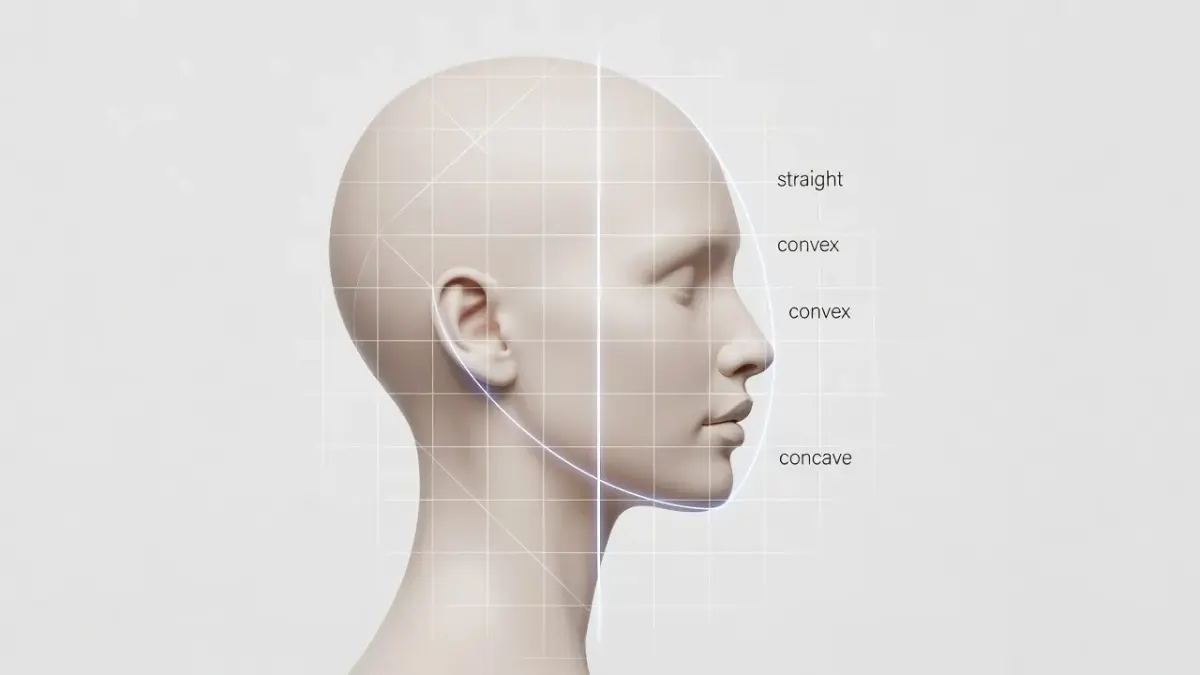
A convex facial profile is a structural silhouette where the midface projects further outward than the forehead and jawline. When viewed from a 90-degree lateral orientation, the prominence of the nose and upper jaw creates a outward curved line from the glabella (forehead) down to the pogonion (chin point). This anatomical alignment often occurs alongside a retruded lower jaw or an over-projected maxilla, altering the overall balance of the facial features.
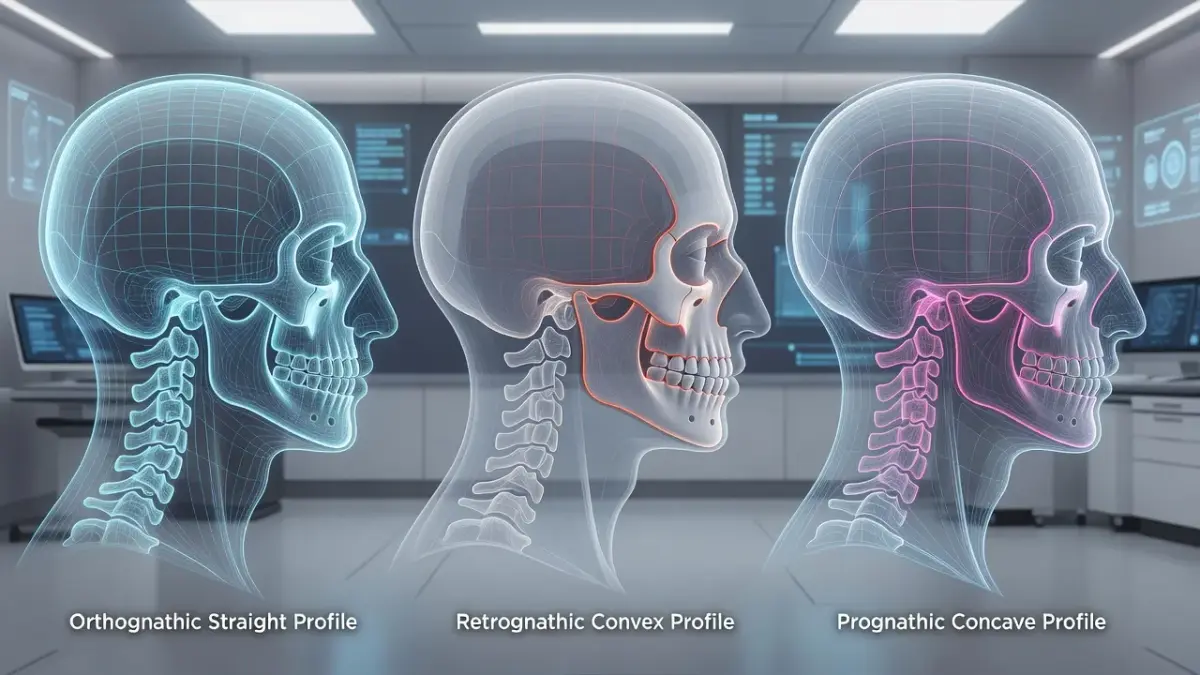
Understanding your side profile begins with looking at your bone structure and soft tissue distribution. If you examine a classic face side profile, the facial contour can be classified into three primary shapes: straight (orthognathic), convex, or concave. A convex profile is the most common variation across many demographics, yet what many people get wrong is assuming it is strictly an aesthetic concern rather than a combination of airway development, dental occlusion, and skeletal genetics.
What causes a convex facial profile?
A convex facial profile is caused by an architectural mismatch between the upper jaw, lower jaw, and facial soft tissues. While the visual effect is a central facial protrusion, the underlying root causes generally fall into four distinct anatomical categories:
Mandibular retrognathia
Mandibular retrognathia occurs when the lower jaw bone (mandible) is positioned too far back relative to the skull base. This is the primary driver of a convex appearance in the majority of individuals. When the chin recedes, the nose and upper lip naturally look far more prominent by comparison.
Maxillary prognathism
Maxillary prognathism refers to an overdeveloped or forward-positioned upper jawbone (maxilla). When the maxilla extends significantly beyond the ideal cephalometric plane, the midface pushes outward, casting the lower face in shadow and deepening the nasolabial folds.
Vertical maxillary excess
Often called "gummy smile syndrome," vertical maxillary excess means the upper jaw has grown excessively downward during development. This forces the lower jaw to rotate backward and downward, exaggerating the chin's retrusion and sharpening the convex curve.
Soft tissue factors
Soft tissue volume plays a quiet but decisive role in profile curvature. Thick nasal cartilage, thin chin padding, high submental fat, or hyperactive mentalis muscles (which pull the chin pad upward and backward) can convert a mild skeletal tendency into a visibly convex profile.
How do genetics, growth, and respiratory factors contribute to a convex facial profile?
Genetic inheritance sets the baseline blueprint for your facial bones, but childhood breathing patterns and tongue posture dictate how those bones actually grow. If a child cannot breathe comfortably through their nose during crucial developmental years, the entire midface and lower jaw alter their trajectory.
Genetics dictate your skeletal class—determining whether your family lineage leans toward a Class I, Class II, or Class III jaw relationship. However, soft tissue habits often pull that genetic tendency toward convexity. Chronic mouth breathing during childhood—frequently caused by enlarged tonsils, nasal polyps, or a deviated septum—forces the mouth to hang open continuously.
When the mouth remains open, the tongue drops to the floor of the mouth instead of resting against the palate. According to research published by the National Center for Biotechnology Information (NCBI), long-term nasal airway obstruction directly correlates with downward and backward rotation of the mandible, narrowing of the upper arch, and an lengthened lower facial height. This developmental path is medically known as "adenoid facies" or long face syndrome, a direct driver of severe profile convexity.
Profile Classification and Diagnostic Evaluation
Determining whether your profile is mildly convex or severely retrognathic requires clear diagnostic standards. Orthodontists and maxillofacial surgeons rely on fixed reference points across the planes of the face to map skeletal alignment.
       Glabella (Forehead)
              \
               \
           Subnasale (Base of Nose)
                 \
                  \
              Pogonion (Chin)
In a standard profile analysis, clinicians drop a reference line from the glabella to the upper lip and chin. In a straight profile, these points align within a 165° to 175° angle. In a convex profile, the angle measured from glabella to subnasale to pogonion drops significantly below 165°, highlighting midface prominence.
| Profile Class | Primary Skeletal Jaw Alignment | Typical Aesthetic Profile Characteristics | Airway & Functional Impact | Recommended Assessment Tool |
|---|---|---|---|---|
| Straight (Orthognathic) | Class I (Ideal bite and jaw position) | Balanced chin, forehead, and nasal projection | Normal airflow and joint function | Standard dental exam |
| AI Structural Analysis | Class I or mild Class II | Variable contour balance and facial ratio evaluation | Identifies soft tissue & proportion imbalances | Glow Up & Attractiveness Test |
| Mild Convexity | Class II Division 1 (Mild chin retrusion) | Slightly weak jawline, prominent nose | Minimal airway restriction | Cephalometric X-ray |
| Severe Convexity | Severe Class II (Mandibular hypoplasia) | Receded chin, deep labiomental fold, double chin line | High risk for obstructive sleep apnea | CBCT scan & airway study |
Evaluating your face through modern computer vision can show you exactly how soft tissue ratios highlight or soften structural convexity. Using tools like the Glow Up & Attractiveness Test app allows women to upload a side photo to evaluate face scores, receive tailored beautification tips, and understand their facial harmony from a smartphone selfie.
What orthodontic treatments address a convex profile?
Orthodontic treatments correct a convex profile by moving teeth within the alveolar bone or guiding jaw growth in younger patients. However, what most people get wrong about adult orthodontics is expecting braces alone to move a receded jawbone several millimeters forward—teeth can move, but adult bones are fixed.
Convex Profile Treatment Decision
For an adolescent patient with active bone growth:
- Functional appliance (Herbst/Twin Block)
- Headgear/Expansion
For an adult patient with fused bone structure:
- Camouflage orthodontics (Extractions)
- Orthognathic surgery
Growth modification in growing patients
If a convex profile is diagnosed before puberty (typically between ages 9 and 14), orthodontists can use functional appliances to encourage mandibular growth or restrict forward maxillary growth.
- Herbst Appliance: A fixed mechanical hinge that holds the lower jaw forward, encouraging the condyles to adapt while positioning the jawline anteriorly.
- Twin Block Appliance: Removable acrylic plates that force the patient to bite forward, gradually reshaping the skeletal profile over 12 to 18 months.
- Headgear: Utilizes external force anchors to restrain forward growth of the maxilla while the lower jaw catches up naturally.
Camouflage orthodontics in adult patients
When growth has completed, moving the skeletal jaw requires surgery. However, patients with mild-to-moderate convexity often opt for camouflage orthodontics. This process hides the underlying jaw mismatch without changing the bone itself.
- Premolar Extractions: Removing two upper premolars creates space to retract the front teeth. This reduces upper lip protrusion and relaxes the lips over a prominent maxilla, decreasing the appearance of profile convexity.
- Interproximal Reduction (IPR): Slenderizing enamel between teeth to create minor retraction space without tooth removal.
What plastic surgery options treat a convex facial profile?
Plastic surgery corrects a convex profile by reshaping soft tissues or adding physical projection to the chin and cheek areas. Where orthodontics focuses on tooth position, cosmetic procedures modify the outer structural points to balance nasal prominence.
Chin augmentation and Osseous Genioplasty
A weak chin is the single largest contributor to an exaggerated convex shape. Surgeons use two distinct methods to bring the lower chin forward:
- Genioplasty (Sliding Osteotomy): The surgeon cuts the lower chin bone, slides it forward, and fixes it into a new position with titanium plates. This provides natural jawline projection and tightens submental neck tissues.
- Implants: Silicone or porous polyethylene (Medpor) implants are positioned over the jawbone. This adds immediate projection to a receded chin without cutting bone.
Rhinoplasty
Because a receded chin makes the nose look disproportionately large, rhinoplasty is often performed alongside chin procedures (profileplasty). De-projecting the nasal tip or reducing a dorsal hump reduces the midface protrusion, instantly flattening the convex curve.
Buccal fat removal and cheek augmentation
- Buccal Fat Pad Excision: Removing deep cheek fat pads reduces fullness in the lower third of the cheeks, creating shadows that accentuate jaw definition.
- Fat Grafting & Fillers: Injecting hyaluronic acid filler or autologous fat along the jawline angle creates the illusion of width and structure. If you are exploring non-surgical adjustments, learning how to get a strong jawline through structural contouring offers a starting point before committing to permanent surgery.
What are the indications for orthognathic surgery in convex profile cases?
Orthognathic surgery is indicated when a convex facial profile is caused by a severe skeletal Class II mismatch that cannot be fixed by tooth movement alone. When the distance between the upper and lower jaw exceeds 5 to 6 millimeters, camouflage orthodontics fails to provide aesthetic balance or functional bite stability.
As documented by the American Association of Oral and Maxillofacial Surgeons (AAOMS), corrective jaw surgery addresses functional impairment alongside facial harmony. Key indications include:
1. Severe Mandibular Retrognathia
When the lower jaw is structurally short, a Bilateral Sagittal Split Osteotomy (BSSO) is performed. The surgeon separates the lower jawbone, slides it forward into ideal bite alignment, and secures it with screws.
2. Airway Compromise & Obstructive Sleep Apnea (OSA)
A receded mandible pushes the tongue back into the pharyngeal airway. Patients with severe profile convexity often suffer from obstructed nocturnal breathing. Advancing both upper and lower jaws (Maxillomandibular Advancement or MMA) opens the throat airway significantly, often resolving sleep apnea.
3. Severe Vertical Maxillary Excess
When the upper jaw grows too far downward, surgeons perform a Le Fort I Osteotomy to cut the maxilla, remove a wedge of bone (impaction), and move the upper jaw upward. This allows the lower jaw to swing upward and forward naturally, closing an open bite and flattening the convex angle.
| Indication | Preferred Procedure | Expected Outcome |
|---|---|---|
| Soft tissue deficit only | Dermal Fillers | Temporary balance |
| Mild chin retrusion | Chin Implant / Genio | Improved chin point |
| Dental Class II bite | Camouflage Braces | Corrected occlusion |
| Skeletal Class II (>6mm) | BSSO Jaw Surgery | Complete re-balance |
Analyzing Your Profile: Self-Assessment Tools vs. Clinical Analysis
If you are evaluating your profile in the mirror, it is easy to misinterpret what you see. A rounded neck or soft jawline can make a perfectly normal jaw look receded.
  Standard Facial Profile Angles
  ====================================
  Straight Profile : 165° - 175°
  Convex Profile   : < 165°  (Nose/Lips project forward)
  Concave Profile  : > 175°  (Chin projects forward)
Before consulting a maxillofacial surgeon, taking a fresh, unbiased look at your facial ratios helps clarify whether your profile issues stem from skin texture, muscle tone, or bone projection.
For women seeking a structured aesthetic review, the Glow Up & Attractiveness Test provides an accessible entry point. As of October 2026, the app charges $9.99/week to deliver an AI-driven beauty analysis based on your selfies. You can discover your beauty score, unlock a personalized glow up guide, receive tailored style and facial balance tips, and even test AI image generation tools to visualize your profile transformation before booking clinical appointments.

How to visually balance a convex profile without surgery
You can soften the visual impact of a convex facial profile through strategic hairstyles, beard shaping, makeup technique, and posture corrections. While non-surgical styling does not change the underlying bone, it dramatically alters how light and shadows interact with your facial features.
Optical balancing through hairstyle selection
- For Women: Avoid slicked-back hairstyles or flat ponytails, which highlight backward chin tilt. Instead, opt for soft, face-framing layers, side-swept bangs, or textured curls that add volume at the nape of the neck and balance a strong midface.
- For Men: Avoid high-top fades that elongate the top of the head without adding width. A medium-length style with side volume keeps the forehead and crown balanced with the lower face.
Facial hair structure for men
Growing a full beard is one of the most effective ways to disguise mandibular retrusion. By trimming the cheeks short and leaving density along the chin point, you physically extend the silhouette of your jawline forward by several millimeters without surgical intervention.
Contour makeup placement
Using dark contour powder along the tip of the nose reduces visual nasal projection. Applying bright highlighter directly to the center of the chin brings the lower jaw visually forward, balancing out midface protrusion.
Frequently Asked Questions
Can mewing fix a convex profile in adults?
Mewing—resting the entire tongue against the roof of the mouth—cannot move fused adult jawbones forward. While proper tongue posture prevents further downward dental drifting and improves swallowing mechanics, it will not replace orthognathic surgery or functional appliances once bone growth has ceased in adulthood.
Does a convex profile affect breathing?
Yes, a convex profile caused by a receded lower jaw often reduces airway dimensions behind the tongue. This narrow pharyngeal space can lead to mouth breathing, chronic snoring, and an increased risk of obstructive sleep apnea.
Is a convex profile attractive?
Attractiveness depends on overall feature harmony, eyes, and skin condition rather than profile shape alone. Many renowned actors and models possess mild convex profiles, which can give the face a youthful, feminine delicacy when paired with good cheekbone projection.
Will weight loss reduce a convex profile appearance?
Losing body fat reduces fullness under the chin and along the submental area. This sharpens the angle between the neck and jawline, making a receded chin appear more defined even though the underlying bone structure stays the same.
What is the difference between a convex and concave facial profile?
A convex profile curves outward at the midface with a receded chin and forehead. A concave profile curves inward at the midface, featuring a prominent, protruding lower jaw (Class III alignment) and a sunken upper jaw.
How much does chin genioplasty cost compared to jaw surgery?
As of late 2026, isolated sliding genioplasty typically ranges between $6,000 and $11,000 in the United States. Full orthognathic double-jaw surgery generally costs between $20,000 and $50,000+ depending on medical insurance coverage, hospital fees, and geographic location.
Can clear aligners fix a receded jawline?
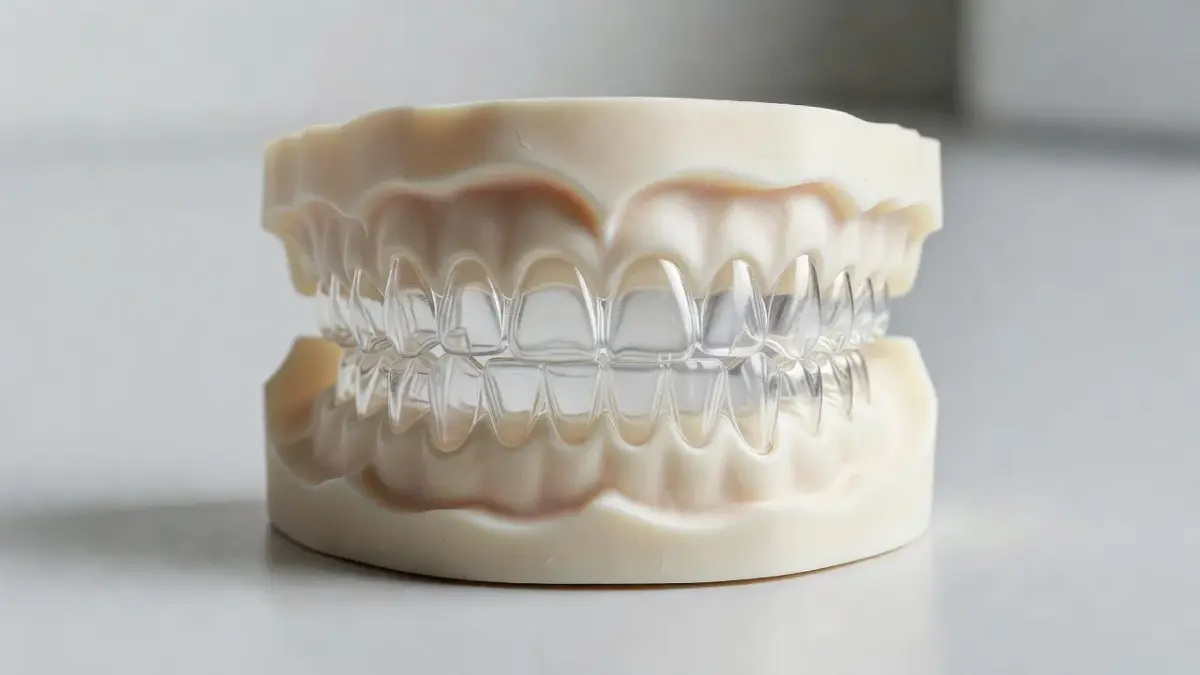
Clear aligners can align crooked teeth and fix minor dental overbites, but they cannot lengthen or move an adult jawbone. Aligners reduce profile convexity only if the profile issue is caused by tipping teeth rather than a short mandible bone.