

A face side profile is the lateral view of the human head, outlining the contours from the forehead down to the neck. Unlike a frontal view, the side view reveals structural depth, bone projection, and spatial proportions—specifically how the nose, lips, chin, and jawline align relative to one another.
When you evaluate a face side, you are looking at the interplay between underlying skeletal structures and surface soft tissues. Orthodontists, facial surgeons, and aesthetic analysts rely heavily on this angle because it highlights asymmetry and profile retrognathism (a receded jaw) or prognathism (an overextended jaw) that forward-facing photos often hide.
                    [FOREHEAD]
                         \
                      [NASAL BRIDGE]
                           \
                         [NOSE TIP]
                           /
                        [LIPS]
                         /
                      [CHIN / MENTON]
                       /
              [JAWLINE / GONIAL ANGLE]
What defines a face side profile?
The face side profile is defined by six primary anatomical landmarks: the forehead contour, nasal bridge, lips, chin projection, jawline angle, and cervicomental angle. These focal points dictate whether your profile appears convex, straight, or concave.
A straight (orthognathic) profile is widely considered the baseline for facial symmetry in classical aesthetics. Convex profiles feature a dominant midface with a retrograded chin, while concave profiles show a prominent lower jaw relative to the forehead and nose.
What anatomical features make up the lateral profile?
The lateral profile consists of the frontal bone, nasal cartilage, maxilla, mandible, and the submental soft tissue under the chin. The relationship between the maxilla (upper jaw) and mandible (lower jaw) sets the foundational angle for your entire lower face.
Your nasal tip projection determines how far out the midface extends. Meanwhile, the gonial angle (the corner of your jawbone below the ear) defines the sharp transition between your cheek and neck.
Why does your face look so different from the side?
Your face looks dramatically different from the side because a 2D front view flattens depth and hides spatial projection. In a front-facing selfie, lighting masks how far your chin projects or how steep your jawline slopes.
Camera lens focal length also alters your face from side angles. Close-up smartphone lenses warp lateral proportions, making the nose appear larger and the chin look weaker than they actually are in three-dimensional space.

How do experts measure facial harmony on a side view face?
Aesthetic experts measure facial harmony on a side view face using standardized reference lines that evaluate spatial proportions between the nose, lips, and chin. Rather than guessing, clinicians use fixed geometric angles to assess facial balance.
These measurement standards originated in orthodontic cephalometrics. They allow practitioners to pinpoint whether a perceived imbalance comes from bone structure or soft tissue depth.
What is Ricketts' Esthetic Line (E-Line)?
Ricketts' Esthetic Line is a straight reference line drawn from the tip of the nose to the tip of the chin on a side profile. According to cephalometric standards documented by the American Association of Orthodontists, ideal soft-tissue balance generally places the lower lip roughly 2 millimeters behind this line, with the upper lip sitting about 4 millimeters behind it.
If your lips press significantly past the E-line, it suggests lip protrusion or a receded chin. If your lips sit far behind the line, your profile may appear sunken or over-rotated.
How does the cervicomental angle affect jawline definition?
The cervicomental angle is the slope formed between the horizontal plane under the chin and the vertical line of the neck. An ideal cervicomental angle falls between 105 and 120 degrees, creating a sharp, well-defined separation between the jawline and throat.
A dull or obtuse angle (greater than 120 degrees) makes the jawline blur into the neck. This happens due to genetics, hyoid bone position, or submental fat deposition—even in individuals with low overall body fat.
| Reference | Measurement | Standard Range |
|---|---|---|
| E-Line (Ricketts) | Line from nose tip through lips to chin tip | |
| Cervicomental Angle (Jaw-to-Neck) | Angle between jawline and neck | 105°–120° |
The E-Line reference is established by positioning nose tip, lips, and chin tip in a vertical alignment. The cervicomental angle is measured where the jawline meets the neck.
What key variable determines your face side aesthetics?
The single most decisive variable determining your face side aesthetics is your underlying jaw bone structure rather than surface features. While skin clarity and lip size draw initial focus, your skeletal foundation dictates how soft tissues drape over your frame.
If your mandible lacks length or width, no surface treatment can create a sharp jawline from the side. Understanding this structural anchor keeps you from wasting effort on surface-level fixes that cannot alter bone projection.
Is your profile shaped by bones or soft tissue?
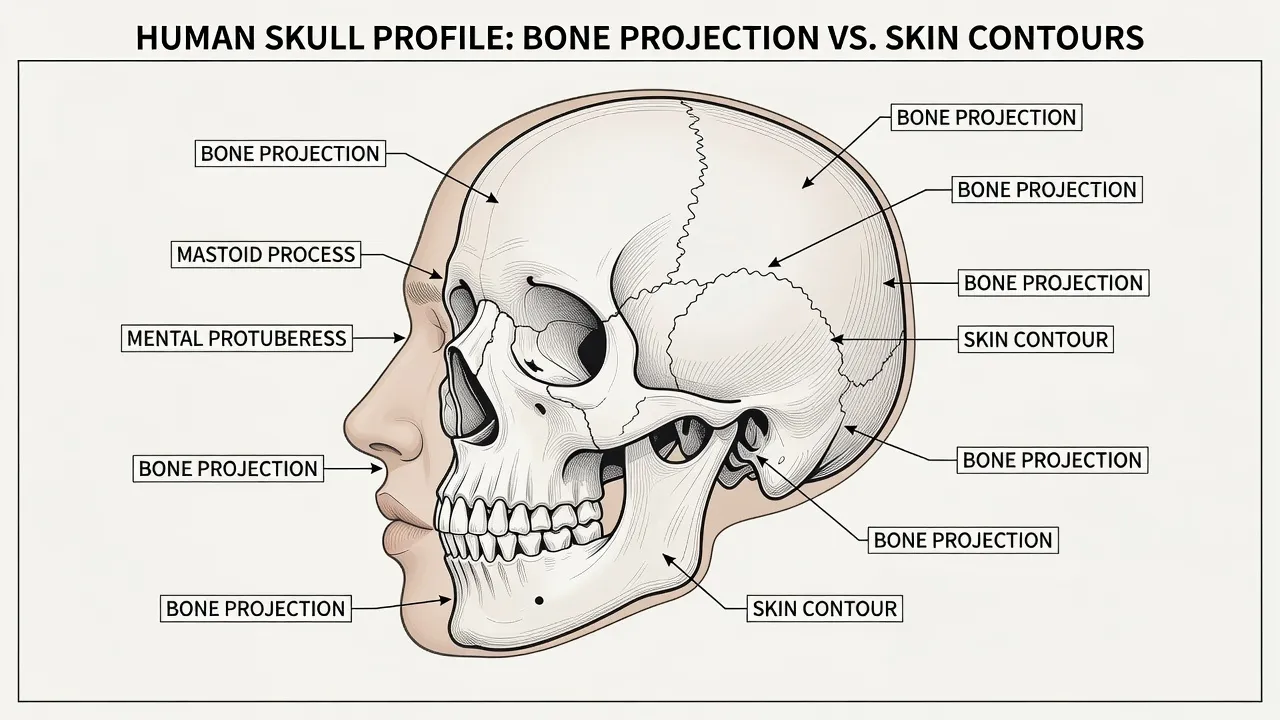
Your profile contour is shaped primarily by bone projection, which acts as the structural scaffold for skin and fat deposits. Hard tissue (the skull, maxilla, and mandible) sets the maximum boundaries of your facial projection.
Soft tissue distribution determines how smoothly those structural edges show through. Aging, hydration, and body composition change soft tissue volume over time, but your skeletal frame remains the primary anchor.
Can posture alter how your face looks from the side?
Yes, forward head posture and poor tongue positioning immediately degrade your jawline definition on a side view. Holding your neck at a forward angle pulls the hyoid bone downward, dragging throat tissue down and creating the illusion of a double chin.
Correcting your alignment through proper alignment techniques and maintaining resting tongue posture against the roof of the mouth tightens submental tissue. If you want to dive deeper into structural alignment, reading up on proper face posture explains how oral habits influence lower profile contours over time.
Key facial evaluation lines and metrics
Evaluating a face from side view requires specific reference points. The table below breaks down the primary measurement lines used by orthodontists and facial plastic surgeons to analyze profile geometry.
| Reference Metric | Anatomical Points | Ideal Range / Value | Aesthetic Significance |
|---|---|---|---|
| Ricketts' E-Line | Nose tip to chin tip (Pogonion) | Lower lip -2mm, Upper lip -4mm | Assesses lip prominence relative to nose and chin |
| Steiner's S-Line | Mid-nasal S-curve to chin tip | Lips touch the line directly | Evaluates soft tissue balance across the midface |
| Nasolabial Angle | Columella (base of nose) to upper lip | 90°–105° (Men), 95°–110° (Women) | Measures nasal tip elevation and upper jaw protrusion |
| Cervicomental Angle | Submandibular plane to anterior neck | 105°–120° | Determines sharpness of the chin-to-neck transition |
| Facial Convexity Angle | Glabella to Subnasale to Pogonion | 165°–175° | Identifies whether the profile is convex, straight, or concave |
As of August 2026, these cephalometric markers remain the clinical standard for profile planning, as noted in diagnostic guidelines from the National Center for Biotechnology Information. They strip away subjective bias and provide measurable data on facial proportions.
Why is the profile view so critical for facial analysis?
The profile view is critical for facial analysis because it isolates structural balance without the visual distraction of eye shape or hair styling. Frontal views can mislead you with makeup contouring or smiling, but a profile reveals raw facial balance.
Understanding your lateral geometry allows you to make informed decisions about grooming, hairstyles, or aesthetic goals. For instance, choosing haircuts based on face shape becomes far more effective when you factor in your side profile's projection alongside your frontal frame.
| Profile Type | Forehead | Nose | Chin |
|---|---|---|---|
| Convex Profile (Receded Mandible) | Slopes back | Slopes back | Slopes back |
| Straight Profile (Orthognathic) | Vertical | Vertical | Vertical |
| Concave Profile (Prominent Mandible) | Slopes forward | Slopes forward | Slopes forward |
How can AI analysis reveal your profile strengths?
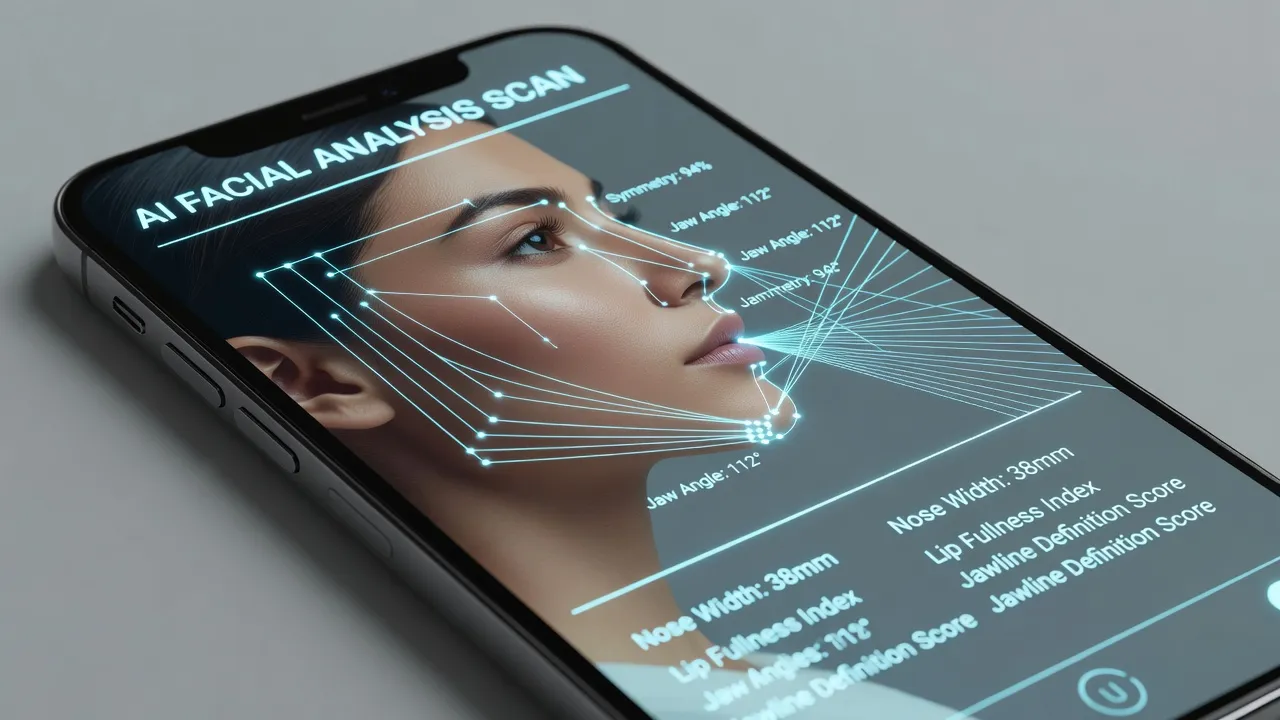
AI facial analysis measures lateral geometric angles from photos to benchmark your features against established aesthetic ratios. By calculating distances between your forehead, nasal tip, philtrum, and chin point, computer vision models offer an objective assessment of your profile harmony.
If you want a detailed breakdown of your facial proportions, the Glow Up & Attractiveness Test provides an accessible digital approach. The app features fine-tuned AI facial rating models specifically developed for women.
By taking a simple selfie, you can receive an instant beauty score alongside an in-depth analysis of face metrics. The system highlights your strongest structural features and offers tailored glow up tips to enhance your overall look.
For those looking to explore self-improvement strategies tailored to female aesthetics, combining these digital metrics with targeted advice on looksmaxxing for women provides a structured roadmap. Understanding your exact profile data helps you highlight your natural assets with confidence.
You can download the Glow Up & Attractiveness Test on iOS to start analyzing your lateral symmetry today.
Frequently Asked Questions
What is a good face side profile?
A good face side profile features balanced proportions where the nose, lips, and chin line up in visual harmony. Clinically, this usually means a straight facial convexity angle (165° to 175°), lips sitting slightly behind Ricketts' E-Line, and a sharp cervicomental jaw-to-neck angle between 105 and 120 degrees.
Can you fix a weak side profile naturally?
You can improve submental tightness and jawline appearance naturally by fixing forward head posture and practicing proper tongue alignment against the palate. However, natural habits cannot alter your underlying jawbone length or genetic bone density.
Why does my face side profile look flat in photos?
Your profile can look flat in photos due to wide camera lens focal lengths, harsh front lighting that washes out shadows, or soft tissue distribution over the midface. Close-lens camera distortion often compresses lateral depth, making structural projection look weaker than it appears in real life.
What is the difference between a convex and concave profile?
A convex profile features a prominent midface or a receded lower jaw, making the center of the face stick out relative to the forehead and chin. A concave profile features a prominent lower jaw (underbite pattern) where the chin projects outward further than the forehead and midface.
How do I measure my own side profile at home?
You can measure your profile by taking a straight-on profile photo at eye level from at least four feet away using a telephoto lens or zoom. Draw a straight line from your nose tip to your chin tip (E-Line) to check whether your lips touch or sit behind the line.
Does body fat percentage affect your profile from the side?
Yes, higher body fat stores submental fat beneath the chin, which obscures the gonial angle and dulls the cervicomental angle. Dropping overall body fat reduces tissue bulk around the neck, revealing the underlying jawline structure.
Is a retrognathic jawline permanent?
A retrognathic (receded) jaw structure is a permanent skeletal condition unless corrected through medical or orthodontic interventions like orthognathic surgery or clear aligners during developmental years. Non-surgical cosmetic options like dermal fillers can temporarily add visual projection to the chin point.