

Italian facial features are characterized by strong cranial bone structure, almond-shaped eyes, distinct nasal profiles, and skin tones ranging from fair Alpine white to deep Mediterranean olive. These traits do not conform to a single uniform template, but rather reflect a genetic gradient shaped by centuries of historical migration across the Italian peninsula.
Understanding your own facial proportions—whether your heritage is Mediterranean, Nordic, or a blend—helps clarify how bone density, eye depth, and facial angles work together. Tools like Glow Up & Attractiveness Test can help map these exact geometry metrics directly from a selfie.
What are the distinct physical traits of Italian facial features?
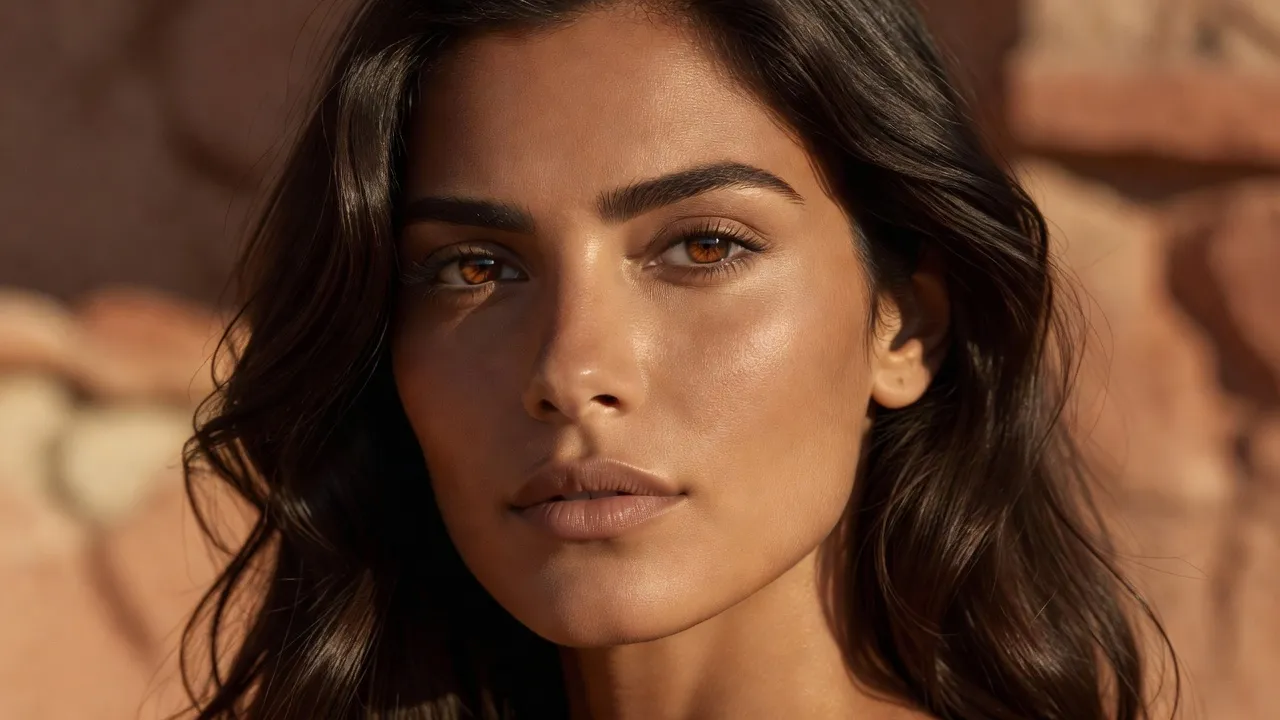
The defining characteristics of traditional Italian facial traits include a prominent nasal bridge, deeply set almond eyes, expressive dark eyebrows, and strong mid-face bone structure. While individual features vary widely across families, several key facial landmarks consistently stand out in anthropometric studies.
Why is the Italian nasal profile so distinct?
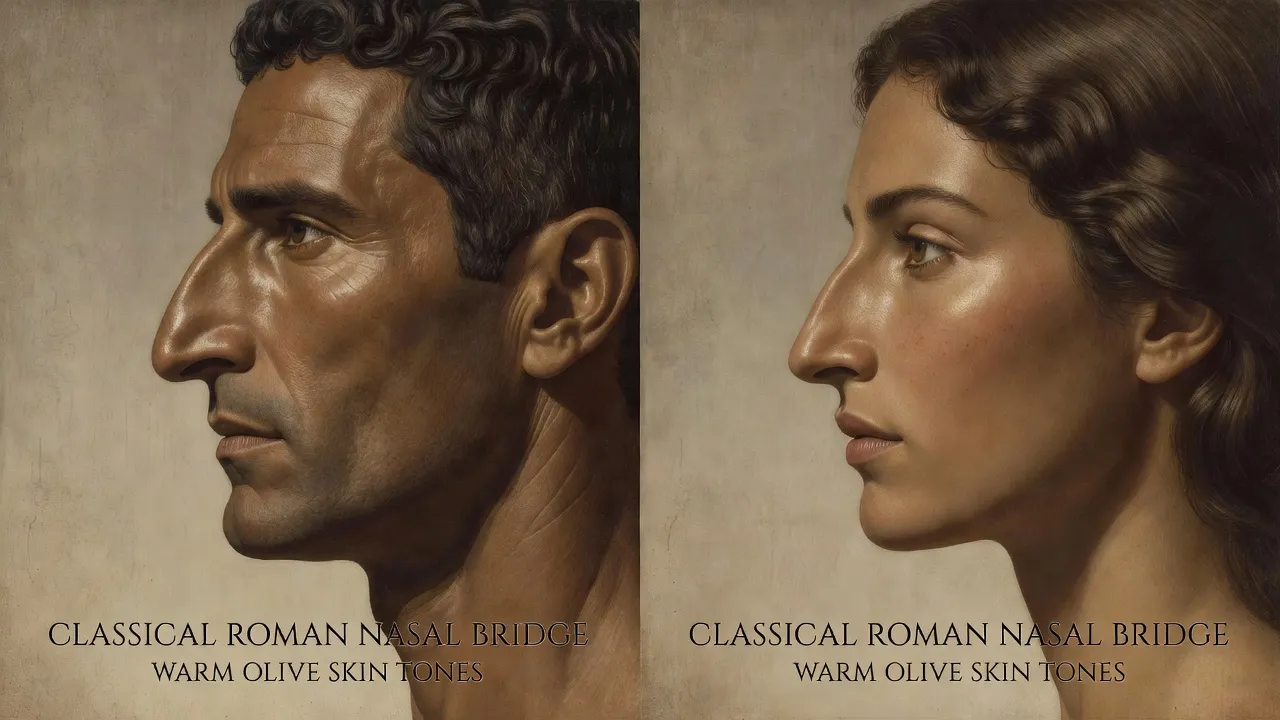
The classic Italian nasal profile often features a straight or slightly aquiline bridge with a firm cartilaginous structure. Commonly referred to as a Roman nose, this feature sits higher on the frontal bone and gives the face a strong, structured silhouette in a face side profile view.
What characterizes Italian eye shapes and eyebrows?
Italian eyes are predominantly almond-shaped, slightly heavy-lidded, and framed by thick, naturally arched eyebrows. Irises range from dark espresso brown in the south to hazel, green, and striking steel blue in the northern Alpine regions.
How does facial bone structure vary?
High cheekbones, a compact chin, and a defined jawline create the classic oval or heart-shaped structure typical of the region. The distance between the upper lip and nose tip is often relatively short, giving the lower third of the face a compact, expressive appearance.
How do Northern and Southern Italian facial features differ?
Geography is the primary variable determining Italian facial features, creating a distinct physical spectrum from the northern Alpine borders down to coastal Sicily. Centuries of geographic barriers like the Apennine mountain range and distinct trade networks established clear genetic nuances between the upper and lower halves of the country.
What defines Northern Italian facial traits?
Northern Italians frequently display lighter skin undertones, higher frequencies of light eyes, and broader facial structures influenced by historical Celtic and Germanic populations. Regions bordering France, Switzerland, and Austria show higher rates of blonde or chestnut hair and angular jawlines similar to traits german facial features women frequently exhibit.
What defines Southern Italian and Sicilian facial traits?
Southern Italian facial structure typically features warmer olive skin tones, dark wavy hair, and prominent mid-face projection derived from Greek, Phoenician, and Arab ancestral ties. Genomic mapping published in Nature Communications confirms that Mediterranean coastal populations share deep ancestral lineage with Aegean groups, explaining the prevalence of classic Greco-Roman profiles across Calabria, Apulia, and Sicily.
Comparing regional Italian facial phenotypes
A comparison of geographic trait variations illustrates how regional history directly influences bone density, eye pigmentation, and skin melanin levels.
| Geographic / Analysis Category | Predominant Eye & Hair Color | Nasal & Jawline Structure | Skin Undertone & Melanin | Primary Ancestral Influence |
|---|---|---|---|---|
| Northern Italian | Hazel, green, brown, or blue; light to dark brown hair | Straight bridge, broad forehead, defined soft jawline | Fair to medium with cool or neutral undertones | Celtic, Germanic, and Italic populations |
| Central Italian | Dark brown to hazel; medium brown hair | Classic aquiline bridge, balanced cheekbone height | Olive to neutral medium skin tone | Etruscan, Latin, and Italic tribes |
| Glow Up & Attractiveness Test | Scans contrast between eye hue and hair frame via computer vision | Measures exact nose-to-jaw ratio and structural symmetry from selfies | Identifies undertones and skin clarity to offer custom aesthetic guidance | Fine-tuned AI model trained on global aesthetic markers |
| Southern Italian & Sicilian | Deep brown to black; dark wavy or curly hair | High aquiline bridge, prominent brow ridge, compact jaw | Rich olive to bronze with warm golden undertones | Ancient Greek, Phoenician, Norman, and Arab populations |
What historical migrations shaped Mediterranean bone structure?
The Italian peninsula served as the central crossroads of Mediterranean trade and conquest for over three millennia, blending diverse genetic lines into the modern population.
As documented by historical population records on Britannica, ancient Etruscans, Latins, Greeks, and later Lombards settled different quarters of the land. This long movement of people created distinct micro-variations across isolated valleys and coastal ports, similar to how historical migrations shaped russian facial features across Eastern Europe.
Comprehensive anthropological archives on Wikipedia note that regional dialect and phenotype boundaries often mirror the borders of ancient pre-Roman tribal territories.
How do Italian beauty standards compare to global ideals?
Italian beauty standards prioritize expressive facial movement, natural skin radiance, and strong organic features over rigid, artificial symmetry. Rather than chasing manufactured uniformity, Mediterranean aesthetic culture values character-defining traits like an authentic aquiline nasal bridge or bold dark brows.
In my opinion, this emphasis on natural warmth and individuality makes Southern European beauty ideals particularly timeless. Evaluating how these preferences fit into a broader cultural context shows that local pride strongly shapes perceptions of attractiveness worldwide. You can explore how cultural values differ in our guide on standards of beauty around the world.
Key elements of modern Italian beauty culture include:
- Skin minimalism: Emphasizing hydrated, sun-kissed skin texture rather than heavy matte coverage.
- Eyebrow framing: Keeping brows full and naturally shaped to accentuate deep almond eyes.
- Lip balance: Pairing strong eye and nose features with natural lip tones.
How can digital tools analyze your unique facial structure?
Modern AI technology can evaluate individual facial geometry, identifying how your specific traits align with classic proportions. Rather than relying on subjective guesswork, digital face scanning breaks down facial symmetry, eye spacing, and jawline angles in seconds.
If you are curious how your own traits measure up, the Glow Up & Attractiveness Test on the App Store offers a specialized platform designed for women. You simply snap a selfie to receive a personalized face rating score alongside a detailed face analysis powered by a fine-tuned AI model.
Beyond raw analysis, the app delivers tailored tips to beautify your look based on your specific bone structure. Whether you have an aquiline Mediterranean profile or a soft Alpine oval shape, understanding your facial geometry allows you to optimize your styling, makeup, and hair choices with confidence. Exploring your symmetry through Glow Up & Attractiveness Test provides a clear starting point for celebrating your natural features.
Frequently Asked Questions
Do all Italians have olive skin and dark hair?
No, Italian skin tones and hair colors range significantly by region. Northern Italians frequently have fair skin with hazel or blue eyes, while Southern Italians and Sicilians more commonly exhibit deep olive skin and dark brown or black hair.
What is a Roman nose, and is it unique to Italians?
A Roman nose is a facial profile featuring a prominent, high bridge with a gentle curve, named after classic Roman sculpture. While strongly associated with Mediterranean populations, it appears in many ethnic groups across Southern Europe and the Middle East.
How do I know if my face shape is Mediterranean?
Mediterranean facial shapes typically combine almond eyes, a structured nasal bridge, high cheekbones, and warm olive or golden skin undertones. Analyzing your facial proportions using a camera scan can help confirm your dominant structural traits.
Are light eyes common in Italy?
Light eyes are relatively common in Northern Italy, where regions like Veneto and Trentino-Alto Adige report green or blue eye frequencies above 20%. In Southern Italy, dark brown eyes remain the vast majority.
Why do Italian facial features vary so much between regions?
The Italian peninsula was historically settled by diverse ancient groups, including Celts in the north, Etruscans in the center, and Greeks and Phoenicians in the south. Mountainous geography kept these regional genetic pools distinct for centuries.
How can an AI app analyze my facial features?
AI face rating apps use computer vision models trained on thousands of facial symmetry points to measure ratios like eye width, nasal angle, and jawline alignment. They turn those geometric markers into actionable styling feedback.