
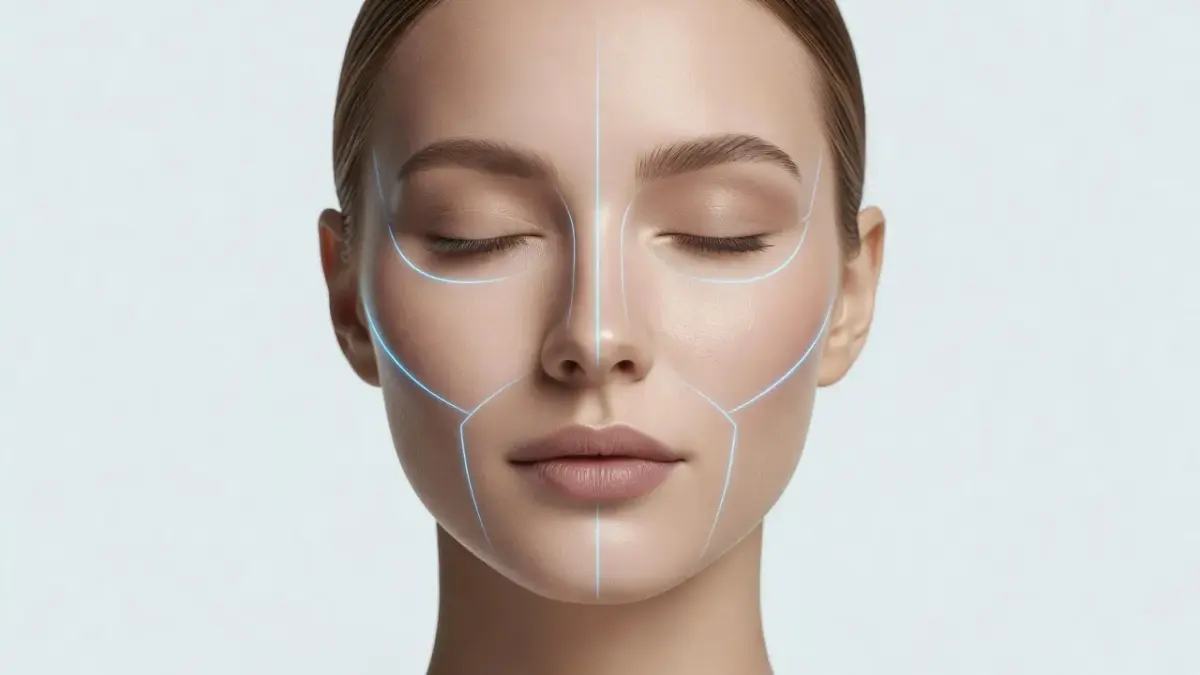
Facial features are the specific anatomical landmarks of the human face - including the eyes, nose, cheekbones, jawline, lips, and chin - that dictate facial structure, spatial proportions, and overall visual balance. These physical traits are determined by a combination of underlying skeletal bone structure, facial muscle distribution, and subcutaneous fat pads. To evaluate how your individual traits work together on your own face, Glow Up & Attractiveness Test provides an iPhone app that analyzes your selfie with AI to map your facial balance.
Understanding facial feature examples requires looking at both hard tissue (bones) and soft tissue (muscles and fat). Below is a guide to the ten primary facial feature examples, detailing their biological foundations, aesthetic roles, and physical constraints.
1. High Cheekbones (Zygomatic Arch Prominence)
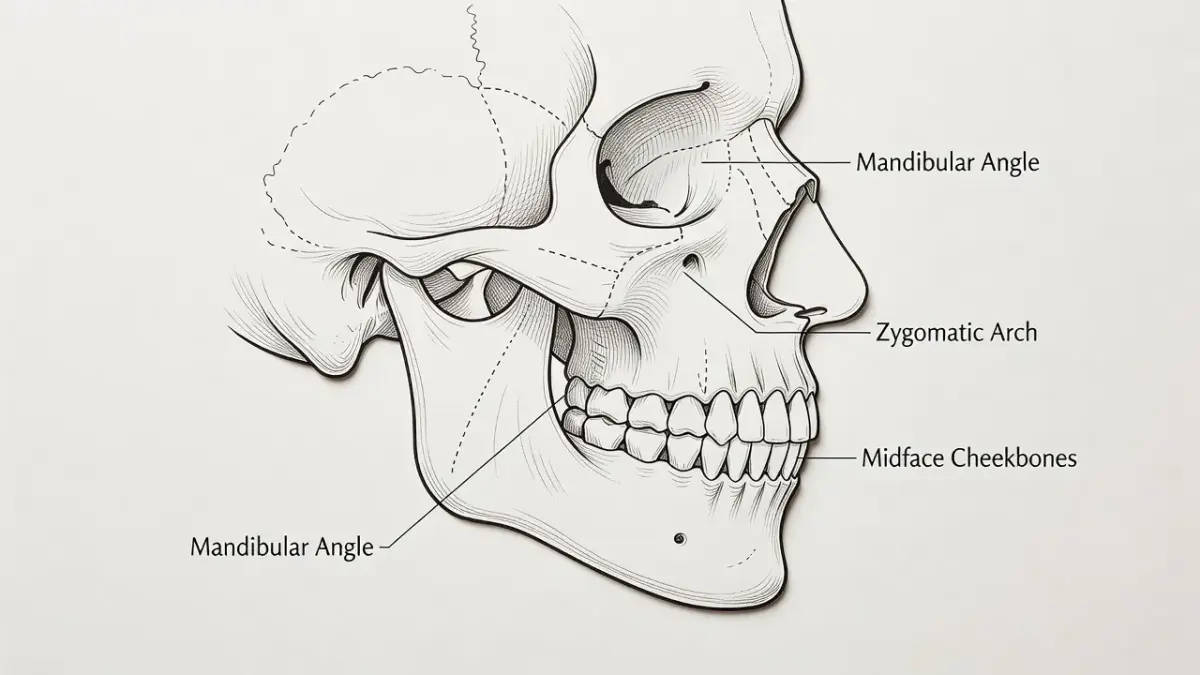
High cheekbones occur when the zygomatic arch sits close to the eyes, creating a sculpted upper facial structure with visible shadows beneath the cheek cavity. Anatomically, the zygomatic bone forms the prominence of the cheek, serving as an attachment point for major chewing muscles like the masseter.
High cheekbones are widely associated with structural symmetry and youthfulness. As facial aging occurs, cheekbones with significant bony projection provide physical support for midface soft tissue, preventing early skin sagging.
Key Limitation: The visibility of high cheekbones depends heavily on body fat percentage and skin thickness. If subcutaneous fat levels are elevated, even a well-defined zygomatic arch can remain entirely hidden under soft tissue.
2. Defined Jawline and Mandibular Angle
A defined jawline is characterized by a sharp mandibular angle that creates a clear line of separation between the lower face and the neck. The jawline is formed by the mandible, with the ideal aesthetic angle typically falling between 110 and 130 degrees when viewed from the side.
A sharp jawline provides strong structural anchor points for lower facial muscles. In facial aesthetics, a clear jawline gives the head a grounded, athletic frame and prevents the appearance of a premature double chin.
Key Limitation: Jawline definition can be severely obscured by water retention, bad posture, or a retruded chin bone structure. You can learn more about how skull geometry influences jaw posture in our guide to measuring face proportions.
3. Almond Eyes and Positive Canthal Tilt
Almond eyes feature an oval shape with tapered outer corners and a positive canthal tilt, meaning the lateral corner sits higher than the medial corner. The canthal tilt is determined by the alignment of the medial and lateral palpebral ligaments relative to a horizontal axis.
Almond-shaped eyes create an alert, harmonious eye area because the upper eyelid covers a small portion of the iris while keeping the sclera (white part) hidden along the bottom edge. A positive tilt of 2 to 5 degrees is generally considered an aesthetic benchmark in facial anthropology studies available on PubMed Central.
Key Limitation: Bone structure surrounding the eye orbit (the supraorbital rim) restricts how much eye shape can be modified without surgical intervention. High eyebrow asymmetry can also create the optical illusion of an uneven eye tilt.
4. Nasal Bridge Structure and Tip Projection
The nose serves as the central focal anchor of the face, defined by the height of the nasal bridge, the width of the nostrils, and the angle of tip projection. The upper third of the nose consists of bone, while the lower two-thirds are formed by hyaline cartilage.
Because the nose sits in the exact center of the face, its proportions dictate the visual harmony of both the front view and side profile. A straight nasal bridge creates a clean vertical line that balances the distance between the forehead and chin.
Key Limitation: Minor deviations in nasal cartilage are extremely common, but focal length distortion from smartphone cameras frequently makes the nose look up to 30% wider in close-up selfies than it actually is in person.
How to Measure Your Facial Features Using AI
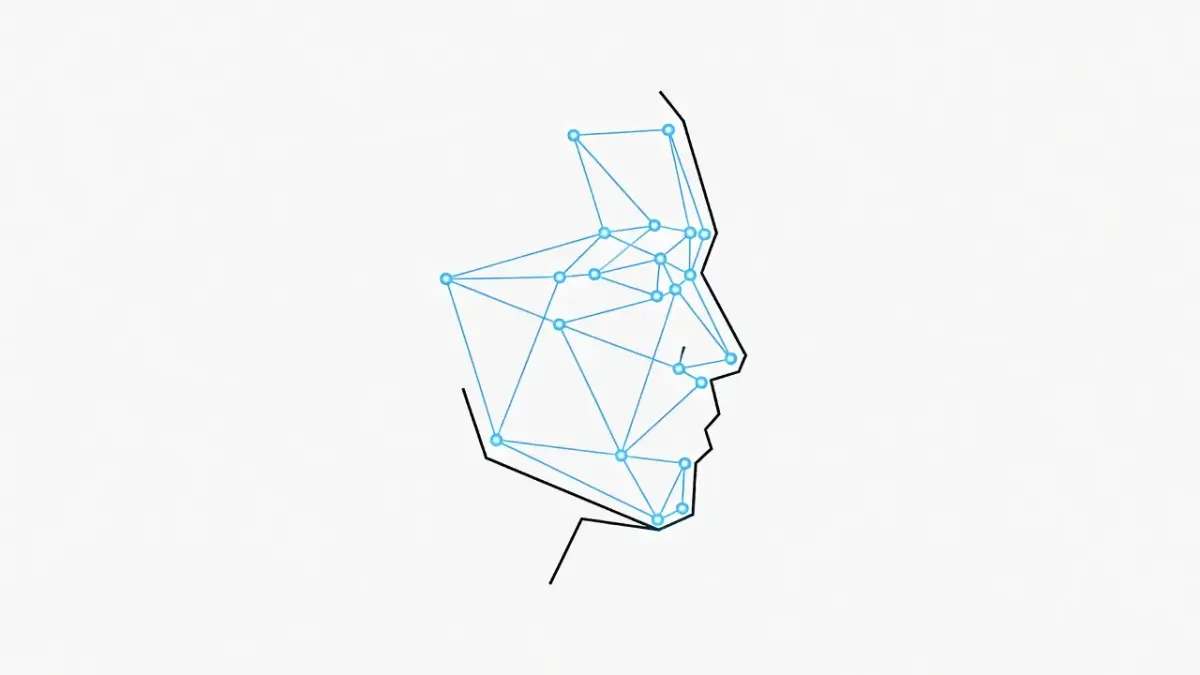
You can measure your facial features manually using calipers or digitally using AI image analysis to map facial ratios. While manual measurements require holding a physical ruler against landmark points like your cheekbones and jaw, computer vision offers a faster way to evaluate proportions without lens distortion errors.
If you want a personalized analysis of your facial traits, Glow Up & Attractiveness Test offers an automated breakdown. Available on iOS for $9.99/week, the app uses a fine-tuned AI model trained on facial geometry to deliver key features:
- Selfie Face Analysis: Snap a photo to get a personalized face rating score and feature mapping.
- Proportion Breakdown: Receive detailed feedback on your facial symmetry, jawline clarity, and feature balance.
- Actionable Advice: Get tailored tips to beautify your look based on your unique structure.
Using AI facial mapping helps eliminate lighting bias, making it easier to track changes in skin clarity or face bloating over time.
5. Full Lips and Philtrum Ratio
Full lips are defined by voluminous vermilion borders, a clearly shaped Cupid's bow, and a short philtrum distance between the base of the nose and the top lip. Anatomically, lip volume comes from the orbicularis oris muscle and localized fat deposits.
A balanced lip ratio usually follows a 1:1.6 proportion, where the lower lip has slightly more volume than the upper lip. A short philtrum (ideally 11 to 15 millimeters) is widely associated with youthfulness, as the philtrum naturally lengthens with age.
Key Limitation: Overfilling or improper lip muscle movement can destroy the natural Cupid's bow curve, leading to a projected appearance often referred to as "duck lips" in cosmetic dermatology.
6. Symmetrical Eyebrows and Supraorbital Ridge
Eyebrows frame the upper face, and their shape is dictated by the underlying supraorbital ridge (brow bone) and facial nerve innervation. The ideal eyebrow position sits directly on or slightly above the orbital rim for women, featuring a subtle arch two-thirds of the way toward the outer edge.
Eyebrows establish horizontal symmetry and balance high foreheads. Because brows are heavily involved in emotional expression, well-groomed, dense brows draw direct visual attention toward the eyes.
Key Limitation: Over-plucking or skin conditions like alopecia can thin brow hair permanently, forcing individuals to rely on microblading or cosmetics to maintain optical brow density.
7. Facial Symmetry and Golden Ratio Harmony
Facial symmetry refers to the degree of equal bilateral balance between the left and right sides of the face. While perfect mirror symmetry does not exist in nature, higher levels of facial symmetry are parsed by the human brain as indicators of developmental stability, as documented on Wikipedia's Facial Symmetry reference guide.
Symmetry is evaluated using the rule of thirds (dividing the face into equal vertical segments from hairline to brow, brow to nose base, and nose base to chin) and fifths (dividing the face horizontally by eye-widths).
Key Limitation: Structural asymmetry is often caused by habit patterns - such as sleeping on one side, chewing on one side of the jaw, or dental misalignment - rather than pure genetics. For a complete breakdown on measuring structural balance, review our analysis on what face symmetry is.
8. Prominent Chin (Mental Protuberance)
A prominent chin is established by the projection of the mental protuberance of the mandible, providing horizontal balance to the nose and forehead. When looking at a side profile, a line dropped vertically from the lower lip should touch or sit slightly ahead of the chin tip.
A strong, well-projected chin prevents a "weak" profile and supports the submental area (the region under the jaw), keeping neck skin taut.
Key Limitation: A recessed chin (retrognathia) is frequently a functional airway issue caused by mouth breathing during child development rather than just a cosmetic concern. Correcting it often requires orthodontic intervention or jaw surgery rather than simple cosmetic fixes.
9. Broad vs. Narrow Forehead Width
Forehead width and height are determined by the frontal bone structure and the natural position of the hairline. The forehead accounts for the upper third of the facial balance equation, serving as the backdrop for brow positioning.
A balanced forehead has a height roughly equal to the distance from the brow to the tip of the nose. Broad foreheads convey intellect and open facial space, whereas narrow foreheads shorten the overall facial shape.
Key Limitation: Hairline recession due to androgenetic alopecia can alter natural forehead proportions rapidly, throwing off historical upper-third facial balance.
10. Facial Dimples and Soft Tissue Accents
Facial dimples are caused by a structural variation in the zygomaticus major muscle, where a split muscle belly creates a visible indentation when smiling. Dimples are considered a unique aesthetic accent trait that breaks up facial surface area and adds animation to expressions.
Unlike bone features, dimples are dynamic features - meaning they appear primarily during muscle movement rather than remaining static at rest.
Key Limitation: Because dimples are caused by a genetic muscle variation, they cannot be naturally created through face exercises. Cosmetic dimpleplasty can simulate them, but artificial dimples often look unnaturally deep when the face is at rest.

Comparison Matrix: Facial Features, Measurement Metrics, and Aesthetic Impact
The table below breaks down the ten facial feature examples, detailing their underlying anatomical structure, primary measurement criteria, and functional limits as evaluated in 2026.
| Facial Feature Example | Underlying Anatomy | Primary Measurement Metric | Key Aesthetic Limitation |
|---|---|---|---|
| 1. High Cheekbones | Zygomatic bone & arch | Zygomatic width vs. jaw width ratio | Obscured if facial body fat is high |
| 2. Defined Jawline | Mandible bone & masseter | Mandibular angle (110°–130° optimal) | Affected by water bloat & neck posture |
| 3. Almond Eyes | Palpebral ligaments & orbit | Canthal tilt angle (+2° to +5°) | Hard tissue orbital rim restricts shape |
| 4. Nasal Bridge | Nasal bones & hyaline cartilage | Nasofacial angle & tip projection | Camera lens focal length distorts width |
| 5. Full Lips | Orbicularis oris muscle | Upper to lower lip height ratio (1:1.6) | Fillers risk destroying Cupid's bow |
| 6. Symmetrical Brows | Supraorbital ridge & frontalis | Distance from pupil to brow arch | Hair thinning requires cosmetic fill |
| 7. Facial Symmetry | Bilateral craniomaxillofacial bone | Bilateral landmark deviation (<2mm) | Habitual chewing/sleeping alters alignment |
| 8. Prominent Chin | Mental protuberance of mandible | Profile line from lip to chin point | Recessed chin often reflects airway issues |
| 9. Balanced Forehead | Frontal bone & hairline | Upper third vertical height ratio | Hairline recession shifts proportions |
| 10. Cheek Dimples | Bifid zygomaticus major muscle | Indentation depth during muscle flexion | Cannot be created without surgical cuts |
How Camera Angles and Lighting Distort Facial Features
Camera lens focal length and lighting placement can drastically alter how your facial features appear in photographs. A 28mm smartphone camera lens used at arm's length expands central facial features - making the nose appear larger and the ears smaller - compared to an 85mm telephoto lens used by professional photographers.
To get an accurate view of your real facial features:
- Step Back: Place the camera at least 5 feet away and use 2x optical zoom to minimize focal distortion.
- Use Soft, Frontal Light: Overhead lighting creates deep shadows under the eyes and nose, artificially emphasizing dark circles or bump contours.
- Keep Head Level: Tilting the head up or down skews jawline angles and philtrum length. If you want to see how angle adjustments shift feature perception, check out our guide on face shape analysis.
Frequently Asked Questions
What are the main facial features?
The primary facial features are the eyes, eyebrows, nose, cheekbones, lips, jawline, chin, and forehead. These features are defined by the underlying skull bones, facial muscles, and subcutaneous fat layers.
Can facial features change naturally as you age?
Yes, facial features change over time due to bone density loss, fat pad drift, and reduced skin elasticity. As collagen drops, the philtrum lengthens, lips lose volume, and jawline definition softens.
What is the rarest facial feature?
Naturally occurring cheek dimples and true amber or green eyes are among the rarest facial feature traits worldwide. Dimples occur in roughly 20% to 30% of the global population due to a unique muscle structure.
How do I figure out my best facial feature?
You can identify your strong facial features by evaluating visual contrast, symmetry, and bone definition. Looking at neutral front-facing photos in soft lighting helps highlight whether your eye shape, cheekbone projection, or jawline structure provides the strongest anchor.
Does body fat percentage affect facial features?
Body fat percentage directly alters how sharp or defined your bone features appear. Lowering facial water retention and body fat brings out underlying structures like high cheekbones and mandibular angles, while higher body fat softens feature edges.
Can you change your facial features without surgery?
While bone structure cannot be altered without surgery or orthodontics, you can optimize soft tissue features. Weight management, facial muscle training, posture alignment, and makeup contouring significantly alter the visual appearance of jawlines and cheekbones.
Tracking and Optimizing Your Features
Understanding your facial features provides a clear baseline for personal grooming, makeup placement, and overall aesthetic tracking. Whether you have prominent cheekbones, almond eyes, or a sharp jawline, harmony between features matters far more than any single isolated trait.
As of November 2026, mobile tools make tracking facial structure simpler than ever. If you want a digital breakdown of your proportions, download Glow Up & Attractiveness Test on iOS to analyze your selfies, measure feature balance, and access targeted tips for your aesthetic journey.