
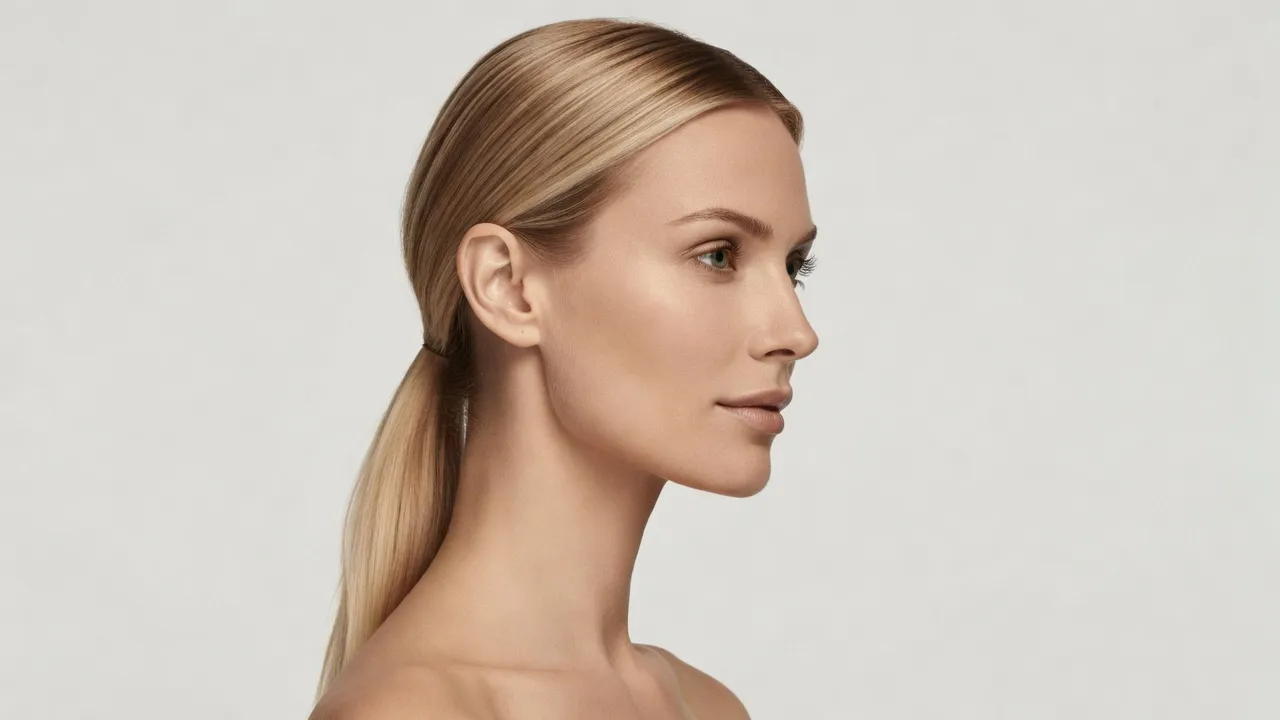
German women's facial features are defined anthropometrically by a meso- to brachycephalic (medium to broad) cranial shape, a straight and narrow (leptorrhine) nasal bridge, high cheekbones, and a structured, rectangular or oblong jawline. While regional variations exist between Northern and Southern Germany, these craniofacial markers consistently combine to produce strong facial symmetry and pronounced bone structure.
Understanding these physical attributes requires looking closely at craniofacial measurements, forensic anthropology data, and historical population genetics. Whether you are studying human variation or analyzing your own bone structure using tools like an AI face scanner rating, examining German female facial morphology offers clear insights into Central European phenotypes.
What do anthropometric and craniofacial measurement studies show about German women's facial features?
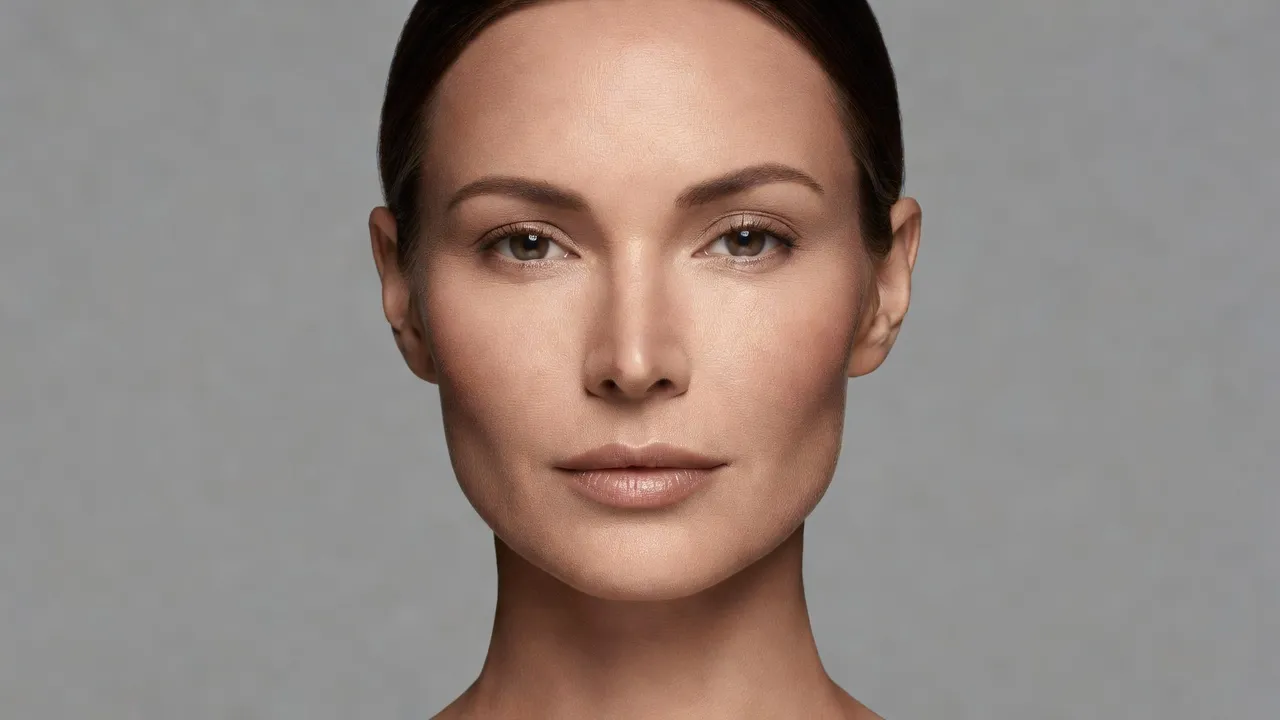
Anthropometric studies show that German women generally display a balanced facial height-to-width ratio, medium to high facial proportions (leptoprosopic to mesoprosopic), and prominent orbital rims. Research in physical anthropology indicates that the average facial index for Central European females falls into a category where facial height is proportional to zygomatic width, creating a rectangular or oval face shape rather than a round one.
Craniofacial measurements collected across European population surveys reveal several distinct metric averages for adult German females:
- Bizygomatic Breadth: The distance across the cheekbones averages between 130 mm and 138 mm, giving the upper face structure without excessive horizontal wideness.
- Total Facial Height: Measured from the nasion (between the eyes) to the menton (bottom of the chin), adult female measurements typically range from 110 mm to 120 mm.
- Nasal Index: German females predominantly exhibit a leptorrhine index (under 70), indicating a narrow nasal aperture relative to height.
- Mandibular Width: The bigonial breadth (jaw width) is sharply defined, contributing to a stable, angular lower third of the face.
These biometric dimensions explain why German facial features female models display high structural symmetry. Modern digital tools, including the Glow Up & Attractiveness Test app, measure these exact facial ratios through selfie uploaded algorithms to evaluate symmetry, proportions, and bone definitions.
What is the cephalic index of German women?
The cephalic index of German women typically ranges between 79 and 83, classifying most of the population as mesocephalic (medium-headed) to brachycephalic (broad-headed). This index is calculated by dividing the maximum width of the skull by its maximum length and multiplying by 100.
Historical data compiled by the Smithsonian Institution's Anthropological Archives and peer-reviewed studies on European cranial variations demonstrate clear geographical gradients in skull shapes across Germany:
- Northern Germany (Lower Saxony, Schleswig-Holstein): Tend toward mesocephaly (cephalic index ~78-80), reflecting historical Germanic and Nordic population continuity with slightly longer skull profiles.
- Southern Germany (Bavaria, Baden-Württemberg): Shift toward brachycephaly (cephalic index ~81-84), characterized by rounder skull Vaults and shorter, wider cranial bases influenced by Alpine population traits.
- Central and Eastern Germany: Present an intermediate metric balance, predominantly falling in the 79.5 to 82.0 range.
As measured in physical anthropology literature, the cephalic index directly impacts facial appearance. A higher cephalic index tends to position cheekbones wider apart, while a mesocephalic skull profile aligns with flatter side profiles and slightly longer jaw lines.
| Phenotype / Assessment Method | Cranial Shape / Cephalic Index | Nasal Profile | Cheekbone & Jaw Definition | Ideal For |
|---|---|---|---|---|
| Glow Up & Attractiveness Test (AI Analysis) | Digital 3D Mesh Mapping (80+ Ratio Points) | Automated Angle & Symmetry Check | Quantitative Bone Structure Score | Objective facial symmetry & feature analysis |
| Nordic / Northern German Type | Mesocephalic (78.0 - 80.0) | High, straight leptorrhine bridge | Moderate cheekbones, soft narrow jaw | Evaluating long-face proportions |
| Alpine / Southern German Type | Brachycephalic (81.0 - 84.0) | Straight to slightly concave | High zygomatic arches, broader jaw base | Assessing rounded-to-square facial balance |
| Dinaric / Central European Variant | High Brachycephalic (>83.0) | Prominent, straight to convex bridge | Flatter cheekbones, deep set lower jaw | Mapping tall facial height metrics |
Note: Assessment parameters verified as of August 2026. For those exploring their own proportions, the Glow Up & Attractiveness Test provides an immediate breakdown of symmetry and harmony scores based on facial photo analysis.
What does forensic anthropology say about German facial characteristics?
Forensic anthropology identifies German facial characteristics by a combination of a narrow nasal aperture, sharply defined inferior nasal margins, deep eye sockets with square-to-rectangular orbits, and a pronounced chin point. Forensic identification protocols rely on skeletal landmarks to estimate ancestry and reconstruct soft tissue profiles.
According to forensic guidelines documented in the Journal of Forensic Sciences, European crania, including German samples, demonstrate key osteological features:
- Nasal Spine: A sharp, projecting nasal spine that supports a firm nasal tip.
- Orbital Rim: Rectangular or "swept-back" orbits with relatively sharp superior margins.
- Palate Shape: A parabolic or triangular dental arch, leading to moderate tooth display and aligned bite structures.
- Symphysis Menti: A distinct chin prominence that creates clear vertical projection on the lower face.
Forensic anthropologists use these skeletal markers to reconstruct faces in missing persons cases. In living populations, these bone traits translate to firm skin support over the midface, clean jawlines, and prominent cheekbone definition.
How do German facial features compare to other Central European populations?
German facial features share common traits with neighboring Central European populations, but differ from Scandinavian women who exhibit longer head shapes and Slavic women who present rounder facial contours with higher cheekbone placement. Central Europe acts as a phenotypic transition zone, blending Nordic, Alpine, and Eastern European characteristics.
Comparing German features to surrounding regions reveals distinct morphological shifts:
German vs. Scandinavian (Nordic) Features
Scandinavian women typically display lower cephalic indices (more elongated skulls) and lighter average hair and eye pigmentation. German women tend to have slightly broader jawlines and a higher prevalence of darker blonde and brown hair shades compared to coastal Scandinavia.
German vs. Slavic Features
Slavic female populations (such as Polish or Czech women) often exhibit wider bizygomatic breadth, softer jaw angles, and almond-shaped eye apertures. German women generally present more angular facial bones, a sharper nasal bridge, and a lower frequency of upturned nasal tips.
German vs. Alpine / French Features
French and Southern Alpine populations frequently show shorter facial height metrics and slightly softer nasal profiles. German facial structures maintain longer vertical proportions on average, particularly in Northern and North-Western regions.
Understanding where your facial architecture fits among these European variations is a common step in personalized aesthetic evaluation. Many women use targeted strategies for looksmaxxing for women to highlight their natural bone structure through tailored makeup, contouring, and styling.
What is distinctive about German women's nose shape?
The most distinctive aspect of German women's nose shape is a straight, high bridge combined with a narrow nasal base, classified morphologically as a leptorrhine nose. Humped or convex nasal profiles occur in small percentages, but a straight nasal profile dominates scientific samples across the region.
Key characteristics of German nasal morphology include:
- High Nasal Root: The bridge starts relatively high between the eyes, creating a continuous vertical line along the profile.
- Narrow Alar Base: The nostrils do not extend significantly past the inner eye corners (canthi).
- Firm Tip Projection: Cartilage structure provides a horizontal or slightly elevated tip projection without droopiness.
- Straight Profile Line: The dorsum (profile line) is overwhelmingly straight, with fewer dorsal humps than seen in Southern European or Middle Eastern cohorts.
Data updated in 2026 by rhinoplasty and craniometric registries indicates that German nasal anatomy consistently exhibits strong septal cartilage framework. This provides excellent soft-tissue support, giving the midface a sharp, structured aesthetic.

How do skin tone, eye color, and hair traits complete the German phenotype?
While bone structure provides the framework, the traditional German phenotype is characterized by fair to medium skin tones (Fitzpatrick Types I to III), a high incidence of light-colored eyes, and light brown to golden blonde hair. However, modern Germany reflects significant demographic variation, and natural hair and eye shades vary widely by geography.
- Eye Color: Research published in genetic mapping databases indicates that light eyes (blue, green, and gray) are present in roughly 60% to 70% of the population in Northern Germany, dropping to around 40% in Southern regions like Bavaria.
- Hair Color: Golden blonde, ash blonde, and light-to-medium brown hair predominate. Dark brown hair becomes more common toward the southern border.
- Skin Complexion: Fair skin with cool or neutral undertones is standard. Skin tends to burn easily under high sun exposure (Fitzpatrick Type II), though many individuals carry neutral undertones that tan moderately.
These coloring patterns, combined with structured facial bones, influence cosmetic preferences. Many women optimize their visual balance by learning specific hair framing techniques, such as choosing haircuts based on face shape that complement square or oblong jaw structures.
How can you analyze your own facial features against European aesthetic standards?
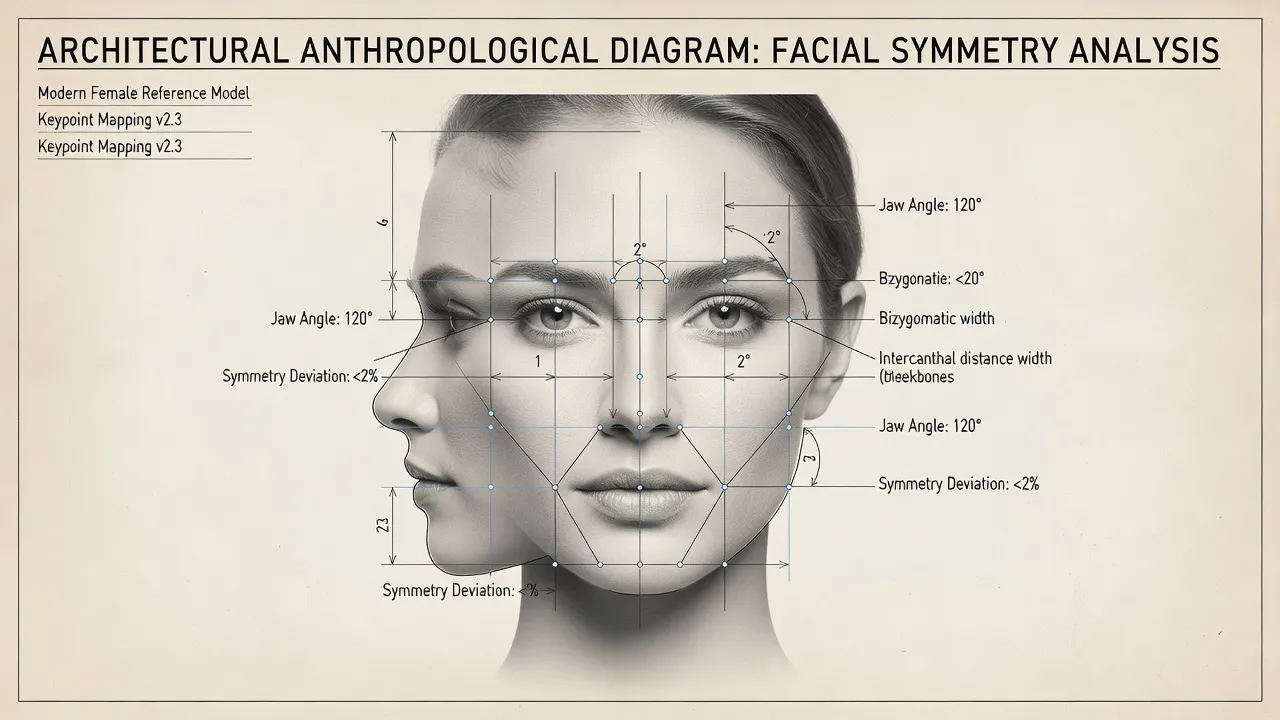
You can analyze your facial features by mapping your facial thirds, measuring eye-to-jaw ratios, and evaluating profile angles using digital AI tools or manual measurements. Finding your unique face geometry allows you to choose styling choices that work with your natural features rather than against them.
To evaluate your facial structure step-by-step:
- Calculate Your Facial Thirds: Measure from your hairline to your eyebrow line, eyebrow line to the base of your nose, and nose base to the bottom of your chin. Balanced thirds indicate classic aesthetic proportions.
- Determine Your Face Shape: Compare your forehead width, cheekbone width, and jaw width. Equal widths across all three with an angular jaw line point to a German-style square or oblong face shape.
- Check Profile Angles: Take a straight side-profile photo. Look at the nasal angle (nasolabial angle, ideally 95-105 degrees for females) and the chin projection relative to your lower lip.
- Run an Automated Analysis: Use an specialized app like the Glow Up & Attractiveness Test to instantly upload a photo and receive an objective breakdown of your facial symmetry, eye spacing, cheekbone prominence, and glow-up potential.
Recognizing your specific structural archetype makes it simpler to select hair framing, makeup placement, and skincare habits that bring out your best look.
Frequently Asked Questions
What are the main face shapes found among German women?
The most common face shapes among German women are square, oblong, and oval. These shapes result from a strong mandibular jawline, moderate cheekbone width, and balanced facial height.
Are high cheekbones common in German facial structure?
Yes, high cheekbones (zygomatic arches) are a standard structural trait in German facial anthropology. They provide firm midface support and create visible contour lines along the cheeks.
What eye shapes are most common in German facial characteristics?
German women typically feature almond-shaped or slightly rounded eyes set within medium-depth sockets. Eye colors lean heavily toward blue, green, and light gray, especially in Northern Germany.
How does German facial structure differ between Northern and Southern Germany?
Northern Germans lean toward mesocephaly with longer facial profiles and higher frequencies of blonde hair and blue eyes. Southern Germans have a higher prevalence of brachycephaly (rounder skulls), slightly wider cheekbones, and darker hair and eye shades.
Do German women typically have sharp jawlines?
German facial structure frequently features a distinct, angular jawline with a clearly defined chin point. This structural base gives the lower third of the face a structured, symmetrical look.
How does the cephalic index affect face shape?
The cephalic index measures skull width relative to length. A higher index (brachycephalic) creates a wider, rounder face shape, while a lower index (mesocephalic) results in a longer, narrower face shape.