
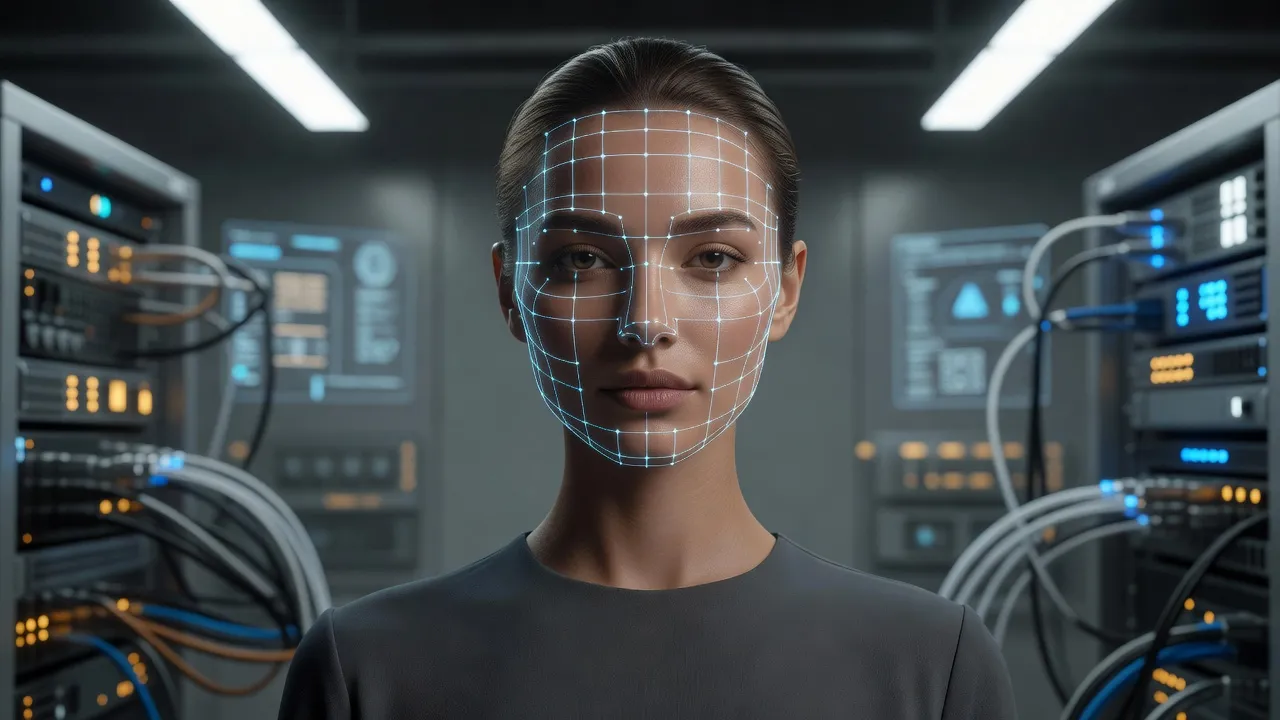
An AI face rating uses computer vision algorithms to evaluate facial photos based on geometry, symmetry, skin texture, and proportion to generate a score. Most systems rely on deep convolutional neural networks trained on dataset collections of human-scored portraits. While these tools offer quick automated feedback, individual scores fluctuate heavily depending on camera focal length, lighting position, and facial angle.
Understanding how machine learning evaluates human facial features helps you interpret these automated scores without misinterpreting the numbers. Here is how current algorithmic face scanners work, how major platforms compare, and where each tool hits its technical limits as of August 2026.
How does Face++'s BeautyScore API rate attractiveness?
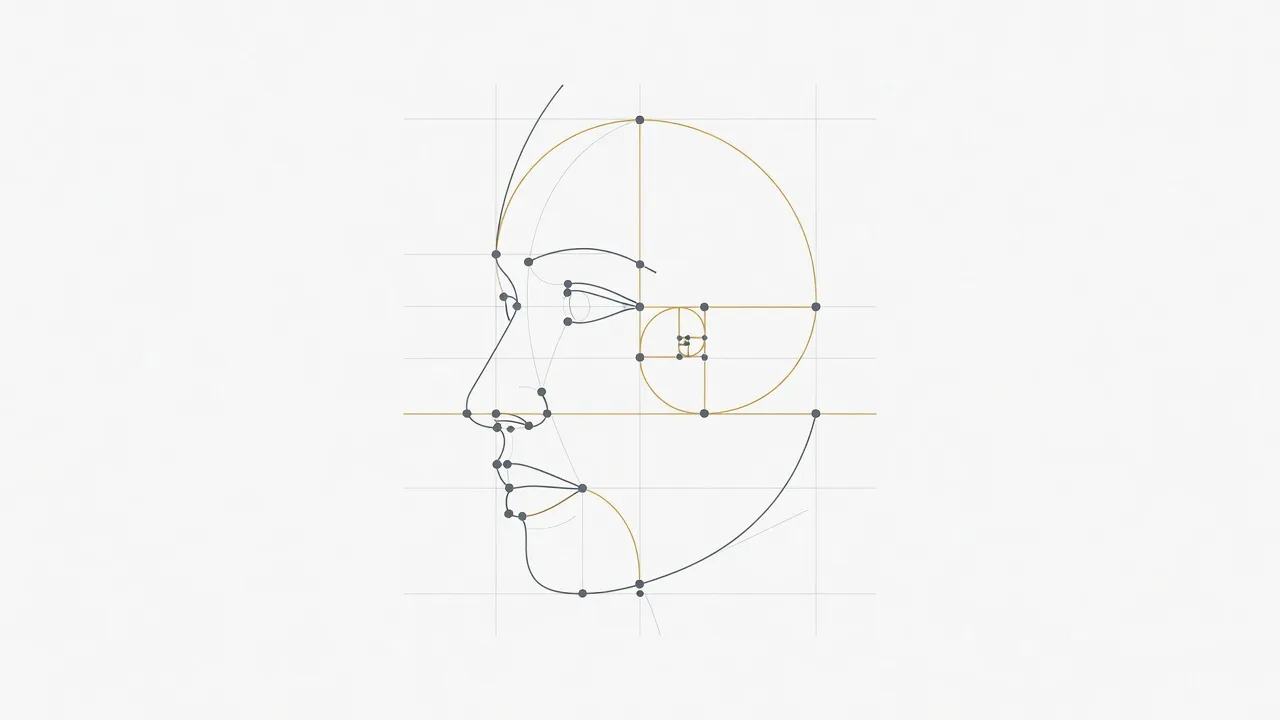
Face++'s BeautyScore API estimates attractiveness by analyzing 106 facial landmark coordinates to measure structural symmetry, facial proportions, and skin uniformity. Built by Megvii, this enterprise API processes uploaded images through deep neural networks trained on thousands of human-annotated faces.
The system evaluates facial proportions against programmed aesthetic baselines. The core calculation breaks down into three key measurements:
- Structural Symmetry: Comparing distance vectors between eye corners, jawlines, and cheekbones across the central facial axis.
- Proportional Ratios: Calculating vertical thirds (forehead to eyebrow, eyebrow to nose base, nose base to chin) and horizontal fifths.
- Surface Texture: Scanning pixel density variations to identify blemishes, wrinkles, and skin tone evenness.
I consider the Face++ API a reliable technical benchmark for developers, but it carries a hard constraint for average users. Because it is an enterprise API rather than a consumer app, accessing it requires coding a custom API request or using third-party wrappers. Furthermore, its scoring algorithm heavily reflects the training demographics of its dataset, meaning slight changes in lighting or face tilt cause score swings of up to 1.5 points on a 10-point scale.
Is Hotness.ai a reliable AI face rating app?
Hotness.ai provides quick automated scores, but its results are highly sensitive to photo quality, making it unreliable as a standalone measure of attractiveness. The platform uses computer vision models to generate a prompt score alongside age and demographic estimations.
If you test the same face across three photos with different lighting, Hotness.ai often produces vastly different outputs. The underlying model prioritizes contrast and clarity over underlying jaw structure.
Key constraints to keep in mind before relying on Hotness.ai include:
- Lighting Vulnerability: Overhead shadows or low-light shots can lower your score by 20% or more due to shadow misinterpretation.
- Focal Length Distortion: Close-up smartphone selfies shot with wide focal lengths (24mm-28mm) warp nose proportions, confusing the neural net.
- Data Privacy Overhead: Free web-based face rating tools often retain uploaded images for algorithm training unless explicitly opted out in their terms.
For quick entertainment, Hotness.ai works fine. However, if you want actionable feedback for personal grooming or an objective attractiveness test, raw automated scores without detailed sub-metrics fall short.
Is PhotoFeeler a reliable site for face rating feedback?
PhotoFeeler is one of the most reliable platforms for facial feedback because it uses real human voters rather than synthetic AI estimates. Instead of calculating pixel geometry, PhotoFeeler collects blind peer reviews categorized by specific contexts like Business, Social, or Dating.
Human evaluation catches critical social cues that computer vision misses. An AI face scan might penalize a wide smile for breaking ideal facial ratio symmetry, whereas human voters rate friendly expressions significantly higher in trust and attractiveness categories.
| Rating Method | Evaluation Criteria |
|---|---|
| PhotoFeeler (Human Crowdsourcing) | Evaluates context, confidence, warmth, and real impression |
| AI Rating Tools | Evaluates mathematical ratios, pixel contrast, and facial landmarks |
According to a landmark study on human perception published in PLOS ONE, human observers process facial attractiveness through complex socio-emotional context rather than raw geometry alone. That makes PhotoFeeler superior for choosing profile photos. The main trade-off is time: free votes require you to rate other users to earn karma credits, while paid testing packages range from $10 to $40 depending on sample size speed.
Is Beauty.ai a legitimate face attractiveness scoring app?
Beauty.ai was a legitimate pioneer in machine learning beauty contests, but its legacy algorithms highlighted severe algorithmic bias in early AI face rating systems. Launched in 2016, the platform hosted an international competition where deep learning models evaluated contestant photos based on skin clarity, symmetry, and age perception.
The project became a famous case study in artificial intelligence development when the algorithms consistently selected light-skinned contestants, revealing that the training data lacked diversity. Modern computer vision platforms have largely fixed those early training set flaws, but Beauty.ai itself no longer operates as an active consumer rating app.
The primary takeaway from the Beauty.ai experiment is clear: any face analysis attractiveness tool is only as unbiased as the dataset used to train it. When exploring current software, look for platforms that explain their evaluation metrics rather than offering opaque numeric scores.
Is 'Hot or Not' a legitimate AI face rating site?
The original 'Hot or Not' was a human-voting website created in 2000, not an AI face rating system. While it pioneered the concept of online beauty scoring, it relied entirely on visitors swiping or casting numeric votes from 1 to 10.
The original platform eventually shut down its rating engine after changing ownership multiple times, transforming into modern dating software. Today, sites using the name 'Hot or Not' are either legacy domain redirects or independent web apps using automated facial detection script libraries.
If you encounter a site marketing itself under that name today, keep these limitations in mind:
- No Algorithmic Analysis: Historical copies lack modern deep-learning feature breakdown.
- Unmoderated Voting: Peer-voting legacy scripts suffer from bot spam and biased scoring distributions.
- Lack of Actionable Advice: A single 1 10 face rating tells you nothing about hair structure, skincare, or lighting adjustments.
What are FaceApp's beauty rating alternatives?
FaceApp focuses on generative photo editing rather than objective face analysis, making tools like PinkMirror, Golden Ratio Face, and specialized glow up apps better alternatives for direct rating. While FaceApp uses deep neural networks to alter expressions, age, and hair styles, it intentionally refrains from outputting numerical attractiveness scores.
If you want structured analysis rather than filter transformations, several specialized tools serve as effective alternatives:
- PinkMirror: Focuses on facial shape geometry, eye spacing, and skin smoothness analysis.
- Golden Ratio Face App: Calculates facial proportions directly against classical Phi balance measurements (1:1.618).
- Glow Up & Attractiveness Test: Built specifically for female facial analysis, providing custom score breakdowns and personalized beauty improvement steps.
For users seeking guidance on looksmaxxing for women, filter apps simply hide underlying traits, whereas analysis apps identify areas for genuine grooming and style improvements.
Glow Up & Attractiveness Test: Personalized AI Face Rating for Women
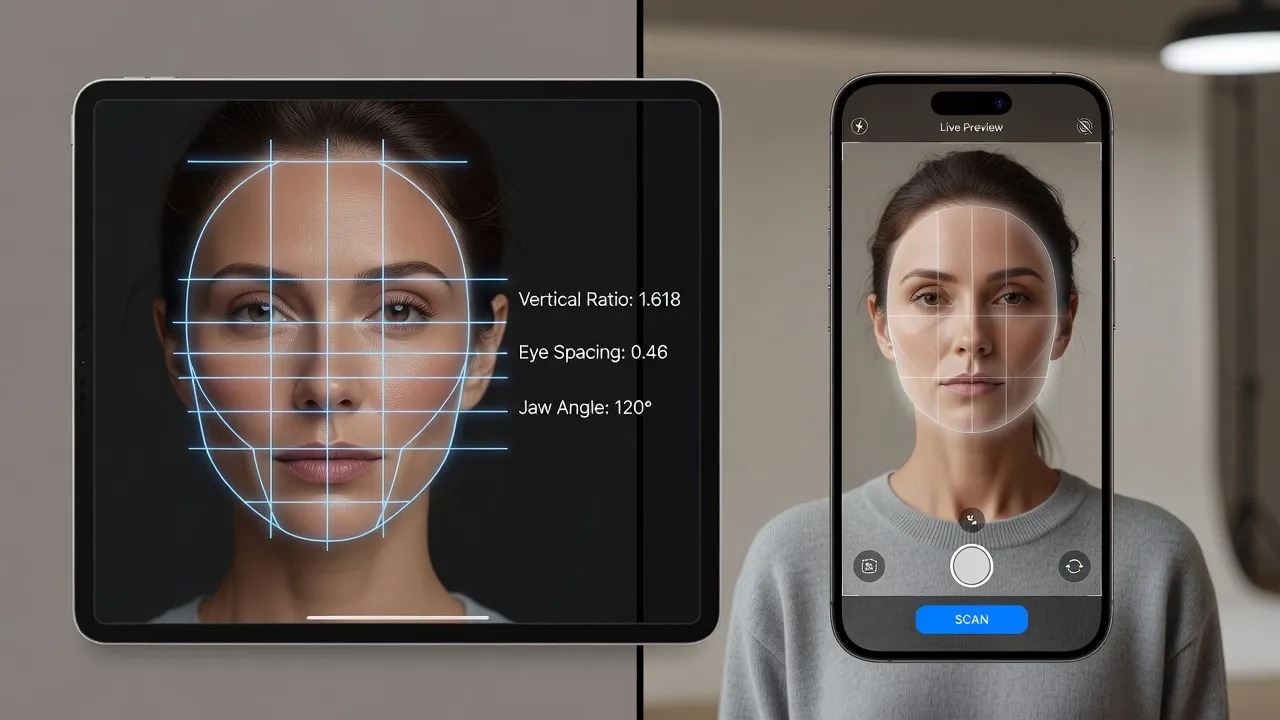
If you want more than an arbitrary number, Glow Up & Attractiveness Test provides a comprehensive approach designed for women seeking detailed facial insights. Rather than relying on generic enterprise models, the app uses a fine-tuned AI model tailored specifically to female facial aesthetics.
You simply snap a selfie to receive a personalized face rating score grounded in symmetry and proportion analysis. What makes this option particularly practical is its actionable approach:
- Detailed Face Analysis: Identifies specific strengths in your facial symmetry, eye balance, and cheekbone alignment.
- Personalized Glow Up Guide: Translates your scores into concrete steps for makeup application, hairstyling, and skincare routines.
- AI Image Visualization: Generates tailored visual previews so you can see yourself as a 10/10 and set realistic aesthetic targets.
I recommend trying the Glow Up & Attractiveness Test on iOS if you prefer clear grooming recommendations over vague web ratings. It bridges the gap between raw machine metrics and daily beauty adjustments.
Top AI Face Rating Tools Compared
The table below outlines the primary features, workflows, and core constraints of top facial analysis engines checked in August 2026.
| Tool / Platform | Primary Analysis Method | Target Output | Key Limitation / Hard Constraint |
|---|---|---|---|
| PhotoFeeler | Human peer crowdsourcing | Contextual scores (1-10) for Business, Dating, and Social | Requires manual voting or purchasing credit packs; non-instant results |
| Glow Up & Attractiveness Test | Fine-tuned female AI vision model | Personalized attractiveness score + tailored glow up guide | Focused specifically on female aesthetics; requires iOS device |
| Hotness.ai | Neural network computer vision | Single automated rating + estimated demographic tags | Highly sensitive to camera angles, focal distortion, and poor lighting |
| Face++ BeautyScore API | 106-point landmark geometry | Raw numerical score via developer API response | Requires programming knowledge or API integration to run queries |
| PinkMirror | Digital golden ratio scanning | Facial balance metrics and skin texture report | Free tier limits detailed structural breakdown metrics |
| Golden Ratio Face | Phi ratio geometry overlay | Percentage match to classical proportions | Ignores skin tone, hair harmony, and overall expression warmth |
Key Factors That Distort Your AI Face Attractiveness Rating
Most people assume an AI face rating test provides an unchangeable score. In practice, technical factors in photograph capture dramatically alter how neural networks process your face scan attractiveness.
| Factor | Effect |
|---|---|
| Focal Length | Short lenses (24mm) widen noses; long lenses (85mm) flatten features |
| Light Angle | Direct overhead lighting deepens eye shadows and accentuates pores |
| Face Posture | Head tilt shifts symmetry vectors relative to camera orientation |
1. Camera Focal Length Distortion
Smartphone front cameras usually feature wide-angle lenses (around 24mm to 28mm equivalent). Wide lenses expand objects near the center of the frame, making your nose appear up to 30% larger relative to your ears. Professional portraits use 85mm or 105mm focal lengths to compress facial features into true proportion.
2. Directional Shadows and Contrast
Neural networks evaluate facial skin texture by reading pixel contrast gradients. Overhead fluorescent lighting casts harsh shadows beneath your eyes, nose, and chin. Computer vision models interpret these shadow zones as uneven skin tone or dark circles, dropping your overall score automatically.
3. Head Tilt and Facial Posture
Even a 5-degree head tilt disrupts the vertical baseline that algorithms use to calculate bilateral symmetry. If your head tilts slightly back or sideways, the distance calculation between your eye corners and jawline changes, causing the model to miscalculate facial balance.
Step-by-Step: How to Get an Accurate 1 to 10 Face Rating
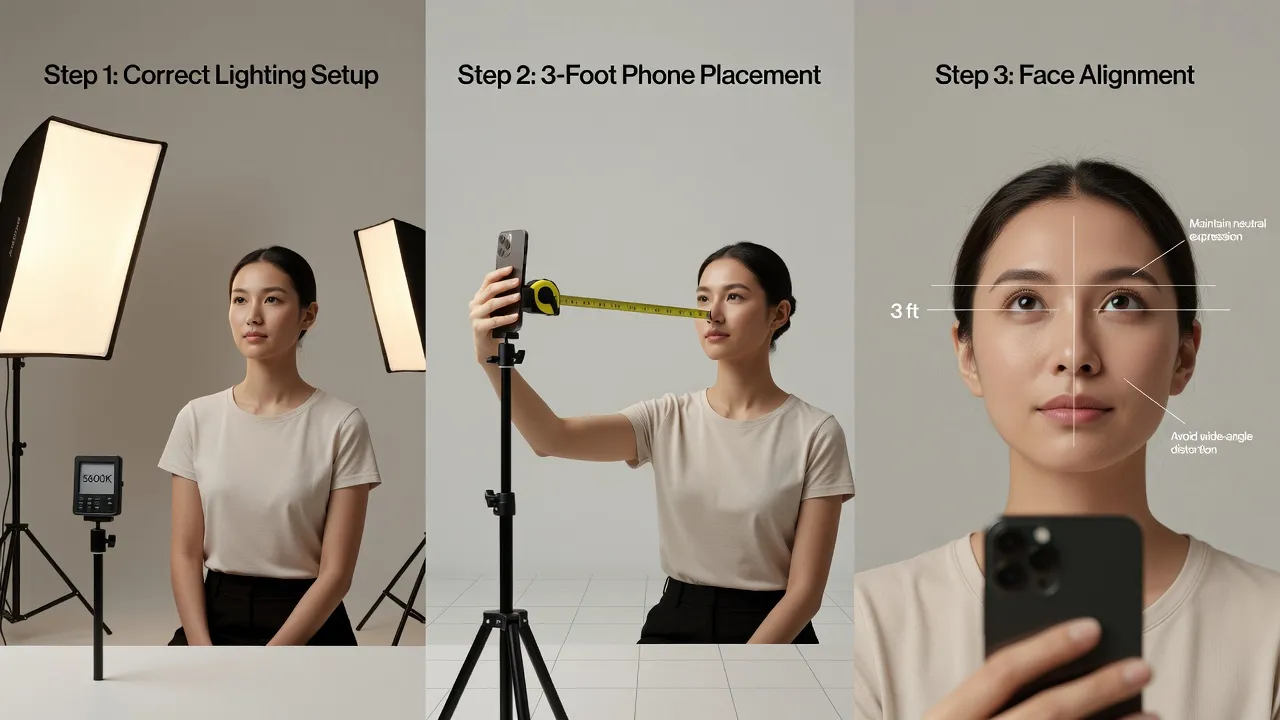
To get a realistic evaluation from any face attractiveness rating app or an attractive level test, you must eliminate photographic artifacts. Follow these steps to prepare your photo:
- Position the Camera at Eye Level: Set your phone at least 3 feet away on a tripod or stable surface and use a 2x zoom setting to eliminate wide-angle distortion.
- Use Diffused Natural Light: Stand facing a window during early morning or late afternoon hours. Avoid direct sunlight and harsh overhead ceiling lights.
- Maintain Neutral Facial Posture: Keep your head straight, shoulders back, and look directly into the camera lens with a neutral or slight natural expression.
- Pull Hair Away from Your Face: Ensure your forehead, cheekbones, and jawline are fully visible so the AI landmark detection nodes can plot all keypoints.
- Avoid Compressed Image Uploads: Upload unedited high-resolution JPEG or PNG files directly from your photo gallery without applying social media filters.
How AI Computer Vision Evaluates Facial Geometry
Modern face rating engines use deep learning models built on convolutional neural network architectures. Understanding the mathematical concepts behind these systems makes it clear why they act as structural guides rather than final judges of personal charm.
When you upload an image, the software converts the photo into a pixel matrix. The algorithm then runs through three analytical layers:
Pixel Processing Pipeline
-
Raw Photo Upload
-
Landmark Detection
-
Geometric Vector Calculation
-
Score Normalization
-
Landmark Extraction: The software places spatial points along the eyes, eyebrows, nose bridge, lips, and jaw outline.
-
Vector Analysis: The model calculates geometric ratios, such as inter-canthal distance (space between eyes) relative to total face width.
-
Pattern Classification: The calculated vectors are run against trained weight matrices derived from human evaluation datasets to produce a normalized score out of 10.
Because these models rely entirely on spatial vectors, they cannot quantify non-verbal charisma, vocal resonance, or personal style. They measure geometry, not human attraction.
Frequently Asked Questions
Can AI accurately measure human facial attractiveness?
AI measures structural proportions, facial symmetry, and skin clarity, but it cannot evaluate personal charm, posture, style, or individual chemistry. Scores reflect statistical patterns in training data rather than absolute human attraction.
How can I get an AI face rating for free?
Several web platforms and iOS/Android applications offer free initial facial scans. However, free tools frequently limit access to detailed structural sub-scores or monetize through in-app upgrades.
Why do my face rating scores change on different photos?
Variations in camera focal length, lighting angles, facial expression, and head posture significantly alter pixel geometry. A wide-angle selfie taken under harsh light scores lower than a professionally lit portrait of the same face.
Does facial symmetry guarantee a high AI score?
Symmetry is a major factor in algorithmic scoring, but it is not the only metric. Overall facial harmony, skin texture, and proper proportional balance between the upper, middle, and lower thirds of the face carry equal weight.
Is my photo data safe when using face rating tools?
Privacy practices vary by developer. Enterprise APIs and reputable mobile apps publish explicit privacy policies regarding photo deletion, while unverified free rating sites may retain or process images for model training.
What is the ideal golden ratio for facial analysis?
The classical golden ratio (Phi) translates to a 1 to 1.618 balance between specific facial dimensions, such as face length relative to width. Modern AI models use golden ratio measurements alongside broader deep learning datasets.
Can changing my style or grooming improve my AI face score?
Yes, improving skin clarity through skincare, styling hair to balance your face shape, and grooming eyebrows to enhance structural symmetry directly changes the landmark measurements processed by AI vision models.