

Attractive faces are facial structures that human brains perceive as aesthetically pleasing due to biological signals like symmetry, structural averageness, sexual dimorphism, and healthy skin texture. Evolutionary biology suggests that these visual cues evolved to indicate genetic fitness, hormonal balance, and developmental stability. As of October 2026, cognitive neuroscience and computer vision algorithms measure these exact proportions to determine what makes a human face visually compelling.
Understanding the mechanics of facial aesthetics helps explain why certain feature combinations capture attention across different cultures. If you want to check how your own features measure up against these biological markers, tools like the Glow Up & Attractiveness Test app use fine-tuned AI models to analyze selfies, provide immediate beauty scores, and generate customized improvement plans.
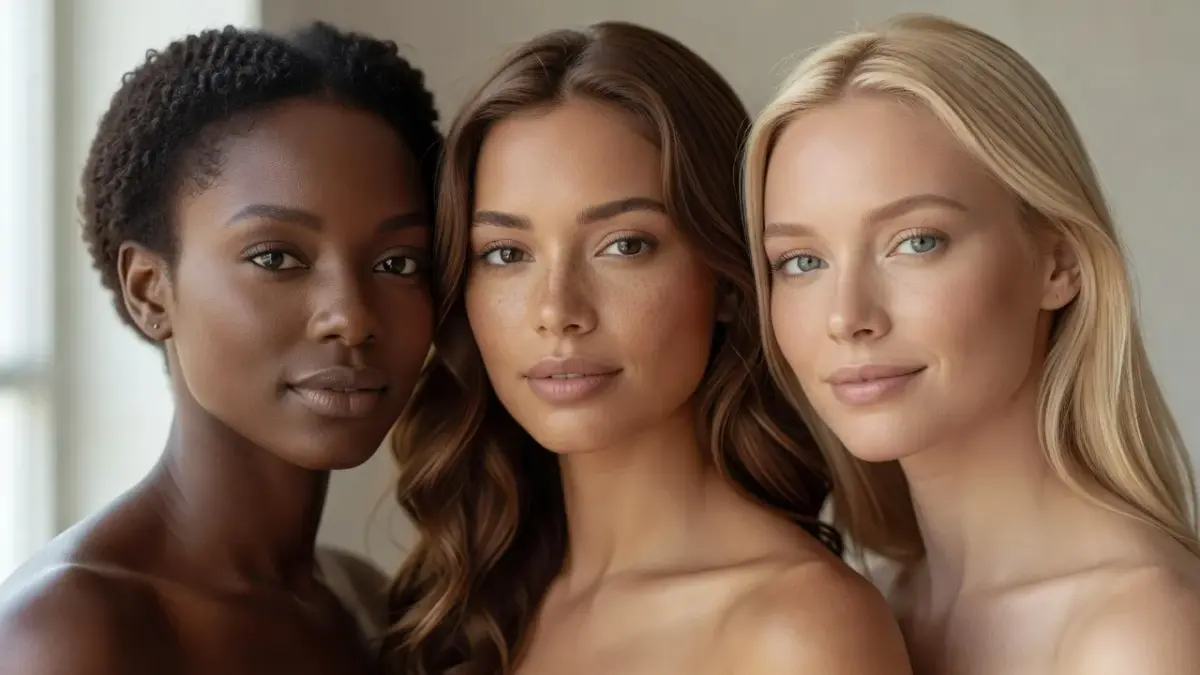
What role does facial symmetry play in attractiveness?
Facial symmetry acts as a primary evolutionary marker of developmental stability and genetic resistance to environmental stressors. Research indexed on NCBI demonstrates that subtle bilateral symmetry reduces the cognitive workload required for the human visual cortex to process a face.
When the left and right sides of a face mirror each other closely, the brain registers the image quickly. This efficiency registers psychologically as visual harmony and aesthetic appeal.
However, absolute mathematical symmetry is rarely found in nature, nor is it strictly desirable. Perfect mirror-image faces produced in laboratory settings often look uncanny or robotic to human observers.
Subtle natural variations are normal and expected. To explore how bilateral balance is calculated using landmark ratios, read our guide on What Is Face Symmetry?.
What role does averageness play in facial attractiveness?
Facial averageness, mathematically known as koinophilia, increases attractiveness because composite faces normalize anatomical extremes and minimize genetic mutations. According to biological studies detailed on Wikipedia, blending multiple facial scans together creates a mathematically average baseline that human eyes naturally prefer over outlier proportions.
Individual scans feed into mathematical averaging, which produces a high attractiveness composite.
Individual Scans contain:
- Outlier features
- Asymmetries
Mathematical Averaging produces:
- Smoothed contours
- Normalized ratios
High Attractiveness Composite displays:
- Balanced proportions
- High visual familiarity
In aesthetic science, "average" does not mean plain or ordinary. Instead, it refers to the mathematical mean of a population's facial dimensions, such as eye spacing, nose width, and jaw length.
When researchers overlay dozens of individual faces into a single digital composite, the composite face is almost always rated as more attractive than the individual inputs. The human brain perceives these mathematically average features as signals of a healthy, robust gene pool.
How does sexual dimorphism affect attractiveness?
Sexual dimorphism affects attractiveness by displaying high levels of testosterone or estrogen through distinct structural bone and soft tissue markers. High testosterone in men creates a prominent jawline, a wide chin, and a pronounced brow ridge. High estrogen in women yields fuller lips, higher cheekbones, smaller chin dimensions, and softer jaw angles.
| Hormone | Masculine Traits | Feminine Traits |
|---|---|---|
| Testosterone | Wide, square jawline | Soft, tapered jawline |
| Testosterone | Prominent brow ridge | Higher, defined cheekbones |
| Testosterone | Larger lower third of face | Fuller lip volume & small chin |
These hormone-dependent traits communicate reproductive health and biological maturity. Evolutionary biology models show that visual emphasis on these secondary sexual characteristics increases immediate facial attractiveness.
Preferences for extreme versus subtle dimorphism fluctuate depending on social environments and individual viewer preferences. However, clear markers of hormonal health remain universally recognizable. Women can see how these traits get scored in reviewed AI attractiveness tests for women.
How do skin quality, texture, and color affect facial attractiveness?
Skin quality and uniform color distribution act as immediate visual indicators of current immunological health, hydration levels, and chronological age. Studies on facial color distribution published in PLOS ONE reveal that smooth skin texture and subtle carotenoid skin coloration often rank higher in attractiveness evaluations than underlying bone structure alone.
Even if a face possesses exceptional geometric symmetry, severe uneven skin tone, deep scarring, or heavy discoloration lowers overall perceived attractiveness ratings. Clear skin reflects efficient toxin clearance, active cell turnover, and balanced dietary intake.
Bright, hydrated skin reflects light evenly across the planes of the face. This light distribution highlights natural high points like the cheekbones and brow arches without requiring heavy cosmetic contouring.
How does facial adiposity affect attractiveness and health perception?
Facial adiposity directly dictates perceived health and attractiveness by highlighting midface fullness and lower-face definition. The volume of subcutaneous fat stored in the cheeks and jawline influences how observers evaluate cardiovascular fitness, immune functionality, and body mass index.
Too little facial fat can create a hollow, prematurely aged appearance. Conversely, excessive facial fat hides the underlying jaw structure and creates a heavy lower face that masks natural dimorphic contours.
An optimal level of facial fat keeps the cheeks looking youthful while keeping the jawline crisp. To learn how facial width ratios interact with fat distribution, check out our deep dive on Face Width Height Ratio.

Are facial attractiveness preferences universal across cultures?
Yes, fundamental facial attractiveness preferences such as symmetry, clean skin, and secondary sexual characteristics show broad cross-cultural agreement across geographic regions. Multiple cross-cultural studies demonstrate that individuals from vastly different ethnic and social backgrounds consistently agree on which faces appear most attractive when evaluating unedited photographs.
| Universal Biological Metrics | Culturally Varied Preferences |
|---|---|
| Bilateral symmetry | Preferred skin tone & tan levels |
| Clear, uniform skin texture | Specific nose bridge height |
| Visible sexual dimorphism | Desired face shape (V-shape vs Oval) |
While foundational biological signals are universal, specific styling details vary by region. For example, some cultures prioritize a slim V-shaped jawline, while others favor a squarer, stronger lower face.
Skin finish preferences also shift between regions, ranging from ultra-dewy glass skin to a fully matte finish. Despite these minor local shifts, the underlying geometric balance remains the core pillar of universal attractiveness.
Comparing Face Analysis Methods in 2026
Evaluating facial structure has evolved from simple subjective mirror assessments to precise digital analysis. The comparison table below outlines the primary methods available in 2026 for assessing facial proportions, skin clarity, and overall aesthetic balance.
| Analysis Method | Core Metrics Evaluated | Turnaround Time | Pricing Model | Best Use Case |
|---|---|---|---|---|
| Glow Up & Attractiveness Test | Symmetry, dimorphism, skin texture, overall beauty score | Instant (AI selfie scan) | $9.99/week | Personal beauty scoring, instant face analysis, and step-by-step glow up guides |
| Manual Caliper Measurements | fWHR, facial thirds, golden ratio, jaw angles | 30–45 minutes | Free (DIY tool cost only) | Self-guided mathematical tracking of precise bone measurements |
| Clinical Aesthetic Consultation | Facial volume, bone density, skin elasticity, soft tissue | 1–2 hours | $150–$300 per session | Professional cosmetic surgery planning and dermatological treatment mapping |
Each method serves a different purpose depending on your goals. Manual measurements work well for raw geometric curiosity, while clinical visits are necessary for surgical changes.
For everyday aesthetic tracking, the Glow Up & Attractiveness Test provides an immediate breakdown of your facial features right from your phone. You can upload a single front-facing photo to receive detailed insights into your facial harmony and actionable beauty tips.
How AI face analyzers evaluate attractiveness metrics
Modern AI face rating tools map hundreds of facial landmark points to evaluate symmetry, proportions, and skin clarity against trained aesthetic datasets. These machine learning algorithms translate classic biological principles—such as facial third ratios and bilateral balance—into precise numerical scores.
- Raw Selfie Upload (Frontal Photo)
- Landmark Point Mapping (200+ Facial Points)
- Metric Comparison (Aesthetic Datasets)
- Customized Score & Plan (AI Beauty Guide)
The algorithm identifies key facial anchors: the inner and outer corners of the eyes, the tip of the nose, the corners of the mouth, and the edges of the jawline. It calculates the distances between these points to assess structural harmony.
To learn more about how AI models process these facial scans, read our breakdown of AI Facial Attractiveness.
If you want to test these algorithmic ratings yourself, download the Glow Up & Attractiveness Test on the App Store. The app uses fine-tuned AI to score your features and generate tailored recommendations to improve your look. You can also compare looksmaxxing apps tested on jawline and skin grading.
Can you increase your facial attractiveness naturally?
Yes, you can measurably improve your facial attractiveness naturally by focusing on skin health, body composition, posture, and grooming. While you cannot change your underlying bone structure without surgery, changing soft tissue thickness and skin reflection dramatically alters how your face looks.
- Optimize body fat percentage: Lowering body fat reveals hidden jawline definition and sharpens cheekbones.
- Improve skin clarity: Consistent daily cleansing, hydration, and sun protection create a smooth, light-reflective surface.
- Maintain good face posture: Keeping your tongue against the roof of your mouth and maintaining proper neck alignment improves lower jaw presentation.
- Style according to face shape: Hairstyles and facial hair that complement your specific bone ratios create the optical illusion of better symmetry.
Small daily habits compound over time. Reducing alcohol intake cuts facial bloat within days, while long-term skincare routines rebuild the collagen layer that keeps skin firm.
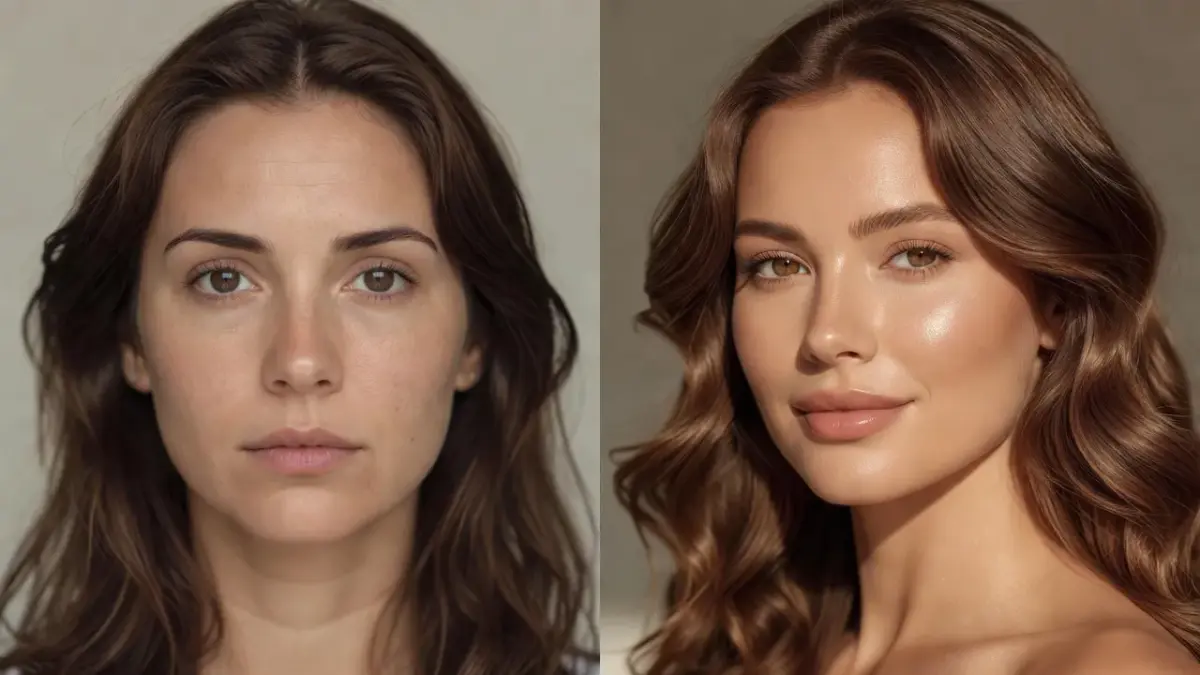
The psychology of facial perception and first impressions
Human brains form judgments about a person's attractiveness, trustworthiness, and competence within 100 milliseconds of seeing their face. Psychological research shows that this automatic assessment happens long before conscious processing takes over.
This rapid processing relies heavily on emotional expression and facial health cues. A naturally relaxed face with open eye expression registers as approachable and attractive.
Conversely, persistent tension in the brow or mouth alters facial muscle symmetry and creates an unintended stern look. Managing stress, sleeping well, and maintaining active skin care directly influence the non-verbal signals your face broadcasts daily.
Frequently Asked Questions
What is the most important feature in an attractive face?
Skin quality and facial symmetry are generally considered the two most influential features in overall facial attractiveness. Clear skin signals current biological health, while symmetry signals developmental stability.
Does facial attractiveness change as you age?
Yes, facial attractiveness shifts over time as skin elasticity decreases, fat pads redistribute, and bone density slowly declines. However, maintaining good skincare habits, sun protection, and a healthy lifestyle preserves skin clarity and facial contrast at any age.
What is the Golden Ratio for facial attractiveness?
The Golden Ratio (1:1.618) is a mathematical proportion historically believed to create ideal visual harmony. In facial aesthetics, it measures ratios like the width of the mouth relative to the width of the nose, though modern science shows that averageness and symmetry are stronger predictors of attractiveness.
Can facial exercises make your face more attractive?
Facial exercises may slightly tone underlying facial muscles, but they cannot reshape facial bone structure or remove localized fat. Reducing overall body fat and maintaining clear skin are far more effective ways to define your features naturally.
Why do composite faces look more attractive than individual faces?
Composite faces smooth out individual asymmetrical flaws, minor skin blemishes, and extreme feature variations. The resulting averaged face is mathematically balanced, making it easier for the human brain to process.
How do AI apps calculate face ratings?
AI face rating apps map dozens of facial landmark points to measure geometric proportions, bilateral symmetry, feature spacing, and skin texture. The software compares these metrics against large datasets of rated faces to produce an objective beauty score.
Is facial attractiveness completely subjective?
No, facial attractiveness is not entirely subjective. While personal style and cultural preferences create individual variation, biological markers like skin health, symmetry, and hormonal traits create high global agreement on what makes a face attractive.