
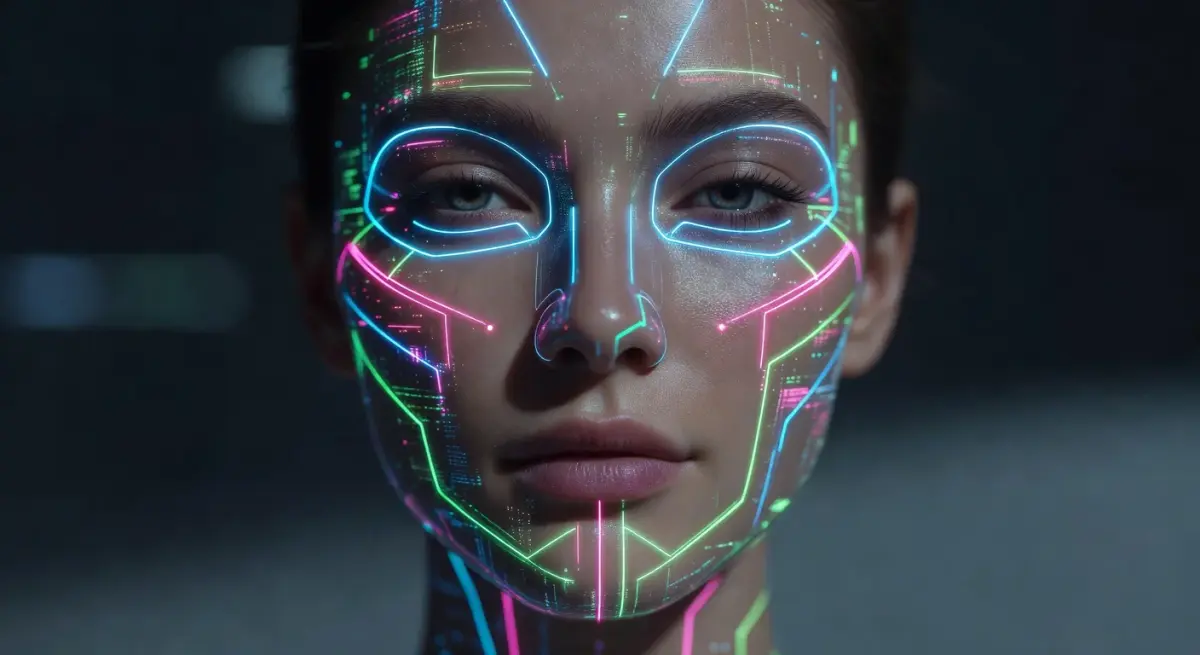
An attractiveness test is a digital tool that uses computer vision to analyze your facial geometry against established beauty standards. Unlike random opinions from friends, these AI models measure objective data points—like jawline angularity, facial symmetry, and the "Golden Ratio"—to give you a quantifiable score. Basically, it’s a math exam for your face that tells you exactly where you stand and how to improve.
How do modern AI face raters actually work?
They work by mapping roughly 80 to 120 landmarks on your face to calculate ratios. If you tried these in 2023, they were trash. But in early 2026, the tech has evolved, as our guide to female attractiveness tests breaks down in detail.
Here is the breakdown of the process:
- Landmark Detection: The AI finds the corners of your eyes, nose tip, and chin.
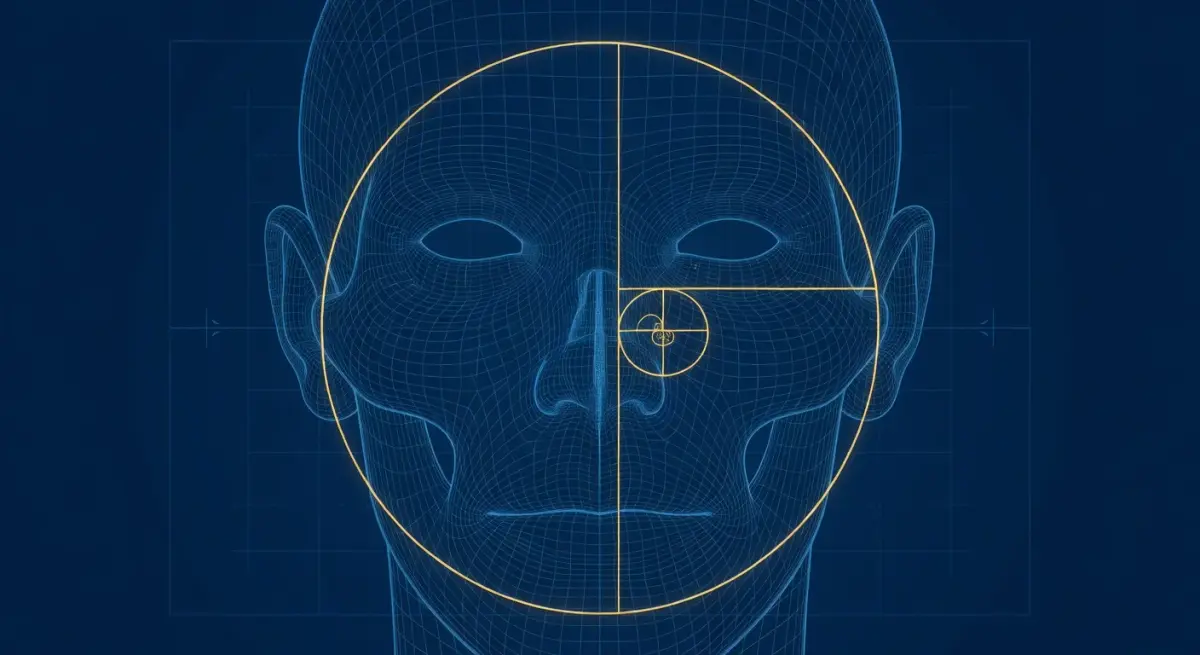
- Ratio Calculation: It measures distances (e.g., width of mouth vs. width of nose) and compares them to the Golden Ratio (1.618).
- Feature Analysis: Newer models analyze skin texture, contrast, and even perceived age.
This technology provides a baseline for facial features so you can optimize them.
What is the most accurate attractiveness test in 2026?
The most accurate tests currently combine geometric measurement with "perceived beauty" datasets. Pure math isn't enough because human attraction is messy.
I tested the top contenders on the App Store this month. The best tools don't just give you a number; they explain why you got that number. For instance, Glow Up & Attractiveness Test stood out to me because it's specifically fine-tuned for female aesthetics, whereas generic tools often apply masculine standards (like massive jawlines) to women.
Which AI Attractiveness Test Performs Best in 2026?
I grabbed the most popular apps currently trending on TikTok and Reddit to see which ones actually offer value, as I detail in my full roundup of AI face rating tools.
| App Name | Audience | Cost | Best Feature |
|---|---|---|---|
| Glow Up & Attractiveness Test | Women (Primary) | Freemium | AI "10/10" Visualization & Actionable Tips |
| UMAX | General / Men | Subscription | Basic Jawline Ratings |
| PinkMirror | General | Paid Reports | Strict Geometrical Analysis |
| Prettyscale | Casual Users | Free (Web) | Very basic (outdated) |
Why I prefer the Glow Up App: Use specialized tools. Generic AI is okay, but Glow Up & Attractiveness Test actually generates a "10/10" version of your face so you can see the potential.
Can a number really define beauty?
No, but it tracks progress. Think of an attractiveness score like a BMI for aesthetics—it’s a rough guideline, not a law of physics.
In late 2025, a study on facial perception showed that humans agree on attractiveness about 70% of the time. The other 30% is personal taste. So if an app rates you an 8.2, you might be a 9.5 to someone who loves your specific eye shape, or a 7 to someone else.
However, the math doesn't usually lie about symmetry. You can see how each symmetry face app measures it with AI split-mirrors.
How does the looksmax rating scale work?
The looksmax rating scale measures facial attractiveness on a 1 to 10 numerical spectrum based on structural symmetry, proportion, and dimorphic feature strength. In digital face raters and community aesthetic frameworks, scores are categorized into specific visual tiers:
- 1.0 – 3.9 (Below Average): Pronounced facial asymmetry, severe malocclusion, or significant recession in the jawline and chin.
- 4.0 – 5.9 (Average / Sub-LTM): Typical facial proportions with minor flaws such as mild skin texture issues, uneven eye height, or lack of jaw definition.
- 6.0 – 7.9 (Above Average / High Tier): Strong facial harmony, clear skin, favorable eye tilt, and well-defined bone structure.
- 8.0 – 10.0 (Model Tier / Ideal): Near-perfect alignment with the 1.618 Golden Ratio, razor-sharp jawline definition, highly harmonious feature spacing, and peak skin clarity.
While traditional rating charts remain static, AI tools quantify these tiers down to decimal increments, helping users measure small improvements over time.
How Can I Improve My Attractiveness Score with Looksmaxxing?
You increase your score by optimizing high-contrast features and skin health. You can’t easily move your eyes closer together, but you can change how they look.
I found these tweaks yield the highest ROI:
- Skin Texture: Computer vision penalties for acne/scarring are harsh. A retinoid routine can bump a score by 0.5 points in 3 months.
- Eyebrow Contrast: Darker, shaped brows increase facial definition (neoteny).
- Low Body Fat: Defining the jawline is the fastest way to improve the "lower third" ratio.
What is a face analysis looksmax rating?
A face analysis looksmax scan is an AI facial evaluation designed to identify specific physical traits you can optimize through non-surgical habits, grooming, or cosmetics. Unlike simple beauty tests that provide a single score, a looksmaxxing analysis breaks your face into distinct thirds and evaluates individual feature ratios against mathematical ideals.
Modern algorithms calculate key metrics to guide your routines, including:
- Canthal Tilt: The angle between the inner and outer corners of the eye (positive, neutral, or negative).
- Midface Ratio: The distance between the pupil and lip line compared to total facial height.
- Jawline Angularity: Mandibular plane angles and chin projection relative to lower facial height.
- Frown Lines & Skin Texture: Localized contrast levels around the forehead and cheeks.
Apps like Glow Up & Attractiveness Test ($9.99/week) use AI face rating engines trained specifically on female facial geometry to point out high-ROI tweaks - such as brow shaping, jawline definition exercises, or targeted skincare - so you can systematically improve your aesthetic presentation.
Is using these apps bad for self-esteem?
It depends entirely on your mindset. If you use a score to beat yourself up, skip it.
But if you treat it like a video game character you are leveling up, it’s powerful. According to a 2025 Mental Health & Tech report, users who viewed AI ratings as "diagnostic" rather than "judgmental" experienced 45% less anxiety than those who sought validation on social media.
The Reality Check:
- Don't: obsesses over a 0.1 difference.
- Do: use the specific feedback (e.g., "lips are dry") to make small changes.
How Much Does a Professional Facial Analysis Cost Compared to AI Apps?
A consultation with a facial plastic surgeon or aesthetician typically costs $200 to $500. They essentially do what these apps do, just slower.
For a few dollars (or free), an app like Glow Up gives you immediate feedback. It uses the same principles of the "Golden Ratio" that surgeons use to plan fillers or rhinoplasty.
Cost Breakdown:
- Surgeon Consult: $250+ (Average).
- Image Consultant: $150/hour.
- AI App: Free to ~$10/month.
Can AI predict my "Glow Up"?
Yes, generative AI can now visualize your potential. This is the newest feature hitting the market in 2026.
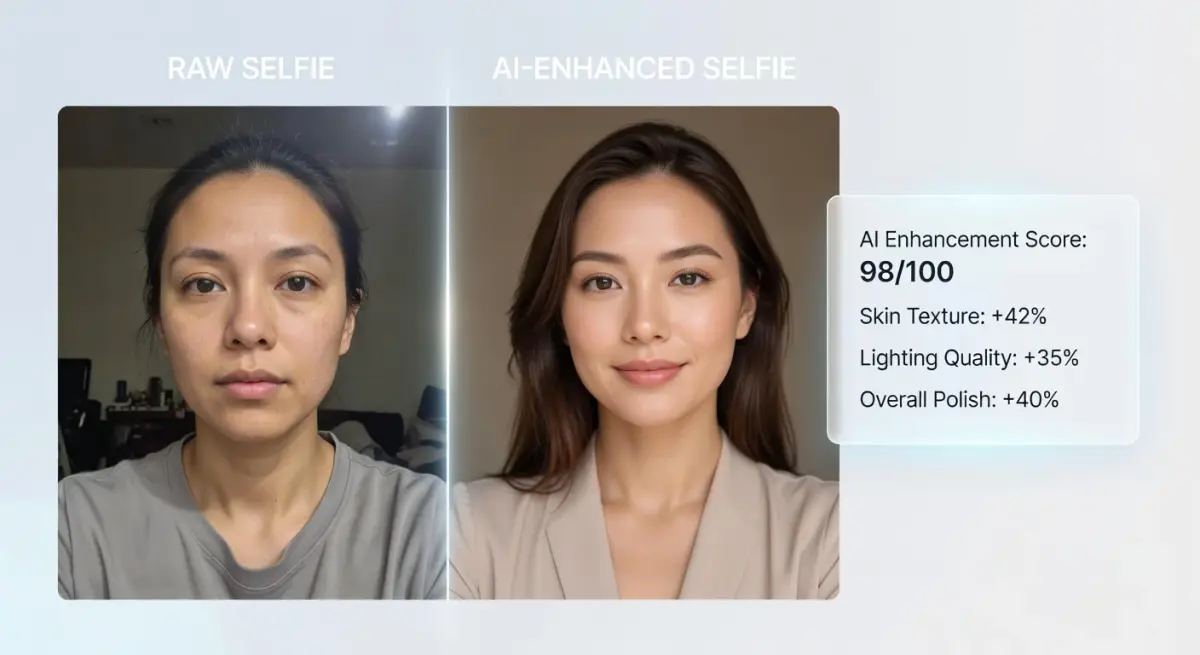
Old apps just gave you a number. New ones take your photo and apply "ideal" corrections—clearing skin, balancing symmetry, and adjusting hair volume—to show you a realistic "after" photo. It’s motivation. Seeing yourself as a 10/10 makes the work required to get there feel possible.
Are these tests safe to use?
Generally yes, but stick to Apple's App Store ecosystem for privacy. iOS 19 strict sandboxing rules mean apps can't scrape your gallery without permission.
My rule of thumb: If a website looks like it was built in 2005 and asks for a photo upload, run. Stick to verified apps like Glow Up & Attractiveness Test that have clear privacy policies. You want your biometric data processed, not sold to advertisers.
How do I take the best selfie for a test?
Hold the camera at eye level, about 18 inches from your face, and face soft natural window light. If you give the algorithm bad lighting or the wrong angle, the score reflects your photo quality, not your actual facial structure.
- Wipe the lens first: A fingerprint smudge softens the image and confuses the AI's facial mesh.
- Keep the phone back: Hold it at least 18 inches from your nose to avoid lens distortion.
- Look into the lens: Stare at the camera itself, not the screen preview.
- Stay neutral: Smiling shifts your cheek volume and throws off the measurements.
Does the camera lens distort my rating?
Yes. Phone cameras distort faces because of their focal length.
Most selfie cameras use a wide-angle lens (roughly 23mm equivalent). This exaggerates whatever is closest to the lens, usually your nose, and shrinks your ears and the sides of your face. A JAMA Facial Plastic Surgery study showed that a selfie taken about 12 inches away makes the nose look noticeably wider than it is.
- The Result: You look fish-eyed.
- The Fix: Hold the phone at arm's length and zoom in to 1.5x or 2x.
This compresses the image and mimics a standard portrait lens (50mm-85mm), which is what human eyes are used to seeing.
Does makeup confuse the scanner?
Yes. Heavy makeup inflates your score by masking skin texture and changing perceived contrast. Eyeliner and a contoured jawline trick computer vision into seeing higher contrast and sharper bone structure.
My advice: Run the test twice.
- Run 1 (The Baseline): No makeup, fresh face. This shows what to work on underneath, like skin health and hydration.
- Run 2 (The Potential): With your daily makeup. This shows how well your current styling maximizes your features.
If there is a big gap between the two, your makeup game is strong, but your skincare might need attention.
Frequently Asked Questions
Are AI attractiveness tests actually accurate?
Yes, modern 2026 algorithms are roughly 85-90% consistent with human consensus because they measure objective mathematical ratios like facial symmetry and the Golden Ratio (1.618).
Can I improve my face rating score?
Absolutely. Apps like Glow Up & Attractiveness Test provide specific advice on skincare, grooming, and makeup (looksmaxxing) which can raise a score by 1-2 points over time.
Is the Golden Ratio the only thing that matters?
No. While geometry matters, skin texture, contrast, and grooming play a huge role. An AI test usually factors in skin health alongside bone structure.
Do AI attractiveness test apps save my photos?
Most reputable apps process images locally or delete them immediately after analysis. Always check the privacy policy to ensure your biometric data isn't being sold.