

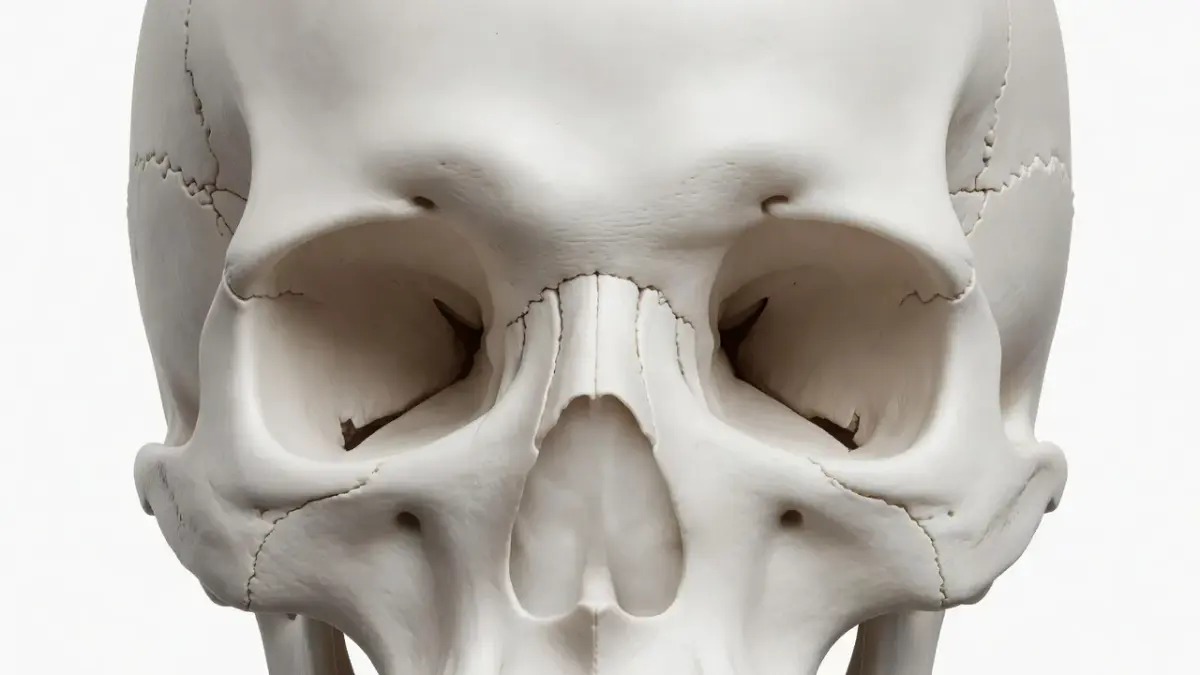
A strong brow bone - anatomically known as a prominent supraorbital ridge - is a defined bony projection located directly above the eye sockets on the frontal bone. Unlike flat or soft foreheads, a pronounced ridge projects forward to frame the eyes, create natural shadow depth, and establish strong structural architecture in the upper third of the face. Understanding how this ridge interacts with your eyes and forehead requires evaluating overall facial geometry. If you want to check how your brow projection affects your overall balance, Glow Up & Attractiveness Test is an iPhone app that provides AI-driven face ratings and structural breakdown based on a single selfie.
What is the anatomical structure of a strong brow bone?
The anatomical foundation of a strong brow bone is the supraorbital arch of the frontal bone. This bony shelf forms the upper rim of the eye socket and anchors the lower forehead. According to anatomical records on the supraorbital ridge, this bone displays prominent sexual dimorphism, generally presenting as a continuous, thicker horizontal ridge in biological males and a smoother, flatter incline in biological females.
Beyond biological markers, the brow ridge serves as an architectural anchor for light reflection across the planes of the face. When light hits a projection on the forehead, it illuminates the upper shelf of the ridge while casting a soft shadow over the upper eyelid. This interplay creates the visual depth associated with deep-set eyes and sculpted facial framing.
How can makeup contouring and highlighting create a stronger brow bone?
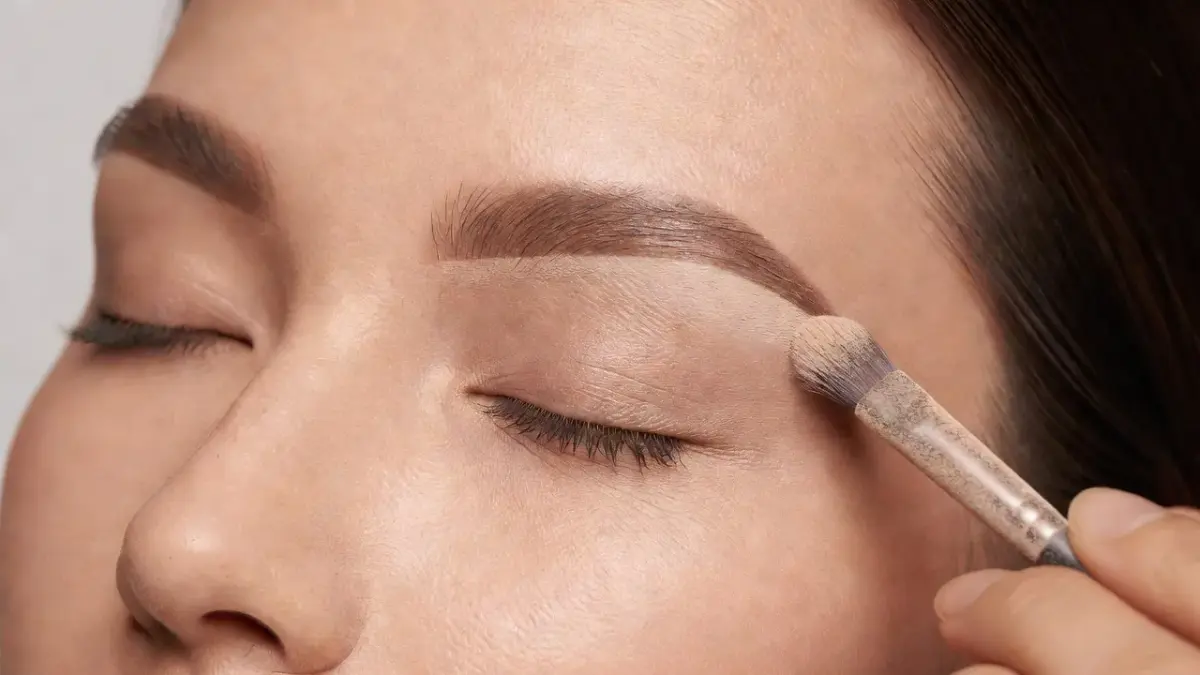
Makeup contouring and highlighting create a stronger brow bone by using light and shadow to simulate forward projection. You achieve this effect by placing a cool-toned contour shade directly above the brow arch and sweeping a lighter matte highlighter along the brow bone shelf underneath the eyebrow hair.
To make the bone appear to push forward, contrast is essential.
- Apply a cream or powder contour shade half an inch above the eyebrow arch to create an artificial recessed shadow.
- Precision-blend a bright corrector or light concealer directly beneath the tail and arch of the brow.
- Avoid glittery highlighters on heavy brows, as excessive shine can make the brow area look swollen rather than structural.
Practicing this shadow placement changes how overhead light interacts with your forehead in photos. As of November 2026, light-mapping techniques remain the most popular non-invasive method for testing a stronger brow ridge before considering cosmetic procedures.
Can brow lamination or microblading make the brow bone look stronger?
Yes, brow lamination and microblading make the brow bone look stronger by vertically expanding the eyebrow hair frame to accentuate the underlying bone ridge. By lifting hairs upright or adding hyper-realistic stroke lines along the top edge of the brow arch, these treatments alter the visual focus of your upper face.
Microblading allows a technician to artificially lift your brow arch higher onto the actual supraorbital rim. When the hair pattern aligns perfectly with the crest of the bone, the ridge looks wider and more pronounced.
Brow lamination sets existing hairs upward into a fixed vertical position. This expanded vertical footprint draws attention directly to the structural line beneath it, giving the impression of a denser, more forward-projecting bone.
What non-surgical options enhance the brow bone, such as fillers, fat grafting or threads?
Non-surgical options like hyaluronic acid fillers, autologous fat grafting, and suspension threads enhance the brow bone by adding tissue volume or lifting sagging skin. Dermal fillers inject a dense gel directly onto the periosteum (the bone surface) to physically build out forward projection without surgery.
Fat grafting involves harvesting adipose tissue via liposuction from your abdomen or thighs and transferring purified fat cells to the brow ridge. This provides a softer, longer-lasting volume addition than hyaluronic acid.
Suspension threads do not add true volume, but they pull heavy brow skin upward toward the hairline. This mechanical tension uncovers the natural bone contour beneath, making a soft ridge look immediately sharper.
What surgical options do plastic surgeons offer for brow bone augmentation?
Plastic surgeons offer custom implants, bone cement reshaping, and brow bone recontouring procedures to permanently modify the brow bone. Surgical augmentation targets patients seeking permanent structural shifts in projection, width, or angle that injectable fillers cannot maintain over time.
Surgeons perform these operations through an incision placed behind the hairline (coronal incision) or along the pretrichial border. According to clinical guidance from the American Society of Plastic Surgeons, custom computer-designed implants made of biocompatible materials offer high anatomical precision for upper facial reconstruction and aesthetic enhancements.
A surgeon can also use methyl methacrylate or hydroxyapatite bone cement. The surgeon molds these materials directly over the existing frontal bone during surgery to sculpt a customized brow ridge shape.
Can supraorbital ridge implants strengthen the brow bone?
Yes, supraorbital ridge implants can significantly strengthen the brow bone by permanently increasing the anterior projection and lateral width of the forehead shelf. These solid implants are crafted from high-density materials like porous polyethylene (Medpor) or solid medical-grade silicone.
During surgery, the implant is anchored directly to the frontal bone using micro-screws made of titanium. This fixation prevents implant rotation or shifting over time.
Custom 3D CT modeling ensures the implant matches your natural skull contours without leaving visible ridges or artificial steps along your forehead transition zone. This structural placement creates a firm, natural-feeling brow line.
How do brow bone implants compare with fat grafting and fillers, and what are the complications?
Brow bone implants provide permanent, sharp structural projection, whereas fillers and fat grafting offer softer, temporary volume increases. The primary variable that decides the right path for you is whether you need rigid structural bone simulation or subtle soft-tissue cushioning.
If you need a rigid, high-projection shelf, implants are the definitive answer. If you only want slight volume smoothing over an existing ridge, injectables are far safer and easier to adjust.
| Method | Longevity | Invasiveness | Primary Benefit | Main Complications |
|---|---|---|---|---|
| Supraorbital Implants | Permanent | High (Surgical) | Precise, rigid bony projection | Infection, nerve numbness, implant displacement |
| Hyaluronic Acid Fillers | 9 to 18 months | Minimal (Injections) | Reversible, zero downtime | Vascular occlusion, asymmetry, filler migration |
| Autologous Fat Grafting | 3 to 5+ years | Moderate (Liposuction) | Natural tissue integration | Unpredictable fat reabsorption, clumping |
| Glow Up & Attractiveness Test | Instant Analysis | None (Mobile App) | Visual mapping of brow balance | Requires clear lighting for best selfie analysis |
Complications vary significantly depending on the method you select. Injectable fillers carry a risk of vascular occlusion if gel enters the supraorbital artery, which can cause skin necrosis. Surgical implants carry risks of chronic infection, temporary or permanent numbness along the forehead from nerve stretching, and visible implant borders if skin coverage is thin. Clinical research on NCBI emphasizes that deep periosteal placement is necessary for both fillers and implants to prevent unnatural surface bumps.
How does a strong brow bone influence facial symmetry and harmony?
A prominent brow bone plays a decisive role in balancing overall face proportions and ratios. It acts as the anchor point for the upper third of the face, counterbalancing a strong jawline or prominent chin in the lower third.
Without a supportive brow ridge, the middle and lower facial features can appear disproportionately large or forward-set. The depth provided by the brow shelf creates the classic frame for eye distance and forehead slope.
When evaluating overall balance, aesthetic systems measure the spatial relationship between the supraorbital rim, the pupils, and the cheekbones. If you want to check how your upper facial structure compares to standard geometric baselines, running an image through an AI facial analysis app gives you immediate feedback on feature spacing.
Evaluating your facial structure with AI and digital analysis
Before committing to cosmetic procedures or heavy makeup transformations, understanding your natural bone framework is essential. The decision on how to adjust your upper face depends heavily on your facial width-to-height ratio and existing bone density.
If you want objective feedback on your upper facial structure, Glow Up & Attractiveness Test offers automated visual feedback. Available as an iPhone app, it uses a specialized fine-tuned AI model to evaluate facial harmony, score overall feature balance, and suggest tailored tips. You can upload a selfie to receive a detailed breakdown of your facial proportions, see AI-generated prospective looks, and generate shareable before-and-after comparisons to track changes over time.
Frequently Asked Questions
Is a strong brow bone considered attractive?
Yes, a strong brow bone is widely considered an attractive feature in both men and women because it gives definition to the eye area and creates structural facial depth.
Can you get a strong brow bone without surgery?
Yes, you can temporarily enhance your brow bone without surgery using dermal fillers, strategically placed makeup contouring, and eyebrow lamination.
Does brow bone filler hurt?
Brow bone filler causes mild to moderate discomfort, but topical numbing creams and lidocaine mixed into the filler gel minimize pain during the injection process.
Can facial exercises make your brow bone bigger?
No, facial exercises cannot enlarge the brow bone because the ridge is made of solid frontal bone tissue that does not expand from muscle exercise.
How long do brow bone fillers last?
Dermal fillers injected deep onto the brow bone periosteum typically last between 9 and 18 months depending on your individual metabolism and gel density.
What is the recovery time for brow bone implant surgery?
Initial swelling and bruising from brow bone implant surgery peak within 48 hours and usually subside within 2 to 3 weeks, though full tissue setting takes several months.
Can a strong brow bone cause heavy eyelids?
A prominent brow ridge can sometimes push soft forehead skin downward, making eyelids look slightly hooded or heavy even if functional vision remains totally clear.