
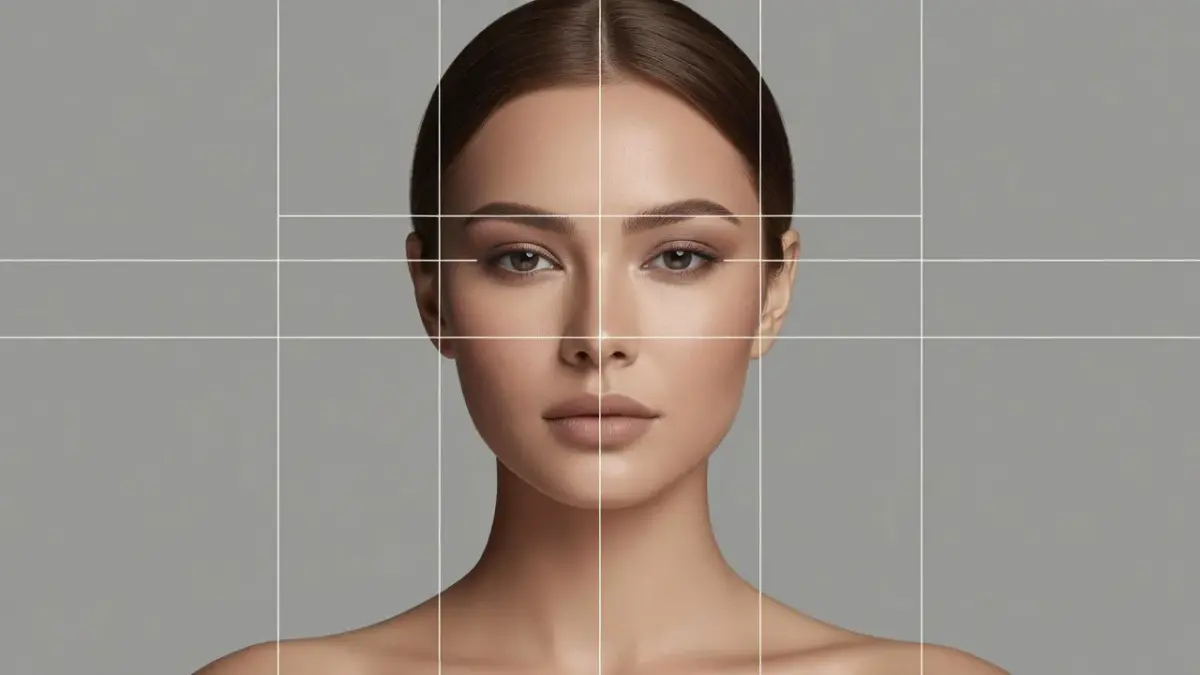
Measuring your face proportions accurately requires taking a straight-on, un-distorted photo and mapping three vertical thirds, five horizontal fifths, and key landmark ratios. Following this step-by-step facial proportions guide lets you map your facial structure in under 15 minutes using a standard millimeter ruler or digital screen callipers.
Most people make the mistake of judging individual features in isolation, assuming a slightly wider nose or thin lips are the issue, when facial attractiveness is largely governed by spatial harmony. Evaluating individual features without knowing your base ratios often leads to counterproductive styling choices. By mapping your landmarks systematically, you gain precise data on where your face sits relative to classical aesthetic canons.
| Step | Focus Area | Time Required | Key Tools Needed | Primary Objective |
|---|---|---|---|---|
| 1. Lens Calibration | Photo Setup | 3 minutes | Smartphone, tripod or flat surface | Eliminate camera lens distortion |
| 2. Vertical Thirds | Height Harmony | 3 minutes | Straight-edge ruler or digital overlay | Divide face into forehead, midface, and chin sections |
| 3. Horizontal Fifths | Width Balance | 3 minutes | Millimeter ruler | Measure eye width against facial width |
| 4. Ratio Calculation | Core Metrics | 4 minutes | Basic calculator | Determine fWHR and philtrum-to-chin ratio |
| 5. Softmaxxing Adjustments | Style Rebalancing | Ongoing | Hair, makeup, or grooming tools | Visually balance non-standard proportions |
Step 1: Take a Lens-Calibrated Frontal Photo
To get accurate face measurements, you must take a photo from at least four feet away using an optical lens or zoomed camera to prevent perspective distortion. Close-up smartphone selfies create wide-angle barrel distortion, which artificially enlarges the nose and shrinks the ears.
According to research published by the National Center for Biotechnology Information, smartphone photos taken at a 12-inch distance expand perceived nose size by up to 30% compared to standard 5-foot portrait shots. To prepare your image:
- Mount your phone on a tripod or stable surface at eye level.
- Step back 4 to 5 feet and use a 2x optical zoom setting (or have someone take the photo).
- Pull your hair back completely so your hairline and outer jawlines are fully visible.
- Maintain a neutral facial expression with your teeth gently resting together and lips unpouted.
- Print the image on paper or open it in a digital image editor like Photoshop or Canva.
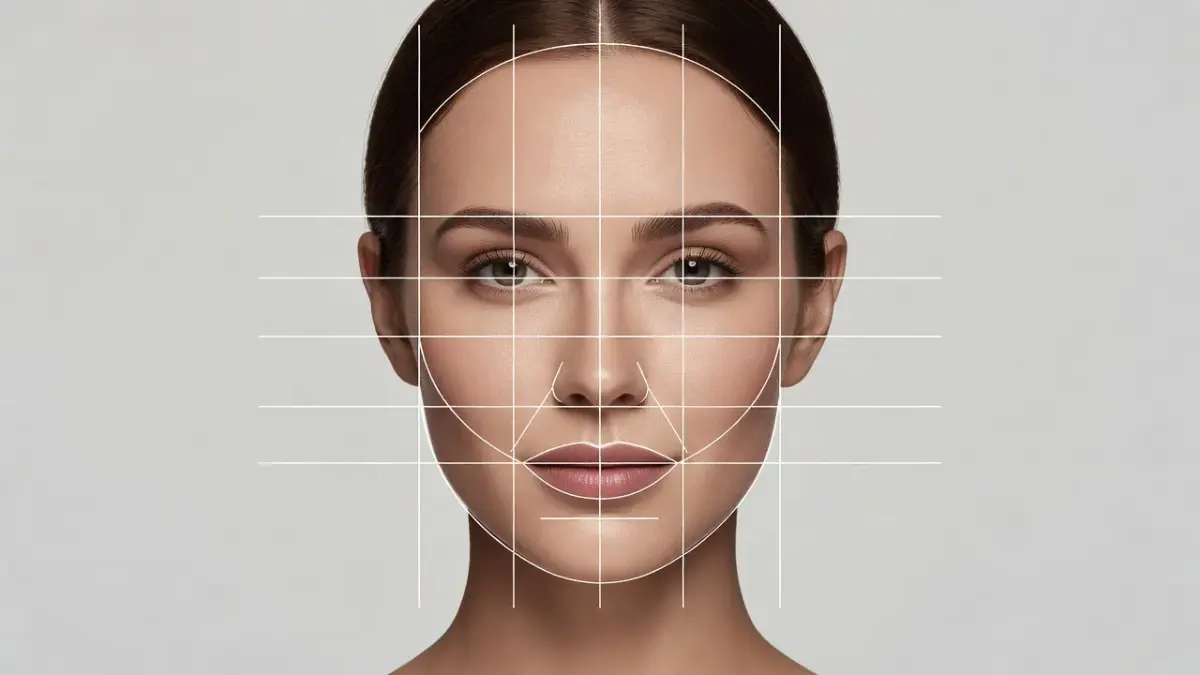
Step 2: How Do You Divide the Face into Vertical Thirds?
You divide the face into vertical thirds by measuring the equal distance between three primary horizontal lines: hairline to eyebrow line, eyebrow line to nose base, and nose base to chin tip. This classical breakdown, originally established during the Renaissance, forms the baseline of facial height analysis, and it's also the foundation artists use in a step by step guide to drawing realistic faces.
Use a ruler to mark these three distinct zones on your photo:
- Upper Third (Forehead Zone): From the trichion (the midpoint of your hairline) down to the glabella (the midpoint between your eyebrows).
- Middle Third (Midface Zone): From the glabella down to the subnasale (the point where your nose base meets your upper lip).
- Lower Third (Lower Face Zone): From the subnasale down to the menton (the lowest point of your chin line).
In classical aesthetics documented in Britannica's guide to human proportion, an ideal face exhibits a 1:1:1 ratio across all three tiers. If your middle third is noticeably longer than your upper or lower third, you have a midface-dominant structure.
Within the lower third, pay attention to the sub-ratio between your upper lip and lower chin. The distance from the subnasale to the mouth opening should be roughly half the distance from the mouth opening to the bottom of the chin. If you want to dive deeper into lower-third harmony, understanding long philtrum aesthetic ratios can help you evaluate whether your philtrum length aligns with your overall jaw height.
Step 3: How Do You Calculate the Horizontal Fifths of the Face?
You measure horizontal facial balance by dividing the maximum width of your face into five equal vertical bands, each equivalent to the width of one eye. If your face matches classical symmetry, the total width across your cheekbones equals exactly five eye-widths.
To plot your horizontal fifths:
- Draw vertical lines down from the outermost edges of your head at cheekbone height.
- Draw lines extending straight down from the outer corners (exocanthion) and inner corners (endocanthion) of both eyes.
- Measure each of the five segments from left to right:
- Segment 1: Outer left edge to left outer eye corner.
- Segment 2: Left outer eye corner to left inner eye corner (Left Eye Width).
- Segment 3: Left inner eye corner to right inner eye corner (Interpupillary/Intercanthal Space).
- Segment 4: Right inner eye corner to right outer eye corner (Right Eye Width).
- Segment 5: Right outer eye corner to outer right edge.
If Segment 3 is wider than your eye width (Segment 2), you have wide-set eyes (hypertelorism). If Segment 3 is narrower than your eye width, your features are close-set.
Step 4: Calculate Your Key Facial Ratios
Calculating your key facial metrics involves dividing specific millimeter lengths to check your facial width-to-height ratio (fWHR) and lower-third balance. These numerical indices provide objective data independent of subjective beauty trends.
Calculate these two critical ratios:
Facial Width-to-Height Ratio (fWHR)
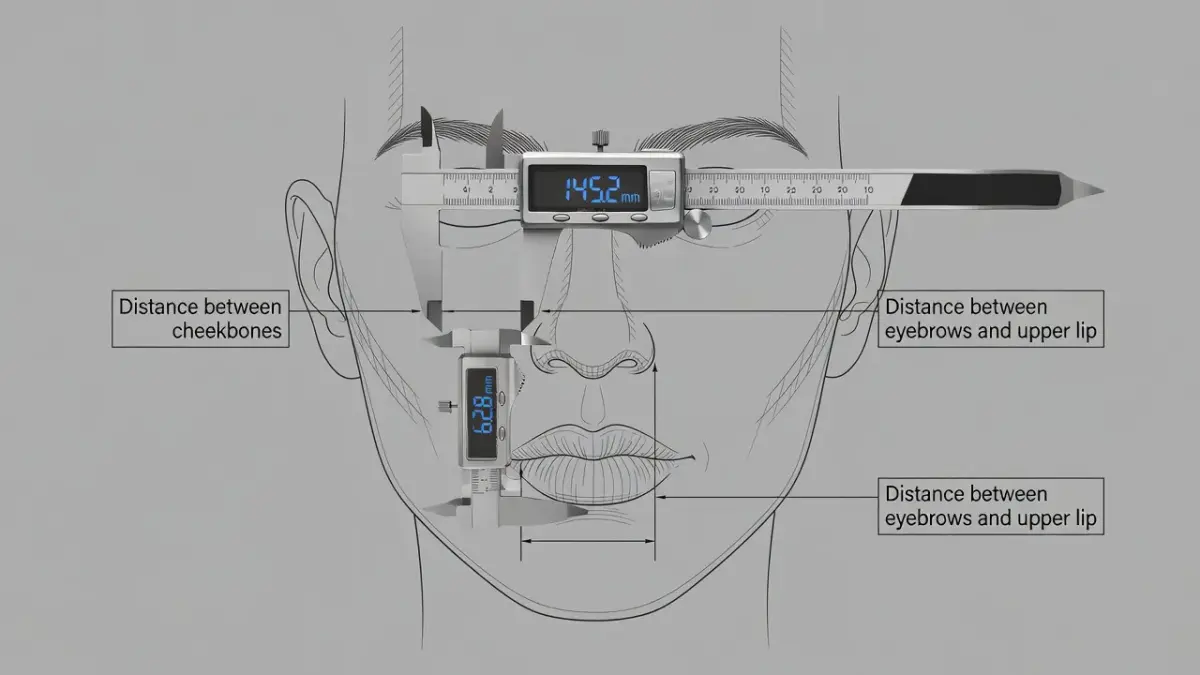
Measure the distance between the outer points of your cheekbones (bipupillary width). Next, measure the distance from the upper brow line down to the top of your upper lip. Divide the width by the height.
$$\text{fWHR} = \frac{\text{Distance between outer cheekbones}}{\text{Distance from brow line to upper lip}}$$
Average female fWHR sits around 1.75 to 1.90. A higher ratio indicates a broader, squarer face, while a lower ratio indicates a longer, narrower structural outline. You can read a complete breakdown in our detailed guide on the face width-to-height ratio (fWHR).
Philtrum-to-Chin Ratio
Measure from the subnasale to the center of your lip border, then measure from your lower lip line down to the tip of your chin. The ideal aesthetic balance is typically 1:2. A ratio of 1:3 indicates a long chin, whereas 1:1 indicates a short chin or elongated upper lip.
Step 5: Translate Your Measurements into Actionable Softmaxxing
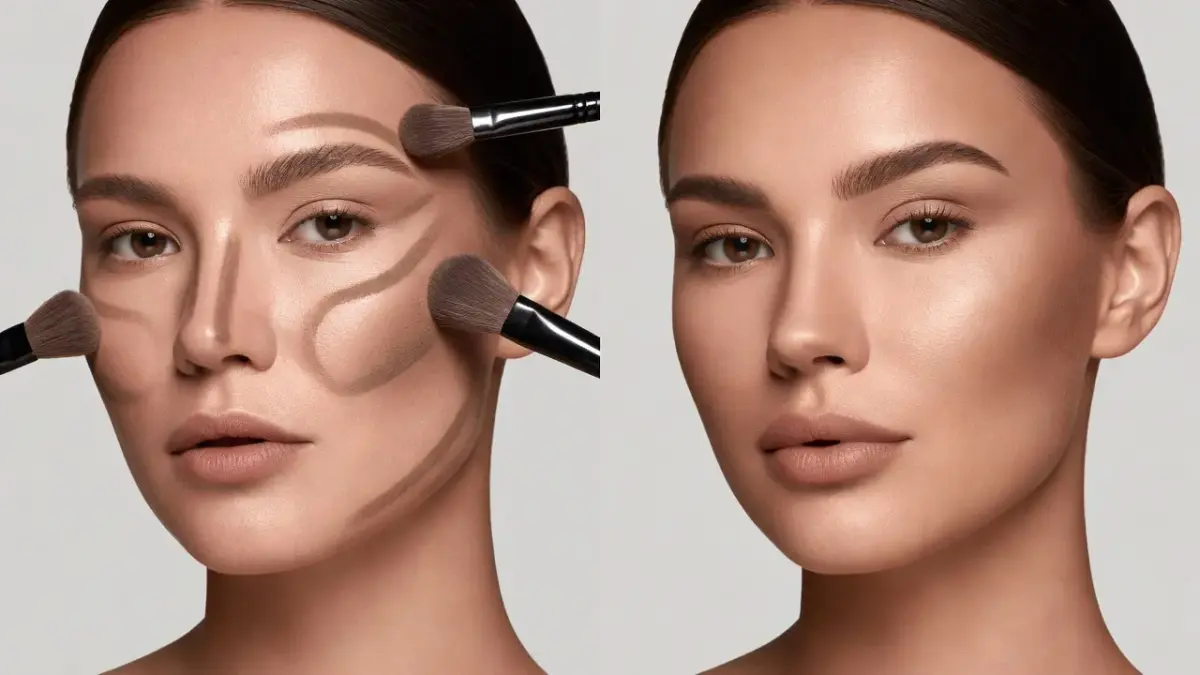
Once you identify where your proportions diverge from classical baselines, you can use targeted hair, makeup, and grooming techniques to create visual symmetry. You do not need invasive procedures to alter how your structural ratios are perceived.
If manual line drawing feels tedious, mobile tools can perform this geometric mapping automatically. The Glow Up & Attractiveness Test app allows you to upload a straight-on selfie to instantly receive a detailed face analysis from a fine-tuned AI model. Available on the App Store for $9.99/week, it offers tailored tips to beautify your look alongside 10/10 AI image generation so you can test styling transformations before trying them in real life.
To adjust your proportions manually based on your step-by-step numbers, apply these styling strategies:
Long Midface Solutions
- Eyebrows: Flatten eyebrow arches slightly to minimize vertical length in the middle third.
- Blush: Apply blush horizontally across the apples of your cheeks rather than along the cheekbones to cut vertical height.
- Contour: Sweep bronzer along your chin tip and forehead hairline to visually shorten the outer boundary.
Short Lower Third or Receding Chin Solutions
- Lips: Overline the top lip slightly while keeping the lower lip natural to balance a short philtrum.
- Hairlines: Choose hair styles that create height at the crown of your head, drawing attention upward away from a compact jawline.
- Necklines: Wear V-neck tops to elongate the neck and extend the lower facial frame.
Why Do Camera Lenses Warp Facial Proportions?
Camera lenses warp facial proportions because short focal lengths force you to stand closer to the subject, distorting relative distance between facial planes. Perspective distortion occurs when features closer to the lens (like the nose) appear disproportionately larger than features farther away (like the ears and temples).
As documented in historical photographic benchmarks on Wikipedia's guide to facial symmetry, focal lengths between 85mm and 135mm yield the most accurate representation of 3D facial geometry on a 2D plane. Standard smartphone front cameras typically use wide-angle focal lengths between 24mm and 28mm.
If you take your measurement photo at arm's length, your nose can appear up to 30% wider, your ear-to-ear distance will look compressed, and your face width-to-height ratio will calculate incorrectly. Always use a focal distance of at least 4 to 6 feet with optical zoom or crop a high-resolution photo taken from a distance.
Can You Permanently Alter Your Facial Proportions?
You can only alter hard facial proportions permanently through surgical procedures like orthognathic surgery, genioplasty, or rhinoplasty, but non-surgical techniques can change their visual perception. Bone structure sets your absolute measurements, but soft tissue thickness and optical framing determine how those measurements look to others.
Before considering medical interventions, explore non-invasive adjustments:
- Masseter Muscle Management: Jaw clenching can widen your lower third. Using mouthguards or targeted masseter relaxation exercises can reduce lower-face width.
- Hairstyling Geometry: Bangs can completely hide a long upper third, effectively shortening your perceived facial length by several centimeters.
- Body Fat Optimization: Lowering overall body fat can accentuate jawline definition and alter your apparent facial width.
- Symmetry Coaching: Correcting uneven chewing habits or head tilt postures improves functional alignment. If you notice structural drift, reviewing standard facial symmetry standards helps clarify whether your asymmetry stems from habit or bone alignment.
Frequently Asked Questions
What are the ideal facial proportions for women?
The classical aesthetic ideal divides the face into three equal vertical thirds and five equal horizontal eye-widths. A balanced face width-to-height ratio (fWHR) for women typically sits between 1.70 and 1.85, accompanied by a 1:2 ratio between the philtrum length and chin height.
How do I accurately measure my facial proportions at home?
Take a front-facing photo from 5 feet away using 2x zoom to avoid lens distortion. Print the photo or use a photo editor to draw horizontal lines across your hairline, brow ridge, nose base, and chin, then measure the millimeter distances between each line.
What is the most common error in facial proportion analysis?
The most frequent mistake is using a close-up selfie taken at arm's length. Wide-angle smartphone lenses distort the center of your face, making your nose look wider and your midface appear longer than it actually is.
Does aging change facial proportions over time?
Yes, aging alters facial proportions due to bone resorption, loss of facial fat volume, and skin laxity. The lower third often shortens as teeth wear down or bone recedes, while the philtrum lengthens as collagen decreases in the lip area.
How does the Golden Ratio apply to the human face?
The Golden Ratio (approximately 1.618) applies to facial features when comparing specific measurements, such as total face height divided by face width, or the width of the mouth relative to the width of the nose base. However, modern research shows ideal harmony varies across different ethnic backgrounds.
Can makeup change your face proportions?
Makeup cannot change your physical bone structure, but strategic contouring, highlighting, and eyebrow shaping create optical illusions that rebalance non-standard proportions. Brightening dark areas pulls features forward, while shadowing recedes broader areas.
What is the difference between face shape and face proportions?
Face shape refers to the outer silhouette of your face (such as oval, round, square, or heart), while face proportions measure the internal mathematical distances and ratios between individual features like your eyes, nose, lips, and chin.