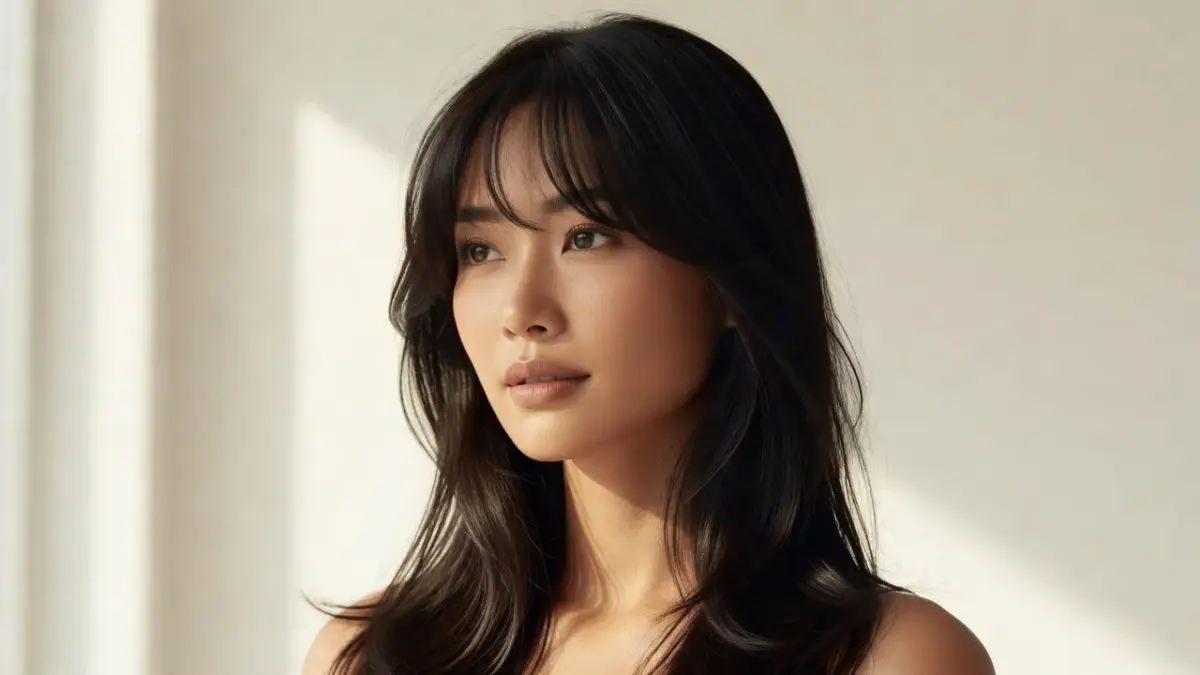
The best face framing layers for Asian faces in 2026 are Korean-style hush layers, curtain bangs, see-through bangs, chin-length lob layers and a soft shag. Which one works depends on your face shape, forehead height and hair texture. Thick, straight hair needs weight removed from inside the layers, while fine hair needs fewer, longer pieces.
As someone who talks hair and face proportions with stylists and readers regularly, I see one mistake most: people pick a cut from a photo of someone with a different forehead height and jaw width. Glow Up & Attractiveness Test is an iPhone app that analyzes a selfie and returns a detailed face analysis with tailored tips, which helps you work out your proportions before you sit in the chair.
What face framing layers are trending in 2026 for Asian faces?
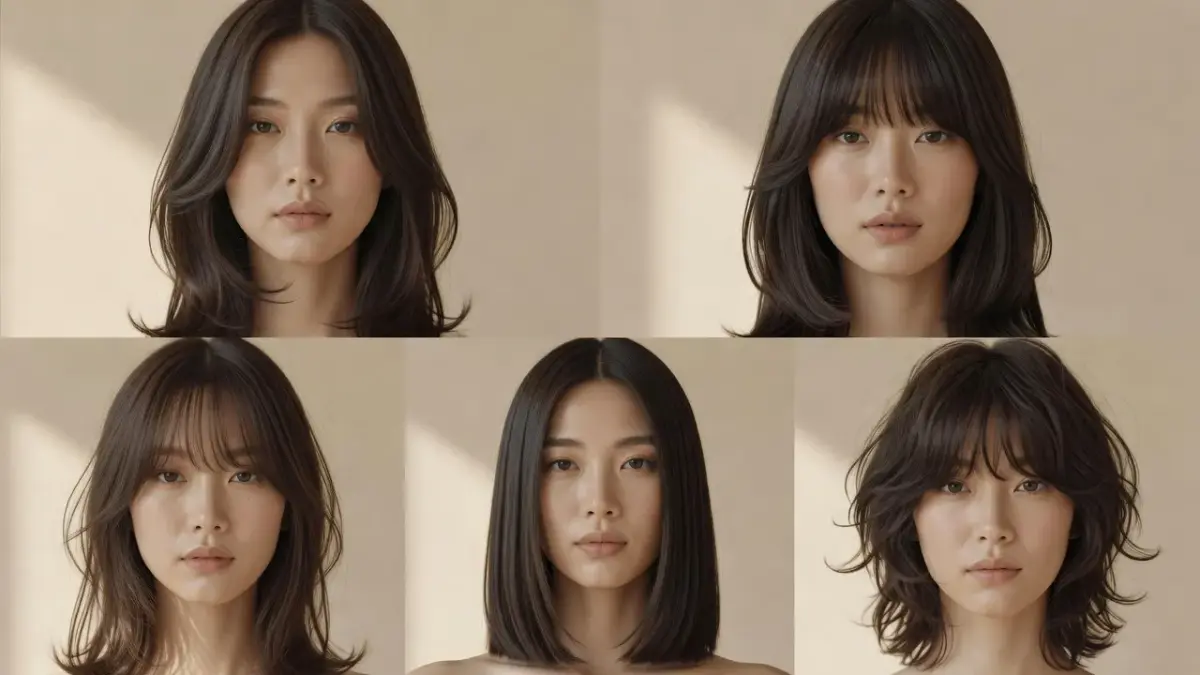
As of November 2026, the five styles I see most are soft hush layers, curtain bangs, see-through bangs, chin-length lob layers and a wearable shag. They all share one idea: shorter pieces start near the cheekbone or chin and blend into longer hair, so they frame the face instead of cutting across it.
Here's my ranking for Asian hair, which is usually straight and dense:
| Rank | Style | Best for | Main trade-off |
|---|---|---|---|
| 1 | Korean hush layers | Long hair, most face shapes | Needs a trim every 6-8 weeks to keep the shape |
| 2 | Curtain bangs | Round and square faces, higher foreheads | Cowlicks fight the center part |
| 3 | See-through (wispy) bangs | Wide or high foreheads, oval faces | Gets oily and splits by midday |
| 4 | Chin-length lob layers | Round and long faces | Visible layers can flip out on thick hair |
| 5 | Soft shag | Fine-to-medium hair that wants volume | Needs daily styling on very thick hair |
What is the Korean face framing haircut with layers?
The Korean face framing haircut is usually called the hush cut: long, feathered layers with two curved face-framing pieces and a soft, often parted fringe. It's the first style I'd recommend for straight hair because it adds movement without a hard shelf of layers.
What defines it:
- Face pieces: They start around the cheekbone or chin and sweep outward, away from the face.
- Back layers: They're long and light, so the silhouette stays full at the ends.
- Fringe: It's a soft curtain or see-through bang, not a blunt one.
- Finish: A "C-curl" at the ends, made with a round brush or a flat iron turned inward.
The trade-off is upkeep. Because the face pieces are cut to a particular length, they lose their curve as they grow out, and I'd book a refresh around every 6-8 weeks. If you only want a low-effort cut, ask for the face pieces without the bang.
Do curtain bangs work with face framing layers on Asian faces?
Yes, curtain bangs work well with face framing layers on Asian faces, as long as your hairline and cowlicks cooperate. Curtain bangs are center-parted and sweep to both sides, which is why they blend so well into layers that start at the cheekbone. Wikipedia's entry on bangs lists curtain bangs as one of the standard fringe styles.
What makes them work on dense, straight hair:
- Check your front hairline first. If you have a strong cowlick or a widow's peak at the center, ask the stylist to cut the fringe slightly longer and part it off-center.
- Cut them long enough. They should hit around the cheekbone or the outer eyebrow, not the lash line. Too short, and thick hair pushes them into a stiff wing.
- Remove internal weight. Dense hair needs thinning inside the fringe so it sweeps instead of puffing up.
- Blow-dry them over a round brush. Ten seconds per side, directed away from the face, is enough.
Skip curtain bangs if your forehead is short. They'll shrink it further. A longer, side-swept face piece is better in that case.
Are see-through bangs and wispy layers popular face framing styles for Asian hair?
Yes, see-through bangs (also called wispy or air bangs) and wispy layers are among the most popular face framing styles for Asian hair. They give you a fringe that shows the forehead through it, so the cut feels lighter than a full bang on thick, straight hair.
Why they're popular:
- Light look: You get face framing without the heavy, blunt line of a full fringe.
- Flexible parting: They can be styled flat, swept or parted with a tiny center gap.
- Easy blend: They merge into face layers without a visible step.
The honest downside is oil. Forehead oil makes fine fringe pieces clump and split by midday, so I'd carry dry shampoo or wash just the bang in the morning, which takes about two minutes.
If you want the opposite look, the hime cut is the classic Japanese style with straight-cut sidelocks and bangs. It's a statement look, and it's much less forgiving of a cowlick than wispy layers.
Which face framing layers suit different Asian face shapes?
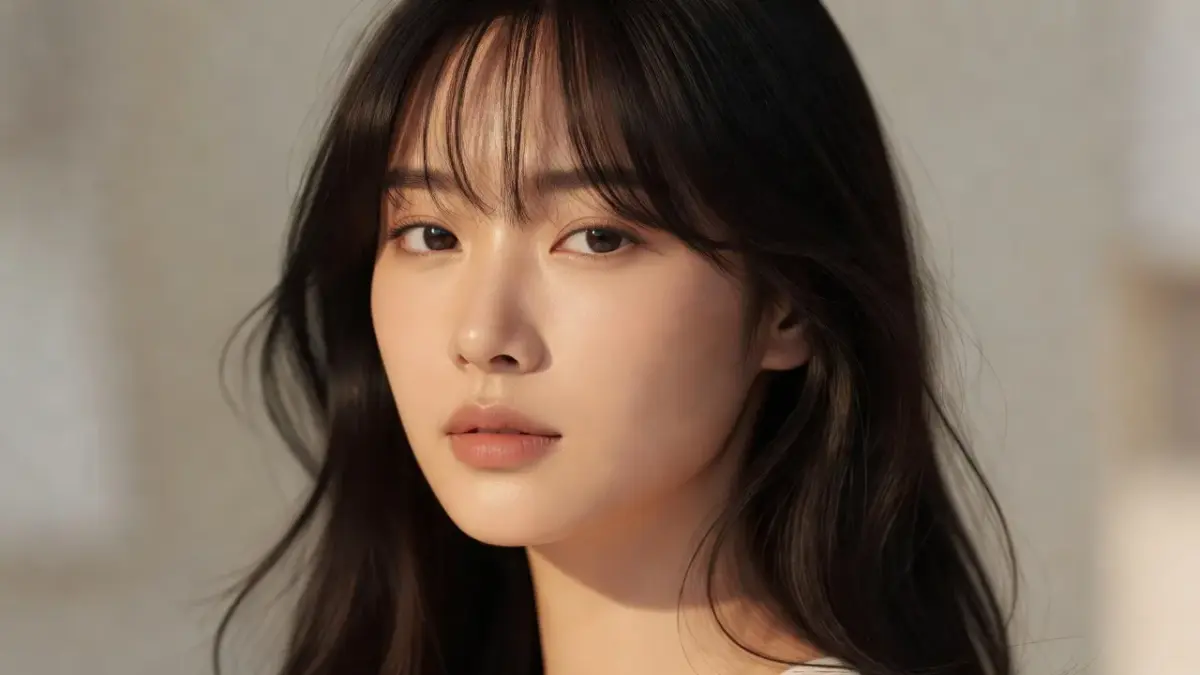
Round faces suit long, angled layers, oval faces suit almost everything, and square faces suit soft layers that start below the jaw. Face shape changes where your first layer should land, so I'd start there before choosing a style.
| Face shape | Layer to ask for | Where the first layer starts | What to avoid |
|---|---|---|---|
| Round | Long, angled face pieces, side-swept bangs | Below the chin | Chin-length layers that widen the cheeks |
| Oval | Hush layers, curtain bangs, shag | Cheekbone or chin | Very heavy blunt bangs |
| Square or wide jaw | Soft, wispy layers curving inward | Just below the jaw | Sharp layers ending at the jaw |
| Long | Curtain bangs, wispy fringe, chin-length lob | Cheekbone | Long flat layers with no fringe |
| Heart or diamond (high cheekbones) | Layers that begin at the chin | Chin | Volume at the cheekbone |
A mirror lies, because angle and lighting distort what you see. For a closer read, I'd measure proportions first using the face shapes analysis guide or the haircuts based on face shape walkthrough.
The app can help here too. Glow Up & Attractiveness Test gives you a face analysis from a selfie plus tailored tips to beautify your look, so you walk into the salon knowing which features you want to emphasize or soften. For a deeper look at how face proportions are measured, the face proportions guide explains the ratios.
Do face framing layers work with a shag, lob or short bob on Asian hair?
Yes, face framing layers work with a shag, lob or short bob on Asian hair, but each needs a different cutting approach. The common problem is density: thick, straight hair stacks layers into a shelf instead of blending them.
Do face framing layers work with a shag on Asian hair?
They do, if the shag is cut soft rather than choppy. A full shag has a lot of short, textured layers around the crown, which on very straight, thick hair can stick out. Ask for a "soft shag" with the shortest layers at the cheekbone and the rest blended long.
Do face framing layers work with a lob?
They work best on a lob, which is why I rank it high for round and long faces. Keep the shortest face piece at or just below the chin, and ask the stylist to point-cut the ends so they curve in. A blunt lob with no layers looks sharp, but a few long face pieces soften it.
Do face framing layers work with a short bob?
Yes, but they're subtle. The bob cut is short enough that "layers" often means a slightly longer front piece or a wispy fringe. On thick hair, ask for texture removed from the underside so the bob doesn't triangle outward.
If you're starting from very long hair, the face-framing tendrils styling guide covers how to hold the shortest pieces.
How do I ask my stylist for face framing layers?
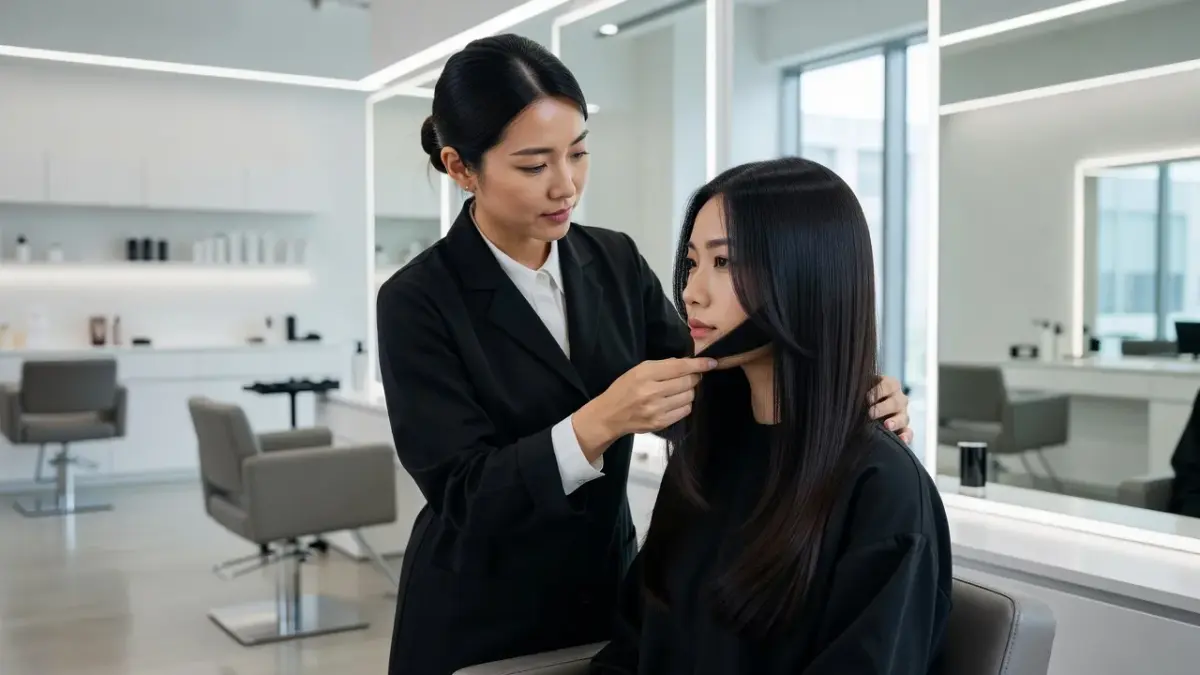
Bring two or three photos of hair that matches your texture, and say where the shortest layer should hit. Photos from people with thin, wavy hair will mislead a stylist, so choose references with straight, dense hair like yours.
Use this checklist:
- Name the starting point: "Shortest piece at the cheekbone" or "at the chin."
- State the fringe: "Curtain bang," "see-through bang" or "no bang."
- Ask for internal thinning: Dense hair needs weight taken out so the layers lie flat.
- Request point-cutting at the ends: It makes the C-curl easier to style.
- Ask for a dry check: Straight hair can look different dry than wet, so have the stylist check the shape dry.
Frequently Asked Questions
How often should I trim face framing layers?
Every 6-8 weeks keeps the shape. The short face pieces grow out fastest, so they lose their curve first. If you only want to maintain the fringe, you can often book a quick bang trim between full cuts.
Do face framing layers make thick Asian hair look thinner?
They can, if the stylist removes weight from inside the layers. Layers without thinning on dense hair can feel bulky. Ask for point-cutting or texturizing, not just shorter pieces.
Can I get face framing layers on fine, flat Asian hair?
Yes, but keep them few and long. Too many short layers make fine hair look sparse. Two long face pieces, starting around the chin, add shape without thinning the ends.
How do I style face framing layers on straight hair?
Use a round brush or a flat iron to curve the ends away from the face. Ten to twenty seconds per piece is enough. Finish with a light-hold spray so the curve lasts through the day.
Are face framing layers good for a big forehead?
Yes, especially curtain bangs or see-through bangs. They cover part of the forehead while keeping the face open. If you'd rather not have bangs, side-swept face pieces break up the forehead area as well.
What's the difference between face framing layers and a hush cut?
A hush cut is a specific face framing style. It combines long, light layers, soft face pieces and a curtain or wispy bang. "Face framing layers" is the general term, which also covers lob or shag versions.
Do face framing layers work with wavy or curly Asian hair?
They do, but the cut changes. Wavy and curly hair shrinks as it dries, so stylists usually cut face pieces longer and dry. On straight hair you can cut shorter and rely on styling.
Can an app tell me which layers suit my face?
An app can help you understand your proportions before you choose. Glow Up & Attractiveness Test analyzes a selfie and gives tips based on your features, which you can bring to your stylist. For a wider look at face analysis tools, see the best looksmaxxing apps.