
Matching haircuts based on face shape requires balancing your visual bone structure—specifically your jawline width, forehead height, and cheekbone prominence—against strategic length, layering, and fringe. The fundamental rule of hair styling is proportion: wide faces benefit from vertical volume and face-framing layers, while long or angular faces look best with horizontal width, curtain bangs, or soft wave textures. Choosing the right cut prevents harsh features from being overemphasized and accentuates your natural symmetry.
Finding the ideal match between your face shape and haircut isn't just about following viral trends; it comes down to geometric geometry and focal points. Whether you have an oval, round, square, heart, diamond, or oblong structure, modern cut techniques in 2026 allow you to wear almost any hair length if the internal layering is tailored correctly to your jaw and cheekbones.
How to identify your face shape accurately before cutting
Determining your exact facial structure requires measuring the relative width of your forehead, cheekbones, and jawline against the overall vertical length of your face. Many people misidentify their proportions because soft tissue changes, body weight fluctuations, and hair placement can obscure the underlying bone structure.
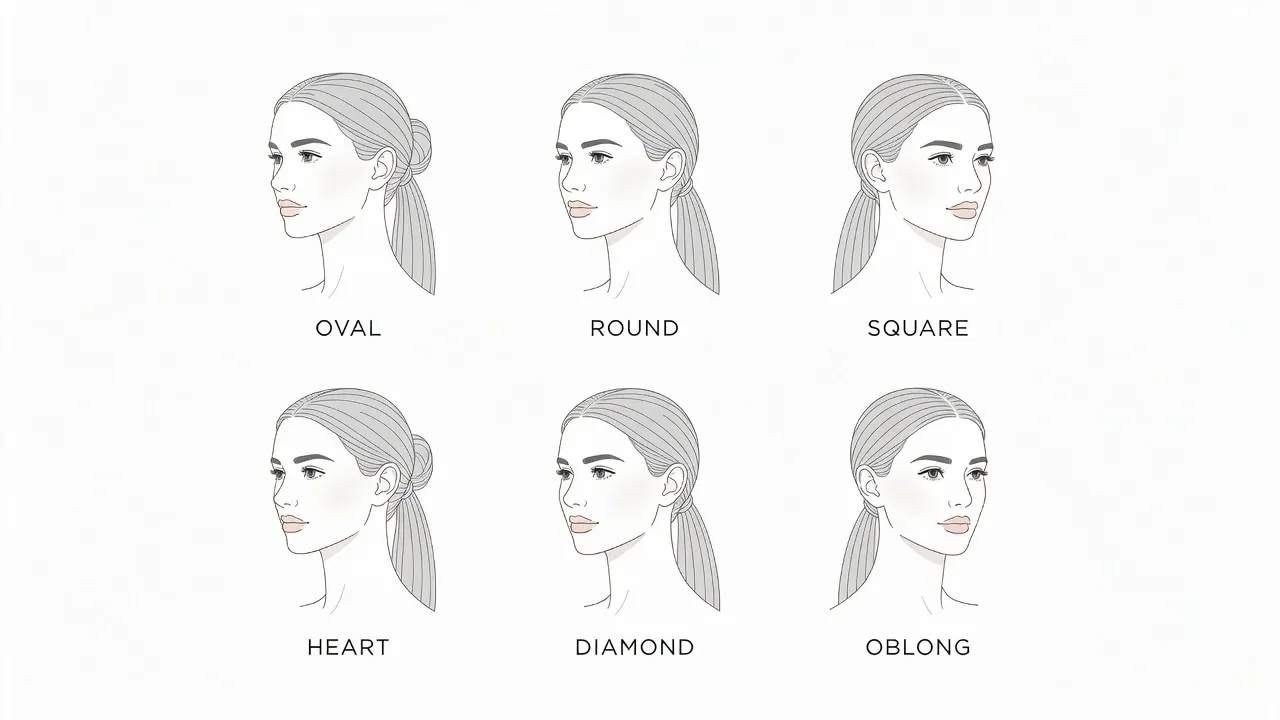
To assess your proportions manually at home, follow these four simple diagnostic steps:
- Measure across the widest part of your forehead: Place a flexible tape measure from hairline peak to hairline peak.
- Measure cheekbone to cheekbone: Measure across the prominent curve of your cheeks, starting just past the outer corner of each eye.
- Measure jawline width: Measure from the base of your jaw under your ear to the middle of your chin, then double that number.
- Measure overall face length: Measure straight down from the center of your hairline to the tip of your chin.
If manual tape measurements feel tedious or unclear, you can use digital beauty tools for instant structural feedback. The Glow Up & Attractiveness Test uses fine-tuned facial analysis AI to map your facial symmetry, cheekbone prominence, and chin-to-forehead ratios directly from a selfie. By uploading a clear photo via their iOS application, you get a detailed breakdown of your proportions, making it much easier to select a style during a female glow up journey before sitting in the stylist's chair.
The 6 primary face shapes and their best haircuts
Every face structure falls into one of six core categories, each requiring specific haircut architecture to achieve optimal aesthetic balance. Here is the curated guide to matching your facial geometry with the most flattering cuts available today.
       [FACIAL STRUCTURE DIAGNOSTIC]
                     │
    ┌────────────────┴────────────────┐
 [Length > Width]                 [Length ≈ Width]
    │                                 │
    ├─ Jaw rounded? ──► OBLONG        ├─ Jaw rounded? ──► ROUND
    └─ Pointed chin? ──► DIAMOND      └─ Jaw angular? ──► SQUARE
1. Oval face shape: balanced proportions and versatile cuts
An oval face features balanced proportions where the facial length is roughly 1.5 times the width, with a forehead slightly wider than the softly rounded jaw. Because the proportions are inherently symmetrical, oval faces can carry almost any haircut length or texture without needing optical correction.
- Why it works: The soft jawline and balanced forehead create an open canvas for both sharp geometry and soft perimeter layers.
- Top recommended cuts: Long internal layers, blunt collarbone bobs, curtain bangs, and chin-length shags.
- Key trade-off: Highly exaggerated volume at the top of the crown can elongate the face unnecessarily, pushing an oval shape into oblong territory.
If you have an oval face, you can experiment freely with modern micro-bangs or sleek middle parts. As noted in symmetry studies cited by the National Center for Biotechnology Information, facial attractiveness strongly correlates with proportional balance, which is why oval faces require minimal strategic correction from hair strands.
2. Round face shape: creating height and angular lines
A round face shape features equal width and length with soft curves, full cheeks, and a rounded jawline that lacks sharp angles. The primary goal when picking a shape of your face hairstyle for round structures is to elongate the head visually and introduce diagonal perimeter lines.
- Why it works: Vertical layers and side-swept bangs break up the circular perimeter and create the illusion of structured bone depth.
- Top recommended cuts: Long asymmetrical bobs (lobes), textured shags with crown height, deep side parts, and long face-framing layers starting below the chin.
- Key trade-off: Single-length chin bobs and heavy straight-across bangs accentuate facial roundness and broaden the cheeks.
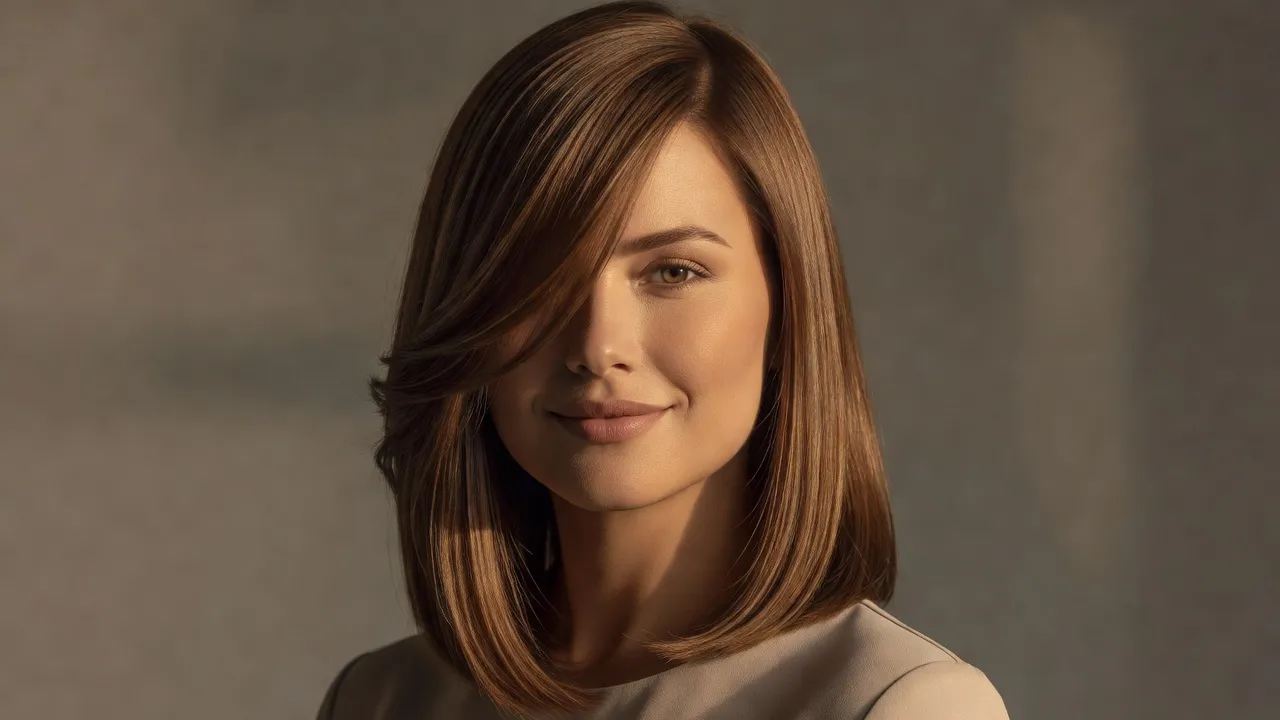
For round faces, avoid blunt cuts that end right at the jaw point. Instead, opt for wispy layers that taper past the collarbone to pull the viewer's eye downward.
3. Square face shape: softening strong jawlines
A square face is defined by a broad forehead, prominent cheekbones, and a sharp, angular jawline of nearly equal width. The right haircut must soften the structural corners of the jaw while maintaining the striking strength of the face.
- Why it works: Feathered ends and soft wave textures disrupt harsh horizontal lines across the lower third of the face.
- Top recommended cuts: Soft curtain bangs, long layered cuts with internal movement, textured shoulder-length lobs, and side-parted shags.
- Key trade-off: Sharp, blunt-cut bobs ending at the chin highlight jaw boxiness and can look overly severe.
If you have a square jaw, incorporating soft, sweeping fringes creates a diagonal distraction that rounds off sharp corners. Integrating a dedicated routine for glow makeup and hair alongside soft layering further highlights your bone structure without making it appear harsh.
4. Heart face shape: balancing wider foreheads with lower volume
A heart-shaped face features a wider forehead and prominent cheekbones that taper down down to a delicate, pointed chin. Haircuts for this shape must reduce visual weight around the upper third of the face while building volume near the jawline.
- Why it works: Adding width around the chin balances the narrow lower face against the broader hairline.
- Top recommended cuts: Chin-length bobs, wispy bottleneck bangs, deep side-parted layers, and mid-length cuts with outwards flipped ends.
- Key trade-off: Short, heavy crown layers add excess volume to the top of the head, making the chin look disproportionately narrow.
Chin-length cuts are particularly effective here because they deposit weight directly into the negative space surrounding a narrow jaw, creating an overall oval impression.
5. Diamond face shape: highlighting cheekbones and softening angles
A diamond face shape is characterized by high, wide cheekbones paired with a narrow forehead and a slender, pointed jawline. This rare face shape looks best in cuts that add width at both the hairline and jaw while keeping the cheeks relatively clear of heavy hair mass.
- Why it works: Strategic fringe opens up the narrow forehead while lower layers fill out the chin zone.
- Top recommended cuts: Curtain bangs paired with shoulder-length shags, chin-framing layers, textured pixie cuts with side volume, and medium lobs.
- Key trade-off: Flat, straight hairstyles with no face-framing layers make the cheekbones look disproportionately wide and sunken near the temples.
Diamond shapes benefit greatly from textured curtain fringe that sweeps outward toward the temples, visually widening the upper face to match cheekbone width.
6. Oblong / Long face shape: adding lateral width and shortening length
An oblong face shape is significantly longer than it is wide, maintaining a uniform line across the forehead, cheeks, and jawline. The best haircuts add horizontal volume at the sides while breaking up vertical length using forehead coverage.
- Why it works: Full bangs and wide, beachy waves expand the face laterally, making it appear shorter and more oval.
- Top recommended cuts: Full blunt bangs, curtain-fringed shags, wide chin-to-shoulder bobs, and voluminous bouncy layers.
- Key trade-off: Super-long, straight hair with a center part pulls the face down, emphasizing vertical length.
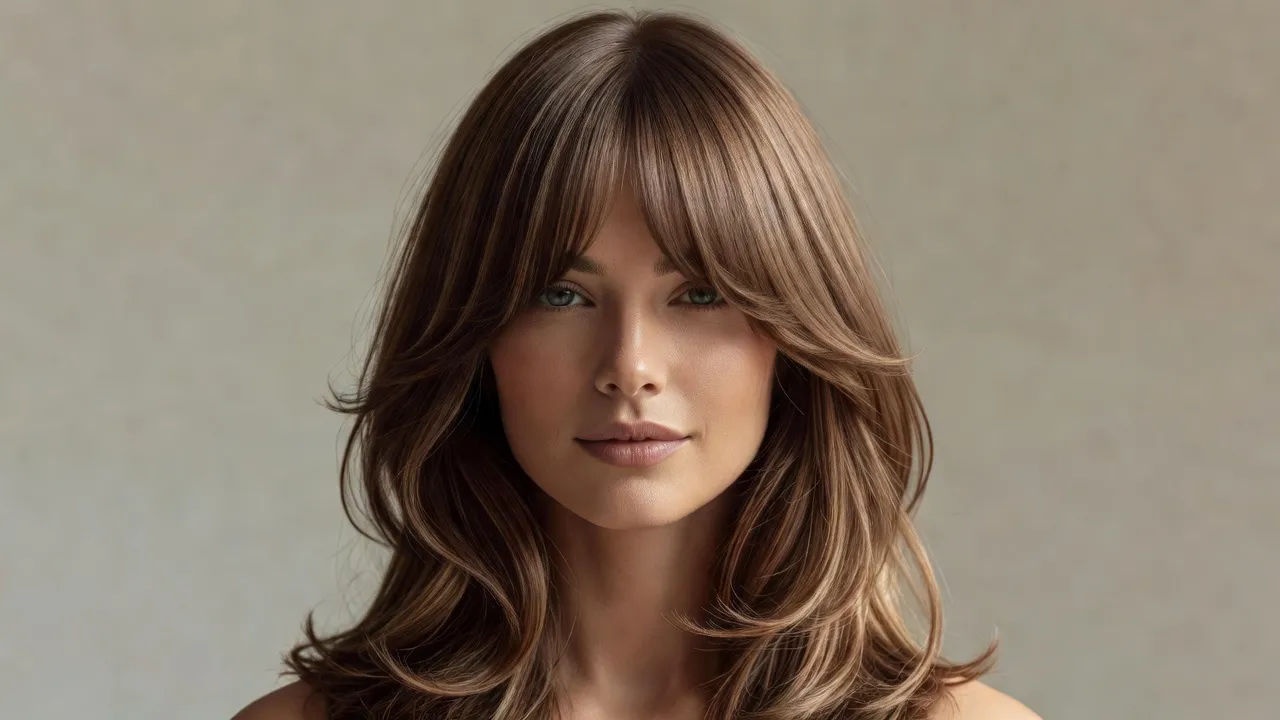
Adding bangs to an oblong face instantly removes two inches of visible vertical height, restoring balance between the eyes and chin.
Face shape and haircut compatibility guide
Comparing your face shape against specific cut lengths and styling methods helps you identify which features to emphasize and which to soften. The table below breaks down the structural goals, recommended cuts, styles to avoid, and diagnostic considerations for every shape.
| Face Shape | Key Architectural Feature | Primary Cut Goal | Best Haircut Match | Styles to Avoid | Diagnostic Option |
|---|---|---|---|---|---|
| Oval | Proportional length-to-width ratio | Maintain natural balance | Long internal layers, collarbone bobs | Hyper-tall crown styles | AI analysis via Glow Up & Attractiveness Test |
| Round | Equal length/width, soft jaw | Create vertical length & angles | Asymmetrical lob, deep side-part shag | Blunt chin-length bobs | Tape measure length vs. width ratio |
| Square | Broad jawline equal to forehead | Soften strong corner angles | Curtain bangs, long feathered layers | Blunt jaw-length cuts | Jaw angle contour check |
| Heart | Broad forehead, narrow pointed chin | Add width at the jawline | Chin-length bob, wispy bottleneck bangs | Top-heavy crown layers | Forehead to chin width measurement |
| Diamond | High cheekbones, narrow forehead/jaw | Open forehead, balance cheek width | Curtain bangs with mid-length shag | Flat slicked-back straight hair | Cheekbone prominence comparison |
| Oblong | Vertical length noticeably larger | Build horizontal side width | Full bangs, voluminous shoulder waves | Pin-straight chest-length cuts | Vertical third face measurement |
What hair trends have changed for face shapes in 2026?
As of August 2026, rigid geometric rules for haircuts based on face shape have shifted toward soft customized internal layering. Heavy, ultra-blunt cuts that forced faces into strict rigid frames are out. Modern styling relies on personalized texturizing to make almost any trend work for any face.
Three major shifts define current hair design standards:
- The evolution of curtain bangs: Rather than uniform center-part fringes, modern curtain bangs are sliced diagonally to hit precisely at specific facial high points—like the cheekbone apex or jaw corner—regardless of overall face shape.
- Weightless internal layering: Modern cuts use point-cutting inside the hair mass to reduce bulk around wide cheeks or build movement near narrow chins without altering the outer length.
- Texture-first sculpting: Natural wave and curl patterns are now integrated into the initial cut shape. According to hair care guides on Byrdie, cutting curly and wavy hair dry based on individual bone landmarks yields far better facial frame balance than wet precision cutting.
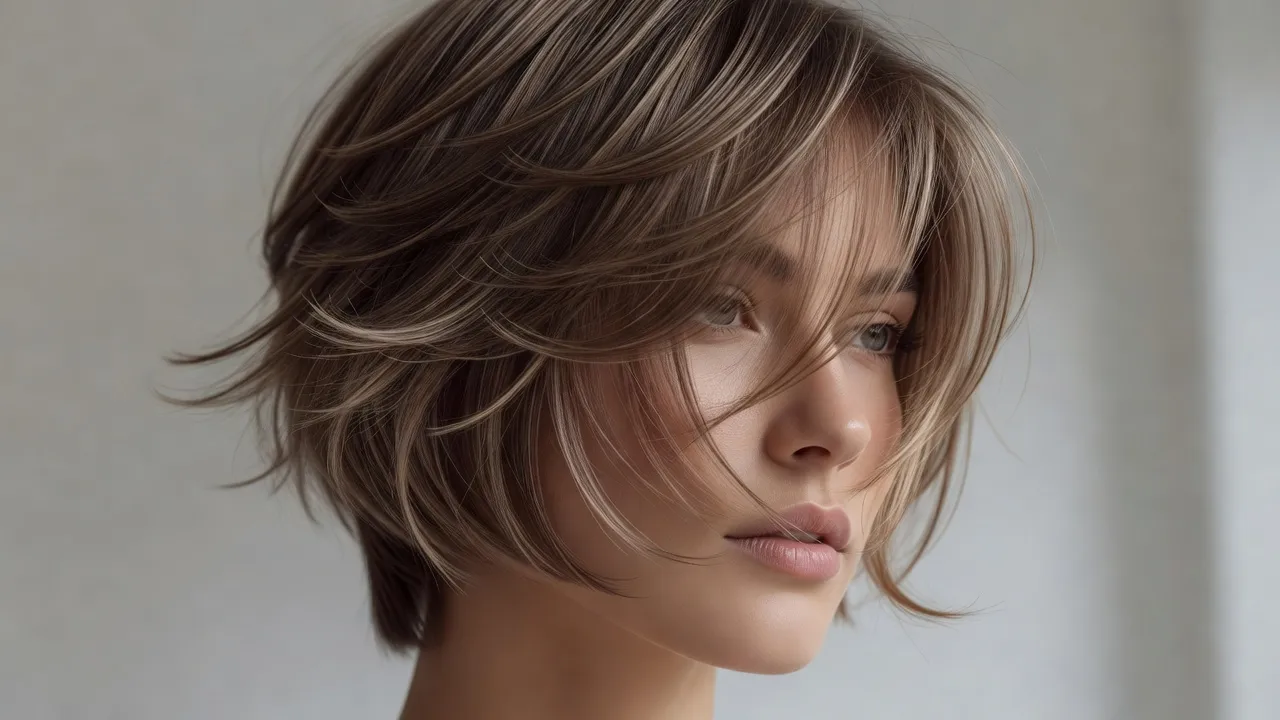
If you are pursuing comprehensive personal aesthetics or interested in looksmaxxing for women, matching your haircut to your structural features provides an immediate elevation to your daily appearance without requiring permanent cosmetic changes.
How to communicate your face shape and haircut goals to your stylist
Getting the exact haircut you want requires bringing clear visual references and explaining where you want focal points to sit relative to your bone structure. Many consultation miscommunications happen because clients use vague terms like "layers" or "bangs" without specifying structural length.
Use these concrete strategies during your salon consultation:
- Point out your reference bone landmarks: Tell your stylist exactly where you want layers to start—for example, "I want the shortest face-framing piece to hit at my cheekbone to widen my narrow forehead."
- Bring 3 photos of the same cut on your face shape: Choose inspiration photos featuring models who share your specific facial structure rather than just picking styles you like on different face types.
- Ask about daily maintenance: Some cuts designed to soften square or round faces require active heat styling, round-brushing, or texturizing sprays to maintain their shape.
Frequently Asked Questions
Can you wear bangs with a round face shape?
Yes, you can wear bangs with a round face shape as long as they are not cut straight across in a heavy, blunt line. Opt for long curtain bangs, wispy bottleneck fringe, or side-swept bangs that create a diagonal angle across the forehead to elongate your face.
What haircut makes your face look thinner?
Longer haircuts with vertical layering, deep side parts, and asymmetrical long bobs (lobs) elongate the face and make it appear slimmer. Keeping length past the collarbone draws the eye downward, breaking up horizontal width across the cheeks.
Is an oval face shape really the most versatile for haircuts?
Yes, an oval face shape has balanced top-to-bottom proportions and soft angles, allowing it to suit almost any style from ultra-short pixie cuts to long, blunt layers. Because no single feature dominates the profile, oval shapes rarely require optical balancing.
Should people with square faces avoid short hair?
No, people with square face shapes do not need to avoid short hair, but they should avoid sharp, chin-length blunt cuts. Short pixie cuts with soft, textured tops or layered short bobs that end above or below the jawline effectively soften an angular jaw.
How do I know if a short haircut will suit my face shape?
To check if short hair suits your face shape, measure the vertical distance from your earlobe to the tip of your chin using a ruler held vertically under your ear and a pencil placed horizontally under your chin. If the measurement is under 2.25 inches, short hair typically flatters your jawline balance.
Can your face shape change over time?
Yes, your perceived face shape can change over time due to natural aging, bone density shifts, body weight changes, and loss of skin elasticity around the jawline. While underlying skull structure remains fixed, soft tissue changes can turn an oval face heart-shaped or rounder over time.
What is the best haircut for a heart face shape with thin hair?
A chin-length bob with soft, wispy layers or a collarbone-length cut with bottleneck bangs works best for thin hair on a heart-shaped face. This structure builds volume around the narrow lower half of the face without thinning out the ends.