
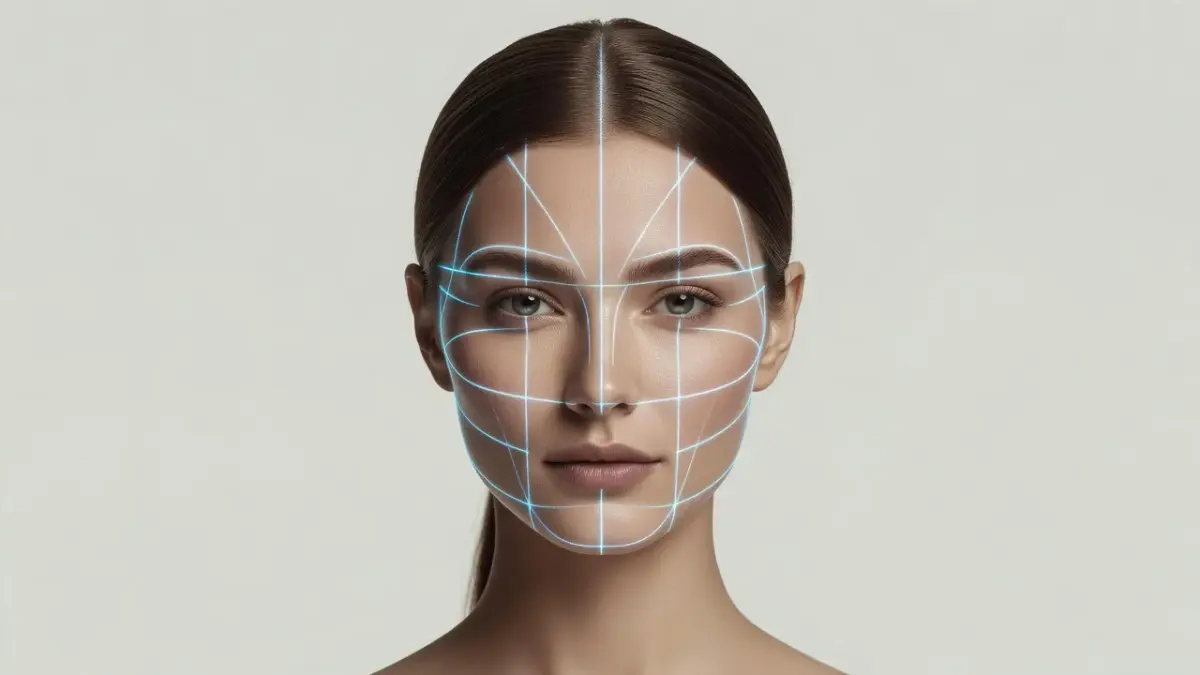
Face shape analysis is the quantitative evaluation of facial structure based on four key dimensions: forehead width, cheekbone span, jawline width, and vertical face length. By mapping these proportional ratios, an analysis categorizes a face into primary structural geometries such as oval, square, round, heart, diamond, or rectangle. Knowing your specific structure removes the guesswork when choosing flattering hairstyles, glasses, and makeup contouring.
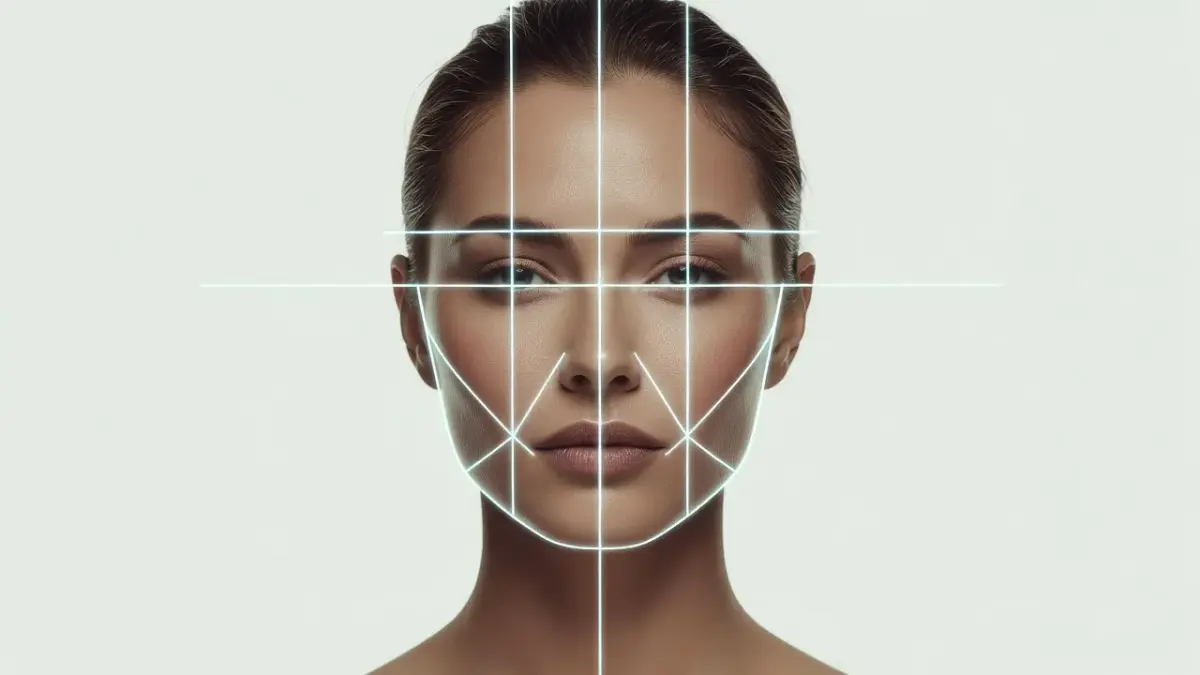
What is face shape analysis?
Face shape analysis is a diagnostic technique that identifies your overarching facial structure by comparing horizontal cheek, jaw, and forehead distances against vertical length. Rather than looking at individual features like eye color or skin tone, this process focuses strictly on bone structure and outline boundary lines.
Understanding your geometry helps clear up confusion when selecting styling choices that balance your proportions. Traditional methods relied on pulling hair back, staring into a mirror, and tracing an outline on the glass with lipstick or dry-erase marker. Modern methods rely on digital landmark detection to measure facial dimensions down to the millimeter.
If you prefer automated tools, downloading a modern iOS app like the Glow Up & Attractiveness Test lets you snap a selfie to get a detailed face analysis from a fine-tuned AI model. For $9.99/week, it pairs structural evaluations with tailored tips to beautify your look without requiring manual tape measurements. Detailed structural evaluation is a core part of any comprehensive analysis of face guidance.
What are the key face shapes descriptions?
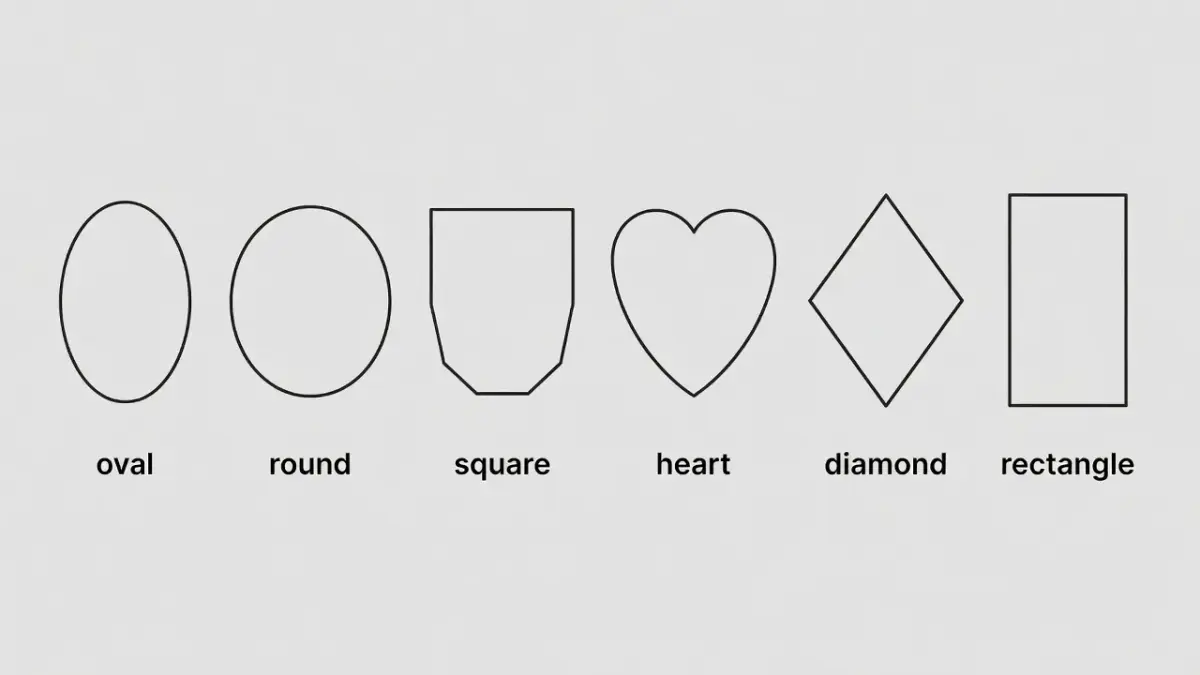
The six main face shapes descriptions include oval, round, square, heart, diamond, and rectangle, each defined by distinct skeletal boundaries and width-to-length ratios. Identifying where your facial dimensions land across these categories clarifies how soft or angular your features appear to others.
Oval face shape description
An oval face shape features a soft jawline with a face length that is roughly 1.5 times its width. The forehead is slightly wider than the chin, and the cheekbones represent the widest point of the face. Because there are no prominent sharp corners or dramatically wide regions, stylists consider the oval profile visually balanced.
Round face shape description
A round face shape features equal width and vertical length with soft, curved jaw boundaries. According to beauty guides on Byrdie, round faces lack sharp angles and reach their maximum width at the cheekbones. The chin is rounded, and the forehead hairline forms a smooth arc.
Square face shape description
A square face shape features a sharp jawline where the forehead, cheekbones, and jaw are virtually identical in width. The jaw corners are prominent and crisp, giving the lower third of the face a strong boxy frame. The length-to-width ratio sits at a clean 1:1 proportion.
Heart face shape description
A heart face shape features a broad forehead and wide cheekbones that narrow down sharply into a pointed chin. Often accompanied by a widow's peak hairline, this structure is noticeably top-heavy. The jawline is delicate and lacks squared corners.
Diamond face shape description
A diamond face shape features high, prominent cheekbones paired with a narrow forehead and an equally narrow, pointed jawline. This structural type is the rarest natural shape. The cheekbone width is significantly larger than both the forehead line and the jawline measurement.
Rectangle face shape description
A rectangle face shape features a vertical length noticeably greater than its width, paired with a squared, angular jawline. Sometimes referred to as an oblong shape, this category retains straight side contours from forehead to jaw. The forehead, cheekbones, and jawline share equal spans across the face.
Face shapes descriptions and key structural dimensions
Comparing facial dimensions across shapes reveals how small differences in bone span alter overall geometry. The table below details the proportions, widest areas, and jaw features that define each category.
| Face Shape | Width-to-Length Ratio | Widest Point | Jawline Profile | Forehead Line |
|---|---|---|---|---|
| Oval | ~1 : 1.5 (longer than wide) | Cheekbones | Softly rounded curve | Slightly wider than chin |
| Round | ~1 : 1 (equal dimensions) | Cheekbones | Smooth, rounded curve | Curved, equal to cheek width |
| Square | ~1 : 1 (equal dimensions) | Forehead, cheeks, jaw equal | Sharp 90-degree corners | Wide and straight edge |
| Heart | Variable (tapered) | Forehead / temples | Pointed, narrow chin | Broadest point of face |
| Diamond | Variable (dramatically tapered) | Cheekbones | Pointed, narrow chin | Narrow, tapered temples |
| Rectangle | ~1 : 2 (significantly longer) | Forehead, cheeks, jaw equal | Squared, sharp corners | Wide, flat hairline |
How do you perform a face shapes analysis accurately?
You perform an accurate face shapes analysis by taking four measurements with a soft, flexible tailor's tape and comparing them. Rigid steel tapes or rulers cannot follow the natural curve of your face, so they give wrong numbers. The whole process takes about 10 minutes.
- Prepare your face and space: Pull all your hair back with clips or a headband so your hairline, temples, and jaw corners are exposed. Stand directly in front of a well-lit mirror and keep your head level, looking straight ahead. Tilting your head up or down shortens vertical distances.
- Measure the forehead width: Find the widest section of your forehead, usually halfway between your eyebrows and your hairline. Place the tape on the hairline above the arch of one eyebrow and pull it flat across to the matching spot on the other side, without curving it up into your scalp.
- Measure the cheekbone width: Feel along each cheekbone for the sharpest ridge just below the outer corner of your eye, then stretch the tape from one to the other. Lay it gently over the bridge of your nose. Pressing too hard compresses soft tissue and gives an artificially short reading.
- Measure the jawline width: Place the tape on the corner of your jaw just below your earlobe and run it along the jawbone to the center of your chin, then multiply that number by two. Measuring straight across the front is unreliable because your chin juts forward.
- Measure vertical face length: Run the tape from the center of your hairline straight down over your nose to the lowest point of your chin. If your hairline recedes or has a peak, start where your forehead turns into the slope of your scalp. At the bottom, use the underside point of your chin rather than pushing the tape back against your neck.
- Compare your four numbers: Order them from largest to smallest and compare your length against your widths. Then match the result to the face shape descriptions and the table above.
Record each number in centimeters, because the smaller units give cleaner ratios than inch fractions. Measure in the late afternoon, too: morning fluid retention can make your face read rounder or squarer than it is. Careful measurements keep you from misclassifying a square structure as round simply because of cheek volume.

Manual measurements versus AI digital scanning
Manual tape measurements provide raw numbers, but mobile AI scanning analyzes surface geometry and proportional balance in seconds. As of October 2026, camera-based vision algorithms process thousands of micro-points across your facial contours to detect structural symmetry without user measurement error.
Manual methods cost nothing but suffer from human error. Pulling a tape tightly across curved cheeks distorts straight-line distances, leading to mistaken ratios. Angle changes in mirror reflection can also lead to misjudging jaw corners.
Using dedicated applications like the Glow Up & Attractiveness Test streamlines this assessment. By capturing a single front-facing photo, the app's AI model provides an immediate structural breakdown and rating score, helping you uncover your glow-up potential with customized recommendations.
Why does facial geometry matter for hair and styling choices?
Facial geometry dictates where visual volume or softening angles are needed to create overall visual balance. Hair stylists, makeup artists, and optometrists rely on these structural guidelines to complement natural features rather than exaggerate harsh proportions.
Haircut selection
Haircuts should add volume where your face is narrow and avoid bulk where your face is widest. Round faces benefit from long layers and high crowns that elongate the profile. Square faces look best with soft, wispy bangs that blur sharp jaw corners. Finding ideal haircuts based on face shape balances strong facial lines effortlessly.
Eyewear frames
Glasses frames should contrast with your natural facial geometry rather than copy it. Round faces look sharper in angular rectangular frames, while square faces look softer in round or oval wire frames. According to fitting guides from Healthline, matching frame shape directly to face shape overemphasizes broad or round features.
Makeup contouring and highlight
Contouring creates shadows that pull wide areas inward, while highlighting draws narrow features forward. A heart face shape benefits from subtle contouring along the outer temples to reduce forehead breadth. A rectangle face shape uses blush placed high on the cheeks to widen the middle third of the face visually.
What common errors distort a face shape analysis?
The most common error in face shape analysis is mistaking temporary facial bloat or body fat variations for bone structure. Facial fat sits on top of muscle and bone, soft jaw lines do not mean your underlying skeletal structure lacks square corners.
Another frequent mistake is assessing your face while smiling or holding an expressive pose. Smiling widens the cheekbones and shifts the jaw upward, completely skewing horizontal measurements. Always maintain a neutral expression with a straight head position.
Camera lens distortion also ruins digital selfie assessments taken too close to the screen. Close-up smartphone lenses warp facial proportions by enlarging central features like the nose and narrowing peripheral boundaries. Hold your phone at arm's length or use a 2x optical zoom setting to capture an accurate front view.
Facial symmetry and proportional ratios in 2026
Modern facial analysis looks beyond basic perimeter shapes to evaluate bilateral symmetry and vertical thirds. Researchers on Wikipedia note that facial symmetry plays a substantial role in human perception of aesthetics and attractiveness.
An ideal structural layout divides vertically into three equal sections: hairline to brow ridge, brow ridge to nose base, and nose base to chin tip. Horizontally, a balanced face spans five equal eye-widths from ear to ear. Our guide to face patterns and proportions explains these ratios further.
AI apps combine these structural principles into easy-to-read reports. Knowing whether your profile leans asymmetrical or bottom-heavy lets you adjust hair parts and contour lines with high precision.
Frequently Asked Questions
Can your face shape change as you age?
Yes, your face shape can change over time as fat pads shift, skin loses elasticity, and bone density naturally decreases. Aging often causes lower facial tissue to sag, turning an oval or heart shape into a wider rectangle or jowled square structure.
What is the most common face shape in women?
The oval face shape is widely considered the most common natural structure, followed closely by round and square profiles. However, true diamond and heart shapes are far less frequent across general populations.
How do I tell if my face is round or square?
You can tell by evaluating your jawline corners and width ratios. Both shapes have equal length and width, but square faces possess sharp 90-degree jaw angles, whereas round faces have soft, continuous curves with no hard corners.
Is an oval face shape universally considered attractive?
Yes, classical aesthetic standards frequently regard oval faces as balanced because their proportions do not feature extreme horizontal widths or sharp structural angles. This symmetry allows oval faces to wear almost any hairstyle or eyewear design effortlessly.
How does camera focal length distort face shape?
Short focal lengths, such as wide-angle front-facing selfie cameras, distort facial geometry by bulging center features outward and slanting side boundaries back. Taking photos from at least four feet away prevents wide-angle distortion from altering your face shape analysis.
Can weight loss change my underlying face shape?
Weight loss reduces fat deposits over your cheekbones and jawline, exposing your underlying skeletal geometry, but it does not alter your bone frame. A square jaw will remain square after weight loss, though it will appear sharper and more defined.
Are digital face shape analysis apps accurate?
Digital face shape analysis apps are highly accurate when photos are captured with neutral lighting, flat head angles, and proper lens distances. Advanced AI systems map dozens of structural facial landmarks that eliminate human measuring errors with physical tapes.