

You can make your cheekbones look more prominent through non-invasive contouring, targeted fat loss, dermal fillers, or surgical augmentation depending on your underlying bone structure. While true bone shape is genetically determined by the zygomatic arch, reducing facial fluid retention and strategically restoring or carving midface volume dramatically enhances how high and defined your cheeks appear.
The single variable that determines which method works for you is whether your bottleneck is structural bone projection, overlying soft tissue volume, or muscle tone. Below is a realistic breakdown of how options compare across timeline, invasiveness, and cost as of August 2026.
| Step / Option | Primary Approach | Realistic Timeframe | Requirement / Cost Range |
|---|---|---|---|
| Step 1: Structural Analysis | Manual assessment & facial scanning | Immediate | Free to low cost |
| Step 2: Debloating & Fat Loss | Dietary changes & body fat reduction | 2 to 8 weeks | Free |
| Step 3: Optical Contouring | Makeup, shading, & lighting tricks | 5 minutes | $10 - $50 (makeup supplies) |
| Step 4: Hair & Frame Adjustments | Strategic haircuts & cheek-framing layers | 45 minutes | $30 - $150 (stylist visit) |
| Step 5: Hyaluronic Fillers | Injected gel over zygomatic bone | 15 minutes (lasts 6-18 months) | $600 - $2,000 per session |
| Step 6: Buccal Fat Removal | Surgical excision of lower cheek fat | 1 hour surgery (permanent) | $2,000 - $5,000 |
| Step 7: Malar Implants | Solid silicone/porous implants | 1-2 hours surgery (permanent) | $3,500 - $8,000 |
Do facial exercises improve or increase cheekbone prominence?
No, facial exercises cannot alter your underlying zygomatic bone structure or build significant bone mass. The bone itself dictates the high point of your cheeks, and no amount of targeted muscle movement can change genetic skeletal geometry.
While exercises like "cheek lifts" target the zygomaticus major and minor muscles, building these muscles provides only minor soft-tissue support rather than structural projection. According to a study published in JAMA Dermatology, a 20-week facial exercise regimen showed modest improvements in upper and lower cheek fullness, but it did not change bone contours.
If you are hoping to carve out a sharp, hollowed look, hypertrophy of the facial muscles can sometimes widen the midface rather than accentuate the bone edge. For most women, spending 30 minutes a day on facial yoga yields far smaller visual gains than simple dietary debloating or topical contouring.
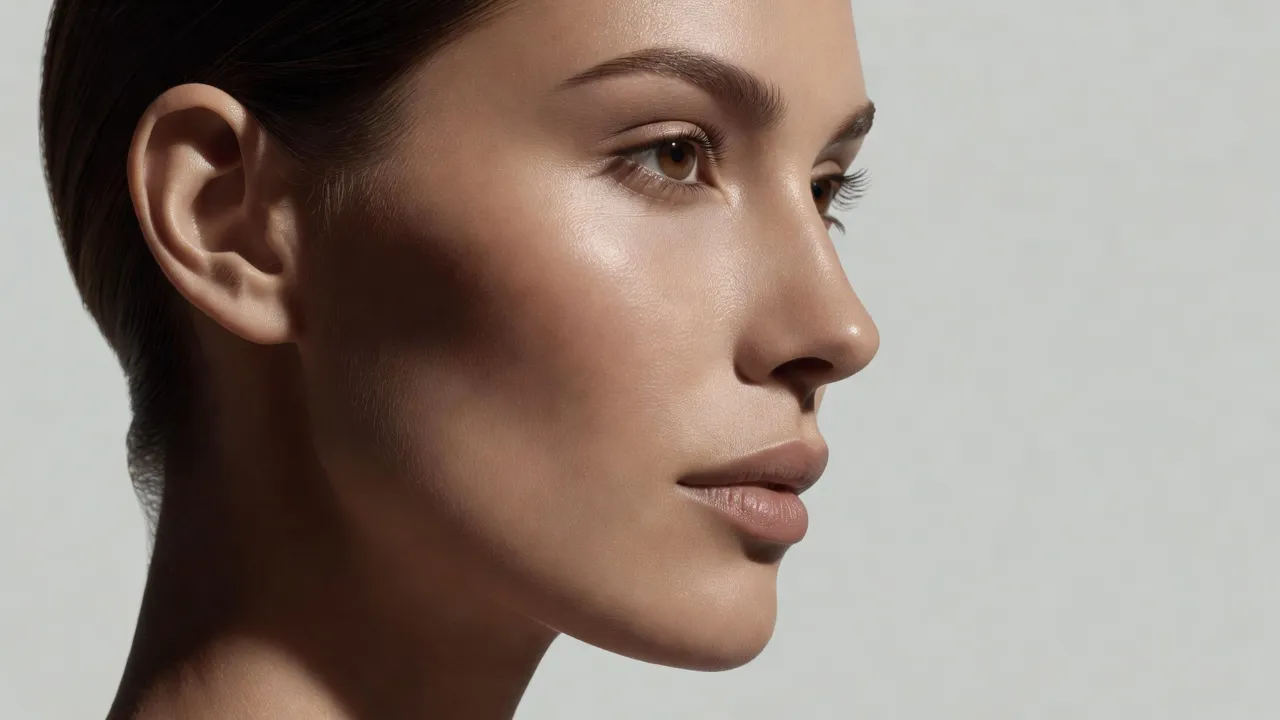
What are the effectiveness and risks of buccal fat removal for cheekbones?
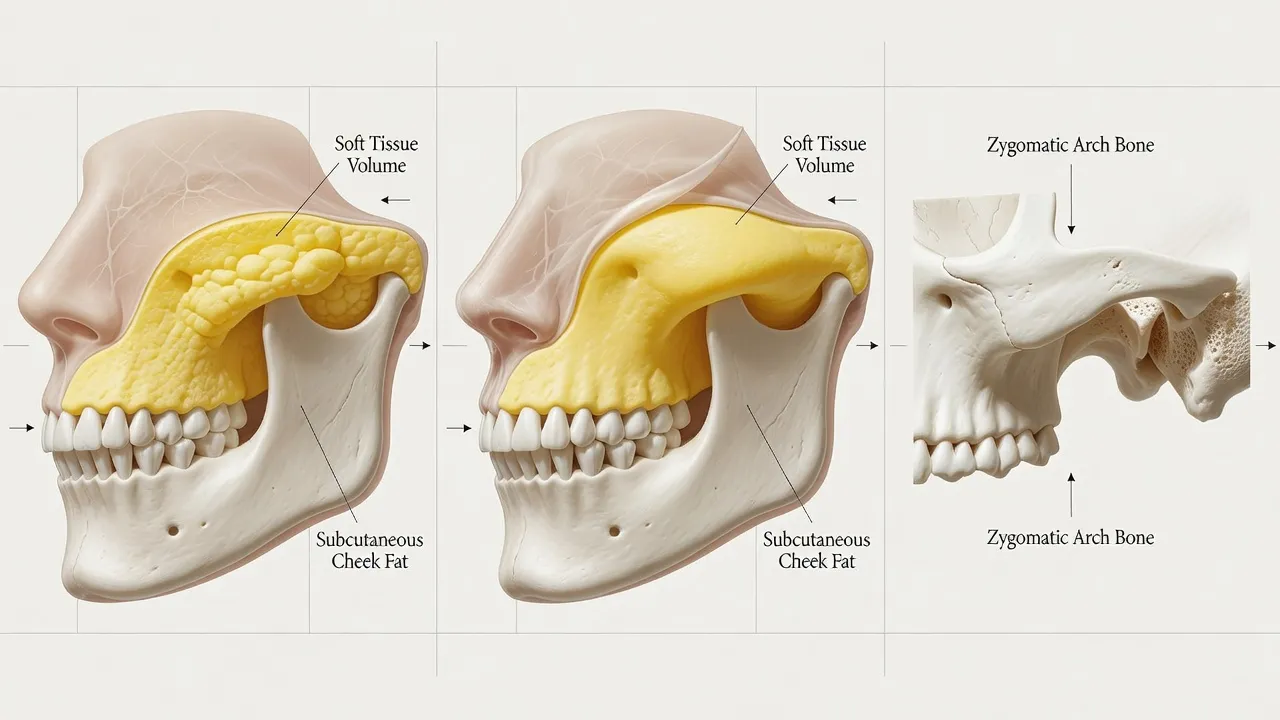
Buccal fat removal effectively hollows the lower midface to make existing cheekbones pop, but it carries a high risk of premature facial aging. By removing the buccal fat pad situated beneath the cheekbones, surgeons create a shadow directly under the zygomatic arch.
The procedure takes under an hour under local anesthesia and produces permanent results once post-op swelling settles over 3 to 6 months. However, the American Society of Plastic Surgeons cautions that patients must be carefully selected. Extracting too much fat pad volume early in life can leave your face looking prematurely gaunt as natural subcutaneous fat thins with age.
I'd skip buccal fat removal entirely if you already have a slender or long face shape. The surgical excision cannot be easily reversed, and volume loss that looks chiseled at age 25 can resemble hollow wasting by age 40.
How effective and safe are dermal fillers (hyaluronic acid) for cheek augmentation?
Hyaluronic acid dermal fillers are highly effective for creating instant cheek volume and carry a strong safety profile when injected by an experienced practitioner. Injections placed directly along the periosteum (the bone layer) lift overlying tissue and simulate a stronger zygomatic arch.
Results are immediate, require zero surgical downtime, and typically last between 6 and 18 months depending on the product density used. The primary advantage of hyaluronic acid is reversibility: if you dislike the outcome or experience asymmetric placement, the filler can be dissolved within hours using the enzyme hyaluronidase.
As detailed by the Cleveland Clinic, minor side effects include localized bruising and swelling, while serious complications like vascular occlusion are rare when qualified injectors use aspirating techniques or blunt-tip cannulas.
The zygomatic arch (bone) is the anatomical location for two approaches to cheek augmentation:
- Structural fillers (reversible, 6-18 months duration)
- Surgical implants (permanent, solid)
What are the outcomes and complications of cheek/malar implants?
Cheek implants provide a permanent, highly customizable increase in bone projection, though they carry surgical risks like implant shift and infection. Made from solid silicone, porous polyethylene, or ePTFE, malar and submalar implants are anchored directly to the facial skeleton via incisions inside the upper lip.
The outcomes offer sharper, more dramatic projection than fillers can achieve, especially for individuals with naturally flat midfaces. Because the material does not degrade over time, you avoid the recurring cost of maintenance injections every year.
However, complications require careful consideration:
- Implant displacement: Physical trauma or improper anchoring can cause the implant to shift out of alignment.
- Infection: Any foreign body placed under the periosteum carries a small risk of chronic infection, which usually requires complete surgical removal.
- Nerve numbness: Temporary or permanent alteration of sensory nerves in the upper lip and cheek can occur during pocket dissection.
How effective are thread lifts (PDO threads) for the midface/cheeks?
PDO thread lifts provide moderate, immediate lifting of sagging midface tissue, but their results are temporary and rarely last beyond 6 to 12 months. Dissolvable polydioxanone (PDO) threads feature tiny barbs that anchor into the subcutaneous fat to pull soft tissue upward toward the temple.
Thread lifts do not add actual volume to the cheekbones. Instead, they reposition descended fat pads higher up on the face, which can make the zygomatic region look fuller if age-related sagging is your main issue.
I find thread lifts disappointing for young women who want sharper bone definition. The mechanical lift degrades relatively fast as the body absorbs the sutures, and the cost-to-longevity ratio rarely competes favorably with targeted hyaluronic acid fillers.
What are the results of fat grafting to the cheeks?
Autologous fat grafting delivers permanent, natural-looking cheek volume once the transplanted fat establishes a blood supply. Liposuction harvests fat cells from your abdomen or thighs, purifies them, and reinjects them over the cheekbones in microscopic micro-droplets.
Because the filler material comes from your own tissue, there is zero risk of allergic reaction or systemic rejection. Typically, 50% to 70% of the injected fat cells survive permanently after a 3-month integration window.
The primary variable is unpredictability: your surgeon cannot control the exact survival rate of the fat cells. If you gain or lose significant body weight later, the transferred cheek fat will expand or shrink just like fat anywhere else on your body.
Step 1: Analyze your current facial structure and midface balance
To accentuate your cheekbones effectively, you must first identify whether your midface lacks structural bone projection, holds excess fluid, or suffers from volume loss. Attempting to fix a soft-tissue issue with bone implants creates a harsh, unnatural appearance.
Start by placing your thumbs on your tragus (the small cartilaginous flap in front of your ear channel) and sliding your index fingers forward toward the side of your nostrils. The bony ridge you feel right under your eye socket is your zygomatic arch. If that ridge feels high and prominent to the touch but looks hidden in photos, your bottleneck is soft-tissue coverage or systemic bloating rather than skeletal shape.
For a clearer, objective baseline before spending money on cosmetics or treatments, run a detailed analysis of face metrics. Understanding your facial width ratios and side profile projection prevents you from misdiagnosing your structural strengths.
Step 2: Eliminate facial fluid retention and lower excess body fat
Reducing systemic water retention and body fat unveils hidden cheekbone sharpness faster than almost any topical product. Subcutaneous facial fat and interstitial fluid sit directly over the zygomatic arch, blurring the sharp contrast between your cheekbone peak and your lower cheek hollow.
To drop facial bloating quickly:
- Reduce sodium intake: Keep daily sodium below 2,000 mg to prevent your body from holding water in the facial tissues.
- Increase daily water consumption: Drink at least 3 liters of water daily to signal your kidneys to flush out excess stored fluids.
- Minimize refined carbs and alcohol: Both spike insulin and cause systemic fluid retention, leading to noticeable facial fullness.
If you suspect your facial bloat is linked to dietary triggers or lifestyle habits, tracking changes over a few weeks will reveal your true bone lines without medical intervention.
Step 3: Master optical contouring and highlighting techniques
Contouring relies on light play to visually deepen the hollow beneath your cheekbones while reflecting light off the highest point of the bone. This technique creates the illusion of higher zygomatic arches in seconds using standard cream or powder cosmetics.
Follow this simple application sequence:
- Find your hollow: Feel for the dip directly beneath your zygomatic arch, starting from the top of your ear down toward the corner of your mouth.
- Apply cool-toned contour: Map a cool-grey or neutral contour shade into the back two-thirds of that hollow. Avoid warm orange bronzers here, as warm tones fail to mimic natural shadow.
- Place the highlighter: Dab a reflective cream or subtle shimmer highlighter onto the highest point of your cheekbone, right under the outer corner of your eye.
- Blend upward: Always blend your contour line upward toward the temple. Blending downward drags the shadow into your lower cheek and creates a sagging effect.
Pairing clean contouring with a soft glowy makeup look adds dimension without looking heavy under daylight.
Step 4: Adapt your hairstyle to frame the zygomatic arch
The right haircut frames your face by drawing visual attention directly across the midface at the exact height of your cheekbones. Hair cuts that fall completely flat or end at the jawline can make high cheekbones look washed out or overly wide.
Ask your stylist for these specific framing adjustments:
- Curtain bangs: Have the shortest point of curtain bangs hit right at the high peak of your cheekbones to sweep outward and highlight the bone angle.
- Face-framing layers: Incorporate choppy, outward-curling layers that begin at the midface rather than the chin.
- Voluminous crowns: Adding slight lift at the root prevents long hair from pulling the eyes downward away from your cheek structure.
Reviewing haircuts based on face shape ensures your hairstyle complements your cheek structure instead of competing with it.
Step 5: Benchmark your aesthetic potential with an objective face scan
Before deciding on invasive interventions or committing to long-term procedures, getting an objective measurement of your facial symmetry and proportion saves time and money. Personal perception in a bathroom mirror is easily distorted by bad lighting and focal length distortion from phone cameras.
If you want a data-backed breakdown of your midface balance, download Glow Up & Attractiveness Test. Built specifically for female aesthetic analysis, the app uses fine-tuned AI models to analyze your uploaded selfies and evaluate your facial proportions.
Instead of guessing whether your cheeks need more volume or better soft-tissue contrast, the app delivers a personalized face rating score alongside an actionable glow-up guide. You can also test tailored tips to beautify your look and utilize AI image generation to preview yourself with enhanced facial balance before making changes.

Step 6: Choose between non-surgical and surgical medical options
If natural debloating, styling, and makeup hit a wall, select a cosmetic intervention matched to your specific anatomical need and budget. Never select a treatment based purely on trends; match the tool to whether you lack bone structure or tissue mass.
Follow this decision rule:
- If you have flat bones and want flexibility: Opt for hyaluronic acid dermal fillers ($600–$2,000). They provide immediate volume and can be dissolved if your aesthetic preferences change.
- If you have deep lower-cheek fat hiding strong bones: Evaluate buccal fat removal ($2,000–$5,000) only if your face is naturally round and unlikely to look hollow as you age.
- If you want a permanent, high-definition structural transformation: Consult a board-certified facial plastic surgeon regarding malar implants ($3,500–$8,000) or autologous fat grafting.
If you are exploring broader female aesthetic optimization, explore looksmaxxing for women to understand how cheek structure integrates with overall facial harmony.
Frequently Asked Questions
Can chewing gum make your cheekbones more prominent?
Chewing gum builds the masseter muscles located near the jawline, not the cheekbones. While stronger masseters can widen your lower jaw, chewing gum does not increase zygomatic bone size or make high cheekbones look sharper.
What is the difference between high and low cheekbones?
High cheekbones have their widest and highest point of bone projection right below the eyes, near the top of the ears. Low cheekbones have their projection peak lower down the face, closer to the nostrils and corners of the mouth.
Does losing body fat make cheekbones show more?
Yes, lowering overall body fat reduces the subcutaneous fat layer covering the zygomatic arch. As the fat thins, the natural contrast between the upper bone ridge and the lower cheek hollow becomes significantly sharper.
How do I know if my face structure suits buccal fat removal?
Buccal fat removal suits individuals with naturally round, full faces and strong underlying cheekbones who maintain excess lower-cheek fat even at lower body weights. Those with thin, narrow, or mature faces should avoid it due to gauntness risks.
Are cheek fillers painful to get?
Cheek fillers cause mild discomfort rather than severe pain because most dermal filler products contain lidocaine, a local anesthetic. Injections placed deep on the bone usually produce a quick dull pressure rather than sharp pain.
How long does swelling last after cheek implant surgery?
Initial post-operative swelling and bruising peak during the first 3 to 5 days following cheek implant surgery. While most visible swelling subsides within 2 to 3 weeks, subtle internal tissue healing takes 3 to 6 months to display the final contour.
Can Gua Sha alter my cheekbone shape?
Gua Sha cannot reshape bone tissue or permanently alter cheekbone structure. However, scraping techniques temporarily boost lymphatic drainage, reducing fluid bloat so your natural cheekbones look temporarily clearer.