
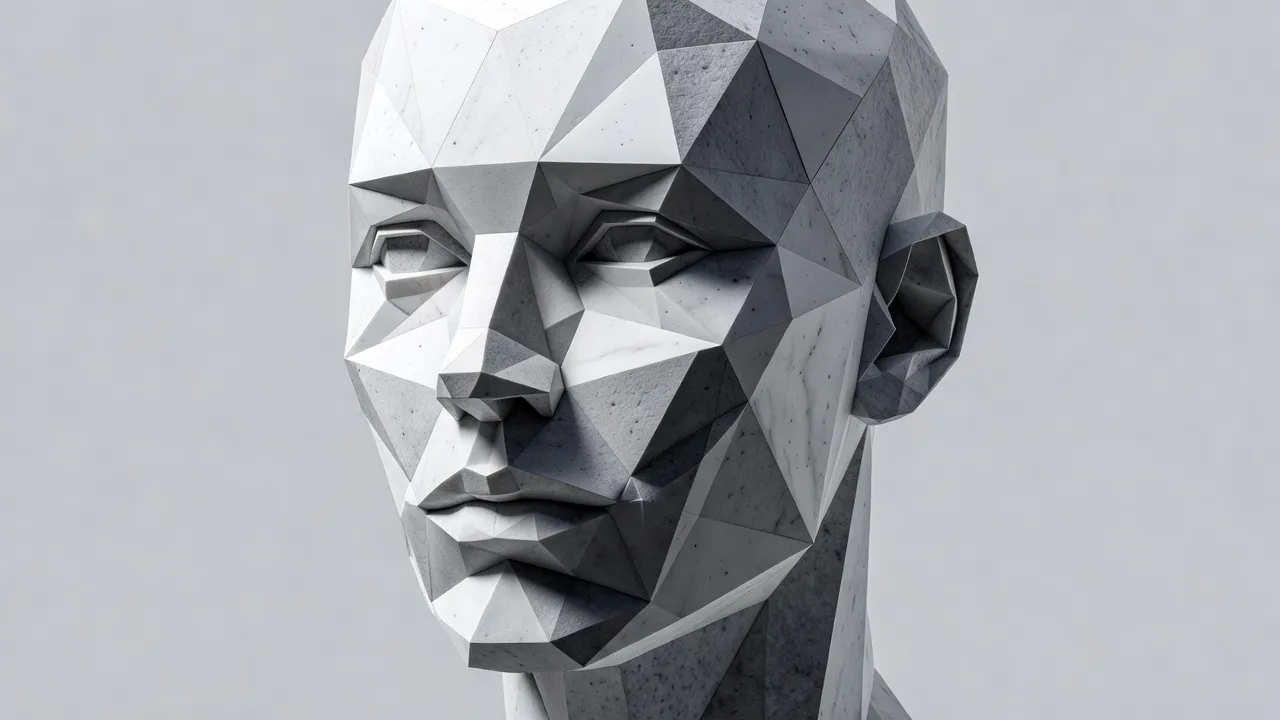
The planes of the face are the flat, angled structural surfaces that make up the three-dimensional geometry of human facial anatomy. Understanding these planar transitions allows artists, makeup practitioners, and cosmetic injectors to map how light bounces across bone and soft tissue, turning complex curves into clear directional blocks. By simplifying the head into distinct front, side, and bottom facets, you can instantly predict shadow placement and evaluate structural symmetry.
Whether you are studying classical portraiture or trying to improve your makeup application, mastering facial planes gives you control over how features appear under different lighting conditions. Tools like the Glow Up & Attractiveness Test build on these same structural principles, using AI technology to evaluate how light hits your cheekbones and jawline in photos.
What are the primary facial planes in human anatomy?
The primary facial planes consist of five core geometric zones: the frontal plane of the forehead, the lateral temporal planes, the cheekbone transitions, the nasal ridges, and the mandibular jawline planes. These surfaces meet at specific anatomical boundaries called ridges or turning points. When light hits the head, each plane points toward or away from the light source, creating distinct values of light, midtone, and shadow.
How does the forehead plane direct light?
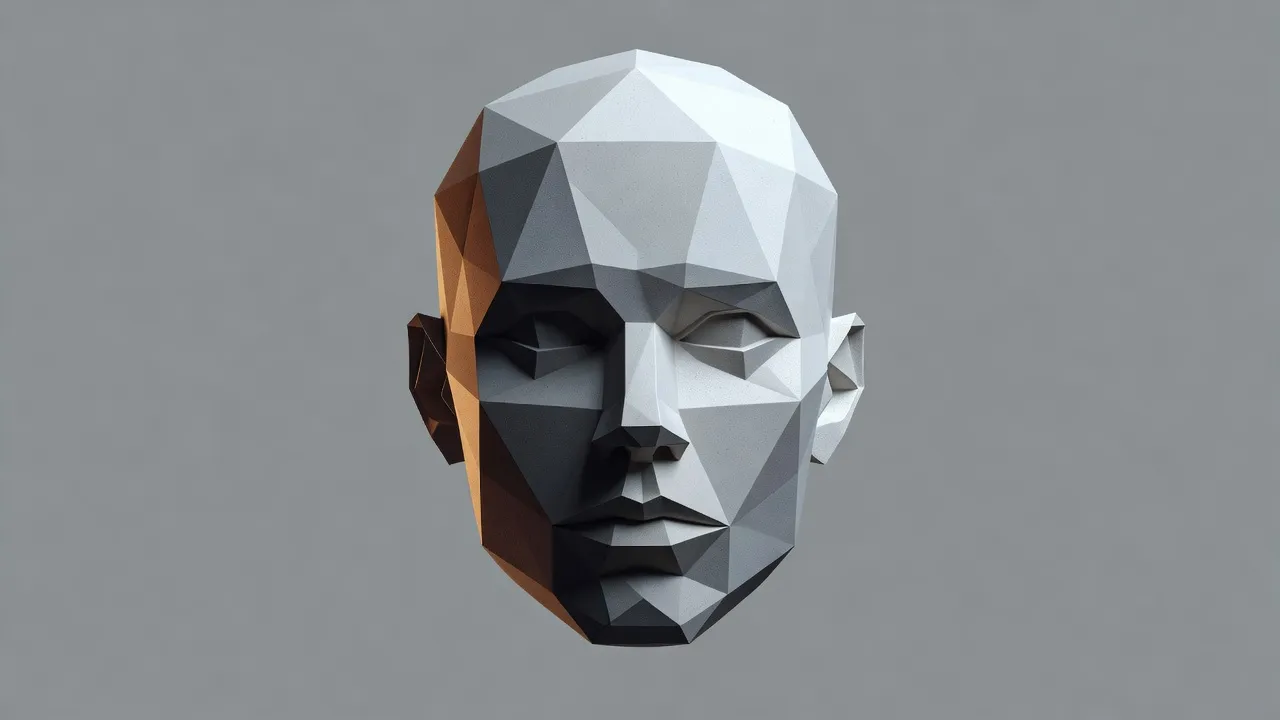
The forehead functions as a large curved shield divided into three main facets: one central flat plane and two sloping temporal planes. The central frontal plane catches maximum overhead light because it angles slightly upward. The side temporal planes drop off sharply toward the hairline at the temporal ridge, creating natural side shadows that separate the face from the cranium.
Why do the cheekbone planes define midface structure?
The cheekbone planes redirect light from the front of the face to the side profiles at the zygomatic arch. Anatomical studies from the National Library of Medicine confirm that the zygomatic bone creates a prominent shelf that catches bright top light while casting an under-shadow into the cheek hollow. If you want to highlight prominent cheekbones, understanding where the front cheek plane turns into the lateral plane is essential.
Planes of the face breakdown and anatomical bounds
Understanding how each facial facet behaves helps in mapping light across different skull shapes. The table below outlines the major facial planes, their underlying structural anchors, and their lighting behaviors.
| Facial Plane | Anatomical Anchor | Primary Orientation | Visual Effect Under Overhead Light |
|---|---|---|---|
| Frontal Forehead | Frontal Bone | Angled slightly upward | Primary highlight zone |
| Temporal Planes | Temporal Fossa | Facing laterally (sides) | Soft side shadow |
| Nasal Bridge | Nasal Bones | Facing forward | Sharp vertical highlight |
| Lateral Nasal Walls | Nasal Cartilage | Facing diagonally | Midtone shadow strip |
| Zygomatic Frontal | Upper Maxilla | Facing forward and up | Bright catchlight area |
| Zygomatic Lateral | Zygomatic Arch | Facing side | Graduated tone change |
| Infraorbital Hollow | Subocular Basin | Facing slightly downward | Natural trough shadow |
| Mandibular Plane | Lower Jawbody | Vertical to angled down | Strong jawline border |
As of September 2026, modern facial analysis tools rely heavily on these exact anatomical boundaries. By assessing how these planes reflect light in a single photo, the Glow Up & Attractiveness Test iOS app provides a detailed face analysis using a fine-tuned AI model to calculate your beauty score and facial balance.
How do artist models simplify facial planes?
Artist models simplify facial planes by converting smooth skin contours into hard-edged geometric polygons. The human skull contains dozens of subtle curves, which can confuse artists trying to render realistic lighting. By reducing the head to basic planar blocks, classic construction systems reveal exactly where a form turns away from light.
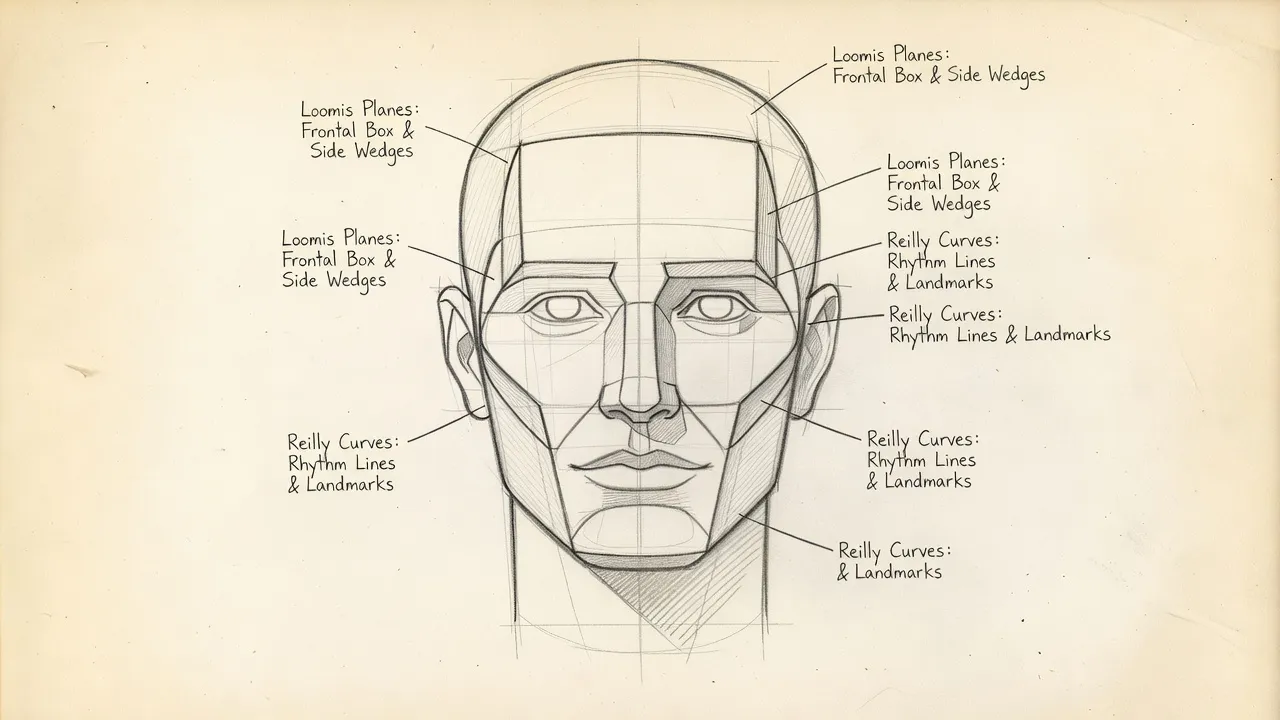
According to historical archives at the Metropolitan Museum of Art, master artists have relied on structural planar simplification since the Renaissance to maintain structural accuracy in portrait paintings. Two specific modern methods remain popular among illustrators and sculptors.
What is the Andrew Loomis head method?
The Andrew Loomis method uses a sphere and a central box structure to establish planar proportions before adding facial features. Loomis breaks the head into three equal horizontal bands: brow to hairline, brow to nose base, and nose base to chin bottom. Once the main sphere is flattened on the sides to form the temporal planes, artists can draw precise cross-sections to place eyes, nose, and mouth on their correct structural planes.
How does the Frank Reilly rhythm system differ?
The Frank Reilly system uses sweeping construction lines to connect facial planes through structural flow lines rather than rigid boxes. Instead of treating each facet as an isolated flat block, Reilly mapped the dynamic rhythms connecting the eye sockets, cheekbones, and jaw. This approach keeps facial planes unified, ensuring that shadow transitions feel organic rather than blocky.
Why do facial planes matter in cosmetics and makeup?
Facial planes dictate where highlight products attract light and where contour shades create depth. Makeup does not change bone structure, but placing pigment on specific planar boundaries tricks the viewer's eye. Darkening a plane that faces downward makes the shadow appear deeper, while brightening a plane that faces upward brings that feature forward.
When evaluating your own facial angles, paying attention to your face side profile reveals how far your midface planes project relative to your brow and jaw.
Here is how makeup artists use planes to shape features:
- Creating a carved jawline: Applying contour along the underside plane of the mandible deepens the shadow, separating the neck from the head.
- Slimming the nose: Placing dark powder along the lateral nasal planes while keeping the frontal nasal strip light creates a narrow ridge appearance.
- Lifting the midface: Applying highlighter to the upper surface of the zygomatic plane draws focus upward toward the temples.
- Softening a strong forehead: Buffing bronze pigment around the upper perimeter of the frontal plane reduces its forward prominence under bright light.
Procedures in aesthetic dermatology work on the same structural rules. Injectors place dermal fillers directly onto periosteal bone anchors to restore lost volume in the zygomatic and chin planes.
How does lighting alter the appearance of facial planes?
Lighting alters facial planes by shifting the high-contrast boundaries between light-facing facets and shaded facets. The position of your light source determines which planes catch direct beams and which fall into occlusion shadows. A single face can look entirely different depending on the angle of illumination.
What happens under top-down butterfly lighting?
Top-down butterfly lighting highlights all horizontal forward-facing planes while dropping lower angled planes into clean shadows. The brow ridge, upper cheekbones, nasal bridge, and lower lip catch maximum light. Meanwhile, dark shadows form under the nose, lower lip, and jawbone plane. Photographers favor this setup because it emphasizes cheekbone structures.
How does side lighting split facial planes?
Side lighting highlights one half of the face while casting the opposing side into deep shadow. This split lighting setup exposes subtle asymmetries in facial plane depth. The bridge of the nose acts as a physical barrier, casting a cast shadow across the far cheek plane.
An overhead light source illuminates the following facial planes in sequence:
- Frontal plane (bright)
- Brow ridge (shadow)
- Zygomatic (highlight)
- Sub-cheek (shadow)
Understanding these light dynamics helps when taking selfies or analyzing portraits. If you want to check how your facial symmetry looks under clean lighting, snapping a quick picture can give you a starting point for further analysis.
How AI maps facial planes for aesthetic scoring
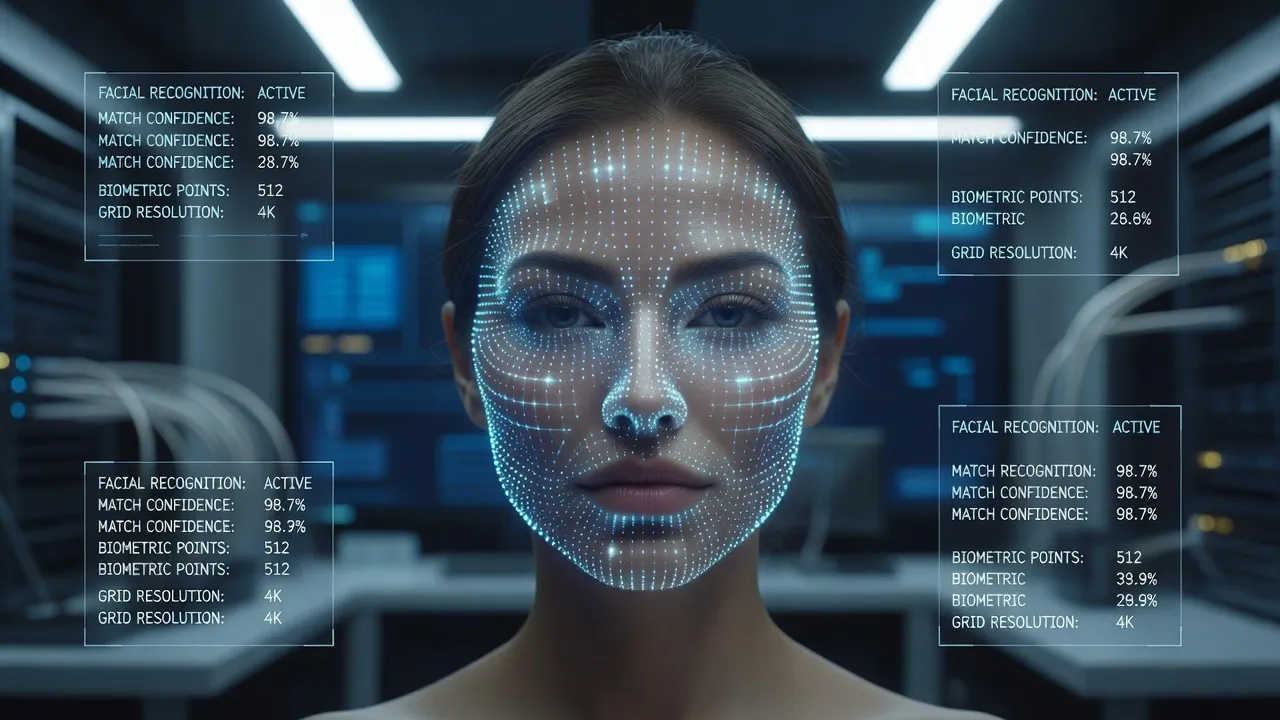
AI models map facial planes by identifying dozens of key 3D landmark points and measuring how light transitions across their geometric surfaces. Rather than viewing a portrait as flat pixels, advanced algorithms calculate angles between facial features to evaluate harmony and structural proportions.
According to research documented by the IEEE Computer Society, modern facial analysis systems use deep convolutional networks to reconstruct 3D head shapes from standard 2D images. These models analyze light gradients to establish where your planes tilt and turn.
If you are curious about how your structural symmetry measures up, the Glow Up & Attractiveness Test app makes this process simple. For $9.99/week, you can snap a selfie to receive a personalized face rating score along with tailored tips to beautify your overall look.
The app uses an AI engine to analyze your proportions, including key ratios like your face width height ratio. You can also discover your beauty score and explore your aesthetic potential using their interactive glow up guide and AI 10/10 visualizer.
What are the limits of working with facial planes?
The primary limit of facial plane theory is that real human faces feature soft, organic curves rather than perfectly flat geometric polygons. Planar diagrams are conceptual guides rather than exact anatomical maps. Treating the face as purely flat surfaces can lead to stiff portraits or over-contoured makeup looks.
Key factors that alter standard plane boundaries include:
- Subcutaneous fat layer thickness: Higher body fat smooths over sharp bone transitions, making plane boundaries softer and harder to detect.
- Age-related volume loss: As collagen drops over time, skin sags into structural hollows, changing where midface planes tilt.
- Lighting diffusion: Soft, diffused light eliminates sharp plane borders, while harsh sunlight makes planar breaks look aggressive.
- Bone density differences: Facial bone structures vary significantly across individuals, meaning generic plane templates will not fit every face perfectly.
For instance, if you are looking to define your lower facial structure, routines targeting how to get a strong jawline must account for both muscle tone and local tissue thickness around the mandibular plane.
Frequently Asked Questions
What are the planes of the face?
The planes of the face are the flat and angled geometric surfaces that form the three-dimensional shape of the head. They determine how light and shadow spread across facial features.
How many planes are there on the human face?
While simple artistic models use around 14 to 20 primary planes, complex anatomical maps divide the face into dozens of minor sub-planes around the eyes, nose, and mouth.
Why do artists study facial planes?
Artists study facial planes to simplify complex organic shapes into clear geometric structures, making it much easier to render accurate lighting, shadows, and portrait proportions.
How do makeup artists use facial planes for contouring?
Makeup artists use planes to decide where to apply highlight and shadow. Placing contour on downward-sloping planes deepens natural shadows, while placing highlighter on upward planes catches light.
What is the difference between facial planes and face shapes?
Face shape refers to the two-dimensional outline of your head (like oval, square, or heart), whereas facial planes refer to the three-dimensional geometric surfaces that create depth across bone structure.
Can facial planes change with age?
Yes, facial planes change appearance over time as aging causes volume loss in fat pads and skin laxity, shifting shadow lines across the midface, under-eyes, and jawline.
How does AI analyze facial planes in photos?
AI algorithms estimate 3D facial planes by identifying key feature landmarks and analyzing light gradients across pixel clusters to determine structural angles and symmetry.
What lighting best reveals the planes of the face?
A single light source positioned at a 45-degree angle above and to the side (such as Rembrandt lighting) reveals facial planes clearly by creating soft midtones and clean shadow breaks.