

Russian facial features refer to a diverse spectrum of physical traits across North Eurasia, defined most frequently by prominent cheekbones, moderate facial breadth, light to medium pigmentation, hooded eyelids, and soft lower jaw contours. Because Russia encompasses over 190 distinct ethnic groups across 11 time zones, there is no single monolithic face type that applies to every citizen. However, the majority East Slavic population shares specific ancestral phenotypic combinations shaped by centuries of regional climate adaptation and interethnic contact.
When studying regional morphology, anthropologists separate stereotypical media descriptions from measurable biological facts. Historically, 19th-century racial typologies tried to categorise regional populations into rigid boxes. Today, genomic mapping and 3D digital facial scanning demonstrate that physical variations follow continuous geographic gradients across Eastern Europe.
Whether you want to understand historic anthropometry or analyze your own facial proportions using tools like an analysis of face guide, breaking down specific facial structures reveals how geography and history shape physical appearance.
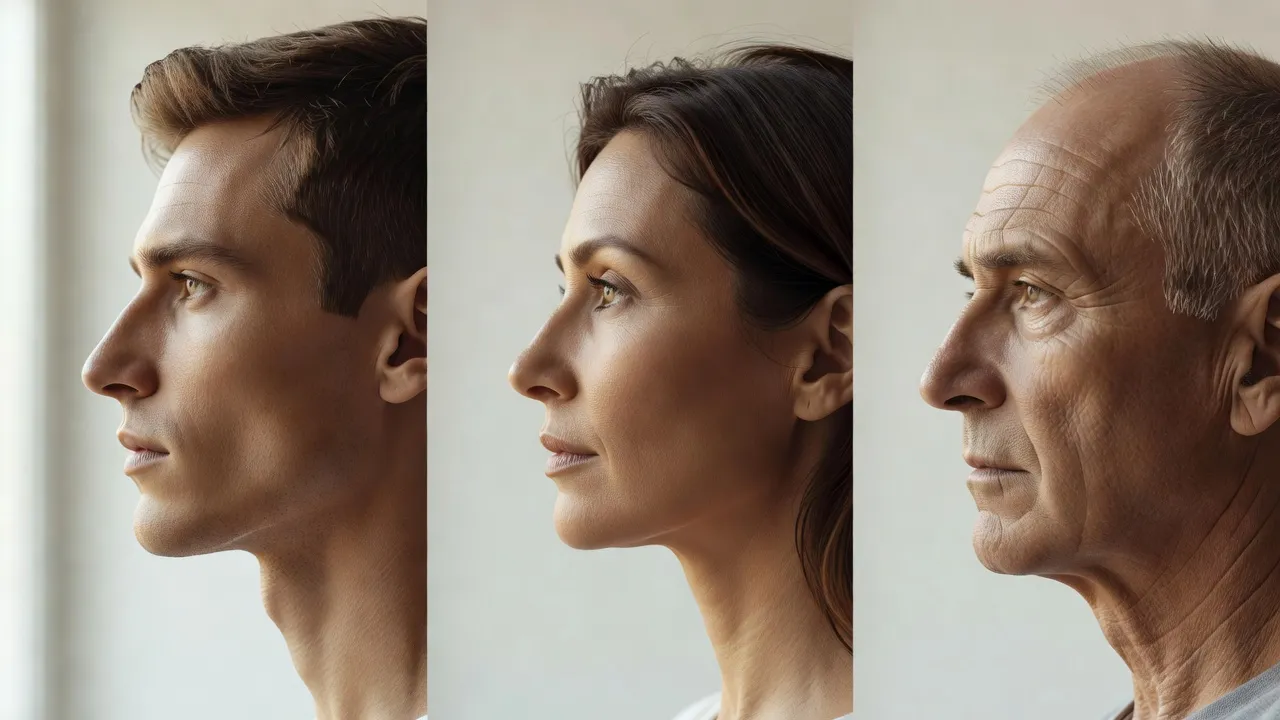
What are the primary facial features associated with Russian demographics?
The primary facial features associated with Russian demographics include wide cheekbones, moderate orbital depth, rounded nasal tips, and a soft jawline. These traits originate predominantly from the East Slavic population group, which represents roughly 77% of the Russian population.
Anthropological surveys break down these recurring characteristics into four core anatomical areas:
- Cheekbone structure: High, widely set zygomatic bones create a broad midface. This structural width often makes the face appear rounder or oval rather than angular.
- Eye region: Eyes range from light blue and grey to hazel and dark brown. Hooded eyelids and slight epicanthic folds appear regularly due to ancestral adaptations to cold winds.
- Nasal shape: Nasal bridges tend to be straight or slightly concave with a soft, rounded tip, contrasting with the narrow, convex bridges common in Southern Europe.
- Jaw and chin: The mandible typically features smooth angles rather than sharp, square jawlines, giving the lower third of the face a softer contour.
Regional variation remains substantial across the country. Western populations near Belarus and Ukraine display features closer to Central European groups, whereas Eastern Siberian populations display distinct North Asian cranial traits.
Is there a genetic or biological basis for Slavic facial features?
Yes, there is a clear genetic basis for Slavic facial features driven by shared haplogroups and ancestral climate adaptations. Modern DNA studies show that East Slavic populations carry high frequencies of Y-DNA haplogroup R1a alongside Uralic genetic markers such as N1c.
As of August 2026, researchers rely on wide-scale genomic sequencing rather than outdated cranial measurements to trace how facial morphology evolved. The genetic architecture behind facial bone development involves dozens of specific genes, including EDAR and PAX3, which influence hair thickness, eye shape, and nose bridge elevation.
According to a comprehensive genetic study published in NCBI PMC, East Slavic groups maintain strong genetic uniformity across vast distances, mixed with local Finno-Ugric substrate lineages in northern regions.
This historical genetic blending explains specific recurring traits:
- Higher frequency of light eyes: Over 50% of Northern and Central Russians carry genetic variants associated with blue or grey eyes.
- Subcutaneous fat distribution: Genetic adaptations for cold weather promote a thicker fat layer under midface skin, creating smoother cheek contours.
- Moderate brow ridge: Slavic skulls generally feature less pronounced supraorbital ridges than Western European skulls, yielding a flatter forehead profile.
To explore how your own facial geometry aligns with global proportions, the Glow Up & Attractiveness Test uses AI models to evaluate midface ratios, cheekbone placement, and overall symmetry directly from a photo.
How do Russian facial features compare to Polish and West Slavic features?
Russian facial features generally exhibit broader cheekbones and lower nasal bridges compared to Polish facial features, which skew closer to Central European norms. While both groups belong to the broader Slavic ethno-linguistic family, West Slavs display distinct structural differences.
When analyzing slavic facial features, geographic proximity to neighboring non-Slavic groups created visible differences in skull breadth and facial height over the last millennium.
| Facial Feature | East Slavic (Russian) | West Slavic (Polish) |
|---|---|---|
| Midface Width | Moderately wide to wide | Moderate to narrow |
| Nasal Bridge Height | Low to medium, straight/concave | Medium to high, often straight |
| Jawline Definition | Soft, rounded mandibular angle | Slightly more angular chin |
| Eye Canopy / Fold | Hooded eyelids common | Standard double eyelid common |
| Forehead Angle | Vertical with smooth brow ridge | Slightly sloped brow structure |
In discussions of polish features facial structure, anthropologists observe that polish people facial features show higher rates of narrow nasal apertures and slightly more prominent chins. This shift reflects historical mixing with Germanic and Baltic populations along the Vistula basin.
For comparison with other North European groups, you can review our breakdown of german facial features women to see how Western European cranial structures diverge from Eastern phenotypes.
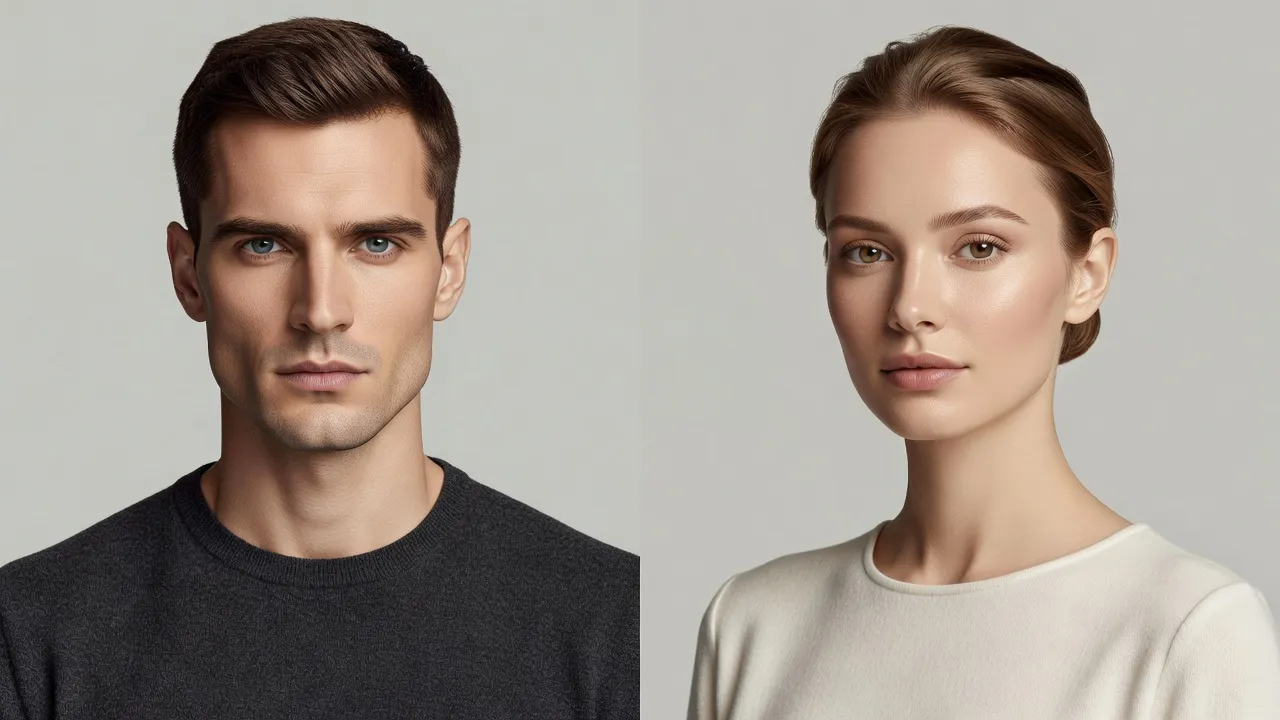
What does forensic anthropology say about Slavic facial features?
Forensic anthropology identifies Slavic facial features through specific craniometric indices, particularly high facial breadth relative to height and medium orbital spacing. Forensic specialists use skull measurements to estimate geographic ancestry in unidentified remains.
Pioneered in Russia by anthropologist Mikhail Gerasimov, facial reconstruction methodology relies on precise tissue-depth averages measured across fixed facial landmarks.
| Facial Feature | Position | Notes |
|---|---|---|
| Forehead / Metopion | Top | |
| Nasal Bridge | Below forehead | Connects from forehead |
| Zygomatic Arch | Left and right of nasal bridge | High breadth ratio |
| Philtrum | Below zygomatic arches | Connects from both zygomatic arches |
| Mental Protuberance | Below philtrum | Soft rounded chin |
Key anthropological markers recorded in Eastern European forensic databases include:
- Cranial Index: Skulls often fall into mesocephalic (medium-headed) or brachycephalic (broad-headed) classifications rather than long-headed dolichocephalic types.
- Orbital Index: Eye sockets are moderately square with rounded lower corners, positioned at a medium interpupillary distance.
- Nasal Aperture: The bone opening for the nose is medium-width (mesorrhine), sitting between narrow Northern European and wide equatorial openings.
- Zygomaxillary Angle: The angle between cheekbones across the upper jaw is flatter than in Atlantic Western European skulls, creating less forward facial projection.
Modern forensic labs updated these tissue-depth standards in 2026 using 3D ultrasound data, replacing old cadaver measurements with live-subject scans.
Is the 'Slavic look' stereotype supported by scientific evidence?
No, the popular 'Slavic look' stereotype is only partially supported by scientific evidence because exaggerated pop-culture depictions ignore vast internal regional diversity. Media tropes usually highlight a hyper-specific combination of sharp high cheekbones, feline eye tilts, and extreme thinness that does not reflect average population metrics.
Pop culture often confuses extreme cosmetic styling with innate biological traits. While high cheekbones do occur at elevated rates in Northern Eurasia, the idea that every person of Slavic descent possesses a "cat-eye" shape or starkly hollow cheeks is false.
The disconnect between biological facts and popular beauty media breaks down across three areas:
- The "Fox Eye" Myth: Modern makeup trends recreate an exaggerated lateral eye lift. Biologically, hooded eyelids and mild epicanthic folds occur frequently, but they create a softer upper lid crease rather than an upward slanted socket.
- Skin Tone Uniformity: Media representations assume uniform pale skin, yet skin undertones across Russia vary from cool pink to warm olive, especially in southern Volga regions.
- Facial Leanness: High cheekbones appear far more dramatic at lower body fat percentages. Average population tissue-depth studies show natural padding over the midface.
Cultural perception of facial aesthetics shifts rapidly. Comparing local standards to american beauty standards shows how globalized social media flattens complex regional genetic variation into simplified beauty trends.
How do climate and ancestral geography shape facial variation in Russia?
Cold Eurasian climates shaped Russian facial features by selecting for wider nasal cavities, subcutaneous cheek fat, and protected orbital regions. Environmental pressures over thousands of years favored physical structures that warmed freezing air and protected facial tissue from frostbite.
Geography acted as a physical filter for ancestral human groups moving across the East European Plain:
- Nasal Air Conditioning: In cold environments, wider internal nasal chambers warm and humidify sub-zero air before it reaches the lungs. This creates a slightly broader nose base compared to temperate coastal populations.
- Ocular Protection: Hooded lids and fat pads around the eye sockets shield sensitive tissues from blinding snow glare and severe wind chill.
- Facial Compactness: A flatter facial profile reduces exposed surface area, minimizing heat loss in dry sub-zero winter temperatures.
As populations migrated along major river routes like the Volga, Dnieper, and Don, environmental selection blended with genetic exchange between neighboring Uralic, Turkic, and Slavic tribes.
How can you evaluate your own facial proportions and symmetry?
You can evaluate your own facial proportions by measuring midface height, cheekbone width, and facial symmetry against established anatomical golden ratios. Understanding your face shape helps you choose flattering haircuts, makeup techniques, and skincare routines tailored to your structure.
Historically, calculating facial ratios required manual calipers and paper grids. Today, digital tools simplify the process using precise facial landmark detection.
To measure your facial structure manually or digitally:
- Determine your facial thirds: Measure the distance from your hairline to eyebrow line, eyebrow line to nose base, and nose base to chin base. Balanced proportions sit close to a 1:1:1 ratio.
- Calculate cheekbone-to-jaw ratio: Measure the distance across the widest point of your cheekbones and compare it to the width across your jaw angles. High cheekbone prominence occurs when midface width exceeds jaw width by 15% or more.
- Assess eye spacing: Check if the distance between your eyes equals the width of a single eye.
If you want an immediate automated breakdown, the Glow Up & Attractiveness Test for iOS analyzes your selfie using fine-tuned computer vision. The app measures your facial symmetry, cheekbone prominence, and feature alignment, providing personalized glow-up tips and visual recommendations without complex manual measurements.
Frequently Asked Questions
What are the most distinct facial traits of Russian origin?
Prominent cheekbones, soft jawlines, hooded eyelids, and straight nasal profiles represent the most common structural traits found in people of East Slavic Russian origin.
Do all Russians have high cheekbones?
No, not all Russians have high cheekbones. While widely set cheekbones occur at higher rates across North Eurasia than in Western Europe, facial structure varies significantly across regions.
How do I know if I have Slavic facial features?
You can identify Slavic facial features by checking for a combination of broad cheekbones, moderate facial width, rounded jaw angles, light to medium eye colors, and soft upper eyelid folds.
Why do Russian faces often look rounder or softer?
Russian faces often look softer due to higher subcutaneous midface fat distribution combined with smooth mandibular angles, which are evolutionary adaptations to cold climates.
Are eye colors lighter in Eastern Europe than Western Europe?
Light eye colors like blue, grey, and green are common across Eastern Europe, with rates exceeding 50% in Northern Russia, Baltic regions, and Poland.
What is the difference between East Slavic and West Slavic faces?
East Slavs generally exhibit slightly broader midfaces and lower nasal bridges, whereas West Slavs often display narrower faces and more prominent chin contours.
How does climate affect facial feature development in North Eurasia?
Cold environments favor protected eye folds, subcutaneous cheek insulation, and specific nasal chamber dimensions that warm freezing air before inhalation.