
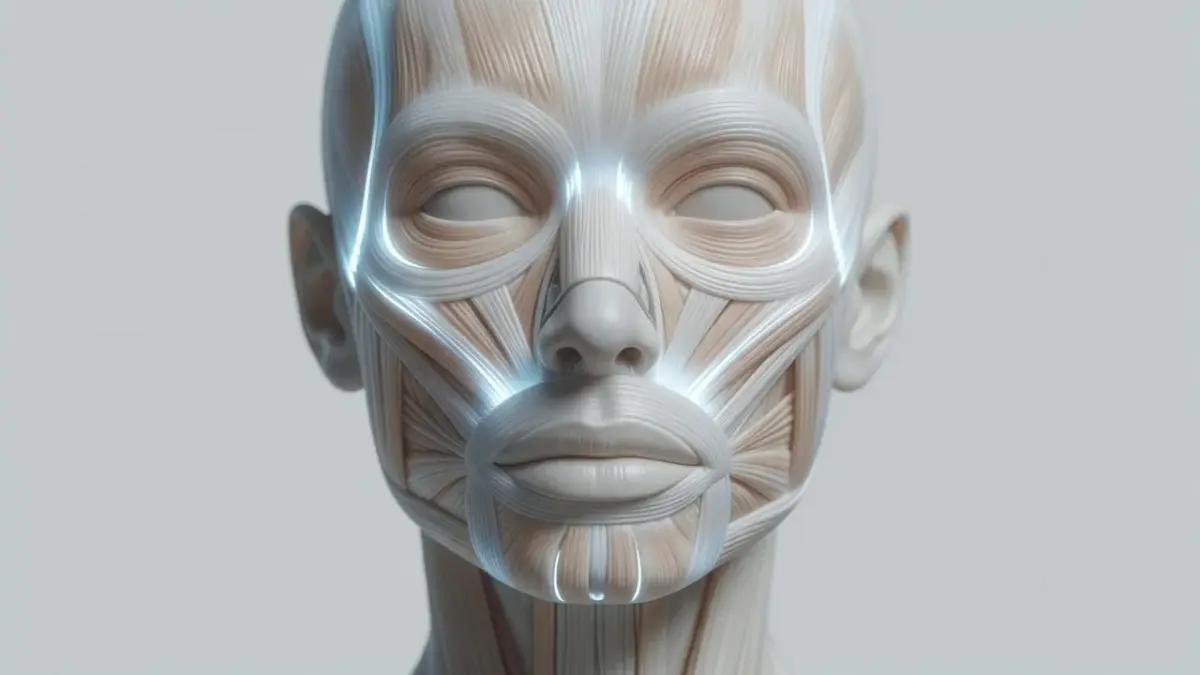
Strong face muscles are well-toned, hypertrophy-capable mimic and masticatory muscles that provide the structural scaffold for facial skin and soft tissue. Unlike topical skincare products that act on epidermal moisture, building targeted tone in deeper facial muscles increases muscle bundle thickness, which can alter midface volume and jawline structure over time.
While working on underlying facial muscles improves baseline tone, tracking structural changes in your features requires clear visual baselines. For women looking to measure structural shifts and overall harmony, our iPhone app Glow Up & Attractiveness Test provides fine-tuned AI face analysis and detailed scoring to guide your routine.
The Anatomy of Facial Musculature: Mimic vs. Masticatory Muscles
Facial anatomy splits into two primary muscular groups: mimic muscles, which attach to the skin to create expressions, and masticatory muscles, which attach to bone to move the jaw. Understanding this anatomical division explains why selective training changes facial contouring while improper mechanics create unwanted strain.
HUMAN FACIAL MUSCULATURE
The two groups sit side by side as columns beneath this title.
| MIMIC MUSCLES (Expressive / Skin-Attached) | MASTICATORY MUSCLES (Chewing / Bone-Attached) |
|---|---|
| Zygomaticus Major & Minor | Masseter |
| Orbicularis Oculi | Temporalis |
| Orbicularis Oris | Medial & Lateral Pterygoids |
| Risorius & Frontalis |
The Mimic Muscle Group
Mimic muscles originate on facial bones or fascia and insert directly into the dermis of your skin. Because they lack joint capsules, their primary role is pulling skin to form expressions like smiling or squinting.
- Zygomaticus Major and Minor: Lift the corners of the mouth and elevate the cheek pads.
- Orbicularis Oculi: Encircles the eyes to control blinking and eye closure.
- Orbicularis Oris: Surrounds the mouth, regulating lip posture and closure.
- Risorius: Pulls the mouth corners laterally, contributing to lower-face width.
The Masticatory Muscle Group
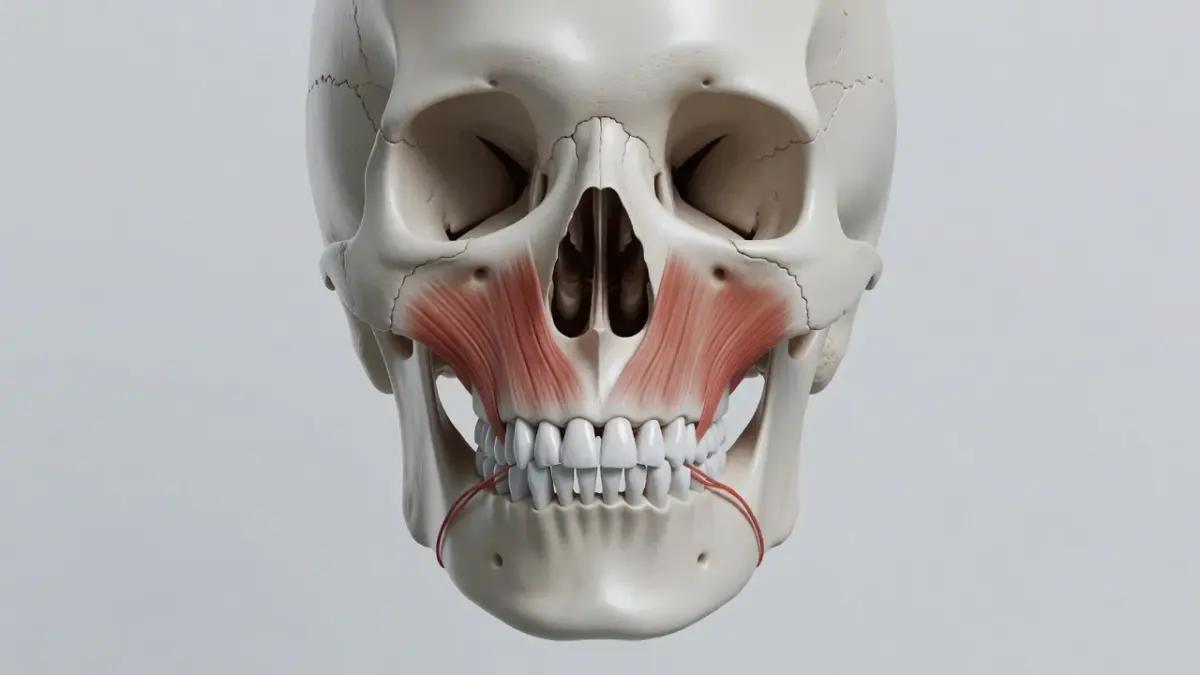
Masticatory muscles originate on the skull and insert into the mandible, generating heavy force for chewing. These muscles behave like skeletal muscles elsewhere in the body and undergo noticeable volume changes when loaded.
- Masseter: The strongest masticatory muscle, responsible for closing the jaw and setting jawline angularity.
- Temporalis: A broad, fan-shaped muscle on the side of the skull that stabilizes jaw closure.
- Pterygoids: Deep internal jaw muscles that enable lateral jaw grinding and protrusion.
Do facial exercises actually reduce signs of aging?
Yes, structured facial exercises can reduce visible signs of aging by increasing muscle volume beneath midface fat pads. As aging occurs, sub-epidermal fat pads atrophy and slide downward, leading to hollow cheeks and sagging skin. Building muscular volume creates a firmer base that lifts overlying skin.
A landmark study published in JAMA Dermatology evaluated middle-aged women undergoing daily 30-minute facial resistance workouts for eight weeks, followed by alternate-day workouts through week 20. Standardized photographic ratings demonstrated significant upper and lower cheek fullness improvements.
The study estimated a perceived age reduction of roughly three years over the 20-week trial. However, visual outcomes depend on consistent execution. Stopping resistance exercises leads to rapid loss of hypertrophic muscular gains, similar to skipping gym workouts for body muscles.
What do dermatologists say about facial exercises?
Dermatologists generally express cautious skepticism toward unguided facial exercises, citing the risk of accelerating mechanical wrinkle formation. While building muscle tissue offers theoretical structural benefits, dermatologists point out that repeated skin folding creates dynamic lines that turn into permanent static wrinkles.
The official stance from organizations like the American Academy of Dermatology emphasizes that repetitive contractions of mimic muscles - such as squinting or pursing lips - break down collagen fibers in the upper dermis. Clinical advice from dermatologists typically hinges on three distinctions:
- Surface folding vs. isometric hold: Dynamic movements that fold skin worsen wrinkles, whereas static contraction minimizes dermal creasing.
- Masticatory vs. mimic focus: Building the masseter or cheek elevators adds structural support, but over-exercising forehead muscles creates deeper horizontal lines.
- Skin elasticity factors: Young skin bounces back from repeated flexing, but mature skin with depleted elastin shows creasing faster when subjected to repetitive facial workouts.
Does face yoga cause or prevent wrinkles?
Face yoga can cause static wrinkles if movements crease skin repeatedly, but it prevents structural sagging when performed with static isometric tension. The result depends entirely on your technique, hand support, and force control.
When face yoga routines involve exaggerated facial expressions without anchoring the skin, dynamic wrinkles around the eyes and forehead deepen rapidly. However, using your hands as manual resistance to anchor skin prevents folding during muscle contraction.
The drawing shows two separate pathways, one above the other. In each, the item on the left leads to the middle item, which leads to the item on the right.
| Starting point | Leads to | Outcome |
|---|---|---|
| Skin Creasing (Dynamic Movement) | Dynamic Wrinkles | Static Lines |
| Skin Anchoring (Isometric Hold) | Muscle Hypertrophy | Midface Support |
To maintain dermal integrity while toning facial underlying structures:
- Anchor the dermal layer: Place fingers firmly across motion lines before contracting target muscles.
- Hold static contractions: Focus on 10 to 15 second isometric holds instead of fast repetitions.
- Moisturize beforehand: Never perform facial exercises on dry skin, as friction increases mechanical stress on epidermal layers.
Does facial exercise build facial muscle, according to the JAMA Dermatology study?
Yes, the 2018 JAMA Dermatology clinical trial confirmed that targeted facial exercises increase muscle size and midface volume. Researchers at Northwestern University measured structural facial alterations using standardized digital photography and blinded dermatological evaluations.
The trial followed a specific protocol over 20 weeks:
- Phase 1 (Weeks 1 to 8): Participants completed 30 minutes of daily facial exercises.
- Phase 2 (Weeks 9 to 20): Participants reduced frequency to 30 minutes every other day.
- Measurement Criteria: Dermatologists evaluated 19 facial features using the Merz-Carruthers Facial Scales.
The quantitative findings showed mean cheek fullness scores improved significantly over the test period. The study authors concluded that muscle hypertrophy was responsible for replacing lost midface volume, as participants maintained stable body weight throughout the study.
Can neuromuscular training strengthen face muscles?
Yes, neuromuscular training strengthens face muscles by improving motor unit recruitment and repairing asymmetrical muscle activation patterns. Originally developed for medical rehabilitation in Bell's palsy and stroke patients, neuromuscular re-education uses biofeedback to restore precise muscular control.
In aesthetic applications, neuromuscular training addresses muscular imbalance. If one side of your jaw or cheek pulls harder during speech or chewing, standard exercises compound that asymmetry. Targeted retraining relies on mirror feedback, electromyography (EMG), and slow, controlled contractions.
If you are incorporating structural workouts into your routine, exploring face exercises for symmetry can help balance muscular tone across both sides of your face. Neuromuscular retraining prioritizes movement precision over force, preventing strong muscles from compensation over weakness.

Do myofunctional therapy exercises strengthen facial muscles?
Yes, myofunctional therapy strengthens facial muscles by retraining resting tongue posture and lip seal mechanics. Orofacial Myofunctional Therapy (OMT) focuses on the neuromuscular re-education of the oral and facial muscles.
Research indexed in PubMed demonstrates that myofunctional therapy increases lip closure strength and masseter tone while correcting tongue thrust issues. Proper tongue posture - resting the full tongue against the roof of the mouth - exerts upward pressure on the maxilla, supporting midface geometry.
Key myofunctional exercises include:
- The Tongue Spot Hold: Pressing the palate behind the front teeth with the tongue body for 30 seconds to engage swallow muscles.
- Lip Trace Resistance: Holding a small flat button between the lips without using teeth to strengthen the orbicularis oris.
- Controlled Swallow Retraining: Swallowing with teeth closed and tongue pressed upward to prevent lower jaw retrognathia.
Measuring Facial Geometry and Muscle Development
Evaluating shifts in muscle tone requires tracking your structural metrics rather than relying on unstandardized mirror checks. Because face muscles lie beneath subcutaneous fat, subtle changes in muscle thickness alter key visual proportions.
Facial Geometry Metrics
The metrics are grouped under three face regions (Upper Face, Midface, and Lower Face). Under each region label, its metrics are listed one below another.
| Region | Metric |
|---|---|
| Upper Face | Forehead Width & Arch Height |
| Midface | Zygomatic Width (Cheekbone Span) |
| Midface Ratio (Eye to Mouth) | |
| Lower Face | Bigonial Width (Jaw Span) |
| Jawline Angularity / Gonial Angle |
When tracking structural changes in your jaw and cheeks, assessing ratios like your face width height ratio reveals whether masseter or cheek development is altering your facial balance.
For women who want objective feedback without manual calipers, our app Glow Up & Attractiveness Test uses fine-tuned AI models to analyze face geometry, measure symmetry, and score overall feature harmony. Taking standardized photos under identical lighting gives you clear visual data on how your face responds to targeted routines over time.
Comparing Approaches to Toning Facial Structure
Different methods targeting facial muscles produce distinct aesthetic and physiological outcomes. The table below compares common approaches based on primary mechanics, target muscle groups, cost, and skin wrinkle risk.
| Method / Tool | Primary Mechanics | Target Muscle Group | Monthly Cost Range | Wrinkle Risk Level | Ideal Reader |
|---|---|---|---|---|---|
| Facial Resistance Yoga | Manual hand resistance with static facial poses | Zygomaticus, Orbicularis Oris | $0 - $30 (Self-guided or apps) | Moderate to High (if skin folds) | Readers seeking midface volume without clinical tools |
| Glow Up & Attractiveness Test | AI selfie scanning, structural face rating, and tailored beauty guides | Whole-face symmetry & metric tracking | $9.99/week | None (Diagnostic & Tracking) | Women tracking structural face changes and glow up metrics |
| Clinical Neuromuscular Therapy | Biofeedback, EMG guidance, mirror retraining | Asymmetrical or paretic mimic muscles | $150 - $450 (Therapist visits) | Very Low | Individuals rectifying facial asymmetry or post-paralysis tone |
| Orofacial Myofunctional Therapy | Tongue posture cues, swallow retraining, lip resistance | Masseter, Tongue, Orbicularis Oris | $100 - $300 (Specialist-led) | Low | Readers needing lower-face posture and mouth breathing fixes |
| Masticatory Hard Chewing | Chewing hard gums or silicone jaw exercisers | Masseter, Temporalis | $15 - $50 (Product supplies) | Moderate (Risk of TMJ joint strain) | Readers targeting jawline expansion and masseter hypertrophy |
What People Get Wrong About Facial Exercises (And What It Costs Them)
The most costly mistake in facial muscle training is treating delicate mimic muscles like heavy gym weights. Loading small facial muscles with unguided resistance leads to three distinct aesthetic and physiological issues.
1. Excessive Masseter Hypertrophy Leading to TMJ Strain
Over-chewing tough gums or jaw exercisers hypertrophies the masseter muscle rapidly. While some seek a wider lower face, overbuilding the masseter can create a square, boxy jawline that throws off overall facial harmony.
Beyond aesthetics, excessive jaw loading causes Temporomandibular Joint (TMJ) strain, leading to jaw clicking, chronic tension headaches, and wear on molar enamel. Fixing joint misalignment often requires expensive nightguards or physical therapy. If lower face definition is your main goal, read our guide on how to get a strong jawline safely before starting heavy chewing routines.
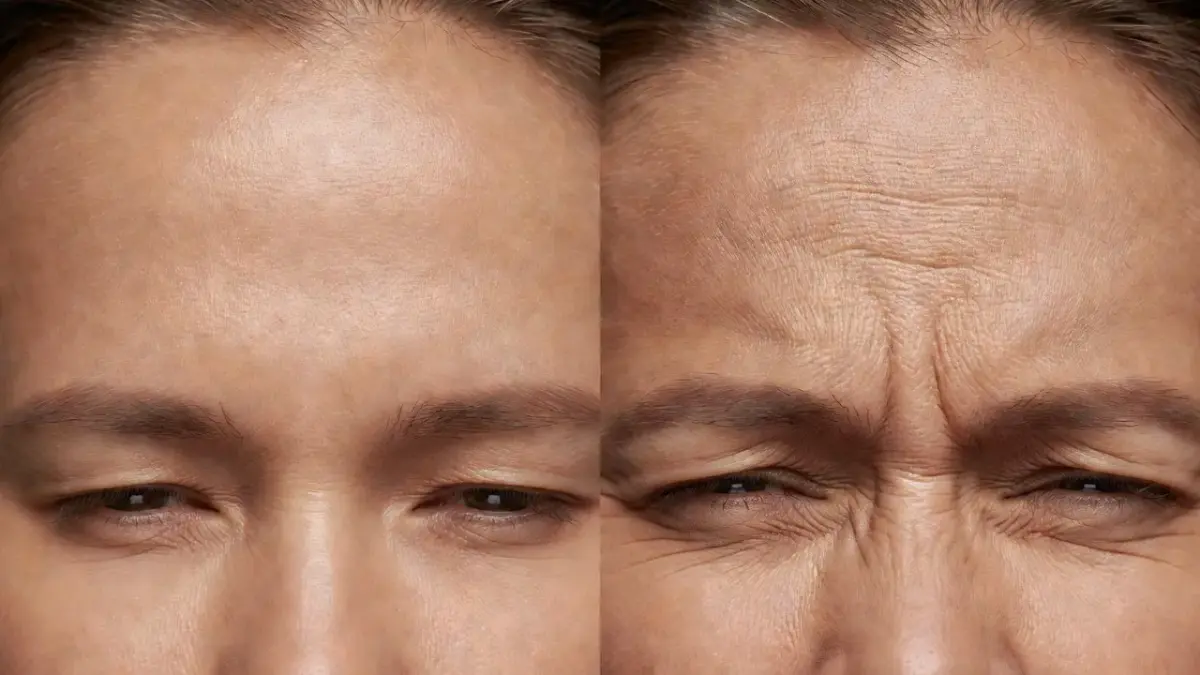
2. Deepening Dynamic Lines on the Forehead and Eyes
Attempting to lift brows or smooth forehead skin through fast repetitions creates permanent horizontal forehead furrows. Mimic muscles interweave directly into dermal collagen.
When you fold aging skin hundreds of times a day, collagen fibers snap under mechanical stress. Correcting these preventable wrinkles often costs thousands of dollars in neurotoxin injections over time.
3. Neglecting Posture and Neck Alignment
Focusing strictly on facial muscles while ignoring forward head posture creates a double chin regardless of muscle tone. When your head shifts forward past your shoulders, the hyoid muscles slacken, allowing submental fat and tissue to drop.
Forward Head Posture feeds into Slacked Hyoid Muscles, which feeds into Submental Sagging:
- Forward Head Posture
- Slacked Hyoid Muscles
- Submental Sagging
Neutral Spine Alignment feeds into Taut Platysma Muscle, which feeds into Defined Neck Line:
- Neutral Spine Alignment
- Taut Platysma Muscle
- Defined Neck Line
Correcting spine position and strengthening the deep neck flexors instantly sharpens lower face contours without requiring aggressive facial flexing.
Daily Protocol to Safely Strengthen Face Muscles
A safe facial muscle protocol relies on static tension, hand anchoring, and limited repetitions to prevent skin creasing. Follow this structured daily routine to build structural support safely.
Step 1: Skin Preparation and Anchoring
- Wash your face and apply a light facial oil or moisturizer to eliminate skin friction.
- Sit upright in front of a mirror with your head in neutral spinal alignment.
Step 2: The Midface Cheek Elevator (Zygomaticus Hold)
- Place your index fingers lightly on the outer corners of your eyes to prevent crow's feet from creasing.
- Smile widely while keeping your lips closed, focusing on pulling cheek corners toward your temples.
- Hold the contraction statically for 10 seconds.
- Relax for 5 seconds. Repeat 5 times.
Step 3: The Lower-Face Resistance Hold (Orbicularis Oris)
- Press two fingers firmly over your lips to anchor upper and lower skin.
- Try to purse your lips against finger resistance without letting the skin wrinkle.
- Hold for 12 seconds, breathing calmly through your nose.
- Repeat 3 times.
Step 4: Tongue Roof Engagement (Myofunctional Lift)
- Flatten your entire tongue against the roof of your mouth, keeping the tip just behind front teeth.
- Vacuum press the middle body of the tongue upward against the palate.
- Hold for 30 seconds while keeping your jaw relaxed. Repeat 4 times.
To balance your workout routine with long-term aesthetic goals, check out our comprehensive guide to looksmaxxing for women.
Frequently Asked Questions
How long does it take to see results from building strong face muscles?
Visible results from targeted facial exercises typically take 8 to 12 weeks of consistent effort. Hypertrophy in smaller mimic muscles requires frequent isometric stimulus, whereas lower-face masseter changes may show sooner depending on overall body fat percentage.
Will strengthening face muscles reduce face fat?
No, strengthening facial muscles does not spot-reduce submental or cheek fat. Muscle hypertrophy increases tissue volume beneath the fat, which can lift saggy contours, but systemic caloric balance determines facial fat loss.
Can face muscle exercises cause TMJ disorders?
Yes, aggressive jaw exercises or excessive hard gum chewing can cause or exacerbate TMJ disorders. Over-straining the temporomandibular joint leads to joint inflammation, clicking sounds, and persistent jaw pain.
What is the best muscle to target for a natural midface lift?
The zygomaticus major and minor muscles are the best targets for lifting the midface. Strengthening these cheek elevator muscles adds volume to upper cheek pads, helping lift the nasolabial folds naturally.
Is facial muscle strength different in men and women?
Yes, men generally possess higher masseter volume and denser facial muscle mass due to higher circulating testosterone levels. Women can still build tone and volume in midface muscles, but changes tend to present as subtle contour refinement rather than broad angular expansion.
Should I do facial exercises every single day?
No, facial muscles require recovery time just like body muscles. Practicing isometric facial routines 3 to 5 times per week allows muscle fibers to repair and adapt without overworking delicate facial tissues.