

To reduce face fat, you must establish a total body caloric deficit while reducing systemic fluid retention to slim down over an 8-to-12-week period. Because the human body mobilizes fat stores systemically rather than locally, slimming your face requires losing overall body fat through diet, exercise, and lifestyle adjustments.

Is spot reduction of face fat a myth?
Yes, spot reduction of face fat is a biological myth because fat loss occurs systemically across the entire body rather than in targeted muscle regions. When your body experiences a caloric deficit, it releases triglycerides into the bloodstream from adipose tissue across your entire anatomy, governed primarily by genetics and hormones.
The human body does not draw energy exclusively from fat cells sitting on top of working muscles. A clinical trial published by the National Center for Biotechnology Information confirmed that targeted muscle training does not induce localized fat reduction in the targeted region. Consequently, thousands of chin tucks or cheek squeezes will not burn the specific lipid droplets stored in your lower cheeks or submental area.
Your genetic predispositions dictate where your body stores fat first and where it sheds it last. For many people, facial fat pads (such as the buccal and submental fat compartments) are among the last areas to show noticeable reduction. You must maintain a steady, sustained body fat loss plan to see structural changes in your facial profile.
Do facial exercises actually reduce face fat?
Facial exercises do not burn subcutaneous facial fat, though dedicated muscle training can tone the underlying facial musculature to improve jaw definition. While contraction of the masseter or platysma muscles increases local muscular tone, it requires far too few calories to stimulate localized lipolysis.
A 2018 study conducted by Northwestern University Dermatology showed that 20 weeks of daily facial exercises increased cheek muscle volume, creating a somewhat fuller, firmer appearance. However, the study noted that total fat volume was unaffected. Building the facial muscles without dropping overall body fat can actually make the lower face look slightly wider rather than slimmer.
If your primary goal is a chiseled profile, facial workouts should only be treated as a secondary toning tool. True facial slimming comes from reducing overall adipose tissue and eliminating subcutaneous fluid retention.
Step 1: Create a daily caloric deficit of 300 to 500 calories
Creating a daily deficit of 300 to 500 calories forces your body to burn stored fat reserves, which gradually reduces facial volume. Slimming your face requires a consistent energy imbalance where your daily caloric intake is lower than your total daily energy expenditure (TDEE).
Daily Caloric Target = TDEE - 400 Calories
How to calculate your energy expenditure
Calculate your baseline using a standard Mifflin-St Jeor equation or an online TDEE calculator. Once you have your baseline calorie maintenance number, subtract 400 calories to create a safe, sustainable rate of fat loss (roughly 0.75 pounds per week).
Maintaining muscle mass during fat loss
Prioritize lean protein to prevent lean muscle tissue loss while in a deficit. Aim for 0.8 to 1.0 grams of protein per pound of target body weight daily. Protein has a high thermic effect of food (TEF), requiring your body to burn more calories during digestion compared to fats or carbohydrates.
Step 2: Cap daily sodium intake at 1,500 to 2,000 milligrams
Capping daily sodium at 1,500 to 2,000 milligrams eliminates excess extracellular fluid, instantly decreasing facial bloat. Excess sodium causes your body to hold onto water in subcutaneous tissues, making your cheeks, eyelids, and jawline look swollen even if your body fat percentage is low.
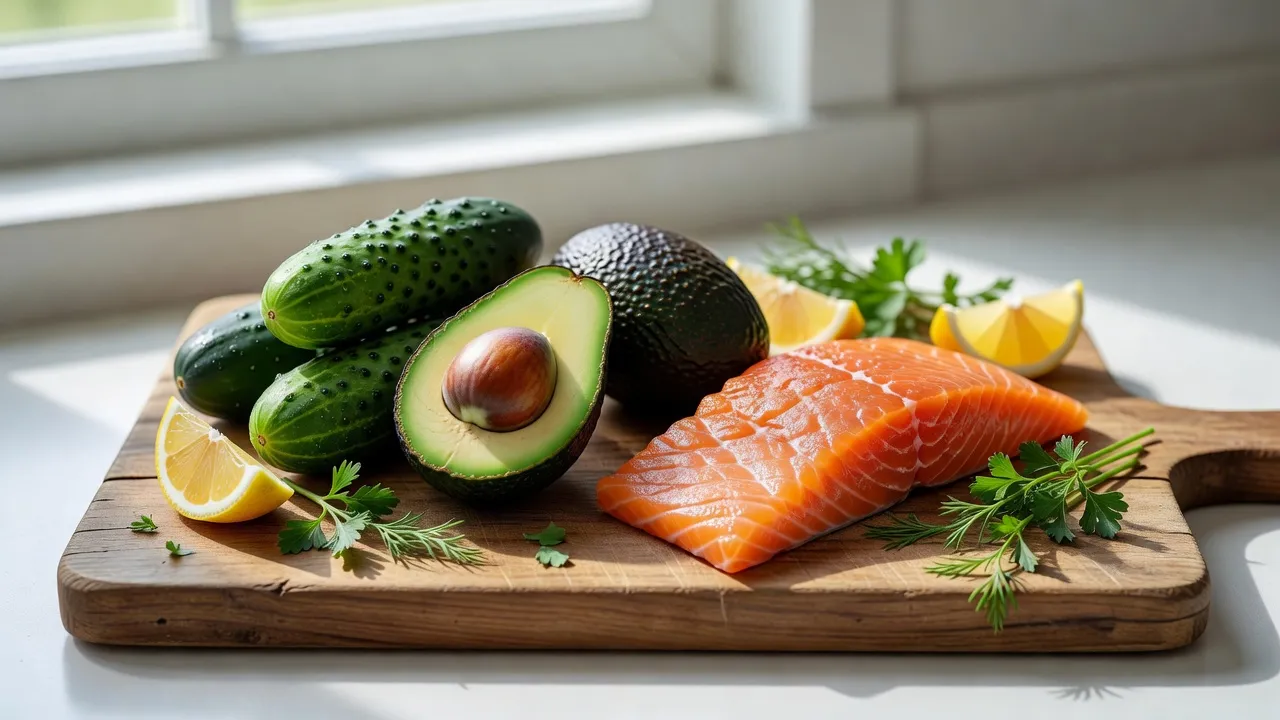
Eliminating hidden sodium sources
The American Heart Association recommends an ideal limit of 1,500 mg per day for optimal cardiovascular health and fluid balance. Avoid high-sodium culprits that cause morning face puffiness:
- Processed deli meats and cured sausages
- Canned soups and commercial salad dressings
- Frozen pre-packaged meals and instant noodles
- Restaurant dishes heavy in added monosodium glutamate (MSG) or salt
Increasing dietary potassium balance
Potassium acts as a natural counter-weight to sodium, helping your kidneys flush out extra fluid through urine. Incorporate potassium-rich foods into your daily meals:
- Spinach and dark leafy greens (460 mg per 100g)
- Avocados (485 mg per 100g)
- Bananas (358 mg per 100g)
- Coconut water (250 mg per 100 ml)
Step 3: Eliminate alcohol and refined sugars to stop face bloat
Eliminating alcohol and simple carbohydrates reduces systemic vascular inflammation and prevents facial edema. Alcohol is a potent vasodilator and diuretic that causes your body to hold water aggressively in the soft tissues of your face during the recovery phase.
If you struggle with persistent puffiness after nights out, reading about how to manage alcohol face bloat can give you actionable timelines for fluid flush-outs. Alcohol intake impairs sleep architecture and increases cortisol levels, leading to increased fluid retention around the eye sockets and cheeks.
Refined sugars and high-glycemic carbohydrates spike blood insulin levels rapidly. Elevated insulin signals your kidneys to retain sodium, which directly locks fluid into facial tissues. Replace refined white bread, pastries, and sodas with complex carbohydrates like quinoa, sweet potatoes, and oats.
Step 4: Drink 3.5 to 4 liters of water daily
Drinking 3.5 to 4 liters of water every day signals your body that fluid is abundant, prompting your kidneys to excrete stored water weight. Paradoxically, drinking too little water forces your cells to hold onto every drop, resulting in soft, puffy facial features.
- Morning flush: Drink 500 ml of cold water immediately upon waking to kickstart renal filtration.
- Hydration tracking: Carry a dedicated 1-liter reusable bottle and complete four full refills throughout the day.
- Electrolyte balancing: Add a pinch of unrefined sea salt and a squeeze of lemon to your morning glass to assist cellular fluid uptake.
Hydration also improves skin elasticity. When subcutaneous fat layers shrink during overall weight loss, hydrated skin snaps back faster over your changing facial bone structure.
Step 5: Perform 150 minutes of zone 2 cardio and strength training weekly
Combining 150 minutes of moderate cardio with resistance training accelerates total fat loss while keeping your basal metabolic rate elevated. Aerobic exercise oxidizes fatty acids, while strength training builds lean tissue that increases your daily calorie burn even at rest.
Target Heart Rate (Zone 2) = (220 - Age) x 0.65 to 0.75
Maximizing lipid oxidation with Zone 2 cardio
Perform 30 to 45 minutes of low-intensity, steady-state (LISS) exercise 4 times per week. Activities like brisk incline walking, cycling, or stair-climbing in Zone 2 rely primarily on fat stores for fuel, preserving glycogen and preventing excessive fatigue.
Preserving facial structure with compound lifting
Incorporate heavy compound movements like deadlifts, squats, overhead presses, and rows three days per week. Preserving lean muscle across your body ensures that as fat decreases, your body fat percentage drops quickly without causing a haggard appearance.

Does Kybella (deoxycholic acid) help reduce submental face fat?
Yes, Kybella (deoxycholic acid) permanently reduces submental fat under the chin by destroying local fat cell membranes via targeted injection. Deoxycholic acid is a naturally occurring bile acid that breaks down dietary fat in the gut; when injected directly into double-chin tissue, it causes localized cell lysis.
According to clinical safety data from the U.S. Food and Drug Administration (FDA), Kybella is specifically approved for moderate-to-severe submental fat below the jawline. Once these adipocytes are destroyed, they can no longer store or accumulate fat.
What to expect during treatment
- Procedure duration: Treatments take roughly 15 to 20 minutes, involving 20 to 50 small injections per session.
- Number of sessions: Most patients require 2 to 4 sessions spaced at least 1 month apart.
- Downtime: Significant localized swelling ("bullfrog effect") occurs for 7 to 14 days after each session as your body clears dead fat cells.
- Limitations: Kybella is not approved for use on buccal fat pads, lower cheeks, or jowls due to the risk of damaging facial nerves.
What is buccal fat removal, and what are its risks and benefits as an alternative to facial exercises?
Buccal fat removal is a surgical procedure that permanently extracts the lower cheek fat pads to create a hollowed, contoured midface. Unlike lifestyle changes or facial exercises that shrink fat cells temporarily, buccal fat excision physically removes the deep fat mass situated between your cheekbones and jawline.
The procedure is performed through small incisions inside the mouth under local or general anesthesia. Because the fat pad is completely removed, the structural slimming effect is permanent and will not reverse even if you gain modest amounts of body weight later.
Risks vs. benefits of buccal fat excision
| Parameter | Buccal Fat Removal Surgery | Non-Surgical Lifestyle Fat Loss |
|---|---|---|
| Primary Mechanism | Surgical excision of buccal fat pads | Caloric deficit & fluid regulation |
| Permanence | 100% permanent removal of target fat | Requires ongoing habit maintenance |
| Target Area | Mid-cheek hollows only | Entire face, submental, and body |
| Typical Cost | $2,000 – $7,000 (Out-of-pocket) | Free to low cost |
| Recovery Time | 7–10 days post-op swelling | Zero recovery time |
| Long-Term Risks | Premature facial aging, hollow cheeks | Minimal (when done safely) |
Understanding the long-term aesthetic trade-offs
As humans age, natural subcutaneous facial fat thins out automatically. Removing your buccal fat pads in your 20s or 30s can result in a gaunt, prematurely aged aesthetic once you reach your 40s and 50s. Plastic surgeons generally advise against this procedure for individuals who already have narrow or slender faces.
How to track your face transformation as you shed fat
Tracking structural changes in your face requires standardized photos, body fat metrics, and computer-assisted visual analysis. Relying solely on a bathroom scale will not tell you if you are losing water weight, subcutaneous body fat, or lean muscle tissue.
When you lose body fat, structural shifts appear first around your jawline, temple regions, and mid-cheeks. Check out our detailed guide on analysis of face techniques to understand how proportions change across different body fat percentages.
Fat Loss Checklist:
[ ] 3D AI Selfie scan (Baseline setup)
[ ] Weekly morning neck & waist measurements
[ ] Standardized lighting progress photos (Front & Profile)
[ ] Track daily calorie & sodium targets in a journal
To take accurate measurements of your facial progress:
- Take progress pictures weekly under identical, natural lighting conditions at the exact same time of day (preferably right after waking up).
- Keep your face expression completely neutral without smiling or tensing jaw muscles.
- Keep camera angles consistent by mounting your phone at eye level.
To get instant, clear visual tracking of your facial slimming journey, you can use the Glow Up & Attractiveness Test app. By taking a quick selfie, the app leverages a fine-tuned AI model to provide a comprehensive face rating score and detailed breakdown of your facial symmetry, cheekbone prominence, and lower third proportions.

Using dedicated progress tools helps you track your jawline development, evaluate subtle facial changes, and access personalized glow-up tips designed to optimize your visual attractiveness as your body fat drops. You can explore more about how AI model scanning works directly at Glow Up & Attractiveness Test.
If your structural goals involve sharpening your jawline through both fat loss and muscle optimization, consult our guide on how to get a strong jawline for step-by-step physical routines.
Face fat reduction steps at a glance
The table below breaks down every phase of natural facial slimming along with realistic timeframes and costs.
| Step / Treatment | Action Required | Expected Timeframe | Cost / Requirements |
|---|---|---|---|
| 1. Caloric Deficit | Eat 300–500 calories below maintenance daily | 4 to 12 Weeks | Free; Calorie tracking app |
| 2. Sodium Reduction | Limit intake to under 2,000 mg daily | 24 to 72 Hours | Free; Whole foods focus |
| 3. Fluid Optimization | Drink 3.5 to 4 liters of water every day | 48 to 96 Hours | Free; Reusable water bottle |
| 4. Alcohol Elimination | Stop consuming alcoholic beverages completely | 3 to 7 Days | Free; Lifestyle adjustment |
| 5. AI Progress Tracking | Scan facial changes with Glow Up App | Weekly updates | iOS Smartphone; App Store Download |
| 6. Kybella Injections | Medical submental fat destruction | 2 to 4 Months | $1,200 – $4,000 per series |
| 7. Buccal Excision | Surgical cheek pad removal | Immediate (10 days swelling) | $2,000 – $7,000 surgical fee |
Frequently Asked Questions
How long does it take to lose face fat?
You will notice reduced facial water bloat within 3 to 7 days of lowering sodium and alcohol intake. Actual subcutaneous face fat reduction occurs as you drop overall body fat, which typically takes 6 to 12 weeks of a consistent caloric deficit.
Why is my face fat even though I am skinny?
Facial fat distribution is heavily influenced by genetics, bone structure, and fluid retention. You may also be experiencing "skinny fat" composition (low muscle mass relative to fat) or consuming high amounts of dietary sodium and alcohol that create chronic facial edema.
Does chewing gum reduce face fat?
No, chewing gum does not burn facial fat. While it works the masseter muscles in your jaw, it burns an insignificant number of calories and cannot spot-reduce subcutaneous fat. Excessive gum chewing can actually lead to temporomandibular joint (TMJ) pain.
Why is my face puffy when I wake up in the morning?
Morning face puffiness is caused by lying flat for several hours, which allows fluid to pool in facial tissues. High sodium dinners, late-night alcohol, sleeping face-down, and poor lymphatic drainage exacerbate this morning fluid accumulation.
Does drinking cold water burn face fat?
Drinking cold water slightly boosts metabolic rate through thermogenesis as your body warms the water to core temperature, but the effect is negligible. However, staying fully hydrated reduces water retention, which directly slims your face.
Can cortisol make your face look fat?
Yes, chronically high levels of the stress hormone cortisol cause fluid retention and can lead to moon face, a condition characterized by rounded facial fat deposits. Managing stress and prioritizing 7 to 9 hours of sleep helps lower cortisol levels.
Does face fat come back if I gain weight?
Yes, if you gain weight through a caloric surplus, your body expands existing fat cells throughout your body, including those in your cheeks, chin, and neck. Only surgical intervention like buccal fat removal physically destroys fat pads permanently.