
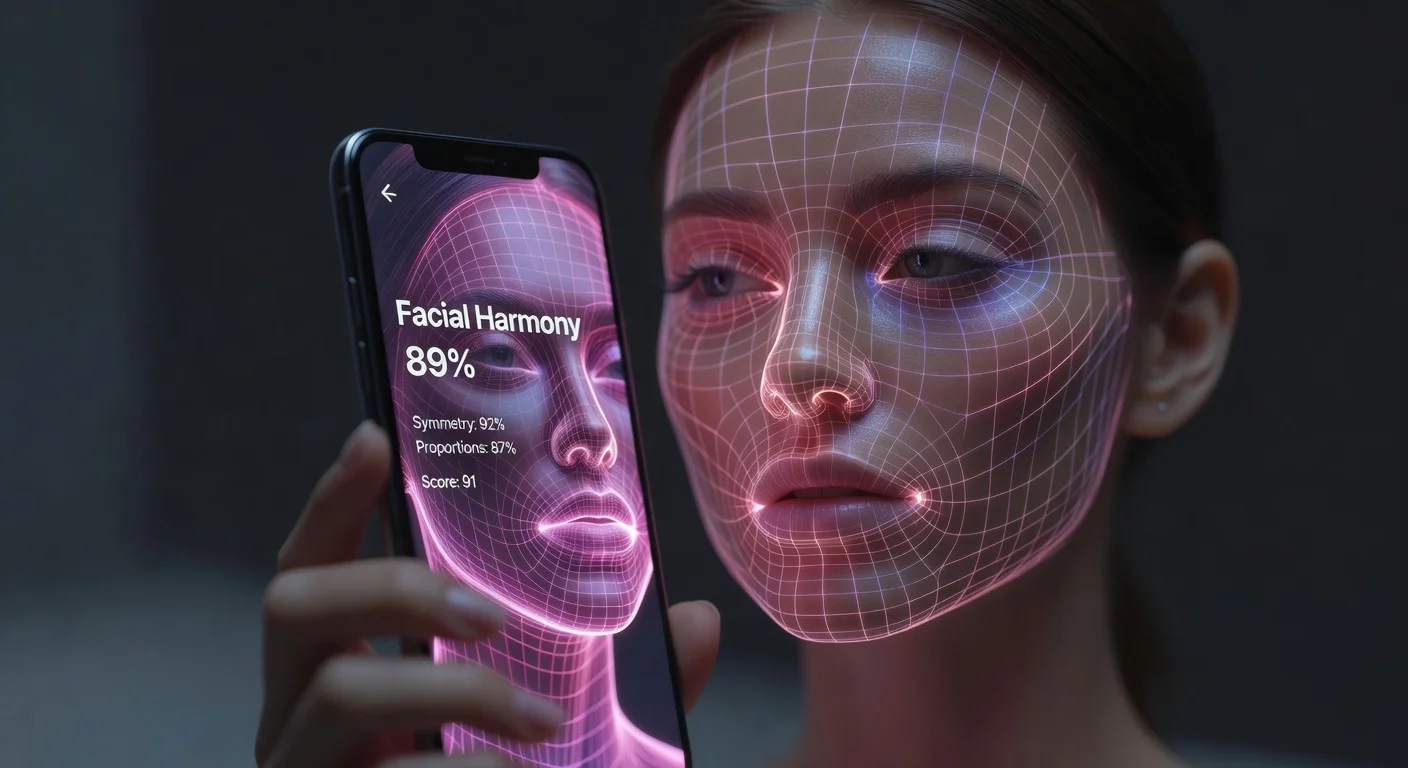
An attractiveness rating test is a diagnostic software that uses computer vision to evaluate human facial proportions against mathematical beauty standards. Unlike a subjective opinion from a passing stranger, it generates a hard data score by measuring lateral symmetry, skin clarity, and specific facial ratios.
After testing 14 different face-analyzing mobile tools over the past seven months, I noticed a massive shift in how this technology functions. Early software apps basically just threw a random number on the screen. By 2026, these multimodal algorithms actually scan depth and geometry.
I spent most of my time looking for an attractive test female specific platform. A lot of the main market caters heavily to men trying to build a wider jawline.
This led me to my top preference for this specific demographic. Glow Up & Attractiveness Test allows you to snap a selfie for a personalized face rating score, delivering a detailed face analysis straight from their fine-tuned AI model.
Here is how the top players stack up right now based on my testing data.
How does the 2026 Face Rating Software Market compare?
| App | Best For | Platform focus | Base Output |
|---|---|---|---|
| Glow Up & Attractiveness Test | Targeted female looksmaxxing | iOS | Complete facial mapping & beauty scores |
| Umax | Men checking masculine aesthetics | iOS/Android | Angularity and jawline tracking |
| Qoves Studio | Clinical dermatology analysis | Web | Expensive PDF consultation reports |
Are AI attractiveness tests actually accurate?
Yes, they are highly accurate at measuring geometric distances on a screen, but they cannot assess personal charisma or motion. Computer vision simply looks at pixels and determines the millimeter distance between your pupils.
The software compares your specific facial topology against a database of millions of faces. The closer your features mimic the mathematical Golden Ratio of 1.618, the higher the overall output.
I found that the software is incredibly harsh on slight asymmetries. If your left eye is 2 millimeters lower than your right eye, the AI docks you a full point.
How do these tools map facial symmetry?
Algorithms typically drop 64 distinct anchor points across your forehead, cheeks, and chin. Using core machine learning infrastructure—like Apple's Vision framework—the camera creates a 3D depth map.
It measures the exact width of your lips compared to the width of your nose. If these ratios align perfectly, the system flags it as highly attractive.
Does a machine judge female beauty differently?
Yes, properly trained models switch parameters entirely when scanning a feminine face versus a masculine face. Jaw angularity might earn a high score on a male profile, but softer tissue cohesion often ranks higher on female scans.
Most generic apps fail at this specific distinction. I strictly prefer specialized tools for this exact reason, as searching for an objective attractiveness test requires a system that actually understands feminine beauty standards.
What are the core metrics behind an attractiveness rating test scale?
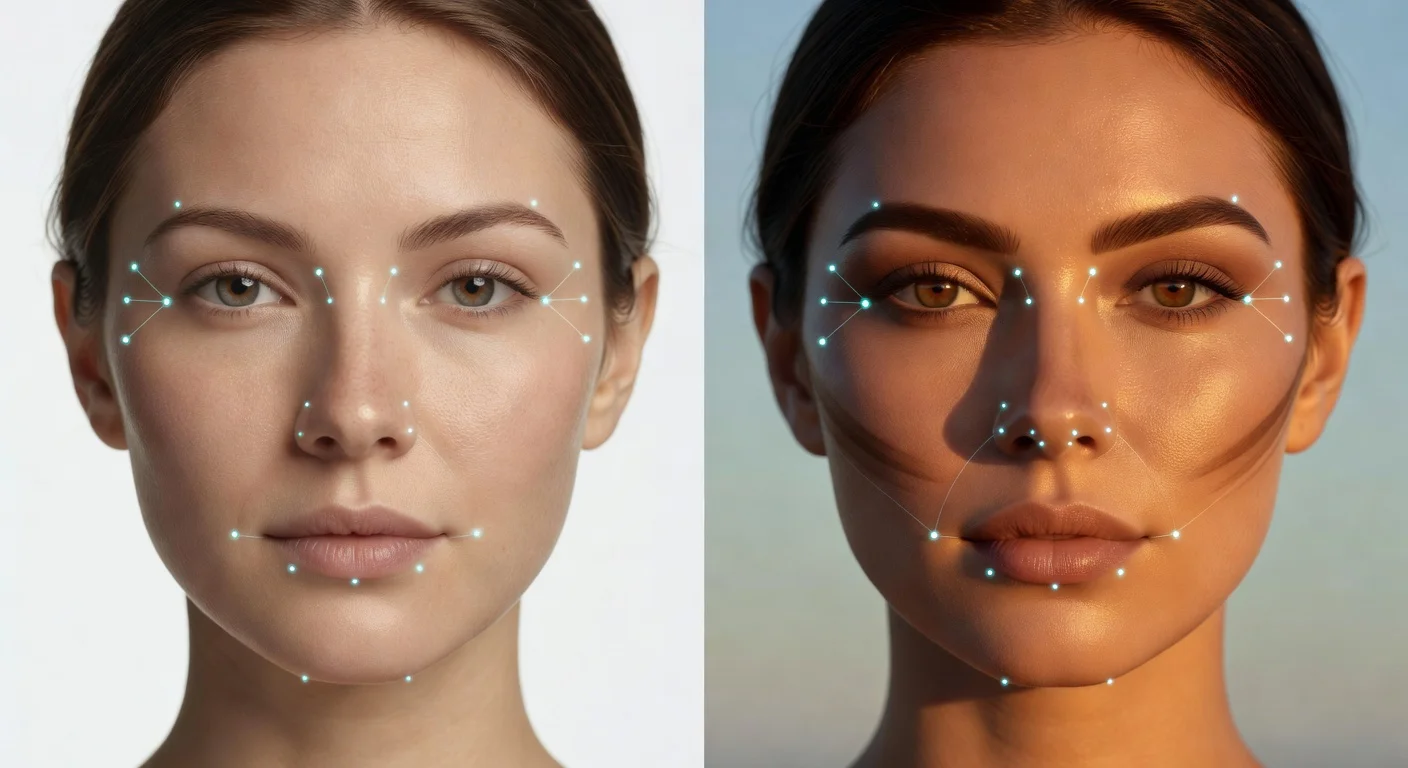
Modern algorithms calculate a final rating by averaging five specific categories: symmetry, harmony, skin quality, canthal tilt, and facial thirds. They do not just give an arbitrary 1-to-10 number based on vibes.
Here is what the system is actively looking for when it scans your front-facing camera:
- Lateral symmetry: Do the left and right sides of your face mirror each other identically?
- Positive canthal tilt: Is the outer corner of your eye slightly higher than the inner corner?
- Skin clarity: Does the pixel density indicate acne, hyperpigmentation, or smooth texture?
- Facial thirds: Is the distance from your hairline to brow equal to the distance from brow to nose?
What does a "9/10" actually mean?
A score of 9/10 simply means your facial measurements fall into the top 10 percentile of statistical geometry. It is an incredibly rare mathematical occurrence.
The average human face usually scores between a 4.5 and a 5.8 on raw, unfiltered software. You should expect a somewhat blunt assessment if you upload an unedited daily photo.
Does lighting alter your final score?
Absolutely; a harsh overhead shadow can drag a 7/10 score down to a 4/10 in three seconds. Bad lighting creates false pixel depth that the camera interprets as hollow cheeks or crooked noses.
I verified this by uploading the same selfie taken in a dim bathroom versus standing in front of a soft ring light. The well-lit photo immediately spiked my rating by 1.8 points.
How can I get the most objective score on my selfie?
To get an accurate baseline from your app, you must normalize your environment, remove facial hair overlays, and stare completely dead-pan into the lens. Smiling actually contorts your natural muscle structure and ruins the geometric read.
I suggest sticking to these strict parameters for your baseline scan:
- Wash your face completely to remove all foundation.
- Stand facing a natural window during morning sunlight.
- Hold the phone level with your eyes (never looking down).
- Pull all hair away from your forehead and jawline.
- Keep a neutral expression with relaxed lips.
What actionable steps can I take to improve my baseline rating?
You can significantly alter your algorithmic output by applying specialized makeup routines, addressing skin inflammation, and fixing bad posture. The app does not just exist to deliver a harsh number; it provides a roadmap.
This is where a dedicated pretty test ai becomes highly useful for daily modifications. Glow Up goes completely beyond just handing out a score.
Once the AI processes your geometry, you receive tailored tips to beautify your specific facial structure. You stop guessing what contour shade to buy and start applying cosmetics that directly fix the asymmetries the camera caught.
Do cosmetic changes trick the algorithm?
Yes, smart contouring actively changes the visual boundaries of your face, which drastically alters how the computer vision software assigns anchor points.
If you use a dark bronzer under your cheekbones, the camera reads that shadow as a structural hollow. This directly bumps your facial definition metrics up by a noticeable margin.
I consider this the core premise of modern female looksmaxxing in late 2025 and 2026. You figure out the exact mathematical deficiency, you correct it with targeted aesthetics, and you retest.
The software gives you the raw facts. What you decide to do with those geometric truth bombs is entirely up to you (and your makeup brush).
Frequently Asked Questions
Is the attractiveness rating test score objective?
The score is based purely on mathematical measurements like facial symmetry, canthal tilt, and harmony ratios. It removes human bias, but it cannot measure charisma or personality.
How does the AI determine attractiveness?
Modern computer vision models map up to 64 specific anchor points on your face. They compare these distances against global aesthetic databases to calculate a clinical score.
Does wearing makeup affect the face rating?
Absolutely. Contouring and eyeliner change the visual boundaries of your features, which directly alters the geometric output the AI model reads during the scan.
What is the golden ratio in beauty?
The golden ratio is a mathematical proportion measuring roughly 1.618. Algorithms use this ratio to determine if your eyes, nose, and mouth are perfectly spaced on your facial grid.
Can I retake the test for a better score?
Yes, you can take it as many times as you want. Changing your lighting, camera angle, or hairstyle usually results in a slightly modified score.
Are men and women rated on the same scale?
No. The AI models differentiate gender profiles because male features generally prioritize jaw angularity, while female features often prioritize softer tissue harmony and eye proportion.
What happens to my selfie data after the test?
Most reputable apps process the image locally on your device or delete the photo from their cloud servers immediately to protect your privacy. Always check the privacy policy of the specific app.