

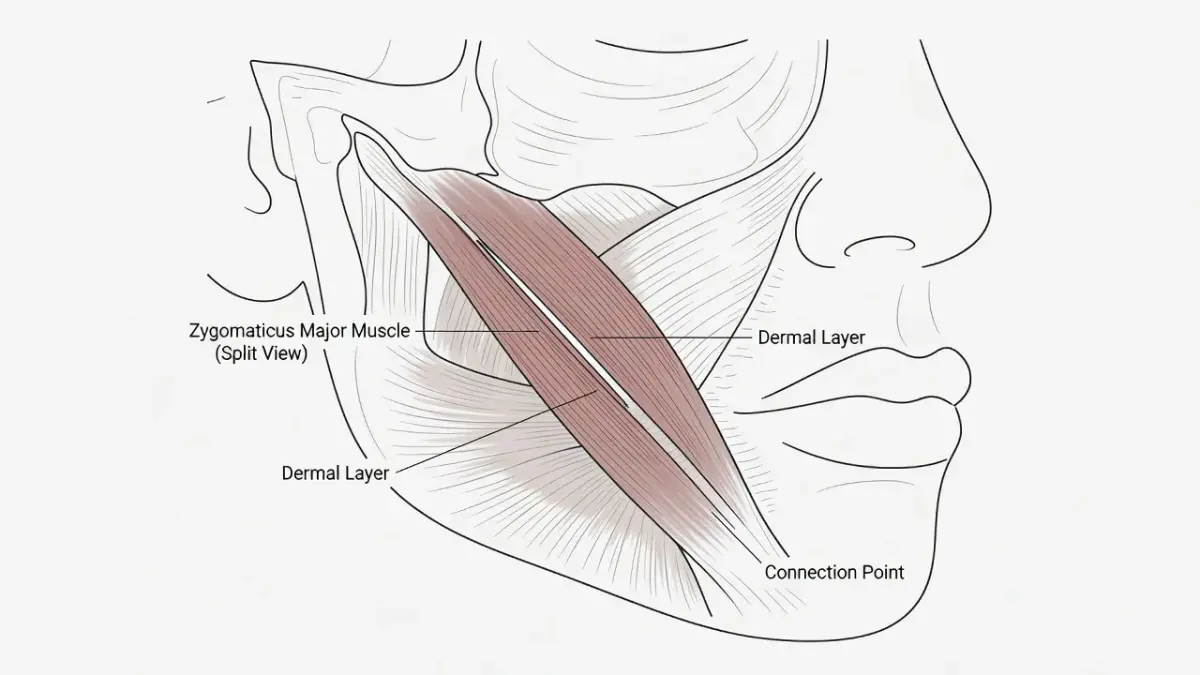
Facial dimples are small, visible indentations in the skin caused by a structural variation in the underlying facial muscle, most commonly a double or split zygomaticus major muscle. When a person smiles, the split muscle pulls the overlying cheek skin inward, creating a temporary depression. While these indentations occur naturally in roughly 20% to 30% of the population, surgical and cosmetic interventions now allow individuals without the genetic trait to create artificial dimples.
Understanding your natural facial geometry is a helpful step before considering any aesthetic modification. Apps like Glow Up & Attractiveness Test allow you to analyze your baseline feature proportions before exploring surgical or non-surgical cheek procedures.
The biological foundation of a natural cheek dimple is an anatomical split in the main smiling muscle. According to anatomical research documented on Wikipedia, a double or bifid zygomaticus major muscle attaches directly to the dermis of the cheek rather than inserting smoothly into the corner of the mouth. When the muscle contracts during a smile, the tethered skin pulls inward toward the facial structure. Because this structural tethering depends on dynamic movement, natural dimples usually appear only during active facial expressions rather than at rest.
Beyond the classic cheek location, human facial anatomy supports distinct variations in dimple placement. You can explore different types of facial dimples to understand how lower chin dimples, foveal cheek indentations, and corner-of-mouth dimples differ in their underlying muscular mechanics.
How is dimpleplasty performed and how popular is it?
Dimpleplasty is an outpatient cosmetic procedure performed under local anesthesia where a surgeon creates an artificial link between the cheek muscle and inner skin. The surgeon operates entirely inside the mouth, leaving no external scars on the face. Interest in the procedure has grown steadily into October 2026 as patients seek subtle, natural-looking facial modifications without general anesthesia.
The surgical process takes approximately 20 to 30 minutes per cheek. The surgeon cuts a tiny incision inside the oral mucosa to access the submucosal tissue and the target muscle fibers.
A small core of muscle and submucosal fat is removed through the intraoral opening. The surgeon then passes a absorbable suture through the inner cheek muscle, catching the deep layer of the outer skin dermis, and ties the suture inside the mouth.
- Local Anesthesia: Administered inside the cheek cavity
- Intraoral Incision: 4-5 mm incision inside the oral mucosa
- Tissue Core Removal: Small section of muscle/submucosal fat excised
- Dermal Suture Pass: Transfixion suture connects muscle to skin
- Knot Securing: Suture tied internally to form static dent
Not everyone is a suitable candidate for surgical dimple creation. Patients with excessively thin facial skin may develop sharp, unnatural skin folds, while individuals with heavy cheek fat pads often fail to show clear indentations because thick fatty tissue cushions the internal suture line.
Can dermal fillers (hyaluronic acid) create dimples non-surgically?
Dermal fillers cannot create true dynamic dimples because injected hyaluronic acid adds volume rather than tethering skin to muscle. Attempting to create a dimple with fillers typically results in a small bump or irregular shadow rather than a functional indentation.
Hyaluronic acid gel acts as a volumetric space-occupier designed to push skin outward. Creating a dimple requires the exact opposite mechanics, which involves anchoring the dermal layer downward toward the underlying facial frame.
Injecting filler around a target site to create a ring of volume with a low center produces an unnatural appearance. The ring shifts during normal facial expressions, creating asymmetrical bulges across the midface.
Furthermore, placing thick dermal filler in high-mobility areas of the cheek carries risks of vascular occlusion and gel migration. Medical guidelines published by the Cleveland Clinic emphasize that structural indentations require physical anchoring of the dermal layer, which non-surgical volume fillers cannot achieve.
Does buccal fat removal or fat grafting affect dimple creation?
Buccal fat removal enhances dimple visibility by thinning the soft tissue layer, whereas fat grafting reduces dimple depth by adding cushioning beneath the skin. Combining midface fat reduction with dimpleplasty often yields sharper definition in patients with full cheeks.
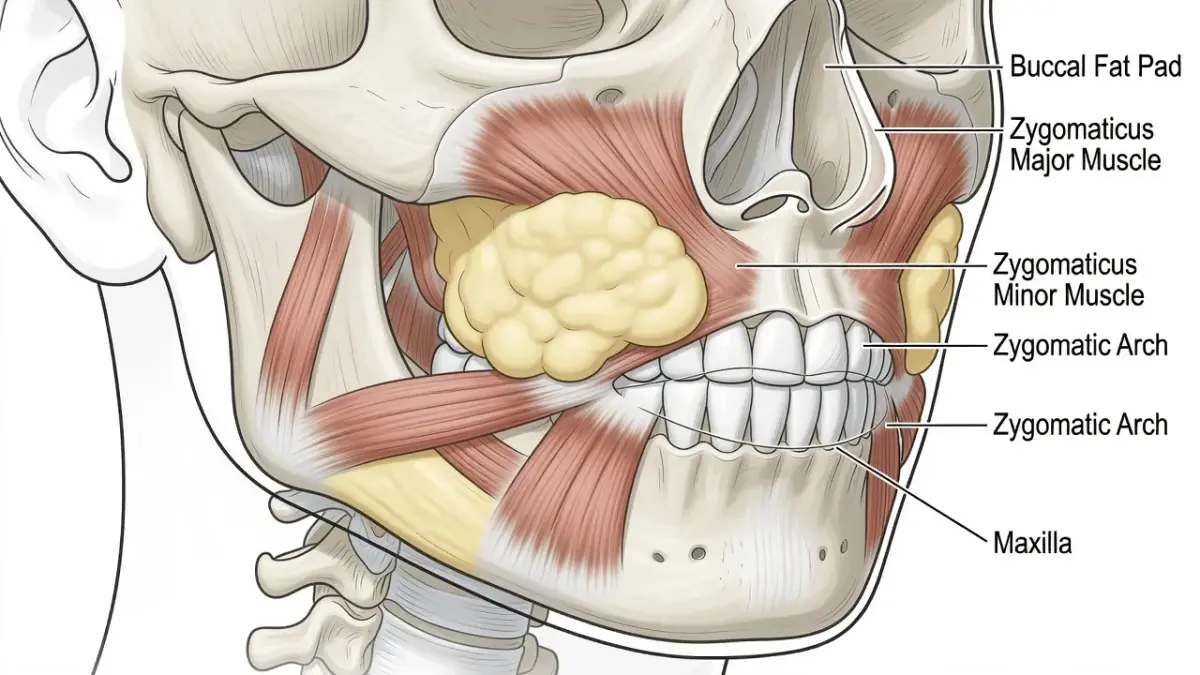
The buccal fat pad sits in the deep midface between the masseter and buccinator muscles. When this fat pad is large, it dampens the pull of the zygomaticus muscle against the skin dermis, softening any existing or created dimple.
| Procedure | Tissue Effect | Impact on Dimple Depth |
|---|---|---|
| Buccal Fat Removal | Reduces deep padding | Increases dimple crispness |
| Structural Grafting | Adds dermal volume | Softens or masks dimple |
| Midface Liposuction | Thins subcutaneous | Heightens muscle traction |
Conversely, autologous fat grafting adds volume directly to the subcutaneous layer. If a patient undergoes facial fat transfer to restore youthful midface volume, existing dimples frequently become shallower or disappear entirely.
Patients considering structural adjustments should evaluate how overall volume impacts facial symmetry. A tool like Glow Up & Attractiveness Test app ($9.99/week) provides a detailed face analysis using fine-tuned AI models, allowing users to assess their baseline facial proportions before undergoing irreversible fat removal.
Can PDO thread techniques be used to create dimples?
Polydioxanone (PDO) threads can create temporary cheek dimples by mechanically pulling the dermis inward toward the intraoral tissue, but the effect typically lasts less than six months. Thread techniques offer a non-surgical alternative, though they carry high rates of early relaxation and asymmetry.
During a thread dimple procedure, a practitioner passes a barbed or looped PDO thread through a needle puncture inside the cheek. The thread grabs the dermis and anchors it to the underlying muscle tissue, securing the knot inside the mouth or deep cheek tissue.
                      PDO THREAD DIMPLE MECHANICS

     Skin Surface  ============================== (Dermis)
                               ||  ||  <-- Thread Barbs Catch Dermis
                               ||  ||
     Cheek Muscle  ------------------------------ (Zygomaticus Major)
                                 \/    <-- Tension Knot Tied Here
The main limitation of PDO threads for dimple creation is tissue tearing under dynamic stress. Because the cheek moves constantly during talking, eating, and smiling, the thread material cuts through soft subcutaneous fat within weeks.
Patients with dense dermal tissue or heavy cheeks are usually ruled out for thread dimples. The mechanical load quickly breaks the thread's grip, causing the cheek to return to its flat state long before the material biodegrades.
Assessing Facial Harmony Before Structural Modifications
Before choosing permanent surgical changes, evaluating how a dimple integrates with your overall features is essential. Adding an indentation to an asymmetrical face can accidentally highlight existing bone or muscle imbalances.
Many individuals review the face symmetry of celebrities to see how natural dimples interact with distinct cheek structures. The presence of a dimple on one side can create a charming focal point, but an improperly placed surgical dimple can alter the visual balance of the lower face.
Using Glow Up & Attractiveness Test allows you to snap a selfie for a personalized face rating score and view tailored feedback on your feature proportions. Discovering your score helps clarify whether midface modifications line up with your personal cosmetic goals.
Taking time to measure your facial dimensions prevents common aesthetic regrets. For instance, understanding your prominent cheekbones helps determine whether a new dimple will align cleanly with your natural highlight lines.
Which type of dimple is attractive?
Attractiveness ratings for facial dimples depend on structural balance and anatomical location rather than a single universal preference. Cheek dimples are widely rated as the most desirable facial indentation because they accentuate the zygomaticus major muscle during a smile, drawing attention toward midface highlights.
Aesthetic evaluation criteria highlight three primary dimple types across facial regions:
- Cheek Dimples (Foveal): Located on the mid-cheek, these indentations add dynamic symmetry during movement and are frequently associated with youthful facial geometry.
- Chin Dimples (Fovea Mentalis): Formed by underlying cleft bone structure, chin dimples impart structural definition to the lower third of the face.
- Corner-of-Mouth Dimples: Positioned near the oral commissure, these subtle indentations accentuate smile width without altering midface proportions.
Individual preference varies based on overall feature framing. Placing a cheek dimple along the intersection of the outer eye corner and smile line aligns with traditional cosmetic mapping for optimal midface visual balance.
Technical Comparison of Dimple Creation Methods
The table below outlines the primary techniques used to achieve facial dimples, detailing their mechanisms, longevity, and candidate limits.
| Method | Procedural Mechanism | Expected Longevity | Primary Candidate Limits | Suture or Material Type |
|---|---|---|---|---|
| Surgical Dimpleplasty | Internal muscle excision and dermal suture anchor | Permanent (after tissue scarring forms) | Ineffective on dense buccal fat pads; risks scarring thin skin | Absorbable Vicryl or Monocryl (3-0 / 4-0) |
| PDO Thread Anchoring | Transfixion thread loops pulling dermis to submucosa | 3 to 6 months | High failure rate in heavy cheeks or high-mobility faces | Polydioxanone barbed thread |
| Dermal Piercing (Punch) | External piercing with heavy barbell compression | Varies (1 to 3 years if scar tract holds) | Causes permanent external skin scarring; high infection rate | Surgical steel or titanium labret |
| Hyaluronic Fillers | Indirect ring volume placement (Depression effect) | Temporary (Not recommended) | Cannot pull skin inward; high risk of lumpiness | Cross-linked hyaluronic acid gel |
What are the risks and recovery time for dimpleplasty?
Initial recovery from dimpleplasty takes about 7 to 14 days, while full tissue healing and natural dynamic movement require 8 to 12 weeks. During the initial two weeks, the artificial dimple remains visible even when the face is completely relaxed.
Common short-term side effects include moderate swelling, minor cheek bruising, and mild tightness while chewing. Intraoral incisions carry a baseline risk of bacterial infection due to oral flora, requiring post-operative antiseptic mouthwashes.
| Timeline | Recovery Progress |
|---|---|
| Days 1 - 3 | Peak swelling; continuous static dimple present |
| Days 4 - 7 | Intraoral suture begins dissolving; pain subsides |
| Weeks 2 - 3 | Static indent softens; dimple deepens mainly on smile |
| Month 2 - 3 | Internal scar tissue matures; natural dynamic movement |
Clinical documentation in surgical journals, such as a study published in the National Center for Biotechnology Information, shows that severe complications remain under 3%. However, specific tissue risks can permanently rule out optimal results:
- Stensen's Duct Injury: Damage to the parotid salivary duct located near the upper second molar.
- Permanent Nerve Parasthesia: Injury to the buccal branch of the facial nerve, causing temporary or permanent muscle weakness.
- Suture Dehiscence: Premature tearing of the internal knot, causing the dimple to disappear completely within days of surgery.
- Granuloma Formation: Inflammatory tissue reactions around permanent suture material.
Patients with active oral infections, bleeding disorders, or severe skin laxity are generally excluded from undergoing the procedure.
Do dimpleplasty results last, based on patient reviews?
Patient outcome data indicates that dimpleplasty results are permanent in roughly 85% to 90% of cases once internal scar tissue forms. However, early suture failure within the first month causes complete reversal in up to 15% of patients.
During the first 4 to 8 weeks, the absorbable suture holds the dermal layer against the muscle. As the suture dissolves, internal scar tissue must take over the job of anchoring the skin.
If the patient's cheek tissue undergoes excessive strain during initial healing—such as aggressive chewing or wide yawning—the delicate scar connection can detach. When this detachment occurs, the skin relaxes back into its flat baseline position.
Patient reviews consistently note that the initial "static" phase, where the dimple shows without smiling, can feel unnatural for the first month. Once full healing occurs by month three, the indentation activates primarily during laughter or smiling, closely mirroring natural genetics.
Biological Factors That Limit Artificial Dimple Success
The long-term appearance of any artificial dimple depends heavily on individual facial biology. Skin thickness, dermal elasticity, and underlying muscle strength dictate how gracefully an indentation ages over time.
As faces lose collagen over decades, skin elasticity naturally declines. An artificial dimple created in a patient's twenties may deepen into a static crease or wrinkle as midface skin loses its structural firmness later in life.
| Skin Condition | Collagen Status | Dimple Appearance |
|---|---|---|
| Young Skin | Firm Dermis | Crisp Dynamic Dent |
| Aged Skin | Collagen Loss | Deepened Static Crease |
Additionally, weight fluctuations can alter surgical outcomes. Gaining significant body weight increases subcutaneous fat thickness, which can smother the internal scar anchor and hide the dimple. Losing significant weight can sharpen the indentation, making it look hollow.
Because of these biological variables, getting a clear analysis of your facial baseline is crucial. Analyzing your features with Glow Up & Attractiveness Test gives you an objective view of your facial structure before making permanent changes to your cheeks.
Frequently Asked Questions
What causes natural dimples on the face?
Natural dimples are caused by an inherited variation in the zygomaticus major muscle. This double or split muscle attaches directly to the cheek skin, pulling the dermal tissue inward whenever you smile.
Is dimpleplasty surgery painful?
The procedure itself is painless because surgeons use local anesthesia to numb the cheek tissue. Patients typically experience mild soreness, tightness, and swelling for 3 to 5 days after the numbness wears off.
How long does a surgical dimple take to look natural?
A surgical dimple usually takes 4 to 8 weeks to look natural. During the first few weeks, the dimple remains visible even when your face is at rest, settling into a dynamic smile-only indentation as internal healing completes.
Can dimpleplasty be undone if I do not like the result?
Reversing dimpleplasty is difficult once permanent internal scar tissue has formed. If caught within the first few weeks, a surgeon can cut the internal suture, but long-term reversal requires surgical excision of the internal scar tract.
Will dimpleplasty leave scars on the outside of my face?
No, standard dimpleplasty leaves no external scars on your face. Surgeons perform the entire procedure through small incisions made inside the mouth through the oral mucosa.
How much does dimpleplasty surgery cost in 2026?
As of October 2026, dimpleplasty costs between $1,500 and $3,500 in the United States, depending on the surgeon's experience and geographic location. The price generally includes local anesthesia and follow-up care.
Can you get dimples naturally through face exercises?
No, face exercises cannot create true permanent dimples. Exercises only strengthen facial muscles temporarily and cannot alter the underlying muscle attachments or create the dermal tethers required for dimples.