
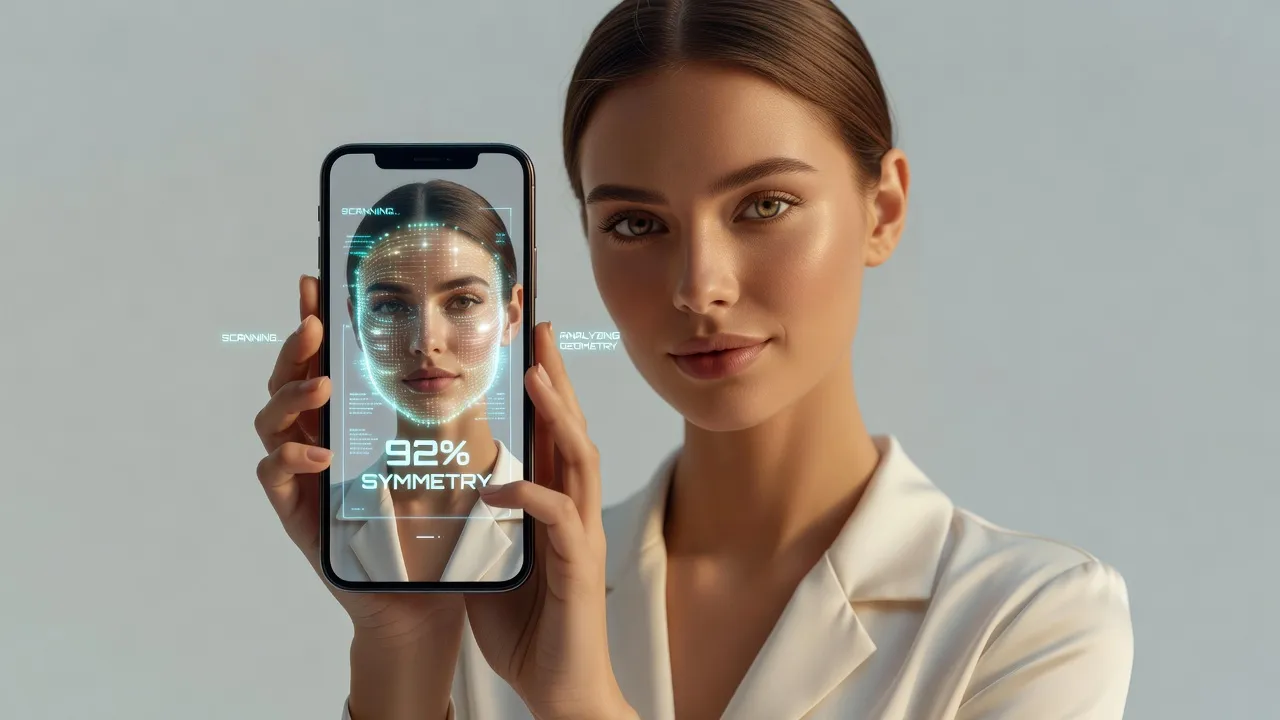
A face scanner rating uses artificial intelligence and computer vision to analyze facial geometry, skin clarity, and structural symmetry against a training dataset to generate a numerical score. Modern facial analysis platforms range from raw developer algorithms like Face++ to consumer applications such as the Glow Up & Attractiveness Test app. While these tools give you an immediate data point, their results depend heavily on photo lighting, camera focal length, and the demographic limits built into their training code.
- User Selfie Upload
- Facial Landmark Identification (eye gap, cheekbones, jaw)
- Ratio & Symmetry Calculation (Golden Ratio comparison)
- AI Dataset Scoring Engine
- Final Numerical Face Scan Rating
What apps rate your face or attractiveness?
Several web portals and mobile applications calculate a face scan rating using computer vision to evaluate human facial features. The tools available in August 2026 fall into three distinct categories: deep-learning consumer apps, web-based ratio calculators, and enterprise facial recognition APIs.
If you are exploring a digital attractiveness rating test, these five platforms represent the main options on the market:
- Glow Up & Attractiveness Test: A iOS app designed specifically for women looking for actionable cosmetic feedback. It combines an initial facial scanner rating with personalized improvement plans and style suggestions.
- Face++ Analysis Engine: A professional facial recognition API built by Megvii that measures facial landmarks, skin health metrics, and estimated attractiveness scores.
- AttractivenessTest.com: A lightweight web tool that runs your selfie through a machine-learning model to spit out a simple score from 1 to 10 within seconds.
- PrettyScale: A legacy browser app that uses manual or automated anchor points to calculate facial symmetry based on golden ratio formulas.
- FaceApp: A popular photo editing utility that uses neural networks to apply beauty filters and calculate age, gender, and facial harmony parameters.
Each app uses a different structural approach. Some look purely at geometric ratios, while others rely on massive neural networks trained on social media images.
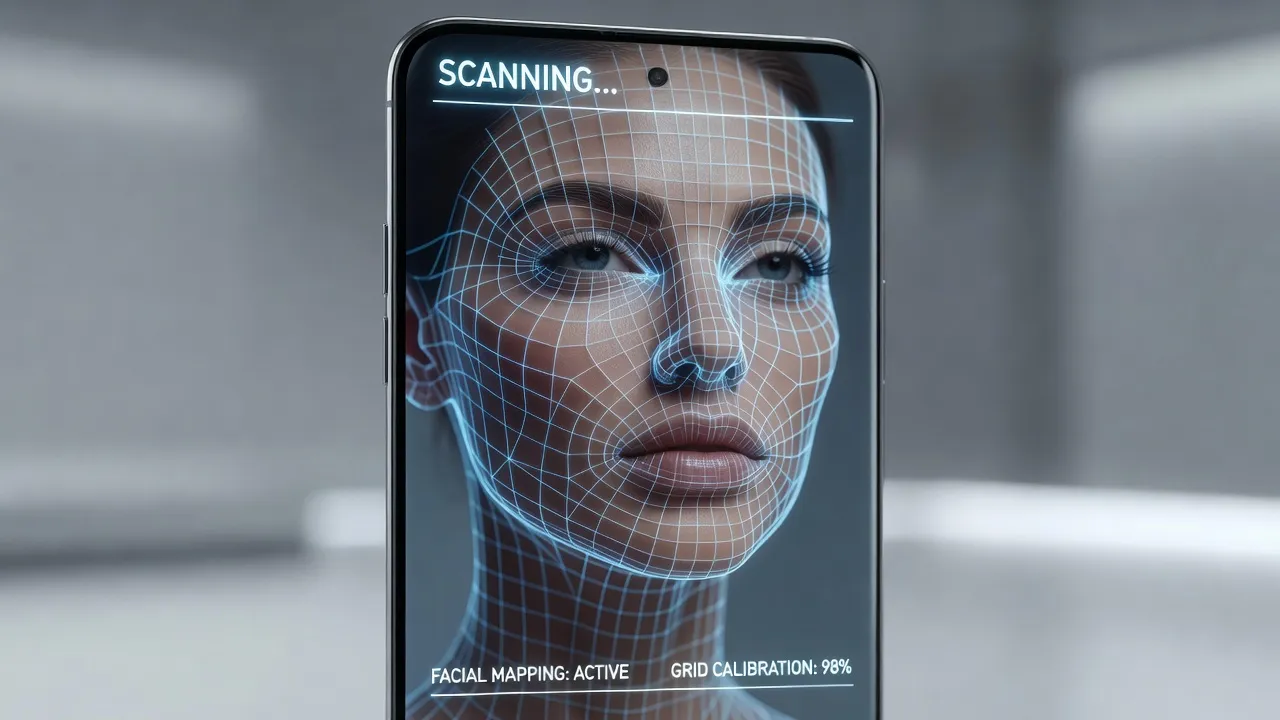
The 5 best face scanner rating tools compared (2026 edition)
Choosing the right face scanner rating app depends on whether you want a raw numerical score, deep biometric breakdown, or personal styling advice. Cold algorithmic scores from web calculators offer quick feedback, but dedicated mobile platforms provide actionable steps to improve your look.
The comparison table below details how the top scanning solutions match up across key features, platforms, and major operational limits as of August 2026.
| Platform / Tool | Primary Scanning Metric | Ideal Workflow Role | Major Technical Limit or Constraint |
|---|---|---|---|
| Face++ API | 83-point facial landmark geometry | Developer backend integration | Requires technical API implementation; no native user UI |
| Glow Up & Attractiveness Test | Fine-tuned AI facial balance & texture model | Personal daily routines & female looksmaxxing guide | iOS only; requires clear lighting for accurate score |
| AttractivenessTest.com | Machine learning pattern matching | Instant web-based curiosity checks | Highly sensitive to camera lens distortion |
| PrettyScale | Golden ratio geometric symmetry | Quick browser proportional analysis | Uses outdated non-neural scoring logic |
| FaceApp | Neural network filter application | Instant aesthetic enhancement preview | Does not provide a transparent numerical score report |
If you want a complete aesthetic analysis rather than an arbitrary backend rating, I recommend starting with the Glow Up & Attractiveness Test app. It translates complex geometric scans into practical style, makeup, and skincare adjustments designed for women.
How accurate are AI face attractiveness rating apps?
AI face rating apps produce consistent measurements under controlled conditions, but their real-world accuracy is capped by camera optics, ambient lighting, and dataset parameters. A scanner does not possess human aesthetic taste. Instead, it measures distances between key facial landmarks (like eyes, nose, and lips) and checks how closely those distances mirror its training data.
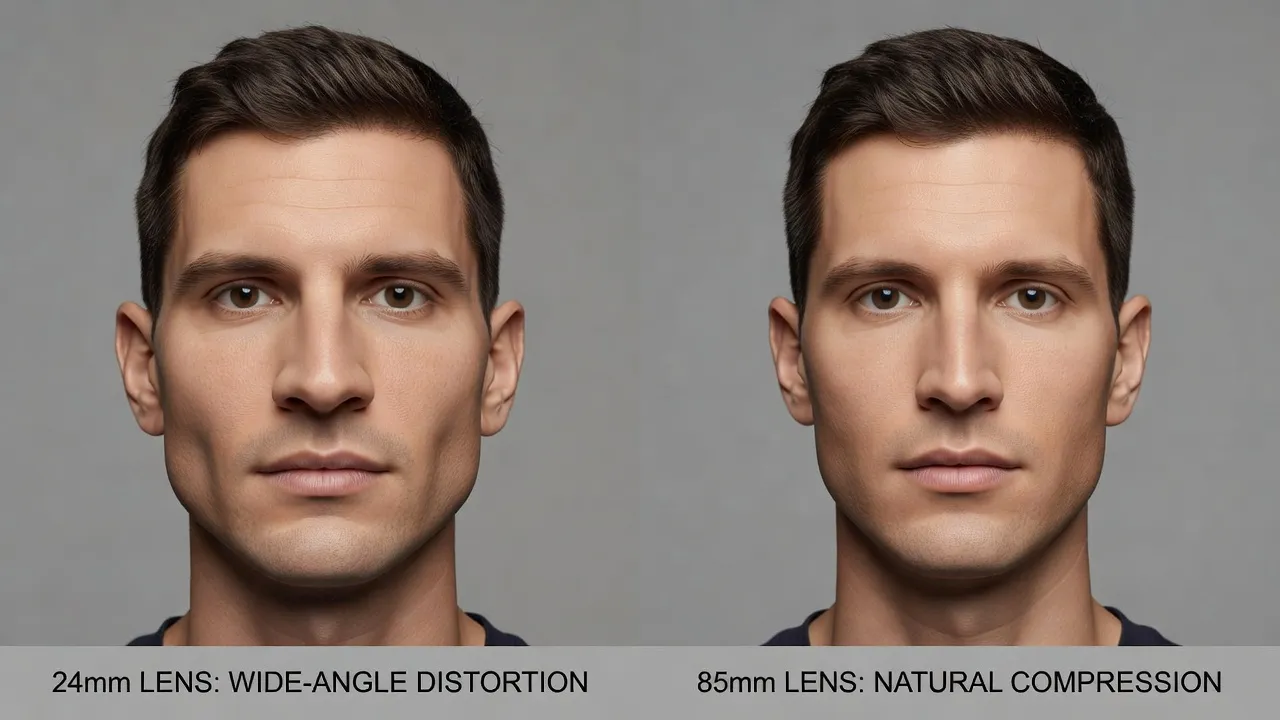
Camera optics alone can completely invalidate a face scan rating. A front-facing smartphone camera with a short focal length (around 24mm to 28mm) distorts facial features by enlarging the nose and shrinking the ears.
| Camera Distance | Optical Effect | Impact on Scanner Rating |
|---|---|---|
| Close (12 inches) | Enlarges nose, flattens ears | Lowers symmetry score by 10-15% |
| Medium (3 feet) | Natural proportions | Optimal benchmark baseline |
| Far (6+ feet) | Flattens features, reduces depth | Blurs skin texture metrics |
Lighting plays an equally critical role. Direct overhead light creates harsh shadows under the eye sockets and chin, leading the algorithm to flag fake asymmetry or dark circles. Side-lighting ruins mid-face proportion calculations.
To get an accurate result on an objective attractiveness test, you need to capture your photo at eye level, approximately three feet away, using diffused natural light.
Is there bias in algorithmic attractiveness prediction?
Yes, beauty algorithms consistently show demographic and cultural bias because their underlying models are trained on narrow image datasets. Machine learning algorithms do not understand beauty in a vacuum. They inherit the exact cultural preferences present in the photo collections used to train them.
If a neural network is trained primarily on western fashion models, it flags those specific facial features as the baseline for a high score. Features common in other populations—such as different eye shapes, broader nose structures, or varied jawlines—are marked down simply because they deviate from the training median.
Age and skin texture create similar algorithmic skew. Most commercial training sets prioritize young adults between 18 and 30 years old with smooth skin.
As a result, natural skin texture, freckles, or age lines often drop your score on a standard face scan rating. This happens even when those features look balanced and attractive in person.
What was Beauty.AI and why did it cause widespread controversy?
Beauty.AI was the first international beauty contest judged entirely by artificial intelligence in 2016, and it sparked immediate controversy by eliminating almost all dark-skinned contestants. Created by deep-learning firm Youth Laboratories, the contest invited over 60,000 people to submit selfies to be judged by algorithms designed to evaluate health, skin clarity, and facial symmetry.
Out of 44 final winners selected by the algorithms across multiple age groups, nearly every single winner was white. Only one winner had darker skin.
               Beauty.AI 2016 Algorithm Pipeline

  [ 60,000+ Global Photo Submissions ]
                  |
                  v
  [ AI Dataset Processing (Biased Training Set) ]
                  |
                  v
  [ 44 Final Winners Selected ]
                  |
                  v
  [ Outcome: 43 White Winners, 1 Dark-Skinned Winner ]
The organizers realized the problem lay in their training datasets. The computer vision models had not been fed enough diverse images of non-white individuals.
Because the AI viewed lighter skin tones as the statistical norm for "health" and "beauty," it systematically disqualified minority applicants. The incident remains a primary case study cited in computer science research regarding algorithmic bias, as documented in public coverage on facial recognition technology history.
How accurate is FaceApp's attractiveness rating and filter system?
FaceApp does not output a clear numerical rating, but its transformation algorithms modify facial features according to preset statistical patterns of attractiveness. When you apply filters like "Hollywood" or "Impression," the app shifts your real features toward a standardized beauty template.
The Original Selfie Face Geometry undergoes the following modifications to produce the Modified "Idealized" Output Face:
- Shrinks Jaw Width & Refines Nose Bridge
- Smooths Skin Texture & Brightens Under-Eye Area
- Enlarges Iris Size & Adjusts Eye Symmetry
The underlying code relies on deep convolutional neural networks. These networks are trained on millions of high-engagement social media portraits to identify which structural edits generate positive reactions.
While the app works well for visual previews, it is not an objective assessment tool. Relying on heavy filter shifts gives you an unrealistic picture of human aesthetics and ignores how motion, expression, and posture shape real-world attractiveness.
Are face scanner rating apps a privacy and data security concern?
Yes, face rating apps present serious privacy risks if their privacy policies permit biometric data retention, third-party sales, or server-side AI model training. Your facial geometry is sensitive biometric data. Unlike a compromised password, you cannot reset your face if a server database suffers a data breach.
When evaluating any face scanner tool, carefully inspect its terms of service before uploading a high-resolution selfie. Key privacy issues include:
- Biometric Storage: Does the developer delete your facial vector maps immediately after processing, or do they store them permanently on remote servers?
- Model Training: Are your personal photos being used without payment to train commercial computer vision models?
- Third-Party Data Sharing: Is your personal metadata sold to advertising brokers or facial recognition databases?
- Server-Side Processing: Does the face scan rating execute locally on your device, or is your unencrypted photo transmitted over external cloud networks?
Regulatory bodies like the Federal Trade Commission regularly issue warnings regarding the collection and misuse of consumer biometrics. I recommend avoiding any scanner tool that lacks a clear privacy policy or demands unnecessary account registration simply to analyze a single photo.
How to use a face scanner rating for constructive self-improvement
To turn a face scan rating into a useful tool, treat the score as a baseline for styling rather than a permanent judgment of your appearance. A single number from 1 to 10 tells you very little about what actually works for your face. The real value comes from spotting specific structural areas where simple, healthy changes make an impact.
For women looking to improve their look, focusing on actionable steps works much better than stressing over an algorithm's output. Here is how to approach your results constructively:
- Focus on facial balance over raw symmetry: Very few human faces are perfectly symmetrical. Use your scan to spot how frame choices, hair parts, and makeup techniques can balance your features naturally.
- Improve skin health and texture: Algorithms heavily penalize uneven skin tone, dark circles, and acne. Setting up a consistent evening routine makes a massive difference in both AI scans and real life.
- Optimize your hair and frame choices: If a scan shows a square jaw or a long mid-face, select haircuts and glasses frames that complement your natural geometry.
- Track changes over time: Use scanner ratings as a benchmark every few months to monitor how fitness improvements, better hydration, or updated styling affect your overall presentation.
If you want structured guidance through this process, exploring looksmaxxing for women provides a clear framework for building confidence without getting hung up on arbitrary online ratings.
Frequently Asked Questions
Can an AI face scanner give me an accurate beauty score?
No, an AI face scanner cannot measure subjective human beauty accurately. It calculates facial symmetry, landmark ratios, and skin clarity against a specific dataset, but it cannot evaluate personal charm, movement, style, or charisma.
Why does my face scan rating change drastically in different photos?
Variations in camera focal length, distance, direct sunlight, and overhead shadows change how an algorithm reads your facial landmarks. A wide-angle selfie lens distorts facial proportions, which usually lowers your calculated score.
Is there a free face scanner rating app that does not require an account?
Yes, tools like AttractivenessTest.com allow you to upload a photo directly in your browser for an instant score without creating an account. However, always review their image retention terms before uploading personal photos.
Do face rating apps save my uploaded selfies on their servers?
It depends on the specific app's privacy policy. Certain platforms process images locally on your device or delete them instantly, while others save user uploads to train future AI models or sell data to third parties.
How does facial symmetry impact an AI scanner rating?
Facial symmetry is a key metric in computer vision beauty models. The software measures the distance from your facial midline to key outer landmarks like your cheekbones, eyes, and jaw corners. Higher mathematical balance usually yields a higher score.
Can lighting conditions improve my face scanner rating score?
Yes, clear, front-facing, diffused natural lighting eliminates harsh facial shadows, softens skin texture, and allows the scanner to detect your true facial features accurately.
What is the ideal focal length for taking a selfie for an AI scan?
An 85mm lens equivalent shot from at least three feet away produces the most accurate proportions for an AI scan. Front-facing smartphone camera lenses (typically 24mm to 28mm) warp nose and jaw proportions.