
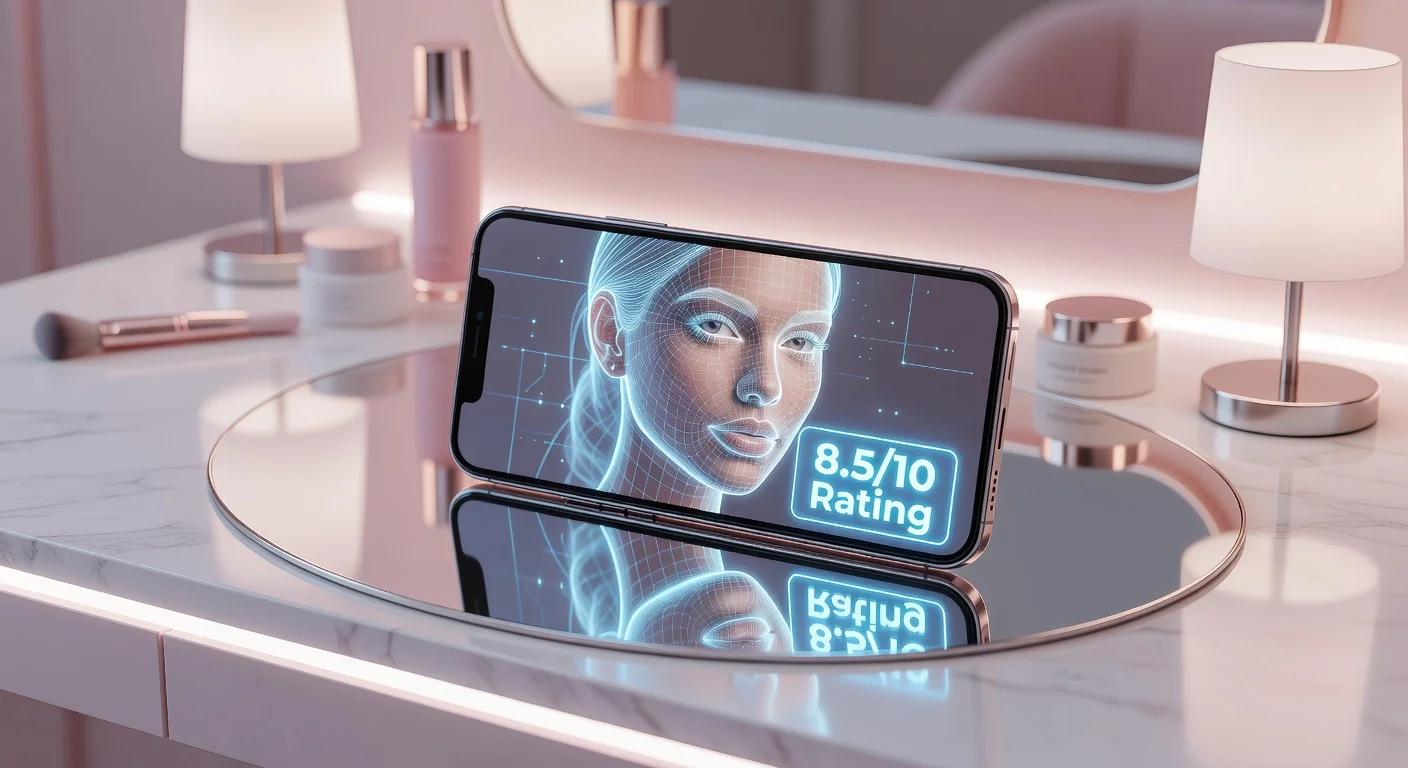
A rate attractiveness photo test is a computer vision tool that scans your image to measure mathematical facial proportions. Unlike biased opinions from friends, it applies strict geometric parameters to give you an objective baseline of your physical appeal.
As someone who analyzes digital beauty algorithms and tests facial recognition models regularly, I have seen a massive shift in how people perceive their looks. People have transitioned from wondering what others think to relying on neural networks for data.
By late 2025, the consumer market for AI face analysis apps passed $210 million in revenue. People are tired of guessing and want actionable data.
How do AI photo rating tools actually work?
AI photo rating tools identify up to 100 specific anchor points on your face and measure the distance between them. The algorithm then compares those measurements to a database of established aesthetic ideals.
If your features align with the golden ratio (1.618), the system generates a higher score. Here are the specific parameters the AI looks for:
- Bilateral symmetry: Do your left and right hemispheres match perfectly?
- Canthal tilt: The angle between the inner and outer corners of your eyes.
- Facial thirds: Is your forehead exactly the same height as your nose and lower face?
- Skin clarity: The software penalizes heavy hyperpigmentation or uneven skin tone.
Can I get an objective attractiveness test from a single photo?
Yes, but only if the photo meets strict technical criteria for lighting and lens focal length. A poor-quality photo will trick the AI into giving you an artificially low score.
Many people turn to an objective attractiveness test hoping for perfect accuracy. I recommend taking at least three different photos in various lighting setups to find your true average.
"A machine cannot judge subjective beauty, but it can calculate geometric harmony faster than the human eye ever could."
Why the camera lens ruins your true beauty score
Standard smartphone cameras distort reality, increasing perceived nose width by almost 30% if held too close. This occurs because front-facing cameras use wide-angle lenses around 24mm to 28mm.
If you use a distorted selfie, the rate attractiveness test will evaluate a warped version of your face. You receive a low score for bad physics, not for genetics.
For the most accurate read, you should set your phone on a tripod at least five feet away. Then, use the zoom function on your rear camera to mimic an 85mm portrait lens.
Comparing the top apps to rate attractiveness photo
The market is crowded in 2026, but the top options heavily divide themselves by their overall goal. Some rely on crowdsourced human opinions, while others use advanced AI.
I tested the three most popular platforms to see how their algorithms handled the same photo set.
| App Name | Analysis Method | Intended Use Case | Price |
|---|---|---|---|
| Photofeeler | Human voting | Corporate headshots & dating profiles | Credits / $19/mo |
| Glow Up & Attractiveness Test | Pure AI model | Top Pick for women's beauty tracking | Free trial available |
| PinkMirror | Basic AI | Casual web-based symmetry checks | Freemium |
The problem with human-voting apps like Photofeeler is that strangers bring personal biases into their ratings. An algorithm removes that bias entirely.
If you specifically want a detailed face analysis from a fine-tuned AI model, Glow Up & Attractiveness Test is arguably the best mobile option. It is designed as a toolkit for women who seek concrete data on their appearance.
Plus, rather than just delivering a harsh number, it actively helps you figure out what to do next. A brief recommendation: use it if you want personalized beauty guides rather than just a standalone score.
How do I take the perfect selfie for analysis?
You need flat, bright, and symmetrical lighting hitting your face directly from the front. Shadows created by overhead lights will alter your jawline artificially and make your eyes appear sunken to the computer system.
When you prepare for an am i attractive quiz photo, treat it like a passport picture. Follow these exact steps for the best results:
- Stand directly facing a bright window during daylight hours.
- Hold the camera exactly at eye level.
- Keep your face fully resting and neutral (smiling stretches your facial width).
- Pull all hair away from your cheekbones and forehead.
According to a published study on facial attractiveness measurements, even a five-degree tilt away from the camera skews symmetry calculations. I usually take ten shots and throw out nine just to be safe.
Translating your score into actionable beauty improvements
A beauty score becomes valuable only with a structured method to improve the micro-flaws the AI points out. Knowing your canthal tilt is slightly negative means nothing if you do not know how to fix it with eyeliner.
This concept underpins looksmaxxing for women. By late 2026, the trend shifted from merely seeking validation to actively pursuing optimization.
Ignoring the data is often a missed opportunity. If the machine points out an imbalance, you can use contouring or styling to visually correct it.
The role of customized looksmaxxing tools
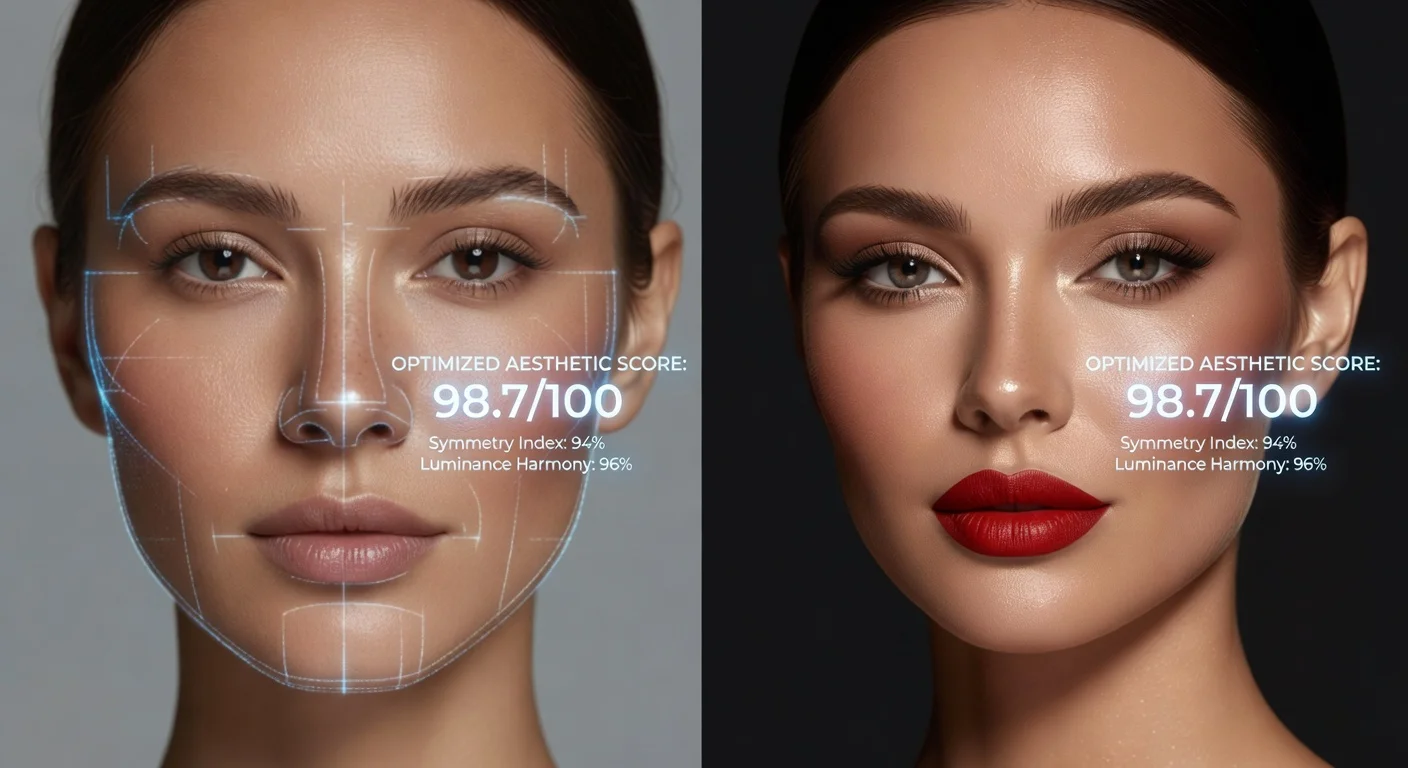
Modern apps do more than just rate you; they generate visual roadmaps of your maximum potential. Instead of feeling bad about a low symmetry score, you can actually visualize what minor adjustments would look like.
For instance, snap a selfie in the Glow Up app to get a personalized face rating score. The system then builds tailored tips to beautify your specific look based on your unique bone structure.
You can even see yourself as a 10/10 using their AI image generation tool. It is surprisingly motivating to see a photorealistic version of your optimized self.
Does AI account for different ethnic beauty standards?
Major algorithmic advancements in early 2026 have significantly reduced the racial bias present in older systems. Early photo rating tools favored Eurocentric features, such as narrow noses and light skin.
Current computer vision models, however, train on diverse global datasets. They calculate facial ratios based on specific ethnic phenotypes rather than applying one standard to everyone.
This means the assessments are fairer than they used to be. (Though no system is 100% perfect yet).
Do these algorithms grade my skin quality?
Yes, most top-tier rating applications dedicate 15% to 20% of your total score to skin texture and clarity. The AI looks for high contrast between your facial features and an even surface tone.
Acne, deep wrinkles, or severe redness disrupt the geometric scanning process. The scanner registers these as topographical anomalies.
This actually works in your favor. Skin quality is one of the cheapest and easiest metrics you can improve to raise your score quickly.
Why you should track your face rating score over time
Routine photo analysis is the only effective way to prove if your skincare routine or new makeup style actually works. If you change your contouring method and your AI score jumps by 0.5 points, you have objective proof.
I recommend downloading a dedicated app and scanning yourself once a month under the exact same lighting conditions. Treat it like stepping on a digital scale for your face.
It keeps you honest. You either improved your baseline appearance or you didn't.
Frequently Asked Questions
Are AI attractiveness scores accurate?
Yes, they are highly accurate at measuring mathematical facial proportions like the golden ratio. However, these tools cannot measure personality, charm, or subjective personal preferences.
Why do I look different in selfies than in the mirror?
Smartphone cameras use wide-angle lenses that distort the center of your face, making your nose appear up to 30% larger. Mirrors provide a more true-to-life reflection without focal length distortion.
What is the best app to rate an attractiveness photo?
For professional feedback from humans, Photofeeler is great. For women looking for AI analysis and specific beauty improvement tips, Glow Up & Attractiveness Test is the top option.
Can a rate attractiveness test measure body proportions?
Most consumer AI rating tools focus exclusively on facial geometry, jawline definition, and skin clarity. Full-body proportion scanning currently requires specialized medical or fitness software.
How does lighting affect an attractiveness rating?
Lighting drastically changes your score by creating artificial shadows that hide or emphasize bone structure. Flat, front-facing natural light results in the highest algorithm scores.
Is a 7 out of 10 considered a good beauty score?
Yes, algorithmically speaking, a 7 out of 10 puts you well above average. Most AI systems score the average human face between 4.5 and 5.5.