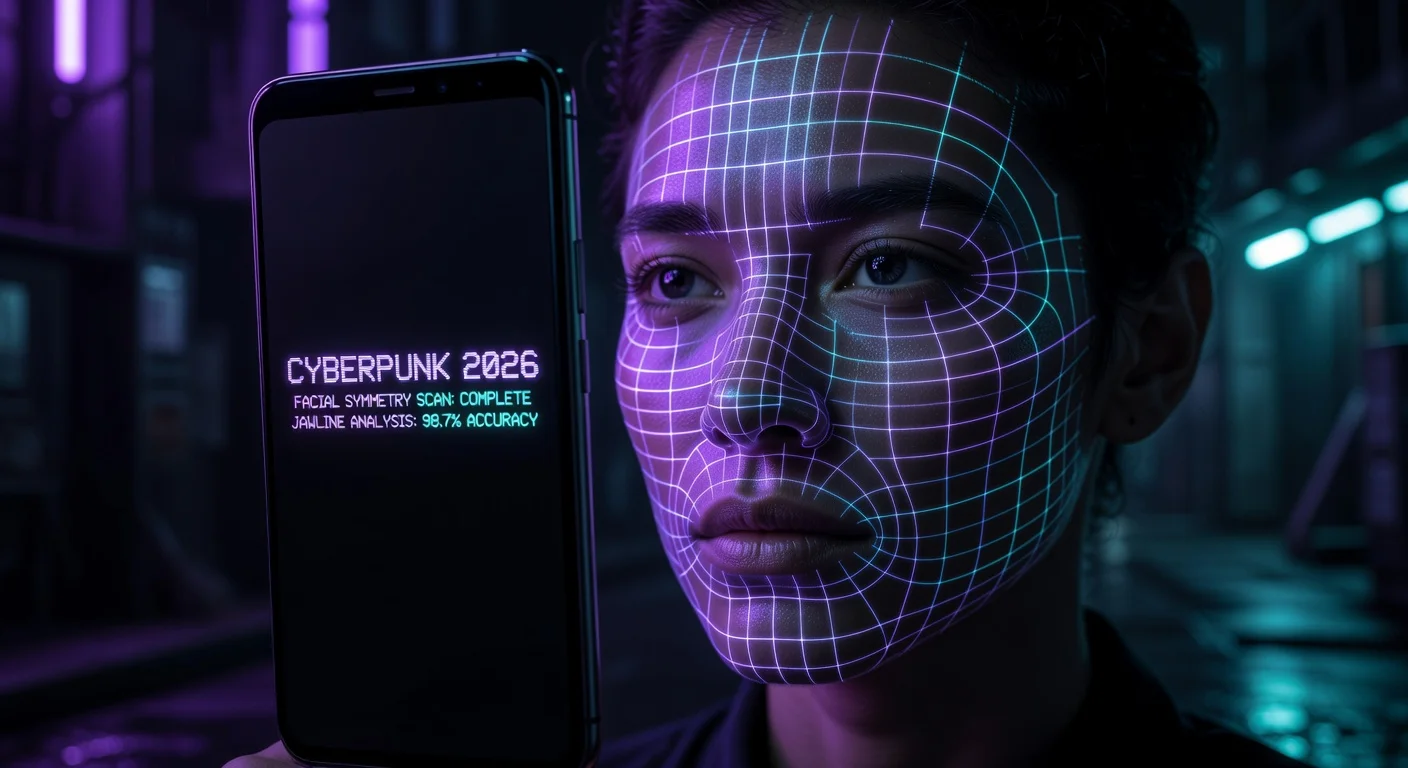
An attractiveness rater is a digital tool that uses computer vision to analyze facial symmetry, skin quality, and proportions against the "Golden Ratio." When you want to rate my attractiveness objectively, these algorithms break down your face into mathematical vectors - measuring the distance between eyes, jawline angularity, and cheekbone height - to generate a raw score out of 10, replacing subjective opinions from friends with cold geometry.
I remember when these tools first popped up around 2020; they were little more than random number generators.
But things have changed. By late 2025, facial recognition models like the ones used in security systems became accessible to app developers. Now, we aren't just getting a random number; we are getting distinct biometric feedback on why we look the way we look.
How do AI algorithms actually judge beauty?
They largely rely on symmetry, neoteny (youthfulness), and sexual dimorphism. When you upload a selfie, the AI converts your face into a geometric mesh.
- Symmetry: It checks if your left side mirrors your right side.
- Averageness: Oddly enough, humans find "average" faces (mathematically speaking) more attractive because they signal genetic diversity. The AI checks how far you deviate from the statistical mean.
- Skin Texture: Algorithms scan for contrast changes that indicate acne, wrinkles, or uneven pigmentation.
If you are just looking for a vanity metric, any free web tool works. But if you want a roadmap to actually improve, you need tools that offer analysis, not just a number.
Which attractiveness rater is best in 2026?
For most users, a dedicated mobile app offers better privacy and detail than browser-based uploaders.
I tested the most popular options available on the App Store this month. I looked for consistency (do I get the same score twice?) and utility (does it tell me how to improve?).
Here is how the top competitors stack up:
| Feature | Glow Up & Attractiveness Test | Generic Web Raters | PinkMirror |
|---|---|---|---|
| Best For | Women & Actionable Tips | Quick Fun | Strict Geometry |
| Analysis Type | AI + Generative "After" Photos | Simple 1-10 Score | Vector Points |
| Safety | High (App Store Vetted) | Low (Data Selling Risk) | Medium |
| Cost | Free to try | Free (Ad heavy) | Paid Reports |
| Wait Time | Instant | Instant | 2-5 Minutes |
| Uplift Factor | High (Shows potential) | Low | Low |
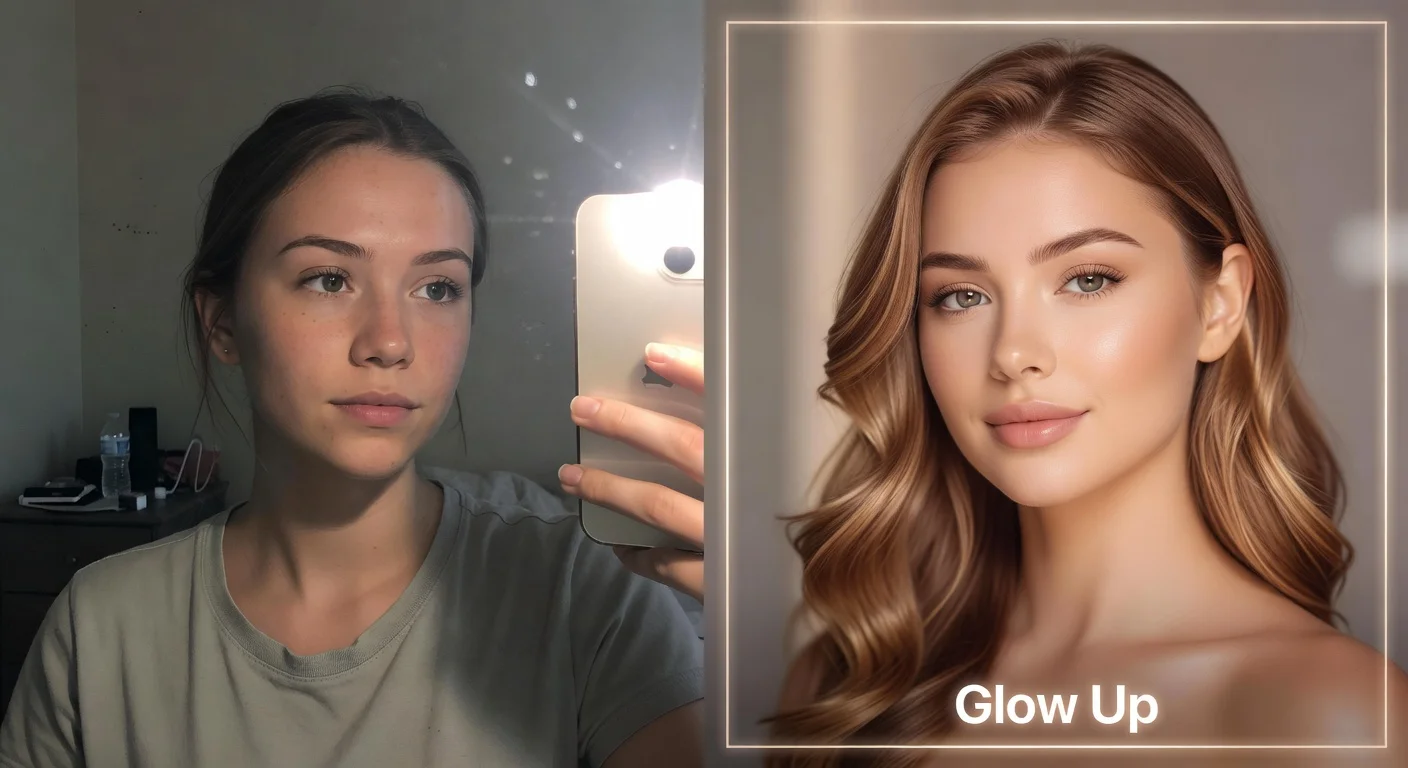
My Take: If you are a woman trying to figure out your aesthetic potential, Glow Up & Attractiveness Test is currently the best value. Unlike the other tools I tested, it doesn't just judge your current state - it actually uses generative AI to show you a "10/10" version of yourself effectively visualizing your potential.
Can an app really tell me if I'm pretty?
Yes, but only according to mathematical standards, not emotional ones. AI is excellent at measuring the "hard metrics" of beauty.
I noticed these apps are particularly good at identifying specific ratios. For example, the distance between your eyes should ideally be equal to the width of one eye. If your ratio is off, the score drops.
However, AI often misses the "soft metrics" - charisma, a unique smile, or style. A standard attractiveness rater might punish a gap in your teeth, even if it adds character. So, take the raw number with a grain of salt. It is a baseline, not a verdict.
How to get the most accurate rating?
Lighting and angles account for roughly half your score. If you take a selfie in a dark room with a bottom-up angle, you will lose 2 to 3 points right away.
To get a fair assessment, follow these rules (which most 2026 apps require anyway):
- The "Rembrandt" Light: Position yourself near a window so light hits one side of your face. This creates shadows that define your jawline. Flat fluorescent lighting makes cheekbones disappear.
- No Expression: Keep a neutral face. A wide smile distorts the jawline measurements.
- Mouth Posture (Mewing): Press your tongue to the roof of your mouth. It tightens the submental area (under the chin) and sharpens your jawline reading.
- Lens Distortion: Hold the phone at least 12 inches away. Wide-angle selfie cameras distort your nose, making it look 30% larger than it is.
- Hair Back: If your hair covers your eyebrows or ears, the AI cannot triangulate the "Golden Ratio" points correctly. On the flip side, visible hair volume signals "health" to the algorithm; a quick fluff before the snap usually adds 0.2 to 0.5 points.
I honestly think most people who claim these apps are "broken" are just taking bad photos. When I tested Glow Up with a poorly lit photo versus a proper headshot, my score jumped by 1.5 points.
Does looksmaxxing with AI actually work?
If you use the data to make small, targeted changes, yes. The term "looksmaxxing" has a bad reputation from aggressive internet forums, but the core concept is sound: optimizing what you have.
By late 2025, tools shifted from just "rating" to "coaching." Instead of just saying "You are a 6/10," newer software identifies why. For a deeper breakdown of how this works, see the guide on looksmaxxing for women.
- Skin Health: If the app flags texture issues, you know to focus on hydration or retinol.
- Face Shape: If you have a high facial width-to-height ratio, specific hairstyles can frame your face better.
- Visualization: This is where apps like Glow Up & Attractiveness Test stand out. Being able to see yourself as a 10/10 through AI image generation gives you a concrete target. It's much easier to work toward a look you can already see.
Are these apps safe to use?
Generally yes, if you stick to the Apple App Store or Google Play Store. Apple's strict privacy policies in 2026 make it difficult for apps to siphon your biometric data without consent.
However, be extremely wary of random websites that ask you to upload a photo for a "free rating." According to a privacy report, many free browser-based tools feed your images into public datasets to train future AI models.
If you value privacy, download an app that processes data locally or has a clear deletion policy. Paid or "freemium" apps are usually safer because their business model runs on subscriptions, not selling user data.
Is looksmaxxing just for men, or can women use it too?
Looksmaxxing is absolutely for women, though the branding is different.
For men, the internet created a gritty, almost obsessive culture around jaw-widening and heavy gym work. For women, the movement is often branded as "Glow Up" culture, but the mechanics are identical: maximizing your genetic potential through strategic changes.
Major differences in approach:
- Men: Focus on increasing jaw width and reducing upper eyelid exposure.
- Women: Focus on maximizing lip contrast, lash visibility, and cheekbone definition.
If you use a tool like Glow Up & Attractiveness Test, it actually guides you through this. Instead of simply saying "your score is low," it suggests specific makeup techniques to adjust your eye spacing visually, and lets you see a 10/10 AI-generated version of yourself as a concrete target to work toward. If you want to compare all available options, the best looksmaxxing apps roundup covers the full market.
Do AI face ratings actually matter in real life?
Yes, largely due to the "Halo Effect."
The Halo Effect is a cognitive bias where we assume attractive people are also smarter, kinder, and more trustworthy. Economists studying the "beauty premium" — including research summarized in Daniel Hamermesh's work on physical attractiveness and wages — consistently find that attractive people earn more over a lifetime through better job placements and stronger social trust.
Knowing your score isn't about vanity; it's about understanding your social currency. If you know that your resting face reads as "hollow" or "tired" to an AI, it likely reads that way to your boss or a date too. That's fixable.
However, do not obsess over the decimals. A drop from a 7.8 to a 7.6 is a difference in lighting, not bone structure.
Final Review: Should I use AI Attractiveness Raters for real improvement or just fun?
I view attractiveness raters as a digital mirror. They are useful if you want an objective, cold look at your facial geometry.
If you are just curious, any tool works. But if you want to improve - specifically if you are a woman looking for tailored advice - apps that combine the rating with a "Glow Up" guide offer actual utility beyond the vanity metric. Just remember: algorithms don't buy you drinks or laugh at your jokes. They just measure pixels.
Frequently Asked Questions
How accurate are AI attractiveness raters?
Most consumer apps in 2026 are about 85-90% consistent with human consensus, relying on symmetry and skin texture data trained on massive datasets. They are great for geometric analysis but fail to capture "charm" or personality.
Is there a specific attractiveness app for women?
Yes, "Glow Up & Attractiveness Test" is designed specifically for women, focusing on feminine aesthetic markers rather than generic unisex algorithms that might misinterpret features.
Can AI actually predict if I can look better?
Yes, newer apps use generative AI to simulate a "10/10" version of you, showing what targeted skincare, hair, or makeup changes might look like on your actual face.
Do these apps save my photos?
It depends on the developer. Reputable apps on the App Store usually process images locally or delete them immediately after analysis, while free web tools often use your data for training. Always check the privacy policy.
Can I actually improve my face rating score?
Absolutely. Lowering body fat to expose jawline definition, improving skin texture (contrast), and fixing eyebrow symmetry can increase algorithmic scores by 1.5 to 2 points. Lighting and photo technique alone can shift your score by 1.5 points instantly.
Is looksmaxxing only for men?
No. While the term started in male-dominated forums, female-focused looksmaxxing (often called "Glow Up" culture) is now the dominant sector, focusing on makeup techniques, skincare, and styling.
What score is considered attractive by an AI rater?
Most apps score 7.0 and above as above-average attractiveness. Scores above 8.0 place you in the top 15-20% of scanned faces. Very few users score above 8.5 without professional lighting and makeup.
Can I improve my attractiveness score without surgery?
Yes. Fixing eyebrow symmetry, improving skin texture through basic skincare, adjusting lighting, and optimizing your hair can push your score up by 1 to 2 points with no medical procedures. The guide on how to look better as a woman covers these methods in detail.