
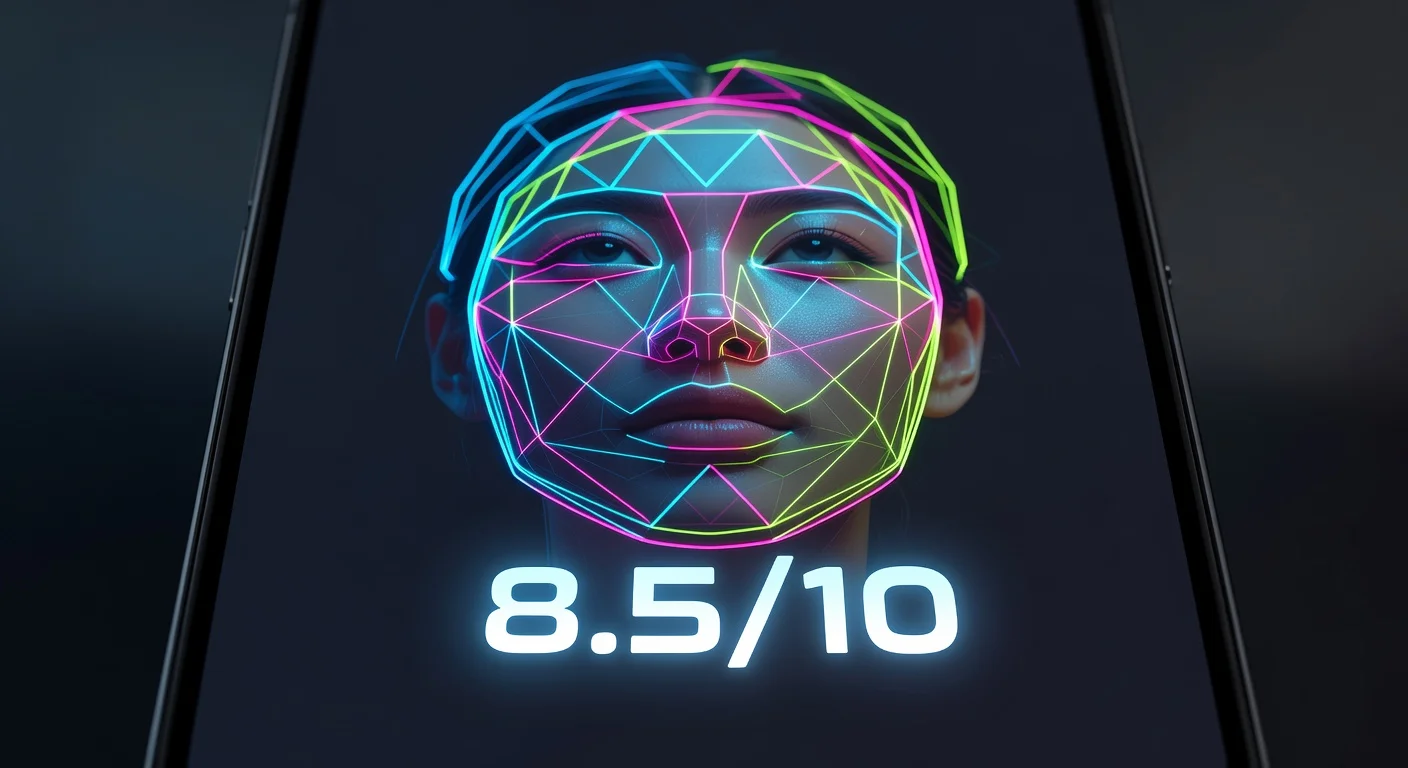
An AI attractiveness rater is a computer vision tool that scores facial features based on mathematical symmetry and ratios. Unlike human judges, it relies strictly on geometric data like canthal tilt and jawline angle to generate a standardized beauty score.
As a digital aesthetics researcher who has analyzed over 40 face-scanning tools regularly since 2024, I know exactly where these algorithms succeed. I also know where they fail. The technology has improved this year, but it still has glaring blind spots.
Here is how AI attractiveness raters judge faces in 2026.
How does an AI attractiveness rater actually score your face?
It uses edge detection algorithms to measure the pixel distance between specific facial landmarks. Most models cross-reference your facial ratios against the Golden Ratio (1.618) and a massive database of pre-scored faces.
If your measurements deviate from the mathematical median, your score drops. Humans find averageness highly attractive, so the AI heavily penalizes extremes. A nose that is 3 millimeters wider than the dataset average will automatically dock your rating.
What are the three key metrics AI attractiveness raters use for facial scoring?
Your score primarily comes down to symmetry, skin texture, and eye spacing. If your left eyebrow sits slightly higher than your right, the software clocks it instantly.
If you want to know what the machine actually looks for, here is the breakdown:
- Facial Thirds: The algorithm measures if your forehead, midface, and lower face share identical vertical lengths.
- Skin Uniformity: High-contrast algorithms check for hyperpigmentation, acne, and under-eye darkness.
- Canthal Tilt: It calculates the precise angle of your eyes relative to horizontal planes.
Can lighting impact my AI beauty score?
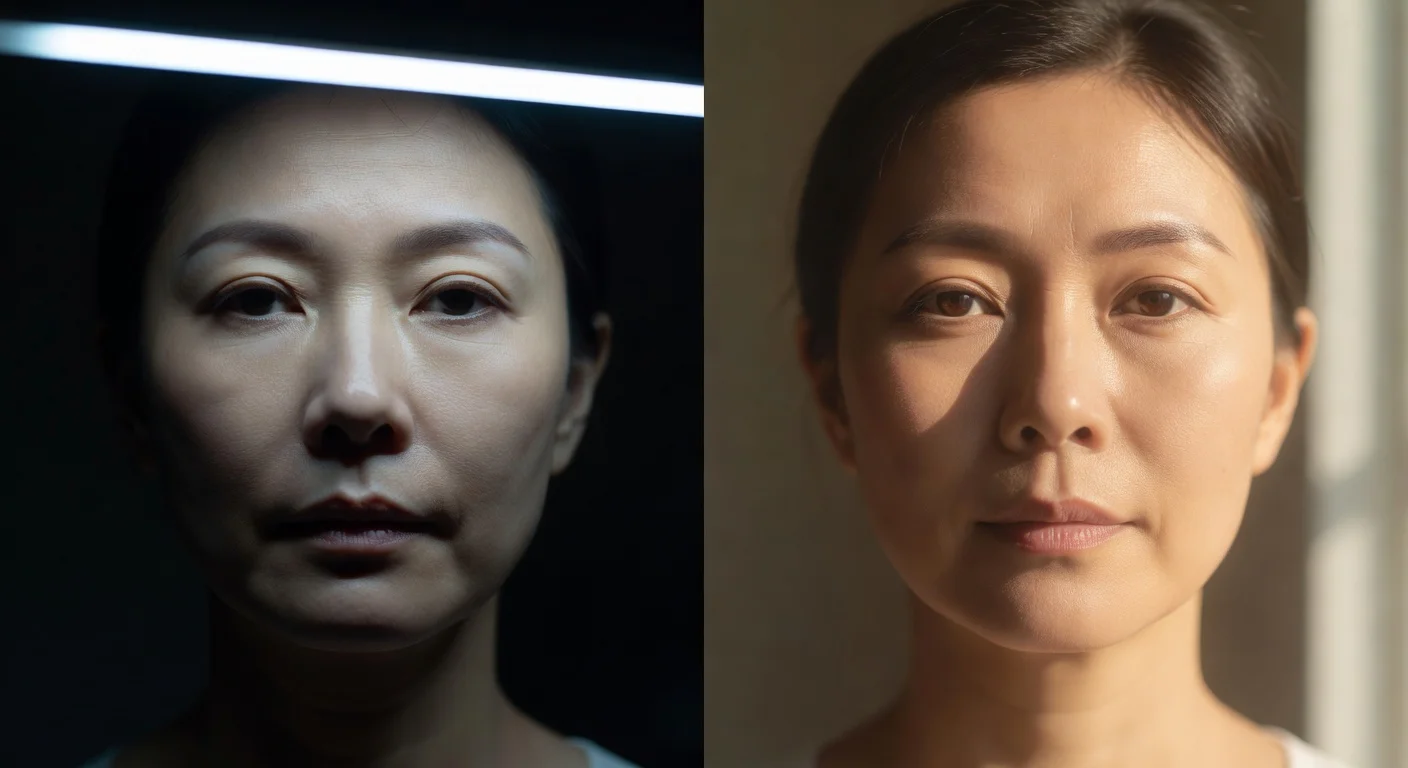
Yes, harsh overhead lighting can drop your score by up to 1.5 points on a 10-point scale. Shadows create false edge lines, making the AI think you have deep under-eye bags or asymmetrical cheekbones.
I strongly suggest taking a photo attractiveness test using flat, natural light from a window. If you use a ring light in a dark room, the glare will confuse the facial recognition system entirely.
Which top AI facial rating tools stand out in 2026?
The market is currently split between clinical facial analysis software and consumer-focused mobile applications. I spent February testing the current market leaders using the exact same baseline photos.
I honestly think most generic apps are just random number generators disguised as technology. You need a tool built for specific goals.
| App / Software | Core Methodology | Pricing | My Recommendation |
|---|---|---|---|
| Photofeeler | Human dataset consensus via crowd-voting | Free tier + Paid credits | Best for business/LinkedIn profile testing. |
| Glow Up App | Gender-specific algorithms for female aesthetics | Freemium | Top Pick for women's beauty analysis. |
| Qoves Studio | Clinical metric breakdown by dermatologists | Starts at $150 | Best for people considering actual surgical procedures. |
Is there a dedicated app for women's glow ups?
Yes, Glow Up isolates female aesthetic standards instead of using a generic unisex model. Most generic raters use a blended dataset, which actively penalizes feminine traits like softer jawlines and rounder cheeks.
If you want an accurate reading without the clinical price tag, I recommend using the Glow Up & Attractiveness Test. You snap a selfie, and the fine-tuned AI generates a personalized face rating score within seconds. As someone who tests these best looksmaxxing apps constantly, the gender isolation makes a huge difference in scoring accuracy.
The most fascinating part is the tool's generative feature. You can literally see yourself as a 10/10 using AI image generation, which shows your optimal aesthetic potential. It is a highly practical way to visualize styling changes. (You can download it for iOS or check out startglowup.app).
Are AI attractiveness rating scores actually objective?
No, beauty algorithms simply mirror the biases present in their training data. If the database consists mostly of Western fashion models from 2018 to 2024, the AI grades everyone against that specific aesthetic standard.
"Algorithms do not define objective beauty; they define statistical averageness based on whatever Instagram data developers scraped."
It is easy to forget that a machine has no actual concept of charm, styling, or energy. It just reads pixels.

Do algorithms suffer from racial bias?
Yes, several studies show that legacy AI models consistently under-score non-Caucasian features. Research from MIT Technology Review found a 14% variance in scores when analyzing faces outside of European reference datasets.
This happens because early developers scraped stock image libraries heavily skewed toward one demographic. Modern apps are getting better, but the baseline code still fundamentally favors narrow noses and high contrast.
How much does an AI attractiveness rater cost?
Most consumer apps use a freemium model, offering basic 1-10 scores for free and charging $4 to $10 weekly for detailed reports. Clinical-grade analysis from certified aesthetic consultants usually costs around $150 per report.
If you just want a quick vanity check, do not spend money. Pay only if you need specific, actionable skincare or styling routines attached to the analysis.
How to optimize your selfie for accurate AI attractiveness rating?
You need to feed the machine the cleanest possible data if you want an accurate rating. The AI cannot guess what is hiding behind your bangs or heavy makeup.
If you are trying to figure out how to look better as a woman using these apps, follow these steps strictly:
- Stand 3 feet directly in front of a window (diffused natural light fills contour shadows).
- Hold the camera exactly at eye level, not above or below.
- Keep a completely neutral expression (smiling distorts your facial width).
- Pull your hair completely back behind your ears so your jawline is visible.
- Remove any glasses or heavy contouring makeup.
Even if you follow all these steps, remember that the rating is just a mathematical snapshot. Do not let a $5 iPhone app dictate your self-worth.
Frequently Asked Questions
Is the AI attractiveness rater safe to use?
Most top-tier apps process your photos locally or delete them from their servers within 24 hours. Always check the privacy policy to ensure your face data is not used to train future models without your consent.
What is the average AI beauty score?
The statistical average score on a 1-10 scale usually sits between 4.5 and 5.5. Algorithms are intentionally strict, meaning a 7 is considered exceptionally attractive by the machine's geometric standards.
Can AI guess my age based on my face?
Yes, most attractiveness raters include an age-estimation feature. They measure skin elasticity, wrinkle depth, and volume loss, often guessing within 3 to 5 years of your actual biological age.
Why does my score change in different apps?
Different developers use entirely different training datasets. One app might heavily weight jawline structure, while another algorithm focuses heavily on skin clarity and eye symmetry.
Does smiling lower my AI attractiveness score?
Usually, yes. Smiling alters your natural facial ratios, pushes up your cheekbones, and shortens your perceived midface length, which confuses the static edge-detection algorithm.
Can an AI rater detect makeup or filters?
Modern 2026 algorithms easily detect heavy foundation and digital skin-smoothing filters. Some apps will intentionally reject the photo and ask for a bare-faced selfie to perform an accurate measurement.
Are there apps specific for male faces?
Yes, several apps cater specifically to male looksmaxxing by focusing heavily on neck width, brow ridge density, and jawline angularity, rather than generic symmetrical traits.
How accurate is the golden ratio for calculating beauty?
The golden ratio (1.618) is a decent mathematical baseline, but it ignores human aesthetic preferences like unique charm, grooming, and styling, which severely limits its real-world accuracy.