
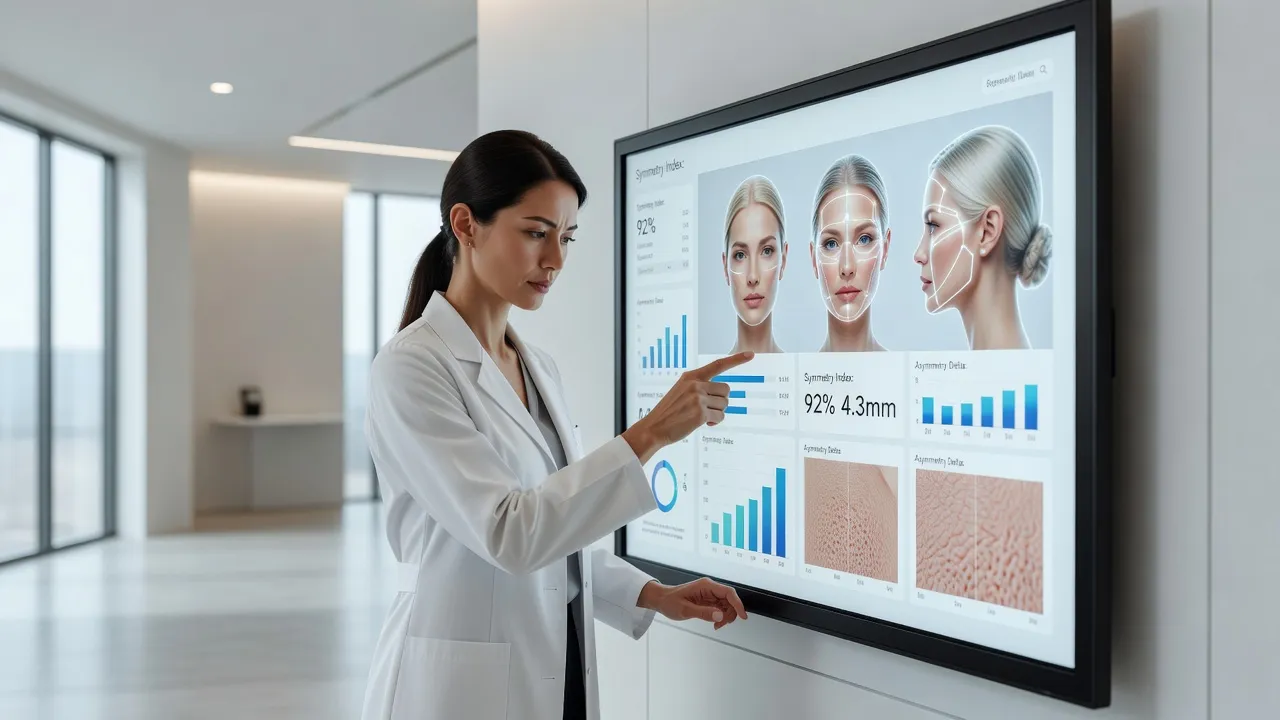
A beauty score is a numerical rating of facial aesthetics derived either from golden ratio geometric analysis, AI neural networks trained on attractiveness data, or crowdsourced human feedback. Most online tools evaluate symmetry, facial proportions, and skin clarity, but their accuracy depends heavily on camera angles, lighting conditions, and baseline training data. While human-based platforms reflect real social perception, algorithmic tools calculate visual ratios against mathematical formulas.
Whether you want a quick facial beauty score from a photo or a deep breakdown of your visual features, modern platforms approach aesthetics from radically different angles. Selecting the right method depends entirely on whether you want objective geometry, real human opinions, or actionable styling suggestions.
| Method | Approach |
|---|---|
| Crowdsourced Human Perception (Photofeeler) | Real human ratings on confidence, approachability, and attractiveness. |
| Geometric Ratio Scanners (PrettyScale) | Landmarks mapped to neoclassical classic beauty facial proportions. |
| Deep Learning Neural Networks (Hotness.ai, Glow Up App) | Models trained on thousands of rated photographs for instant scoring. |
How accurate are beauty score apps?
Automated beauty score apps achieve moderate consistency under ideal studio conditions, but their accuracy drops significantly when processing everyday selfies. A slight tilt of the head, harsh shadows, or a wide-angle phone lens distort facial proportions and alter results dramatically.
Computer vision models read 2D pixels rather than 3D geometry. According to research on camera focal length published by Stanford Medicine, close-up smartphone portraits distort facial features by artificially expanding the nose and narrowing the distance between ears.
When you use a beauty score ai, the algorithm measures pixel distances between key facial landmarks. If your photo has uneven lighting, the software misinterprets shadows as facial asymmetry or poor skin tone, dropping your overall rating despite no physical change in your features.
- Lighting changes: Sunlight versus indoor lamps can shift a score by 15% to 20%.
- Focal length distortion: A 24mm selfie lens makes faces appear rounder than an 85mm portrait lens.
- Head rotation: Even a 5-degree tilt breaks landmark mapping for strict ratio calculators.
Is Hotness.ai's beauty score accurate?
Hotness.ai offers fast, automated ratings, but its scores fluctuate heavily based on image quality and contrast. The tool uses a convolutional neural network trained on public image sets, making it a casual rating tool rather than a clinical aesthetic analyzer.
The primary limitation of Hotness.ai is its sensitivity to facial contrast and makeup. Bright lighting that washes out facial contouring often confuses the neural network, resulting in lower scores for well-lit photos compared to dramatic, high-contrast portraits.
If you are looking for a reliable face beauty score, Hotness.ai functions best as a baseline check under identical lighting conditions rather than an absolute measurement of your attractiveness.
How accurate is Photofeeler's attractiveness rating?
Photofeeler is considered highly accurate for measuring real-world social perception because it relies on votes from authentic human users rather than computer algorithms. By aggregating feedback from dozens of real people, it eliminates algorithmic bias and lens distortion errors.
The platform controls for voter bias by using statistical consensus models. As documented on Photofeeler's methodology page, the system requires a minimum sample size of voters before finalizing a score, ensuring individual subjective preferences do not skew your overall average.
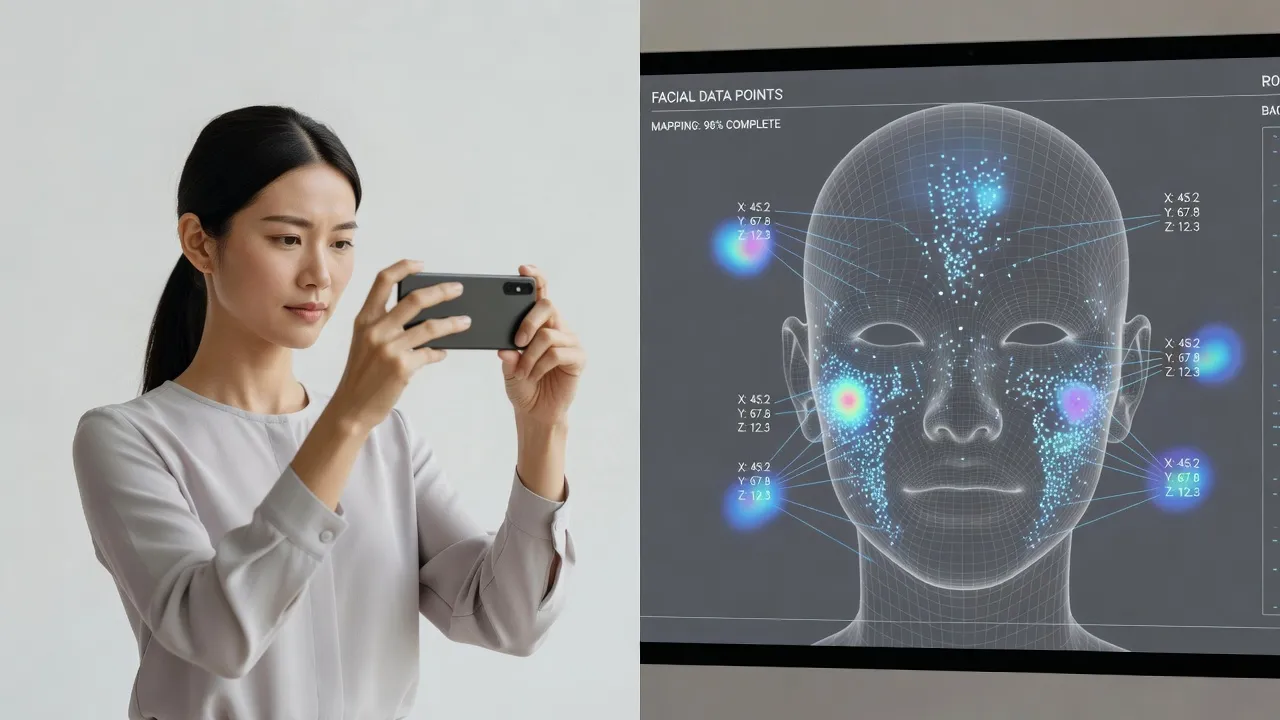
Unlike a mathematical beauty score test, Photofeeler measures how target audiences react to specific contexts. A photo optimized for a corporate LinkedIn profile receives entirely different ratings on traits like "Smart" or "Trustworthy" compared to a casual dating photo rated for "Attractive."
- Sample Size: High voter traits yield a narrow 95% confidence interval.
- Context Filters: Allows separate testing for business, social, and dating profiles.
- Human Factor: Captures expression, warm eye contact, and posture that AI ignores.
How accurate is PrettyScale's beauty score?
PrettyScale delivers accurate mathematical measurements of classic facial symmetry, but it fails to evaluate subjective charm, hair, skin health, or personal style. It operates strictly by mapping overlay lines across your eyes, nose, lips, and jaw.
The software checks your face against the golden ratio, a mathematical proportion historically tied to classical aesthetics. According to detailed entries on Wikipedia's facial symmetry index, geometric proportions correlate with perceived health, yet symmetry alone does not dictate overall human charm.
If you have unique or striking features that deviate from standard neoclassical canons, PrettyScale will penalize your score. It rewards rigid geometric compliance rather than individual visual harmony.
Is Beauty.AI's attractiveness algorithm biased or controversial?
Yes, Beauty.AI generated major controversy in 2016 when its algorithms overwhelmingly selected light-skinned contestants in the world's first AI beauty contest. The outcome highlighted how machine learning models reproduce the underlying biases of their training datasets.
The contest evaluated thousands of entries using deep learning algorithms designed to assess skin clarity and symmetry. However, as reported by The Guardian, the training data lacked sufficient diversity, leading the AI to penalize darker skin tones systematically.
| Lesson | Description |
|---|---|
| Training Data Limitations | Algorithms inherit biases from non-representative image datasets. |
| Over-reliance on Flawless Texture | AI confuses heavy filtering with health and youth. |
| Absence of Cultural Context | Fixed formulas ignore non-Western aesthetic traits. |
Modern aesthetic tools have adjusted their neural networks to prevent these issues. Newer models separate basic bone structure analysis from skin color metrics, ensuring fairer evaluations across diverse ethnicities.
How does QOVES Studio's Q-score attractiveness algorithm work?
QOVES Studio calculates attractiveness by combining cephalometric facial analysis, soft tissue measurements, and sexual dimorphism ratios. Instead of giving a simple score out of ten, it produces an analytical report on structural aesthetics.
The system evaluates facial morphometry by measuring proportions like the bizygomatic width relative to midface height. It identifies specific structural traits—such as gonial angles and infraorbital support—that influence how light hits the face.
- Cephalometric ratios: Measures bone projection and facial thirds balance.
- Sexual dimorphism: Evaluates masculine or feminine trait expression.
- Soft tissue distribution: Checks jawline definition and fat pads.
This clinical approach makes QOVES popular among individuals considering cosmetic adjustments. However, full structural assessments require professional review rather than automated instant selfie checks.
Top 5 Beauty Score Tools and Apps Compared
Selecting the best rating tool depends heavily on what you intend to do with the score. Some users want quick validation, while others seek step-by-step advice on how to improve their appearance.
| Tool / App | Assessment Method | Primary Advantage |
|---|---|---|
| Photofeeler | Real human crowdsourced voting | Measures authentic social response |
| PrettyScale | 2D Golden Ratio landmark mapping | Fast geometric symmetry checks |
| Glow Up & Attractiveness Test | AI analysis & personalized guide | Women-focused glow up guidance |
| QOVES Studio | Clinical cephalometric metrics | Deep structural facial report |
| Hotness.ai | Neural network computer vision | Instant casual numerical score |
1. Photofeeler
Photofeeler rates your photos through crowdsourced votes from real people. Users upload a photo, select a category (Business, Social, or Dating), and receive granular feedback on traits like competence, friendliness, and attractiveness.
The system works on a credit exchange: you rate photos of others to earn free tests, or you buy credits to speed up your results. It provides a statistical breakdown that shows exactly how your photo compares against thousands of test benchmarks.
The trade-off is time. Getting a statistically confident score takes several hours, and results can vary if you test photos with vastly different clothing or expressions.
2. PrettyScale
PrettyScale maps your facial features onto a golden ratio grid to compute a percentage score. You upload an unedited frontal photo, position control markers over your pupils, nose tip, and chin, and wait for the computational calculation.
The platform is free, fast, and requires no registration. It offers immediate feedback on facial symmetry and balance without requiring photo uploads to public rating pools.
However, PrettyScale relies entirely on flat geometry. It ignores skin quality, eye color, grooming, and hair style, meaning a beautifully groomed individual with minor asymmetry might receive a poor score.

3. Glow Up & Attractiveness Test
Glow Up & Attractiveness Test combines AI facial scoring with actionable beauty guides tailored specifically for women. Instead of just giving a cold numerical output, it breaks down visual attributes and outlines practical steps to refine your features.
You snap a selfie to get your initial rating derived from a fine-tuned AI model trained on facial aesthetics. From there, the application provides tailored tips to enhance hair framing, skin clarity, and facial balance.
The app also features an AI visualizer that displays your potential visual ideal, alongside tools to create shareable before-and-after tracking cards. It is designed specifically for women pursuing systemic personal glow ups rather than raw judgment.
4. QOVES Studio
QOVES Studio delivers clinical aesthetic evaluations focused on facial anatomy. Designed by aesthetic consultants, it analyzes soft tissue metrics, bone alignment, and facial balance to explain why certain features harmonize well.
Clients receive comprehensive PDF reports highlighting anatomical strengths and areas for potential cosmetic refinement. It avoids superficial beauty trends in favor of established scientific morphometrics.
The major trade-off is cost and turnaround time. Professional reports require high-resolution studio photography and financial investment, making it unsuitable for casual selfie checks.
5. Hotness.ai
Hotness.ai uses deep neural networks to instantly scan photos and output a numerical score. It processes images through computer vision algorithms that assess facial clarity, youthfulness, and feature prominence within seconds.
The platform requires no setup or manual landmark adjustment. Users drop a photo into the web browser and view an instant visual breakdown.
Its primary downside is erratic scoring caused by ambient light changes. Minor variations in photo contrast can alter your results significantly between consecutive uploads.
Why standard beauty scores fail to capture full attractiveness
Numerical beauty scores measure static geometry, but real-world human attraction depends heavily on motion, voice, posture, and personality. A static 2D image removes dynamic social signals that dictate how people perceive you in daily life.
When taking an attractive level test, remember that phone sensors struggle with 3D depth. Camera lenses compress facial features, altering your natural nose-to-cheek ratio and making jawlines appear softer than they exist in reality.
| Factor | Effect |
|---|---|
| Camera Focal Compression | 24mm lenses distort facial proportions; 3D presence looks different. |
| Dynamic Expressiveness | Smiling, eye contact, and warmth alter perceived attractiveness. |
| Grooming and Styling Context | Haircut, skin health, and posture shift scores faster than bone structure. |
Furthermore, standard ratio calculators do not factor in personal grooming. A person with perfect golden ratio proportions who neglects skin care or hair styling will often score lower in person than someone with average symmetry who styles themselves impeccably.
How to use a beauty score to guide your personal glow up
Instead of treating a beauty score as a final judgment, use it as a diagnostic tool to identify high-leverage areas for style and grooming updates. If an analysis points to poor facial framing, changing your hair parting or eyebrow shape yields immediate visual returns.
Many women exploring looksmaxxing for women focus heavily on unchangeable bone structure. In practice, non-surgical improvements—such as optimizing your night skincare routine, improving posture, and adjusting makeup application—produce dramatic improvements in overall visual appeal.
- Focus on skin clarity: Smooth skin texture improves AI lighting scores and human ratings alike.
- Optimize hair framing: Haircuts designed for your specific face shape balance natural asymmetry.
- Adjust photo lighting: Use natural light facing the window to capture true facial contouring.
What is the "How Normal Am I" beauty score project?
"How Normal Am I" is an interactive educational project created by artist baseline facial algorithms to show how AI systems evaluate and judge human faces. It demonstrates how machine learning algorithms calculate beauty, age, weight, and life expectancy from a single webcam stream.
The project highlights the invasive nature of corporate computer vision systems. As detailed on the official How Normal Am I site, the experience shows users how commercial algorithms score their face against stored demographic averages.
Using this tool offers a clear look into algorithmic rating mechanics. It proves that a computer-generated how normal am i beauty score is merely an extrapolation of training data statistics rather than an accurate evaluation of your personal worth.
Why Glow Up & Attractiveness Test helps women reach their visual potential
If you want more than a cold score, Glow Up & Attractiveness Test provides the personalized feedback and styling steps needed to enhance your overall look. It translates complex algorithmic feedback into everyday grooming habits you can actually control.
By downloading the app on the Apple App Store, you gain access to an intelligent analysis system built specifically for female beauty goals. The app evaluates your features, delivers an initial rating score, and builds a tailored improvement plan.
| Feature | Description |
|---|---|
| AI Face Rating & Analysis | Deep analysis of your facial traits and initial beauty score. |
| Customized Glow Up Guide | Actionable daily tips for hair, skin, and makeup optimization. |
| 10/10 AI Visualizer | See a stylized high-potential version of your natural features. |
| Before & After Tracking | Build shareable progress photos as your habits yield results. |
Instead of leaving you guessing about how to fix symmetry issues, the app guides you through practical changes. Whether you want to explore a new hair structure or refine your makeup, the platform serves as a personal aesthetics coach in your pocket.
You can learn more about facial evaluations by reading our guide on face rating ai or diving into structural beauty with our detailed breakdown on analysis of face.
Frequently Asked Questions
What is a beauty score?
A beauty score is a numerical metric generated by algorithms, human consensus, or geometric ratios to estimate the visual appeal of a human face from a photo.
How do AI beauty scanners work?
AI beauty scanners map coordinate landmarks across your facial features, measuring distances between your eyes, nose, lips, and jawline, then comparing those distances to a dataset of rated images.
Can lighting affect my facial beauty score?
Yes, lighting drastically impacts beauty scores. Harsh shadows can be misread by software as asymmetry or skin blemishes, while front-facing natural light usually increases your score.
Is facial symmetry the only factor in a beauty score?
No, while facial symmetry plays a major role in mathematical calculators like PrettyScale, factors like skin texture, contrast, eye color, grooming, and facial proportions also influence AI and human ratings.
Are online beauty score tests completely objective?
No, online beauty score tests are not completely objective. Geometric tools rely on rigid formulas, while AI models inherit the biases present in the training photo datasets used to build them.
Why do I get different scores on different beauty score apps?
Different apps rely on different methodology: some calculate golden ratio geometry, others use neural networks trained on public photos, and platforms like Photofeeler use crowdsourced human votes.
Can I improve my facial beauty score without surgery?
Yes, you can improve your score by optimizing non-surgical factors like skin health, haircut framing, eyebrow shaping, makeup application, posture, and taking photos under soft, direct lighting.
What is the ideal lens focal length for taking a face rating selfie?
An 85mm portrait lens or a telephoto camera setting reduces wide-angle distortion, providing the most accurate representation of your actual facial proportions compared to close-up 24mm selfie lenses.