
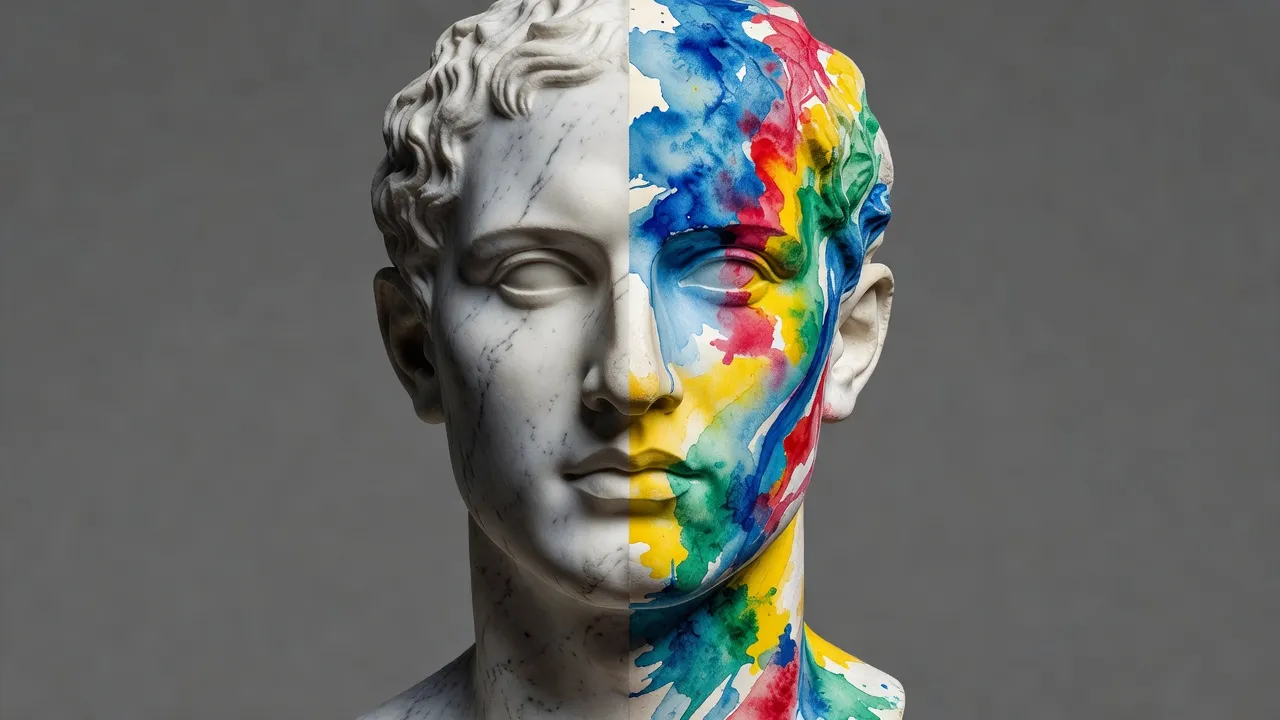
Beauty is subjective because personal preference, cultural conditioning, and social environment heavily dictate what an individual finds visually appealing, even though underlying evolutionary traits like facial symmetry exert a baseline influence. While mathematical proportions provide cross-cultural baselines for attractiveness, local beauty standards, historical eras, and media exposure dramatically shift what real people consider attractive. In practice, aesthetic value remains a combination of biological hardwiring and deeply personal, learned cultural bias.
The philosophical debate over aesthetic value dates back to ancient Greece. Plato argued that beauty was an objective reality existing in ideal forms, while David Hume famously asserted in 1757 that beauty exists merely in the mind which contemplates it.
Modern scientific research confirms that Hume was largely correct. While certain biological signals trigger unconscious interest, your environment continuously rewires what you find attractive throughout your life.
- Biological Hardwiring (Symmetry, Averageness)
- Cultural Filters & Media
- Individual Preferences & Experiences
- Subjective Beauty Perception
Each stage feeds into the next.
When evaluating facial features, geometry provides a starting point, but subjective taste determines the final judgment. Digital tools like the Glow Up & Attractiveness Test analyze objective mathematical proportions through fine-tuned AI, giving users a detailed face analysis based on universal symmetry while leaving space for personal aesthetic preferences.

Universal Biology vs. Subjective Culture
To understand why beauty is subjective, you must separate biological attraction triggers from learned cultural preferences. Humans are born with evolutionary predispositions toward specific visual markers, but society decides how those markers are interpreted.
| Aesthetic Feature | Biological Mechanism | Subjective Cultural Variance | Cost Realities & Trade-offs |
|---|---|---|---|
| Facial Proportions | Signals parasite resistance and genetic health through balance. | Preferred facial shapes vary from V-shaped jaws in East Asia to strong, square jawlines in the US. | High cosmetic procedure costs ($3,000–$15,000) for structural alterations that may go out of style. |
| Skin Clarity | Signals youth, immune function, and hormonal balance. | Texture preferences differ; dewy skin is favored in Korea, while matte finishes dominate Western trends. | Ongoing skincare investments ($50–$300/month) yield better long-term aesthetic returns than surgical changes. |
| Body Shape | Signals reproductive capability and resource efficiency. | Ideal waist-to-hip ratios range from 0.6 in Western media to higher ratios in resource-scarce regions. | Weight-loss drugs and surgeries carry recurring financial costs ($1,000+/month) and high metabolic trade-offs. |
| Glow Up App AI | Evaluates facial balance, geometry, and feature proportions. | Provides objective structural feedback that users apply to their personal visual style. | Low-cost digital alternative to expensive consultations, focusing on non-invasive grooming adjustments. |
As shown above, biological hardwiring creates a loose baseline, but culture defines the target ideal. Understanding these differences prevents falling into expensive trend-chasing traps.
Is facial attractiveness perceived similarly across cultures (symmetry and averageness)?
Yes, facial attractiveness is perceived remarkably similarly across different cultures when evaluating facial symmetry and averageness. Decades of cross-cultural psychological research show that people from vastly different geographic and social backgrounds rank symmetrical faces as more appealing.
Facial averageness does not mean a face is plain or ordinary. In evolutionary biology, "averageness" refers to a face whose features match the mathematical mean of a population.
Why symmetrical faces signal genetic stability
Symmetrical features serve as visual proxies for developmental stability. Environmental stress, illness, and genetic mutations during development cause subtle asymmetries in facial structure.
- Parasite resistance: Symmetrical features suggest an individual successfully resisted pathogens during childhood growth.
- Neuromuscular efficiency: Humans process symmetrical images faster in the visual cortex, rendering them inherently pleasing to look at.
- Feature harmony: Symmetrical proportion reduces visual friction, making faces appear familiar and approachable.
How local cultures override facial symmetry
Despite universal preferences for symmetry, distinct regional preferences consistently alter what individual cultures value. A perfectly symmetrical face can still be rated as unattractive if its features violate local cultural standards.
For instance, Western cultures frequently prioritize prominent cheekbones and full lips, whereas East Asian cultures often favor softer jawlines and smaller chins. To understand how these regional preferences develop, reading about standards of beauty around the world provides critical context on regional aesthetic splits.
Is waist-to-hip ratio preference consistent across cultures?
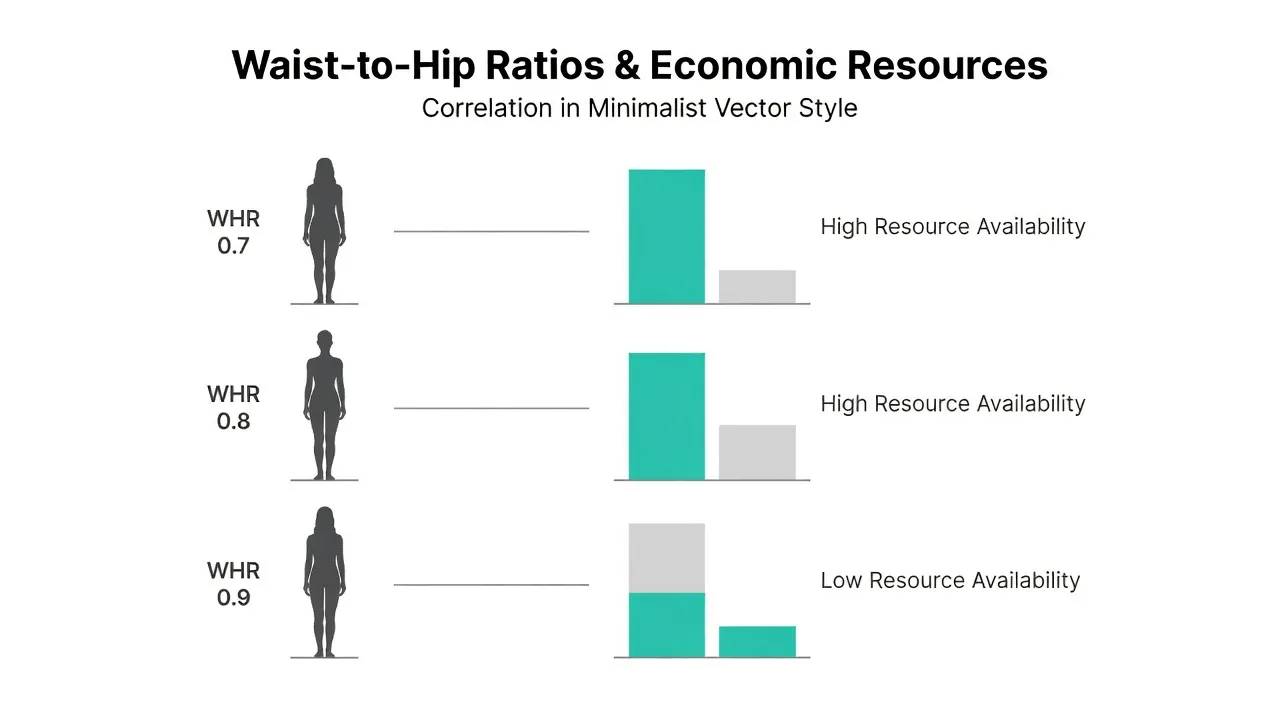
No, waist-to-hip ratio (WHR) preference is not consistent across all cultures, although an hourglass shape with a lower WHR is widely favored in industrialized societies. Evolutionary psychologists originally claimed that a 0.7 WHR was a universal signal of female fertility, but broader field studies disproved this static claim.
A lower waist-to-hip ratio typically signals optimal estrogen levels and youth in post-pubertal women. However, environmental factors and caloric security dramatically alter whether a low WHR is considered attractive.
The impact of resource availability on WHR preferences
In environments where food is scarce, men frequently prefer women with higher waist-to-hip ratios and higher overall body mass. A higher WHR signals caloric reserves necessary to survive food shortages.
- Resource-rich societies: Prefer lower WHR (0.6 to 0.7), as thinness becomes a marker of high social status and self-discipline.
- Resource-scarce societies: Prefer higher WHR (0.8 to 0.9), where additional weight signifies wealth, health, and stability.
- Indigenous studies: Research among the Matsigenka people of the Peruvian Amazon revealed a clear preference for heavier women with higher waist-to-hip ratios.
This cultural divide proves that human physical preferences adapt directly to economic and survival realities.
Do body weight and size preferences vary between developing and industrialized societies?
Yes, body weight and size preferences vary significantly between developing and industrialized societies based on socioeconomic conditions. Body weight is one of the most culturally volatile aspects of human beauty.
In high-income nations, access to cheap, dense calories makes processed food abundant. Consequently, maintaining a slim physique requires time, disposable income, and active effort, turning thinness into a symbol of elevated social status.
The economic inversion of body ideals
Socioeconomic status flips body size preferences depending on how calories are acquired and spent. What represents wealth in one culture often represents hardship in another.
- Industrialized nations: Upper-class demographics display lower average body mass index (BMI) levels due to access to fresh foods, personal trainers, and gym memberships.
- Developing nations: Higher BMI levels correlate directly with wealth, as higher body mass demonstrates the financial ability to afford plentiful food without engaging in manual labor.
- Historical Western shifts: Prior to the 20th century, European art routinely glorified fuller figures because excess weight indicated aristocratic luxury.
As societies transition from agricultural economies to industrial tech hubs, their ideal body standards invert rapidly.
Is preference for sexual dimorphism in faces universal across cultures?
No, preference for facial sexual dimorphism—masculine traits in men and feminine traits in women—is not universal across all human cultures. Sexual dimorphism refers to physical differences between males and females driven by sex hormones like testosterone and estrogen.
While estrogen-driven feminine traits (such as larger eyes and fuller lips) are widely preferred globally, male facial masculinity preferences fluctuate wildly depending on local healthcare and environmental safety.
Environmental pathogen stress and male face preferences
Women living in environments with high health risks and pathogen stress show a stronger preference for highly masculine male faces. Strong jawlines and prominent brow ridges are linked to high testosterone, which requires a robust immune system to sustain during development.
| Environmental Condition | Male Face Preference |
|---|---|
| High Environmental Pathogen Stress | Hyper-Masculine Male Faces |
| Low Pathogen / High Healthcare Area | Softer, Slightly Feminine Male Faces |
According to cross-cultural research published on Wikipedia's facial attractiveness entry, women in highly developed nations with strong healthcare infrastructures often prefer men with softer, less hyper-masculine features. In safer environments, traits associated with cooperative parenting and lower aggression outweigh the biological signals of high-testosterone immune defense.
Does the 'what is beautiful is good' stereotype hold across cultures?
Yes, the "what is beautiful is good" stereotype—known as the attractiveness halo effect—exists across almost all studied cultures, but the specific personality traits attributed to attractive people differ based on cultural values.
People naturally assign positive character traits to physically attractive individuals without realization. However, individualistic and collectivistic cultures project fundamentally different virtues onto attractive faces.
Individualistic vs. collectivistic halo effects
The cognitive bias is universal, but the psychological content of the bias is entirely subjective. The psychological traits assigned to an attractive face align directly with what a given culture values most.
- Individualistic cultures (e.g., US, UK): Attractive people are judged as assertive, dominant, independent, and candid. Comparing these cultural shifts is clear when evaluating American beauty standards alongside global trends.
- Collectivistic cultures (e.g., Korea, Japan): Attractive people are judged as empathetic, generous, loyal, and considerate of group harmony.
- Universal overlap: Almost all cultures view attractive individuals as more socially competent and intelligent than their less attractive peers.
As documented in research on the attractiveness halo effect, this cognitive bias impacts hiring decisions, court verdicts, and social interactions worldwide.
Did exposure to television in Fiji change body image and disordered eating?
Yes, the introduction of Western television to Fiji in the late 1990s triggered a rapid increase in body dissatisfaction and disordered eating among adolescent girls. This real-world shift provided some of the strongest evidence that body image ideals are socially constructed rather than biologically fixed.
Before Western mass media arrived, traditional Fijian culture celebrated robust, muscular physiques. A large appetite and a fuller body were considered indicators of good health, strong community care, and family prosperity.
The landmark 1999 Fiji media study
Researcher Anne Becker published a pivotal study documenting how body ideals shifted within 36 months of television arriving in Fiji. The findings, archived by the National Library of Medicine, demonstrated a direct link between media consumption and altered self-perception.
| Period | Event | Body Ideal or Outcome |
|---|---|---|
| Pre-1995 Fiji | No TV | Body Ideal: Robust, full-figured physique |
| 1995 | Western TV Introduced | Exposure to thin-ideal characters |
| 1998 (3 Years Post-Exposure) | 74% felt "too fat"; purging rates rose from 0% to 11.3% |
Prior to 1995, eating disorders and intentional dieting were virtually non-existent in Fiji. By 1998, after watching shows like Melrose Place, 74% of teenage Fijian girls reported feeling "too fat," and 11.3% admitted to purging to control their weight.
This dramatic rise proved that mass media can completely dismantle centuries of established cultural beauty standards in under three years.

Why Media and Technology Shift Modern Attractiveness Standards
In 2026, social media algorithms, face filters, and generative AI have accelerated the pace at which beauty standards change. What used to take decades of cultural evolution now happens across viral trends within months.
Digital beauty tools help individuals navigate these shifts by providing objective assessments rather than chasing fleeting visual trends.
Separating personal beauty from algorithmic trends
Relying purely on social media trends leads to financial fatigue and poor self-image. Constantly altering your face through cosmetic procedures to match viral aesthetics is expensive and unsustainable.
- Transient trends: Features like exaggerated lip filler, fox-eye lifts, or extreme jaw contouring cycle in and out of style quickly.
- Structural baseline: Understanding your foundational face symmetry and facial harmony helps you make enduring grooming decisions.
- Digital self-analysis: Downloading the iOS app Glow Up & Attractiveness Test allows users to receive tailored tips to beautify their look without jumping straight into invasive cosmetic alterations.
By using digital analysis to identify your strongest natural features, you can focus on actionable grooming habits, styling, and skin health rather than invasive medical changes.
The hidden costs of chasing subjective trends
Attempting to conform to every new subjective standard carries heavy financial and physical costs. Trend-based cosmetic treatments frequently create long-term cosmetic side effects.
- Dissolving fillers: Removing migrated facial fillers costs anywhere from $400 to $1,500 per session.
- Revision surgeries: Correcting trendy cosmetic procedures that have aged poorly can run upward of $10,000 to $25,000.
- Skincare consistency: Simple night routines and sun protection deliver far higher visual ROI at a fraction of the price.
Focusing on health indicators like clear skin, facial posture, and flattering haircuts delivers timeless aesthetic value regardless of how subjective trends shift.
Practical Ways to Optimize Your Appearance Without Chasing Trends
Because beauty is subjective, trying to appeal to everyone is mathematically impossible. The most effective approach is to optimize your natural health indicators and structural balance.
If you are interested in a clear framework for facial balance, studying our detailed analysis of face guide will help you understand how features interact.
Focus on universal health signals
Universal health signals always transcend subjective cultural trends. Regardless of where you live, healthy skin, posture, and hair signal vitality.
- Skin health: Invest in sunscreen, gentle cleansing, and proper hydration to maintain skin clarity.
- Posture and grooming: Strong head and neck posture alters jawline definition and presence instantly without surgery.
- Tailored hair styling: Selecting haircuts based on your underlying bone structure balances facial proportions better than copying celebrity trends.
Leverage AI for personalized insights
Using objective AI tools helps cut through subjective media noise. Rather than guessing what style suits you, objective geometric feedback highlights what works for your specific face shape.
Through the Glow Up & Attractiveness Test, you can discover your beauty score and unlock your glow up potential following a tailored glow up guide. The app combines geometric analysis with tailored grooming tips, helping you present your best self while honoring your unique, subjective individuality.
Frequently Asked Questions
Is beauty entirely subjective or are there objective factors?
Beauty is a combination of objective biological factors and subjective cultural preferences. Evolutionary signals like facial symmetry and skin clarity act as universal baselines, while cultural conditioning and personal experiences determine specific style, feature, and body type preferences.
What is the scientific definition of facial symmetry?
Facial symmetry refers to how closely the left and right sides of a face match each other. High facial symmetry indicates developmental stability and genetic health, making symmetrical faces universally easier for the human brain to process.
Why do beauty standards change over time?
Beauty standards change due to shifting economic conditions, media influence, and technological advancements. As access to resources, fashion trends, and lifestyle habits evolve, societies assign social status to physical traits that are harder to achieve in that specific era.
Does culture affect how attractive people are treated?
Yes, culture affects how attractive people are treated through the halo effect. While individualistic cultures view attractive people as dominant and independent, collectivistic cultures view attractive people as warm, honest, and community-oriented.
How does waist-to-hip ratio influence physical attractiveness?
Waist-to-hip ratio influences physical attractiveness as an indicator of health and fertility. Industrialized societies typically favor lower ratios around 0.7, whereas resource-scarce societies often prefer higher ratios that signal caloric reserves.
Can social media alter an individual's personal beauty preferences?
Yes, repeated exposure to specific face shapes and body types on social media conditions the brain to view those features as normal and attractive. This rapid exposure can shift individual aesthetic preferences in a matter of weeks.
How does AI measure facial balance and proportions?
AI measures facial balance by scanning key facial landmarks to calculate geometric ratios, distance between features, and structural symmetry. These measurements are compared against mathematical facial averages to determine proportional balance.