
Vitamin A for clear skin works by accelerating cellular turnover, preventing clogged pores, and boosting collagen production in the dermis. Used topically as retinoids or consumed via dietary sources, Vitamin A normalizes skin cell shedding to eliminate acne and smooth rough surface texture. As of October 2026, dermatologists consider topical Vitamin A derivative molecules the single most proven class of ingredients for treating active inflammatory acne and post-inflammatory hyperpigmentation.
How Vitamin A Works Inside Your Skin Cells
Vitamin A is not a single chemical compound. It is a family of fat-soluble retinoids that bind directly to nuclear retinoic acid receptors (RARs) inside your skin cells.
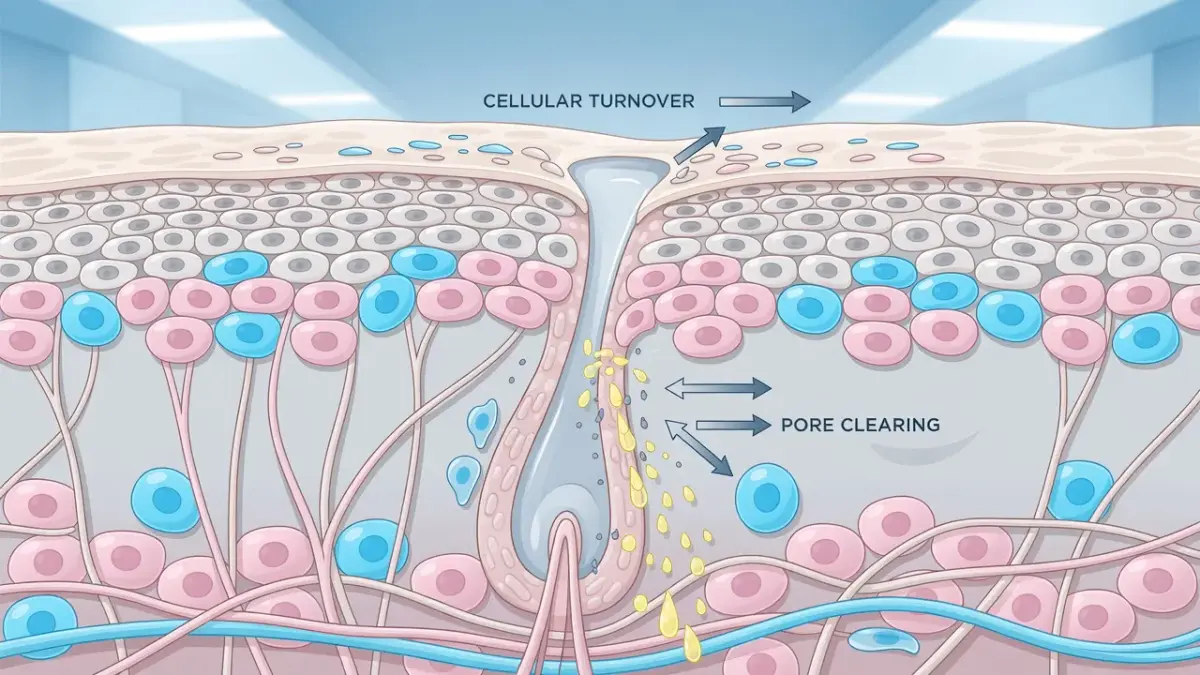
When topical Vitamin A enters the skin, it forces micro-exfoliation from the deepest layers of the epidermis upward. Normally, dead skin cells stick together inside the pore lining, combining with excess sebum to form a microcomedone. Vitamin A breaks these sticky bonds, allowing dead keratinocytes to shed before they can cause a breakout.
Beyond pore clearance, Vitamin A prevents collagen breakdown by inhibiting matrix metalloproteinases (MMPs). This double-action approach—clearing active pore blockages while thicking the deeper dermal matrix—makes Vitamin A unique among skin ingredients.
What do dermatologists recommend: retinol vs retinoids?
Dermatologists generally recommend over-the-counter retinol for mild cosmetic texture or sensitive skin, while prescribing pure retinoic acid retinoids like tretinoin for moderate-to-severe acne.
While all non-prescription retinoids eventually become retinoic acid in the skin, the conversion path decides how fast you see results—and how much peeling you experience.
Retinol requires two internal enzyme conversions to become active:
- Retinol converts into Retinaldehyde (Retinal).
- Retinaldehyde converts into Retinoic Acid.
Because of these mandatory biochemical steps, over-the-counter retinol is gentler on your moisture barrier, but takes 8 to 12 weeks to display visible acne reduction. Prescription retinoids skip these metabolic hurdles entirely, delivering active retinoic acid directly to cell receptors for faster, stronger cellular transformation.
How does retinol compare to tretinoin in clinical effectiveness?
Tretinoin is roughly 20 times more potent than over-the-counter retinol because it requires zero conversion steps once absorbed by the skin.
In direct clinical comparisons, tretinoin increases epidermal cell turnover at a far higher rate than standard retinol formulations. According to research archived by the National Center for Biotechnology Information, pure retinoic acid initiates gene expression changes within hours of application, whereas over-the-counter retinol requires much higher concentrations to yield comparable tissue changes.
The trade-off is tolerance. Tretinoin frequently causes an initial "retinoid purge"—a 2-to-6-week window where underlying microcomedones surface all at once alongside peeling and erythema. Over-the-counter retinol rarely causes severe purging, making it better suited for individuals with underlying rosacea, dry skin, or compromised skin barriers.
Which retinoids do dermatologists recommend: tretinoin, adapalene, or tazarotene?
Dermatologists recommend adapalene for targeted acne treatment, tretinoin for combined acne and photoaging, and tazarotene for severe acne or resistant hyperpigmentation.
Each topical retinoid targets specific retinoic acid receptors (RAR-alpha, RAR-beta, and RAR-gamma) in different proportions:
- Adapalene: A synthetic naphthoic acid derivative that selectively targets RAR-beta and RAR-gamma receptors in the hair follicle. It focuses almost entirely on clearing pores while causing less surface burning.
- Tretinoin: A broad-spectrum retinoid that binds to all RAR types, making it effective for acne, rough texture, and fine lines alike.
- Tazarotene: The most potent topical retinoid available. It binds strongly to RAR-beta and RAR-gamma with high affinity, making it exceptionally effective for stubborn blackheads and thick, textured skin, though it carries the highest rate of skin dryness.
| Vitamin A Derivative | Conversion Steps to Retinoic Acid | Primary Skin Indication | Typical Limits / Barrier Risk | Prescription Needed? |
|---|---|---|---|---|
| Retinyl Palmitate | 3 Steps | Mild cosmetic smoothing | Very low irritation; slow results | No |
| Retinol | 2 Steps | Fine lines, mild pore clogging | Moderate dryness; takes 8–12 weeks | No |
| Retinaldehyde | 1 Step | Moderate congestion, early aging | Mild flaking; faster than retinol | No |
| Adapalene (0.1%) | 0 Steps (Selective receptor) | Comedonal & inflammatory acne | Mild-to-moderate initial purging | No (OTC in US) |
| Tretinoin | 0 Steps (Direct active) | Cystic acne, photoaging, scars | High risk of retinoid dermatitis | Yes |
| Tazarotene | 0 Steps (Direct active) | Severe acne, plaque psoriasis | Highest irritation risk; strict limits | Yes |
What does the American Academy of Dermatology recommend for retinoids?
The American Academy of Dermatology (AAD) recommends topical retinoids as the fundamental first-line therapy for both comedonal and inflammatory acne.
According to official management guidelines published by the American Academy of Dermatology, topical retinoids should be started at the onset of acne treatment and maintained long-term to prevent new lesions from forming. The AAD emphasizes combining topical retinoids with antimicrobial agents like benzoyl peroxide to prevent antibiotic resistance while ensuring deep follicle clearance.
The AAD also advises patient education regarding proper application techniques: using a pea-sized amount for the entire face, applying to completely dry skin, and pairing the molecule with daily broad-spectrum SPF to manage induced photosensitivity.
Evaluating Your Facial Progress During Treatment
Because topical Vitamin A accelerates skin renewal, your face often undergoes visible structural shifts—from temporary redness during the adjustment phase to refined pore geometry months later. Tracking these changes objectively prevents you from quitting early when hit by the initial retinoid purge.
Using an AI-driven tool can clarify whether a new break-out is a normal retinoid reaction or genuine product irritation. If you want to monitor your skin clarity and facial balance during your glow-up, download the Glow Up & Attractiveness Test app.
The app lets you snap a selfie for an immediate face analysis score, using a fine-tuned AI model to evaluate skin texture harmony, symmetry, and overall glow-up potential for $9.99/week. It provides targeted feedback so you can see if your Vitamin A routine is translating into visible aesthetic improvements over a 30-day cycle.
A Vitamin A Molecule Path proceeds through two routes:
- Dietary Intake route (Beta-Carotene/Liver) leads to Systemic Sebaceous Regulation
- Topical Retinoid route (Adapalene/Tretinoin) leads to Direct RAR Binding Cellular Turnover
Both routes converge at Clear Skin Output.
Is adapalene effective over-the-counter versus prescription for acne?
Over-the-counter 0.1% adapalene gel provides identical therapeutic strength for acne as its former prescription version, delivering clinical clearing with minimal barrier disruption.
When the U.S. Food and Drug Administration approved Differin (adapalene 0.1%) for over-the-counter sale, it shifted the standard for non-prescription acne care. Unlike older retinol formulations, adapalene remains stable under sunlight and can be applied during daytime or alongside benzoyl peroxide without breaking down.
Clinical trials show that 0.1% adapalene reduces inflammatory acne lesions by 50% to 60% within 12 weeks of daily use. While prescription-strength 0.3% adapalene exists for severe cases, the 0.1% OTC strength represents the highest power-to-irritation ratio available without a doctor's visit. For more options on topical remedies, check out our detailed guide on products that clear skin.
How does bakuchiol compare to retinol in clinical trials?
Clinical trials reveal that 0.5% bakuchiol produces statistically equivalent reductions in hyperpigmentation and fine lines compared to 0.5% retinol, but with significantly fewer side effects.
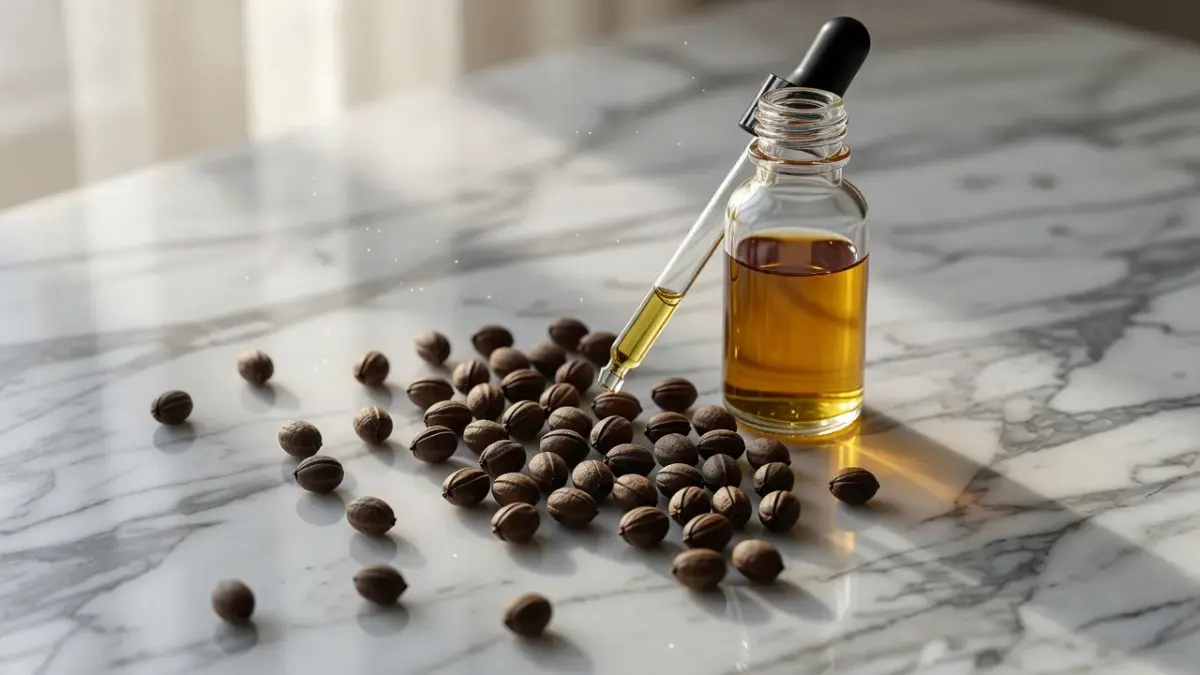
Bakuchiol is a botanical compound extracted from the seeds of Psoralea corylifolia. While it shares no chemical structure with Vitamin A, it activates similar gene expression pathways in human fibroblasts.
In a double-blind, 12-week clinical study published in the British Journal of Dermatology, researchers compared participants using 0.5% bakuchiol twice daily against those using 0.5% retinol once daily. Both groups experienced significant improvements in wrinkle surface area and hyperpigmentation.
However, the retinol group reported far higher rates of skin scaling, stinging, and redness. For individuals ruled out from using traditional retinoids due to eczema, rosacea, or pregnancy, bakuchiol acts as a functional, low-irritation alternative.
Dietary Vitamin A: Preformed vs. Provitamin A Carotenoids
Topical retinoids address local skin cell behavior, but systemic Vitamin A levels dictate overall sebum composition and skin immunity. Your body processes dietary Vitamin A in two distinct forms:
Preformed Vitamin A (Retinoids)
Found in animal sources such as beef liver, egg yolks, cod liver oil, and dairy products. Preformed Vitamin A is directly bioavailable as retinol and retinyl esters. The body absorbs it rapidly, storing excess amounts in the liver.
Because it accumulates in fatty tissue, excessive intake of preformed Vitamin A from high-dose oral supplements can cause toxicity (hypervitaminosis A), leading to dry lips, hair loss, liver strain, and birth defects.
Provitamin A (Carotenoids)
Found in plant foods like carrots, sweet potatoes, spinach, and kale. The most active carotenoid is beta-carotene. Your intestines convert beta-carotene into retinol only when systemic stores run low.
Because your body tightly regulates this enzymatic conversion, you cannot develop toxicity from eating beta-carotene-rich foods. Excessive consumption simply causes carotenemia—a harmless orange tint on the palms and soles. To build an optimal meal plan for facial clarity, read our guide on foods to eat that clear skin.
Contraindications: Who Should Avoid Synthetic Vitamin A?
While topical and oral Vitamin A molecules offer unparalleled skin clearance, strict physiological limits rule out certain options for specific individuals.
- Pregnancy and Breastfeeding: High systemic levels of Vitamin A are teratogenic. Oral isotretinoin requires mandatory birth control compliance programs. Topical prescription retinoids (tretinoin, tazarotene) are strictly prohibited during pregnancy.
- Impaired Skin Barrier: If you suffer from active flare-ups of contact dermatitis, severe eczema, or open facial wounds, applying retinoids will exacerbate inflammation. You must restore barrier lipids with ceramides and cholesterol before introducing Vitamin A.
- Recent In-Office Procedures: Pause all topical Vitamin A derivatives at least 5 to 7 days before chemical peels, laser resurfacing, or facial waxing to prevent epidermolysis (skin tearing).
If you are unsure whether your skin issue stems from pore congestion or a broken barrier, reading our breakdown on clear skin bumps can help you identify your specific skin state before starting powerful active ingredients.
Building a Safe Vitamin A Skin Protocol
Introducing Vitamin A into your routine requires patience to avoid chemical burns or severe peeling.
Week 1–2: Apply pea-sized amount TWICE per week (Sandwich Method)
Week 3–4: Apply pea-sized amount EVERY OTHER NIGHT
Week 5+:  Transition to EVERY NIGHT as tolerated
To minimize barrier distress, follow the "Sandwich Method":
- Cleanse your face with a gentle, non-foaming wash.
- Apply a thin layer of lightweight, fragrance-free moisturizer while skin is damp.
- Wait 10 minutes until your skin is completely dry.
- Spread a pea-sized amount of your chosen retinoid evenly across your forehead, cheeks, and chin (avoiding the corners of eyes and nose).
- Seal with a second layer of heavier barrier cream.
Using this staggered approach buffers the delivery rate of active retinoic acid, allowing your skin cells time to upregulate tolerance without triggering severe inflammation. Pairing this protocol with a structured habit tracker or analyzing your facial progress on startglowup.app ensures you stay consistent through the initial adjustment phase.
Frequently Asked Questions
How long does it take for Vitamin A to clear skin?
Most people see initial reduction in pore clogging within 4 to 6 weeks of daily retinoid use. Complete clearing of deep acne lesions and fading of post-inflammatory hyperpigmentation typically takes 12 to 16 weeks of continuous application.
Can Vitamin A make acne worse at first?
Yes, topical Vitamin A often causes an initial purge lasting 2 to 6 weeks. Because retinoids accelerate cellular turnover, underlying microcomedones surface simultaneously as red bumps before the skin fully clears.
Should I take oral Vitamin A supplements for acne?
You should not take high-dose oral Vitamin A supplements without direct medical supervision. Preformed Vitamin A builds up in the liver and can cause systemic toxicity, dry mucosal membranes, and hair loss.
Can I use Vitamin A during pregnancy?
No, you should avoid prescription topical retinoids and high-dose oral Vitamin A during pregnancy due to birth defect risks. Dermatologists recommend switching to pregnancy-safe alternatives like azelaic acid or bakuchiol.
Does Vitamin A help fade acne scars?
Yes, topical Vitamin A fades flat post-inflammatory hyperpigmentation and post-inflammatory erythema by dispersing excess melanin and speeding epidermal renewal. It also boosts dermal collagen to soften shallow pitted scars over time.
What is the difference between beta-carotene and retinol?
Retinol is preformed, fully bioavailable Vitamin A found in animal sources that the body uses directly. Beta-carotene is a plant pigment that the small intestine converts into retinol only as needed, preventing overdose risks.
Can I combine Vitamin A with Vitamin C in the same routine?
You should not layer Vitamin A and Vitamin C directly on top of each other, as this increases irritation and destabilizes both formulas. Apply Vitamin C in the morning for antioxidant protection and Vitamin A at night for renewal.