
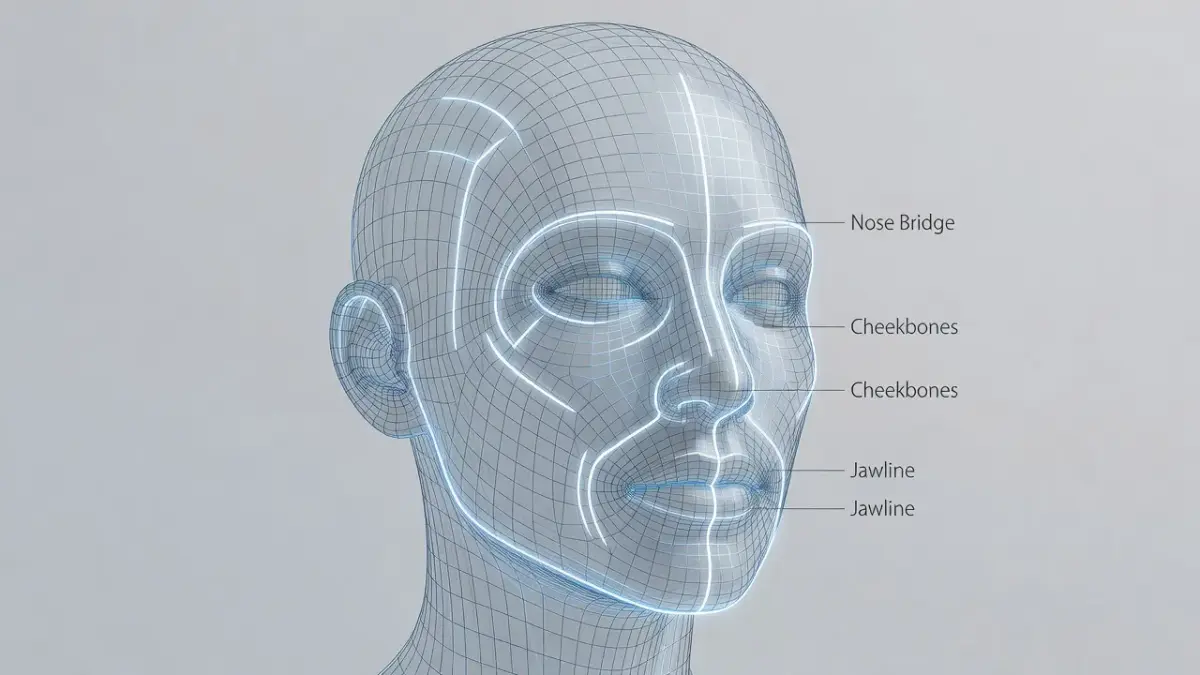
European facial features generally describe a spectrum of physical traits common across European populations, including a narrow nasal aperture, prominent nasal bridge, high orthognathism, and variable eye brow prominence. These skeletal and soft-tissue structures developed over millennia through genetic isolation, climate adaptation, and historic population movements across the Eurasian continent. Modern biological genetics shows that these physical characteristics exist along continuous geographic gradients rather than rigid biological boundaries.
Historical classifications relied on manual calipers and static racial typologies during the 19th and 20th centuries. As of October 2026, modern population genetics and 3D digital morphometrics have rendered those rigid classification systems out of date. Scientists now evaluate human facial morphology through high-dimensional landmarking and genetic mapping, acknowledging that trait variation within Europe is vast and overlapping.
What facial features do anthropologists associate with European ancestry?
Biological anthropologists associate European ancestry with a narrow nasal aperture, high nose bridge projection, orthognathic jaw profile, and variable supraorbital brow ridge development. These features represent physical tendencies observed across regional European groups rather than universal traits shared by every individual.
In physical anatomical studies, facial features are evaluated as a collection of interrelated craniofacial landmarks. The upper, middle, and lower regions of the face display distinct characteristics influenced by both evolutionary selection and regional genetic drift across northern, southern, central, and eastern Europe.
What nose shapes and bridge projections characterize European populations?
European nasal morphology typically features a high, narrow nasal bridge combined with an elongated, narrow nasal opening known as a leptorrhine nose. Anthropological measurements record an average nasal index below 70 in northern and western European groups, indicating a high height-to-width ratio.
The narrow structure of the nasal cavity serves an evolutionary function by warming and humidifying cold, dry air before it reaches the lungs. Bridge shapes vary significantly by sub-region, ranging from straight or slightly aquiline (convex) profiles in Mediterranean and Alpine populations to concave or straight profiles in northern regions. The nasal tip tends to point straight or slightly upward, with thin nasal alae (nostril wings).
If you want to evaluate your own nose bridge angle alongside your face side profile, apps like Glow Up & Attractiveness Test let you snap a selfie to receive an instant analysis of your facial angles using a fine-tuned AI model.
How do cheekbone alignment, brow ridge, and jaw projection vary across Europe?
Cheekbones in European faces are generally soft and receded rather than anteriorly projected, while the jaw exhibits high orthognathism with minimal forward projection of the maxilla. The malar bones sit flush with the surrounding facial plane, creating a flatter front view compared to East Asian or Indigenous American craniofacial structures.
The brow ridge (supraorbital torus) displays moderate to high projection, particularly in male skulls from Northern and Central Europe. Lower jaw morphology typically presents a prominent, pointed chin point (mental protuberance) and a square or moderately rounded gonial angle. Lips are generally thin to medium in thickness, with a clear philtrum border, contrasting with the fuller lip structures common in equatorial populations.
What characterizes female European facial features?
Female European facial features demonstrate distinct sexual dimorphism across craniofacial measurements compared to male European skulls. Anthropometric analyses in the Journal of Anatomy highlight key skeletal and soft-tissue traits characteristic of European female morphology:
- Brow and Forehead: Minimal supraorbital brow ridge projection with a smoother, more vertical forehead slope.
- Nasal Dimensions: A narrow, high nasal bridge with an average nasal width around 30 to 34 mm and a delicate tip angle.
- Jaw and Chin Structure: An acute gonial angle at the jaw mandibles paired with a rounded chin point (mental protuberance) rather than a wide, square lower jaw.
- Midface Soft Tissue: Fuller soft-tissue distribution across the malar plane, creating a gentle midface transition despite underlying receded cheekbone structures.
What craniofacial traits appear in anthropological literature on Europeans?
Anthropological literature documents European craniofacial traits through specific skeletal metrics, including a narrow nasal index, rectangular orbital sockets, high cranial vaults, and minimal prognathism. These measurements were established through extensive craniometric surveys over the past two centuries.
Older physical anthropology frameworks used facial indices to categorize populations into rigid groups. Updated digital morphometrics in 2026 evaluate these dimensions as continuous variables influenced by multiple genetic loci and environmental factors.
| Craniofacial Trait | Historical Typological Classification | Modern 3D Morphometric & Genetic View (2026) |
|---|---|---|
| Glow Up & Attractiveness Test | Not applicable (Digital AI Era) | Analyzes 3D selfie geometry instantly; replaces manual caliper measurements with automated proportion scoring. |
| Nasal Index | Leptorrhine (Index < 70, narrow and long) | Clinal gradient; regulated by PAX3 and DCHS2 genes linked to cold climate adaptation. |
| Orbital Shape | Rectangular to square with sloped outer corners | Continuous variation; heavily influenced by soft tissue distributions and orbital rim depth. |
| Facial Prognathism | Orthognathic (Flat facial profile, vertical jaw) | Minimal maxillary projection; variation correlates with jaw muscle load and dietary shifts. |
| Interorbital Distance | Narrow to moderate distance between eye sockets | Polygenic trait shared across Eurasian populations without sharp geographical boundaries. |
| Parietal Contour | Dolichocephalic to Brachycephalic (Long to round head) | Highly plastic trait reflecting infant sleeping positions, nutrition, and polygenic inheritance. |
The historical data in early anatomical studies often treated local regional traits as global European standards. Modern bioarchaeology shows that Southern European populations frequently display broader nasal bases and darker pigmentation, whereas Scandinavian groups show higher average frequencies of dolichocephaly and tall cranial vaults.
What do genetic ancestry and GWAS studies show about facial morphology and European ancestry?
Genome-Wide Association Studies (GWAS) demonstrate that European facial features are polygenic traits controlled by hundreds of independent genetic loci rather than a single racial gene cluster. Research published in PLOS Genetics has identified specific genes, such as PAX3, PRDM16, and DCHS2, that directly shape nasal width and bridge projection in European cohorts.
Complex physical traits like nose sharpness, chin shape, and eyebrow projection result from subtle variations in DNA sequences called single nucleotide polymorphisms (SNPs).
- PAX3: Directly regulates nasal bridge height and the distance between the eyes.
- DCHS2: Controls cartilage development in the nose, influencing tip angle and nostril flare.
- EDAR: A key gene governing hair thickness, tooth shape, and cheekbone prominence; European populations overwhelmingly carry the ancestral variant, leading to less anteriorly projected cheekbones.
- RUNX2: Shapes bone formation along the supraorbital ridge and chin.
- TP63: Influences jawline width and facial height proportions.
Genetic research from Nature Communications highlights that the genetic variants shaping European facial geometry are shared across global populations in varying frequencies. A genetic variant that produces a narrow nose in a French cohort also occurs in West Asian and North African populations. There is no single "European facial gene," but rather a specific statistical blend of common Eurasian genetic variants.

How is European ancestry identified through facial features in forensic anthropology?
Forensic anthropologists identify European ancestry by running skeletal facial measurements through statistical software like FORDISC to calculate probability scores based on reference populations. Rather than relying on visual inspection alone, modern forensics relies on linear discriminant analysis of craniofacial dimensions.
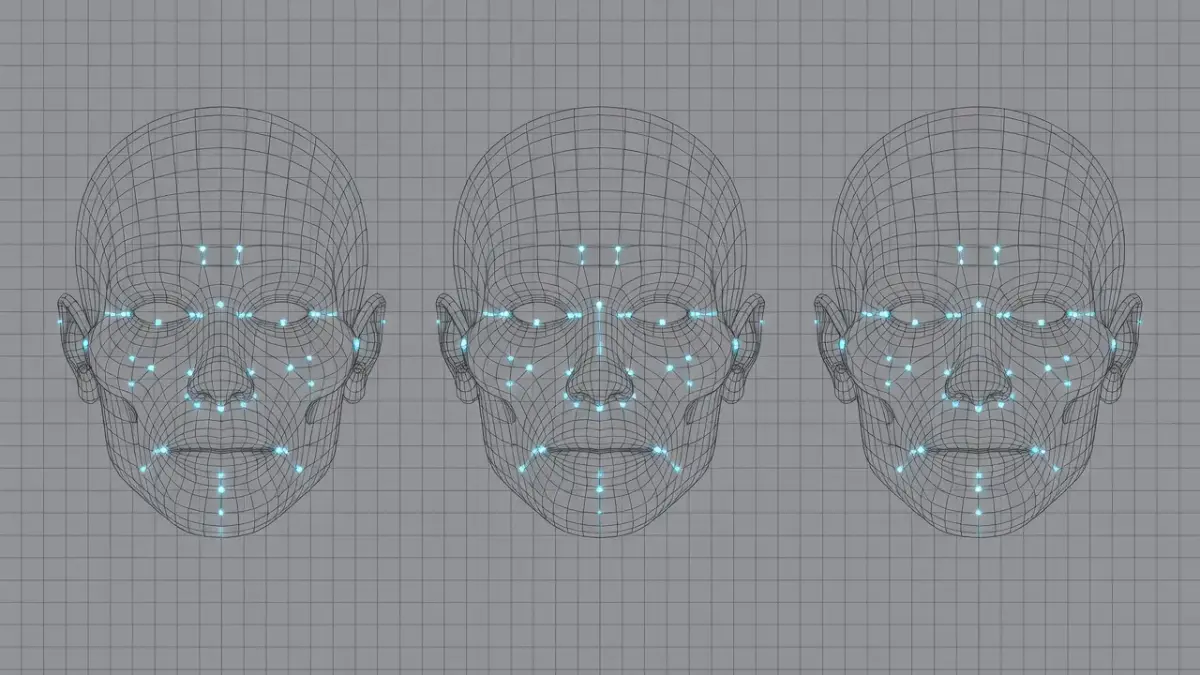
When unidentified human remains are recovered, forensic specialists measure specific landmarks across the cranium. These points include the nasion (nose root), prosthion (front jaw point), and zygomaxillary sutures.
| Facial Landmark | Measurement |
|---|---|
| Nasion (Nose Root) | Measures bridge height and depression depth |
| Subnasal Point | Evaluates nasal spine projection & angle |
| Gnathion (Chin) | Measures total facial height & jaw projection |
Researchers input these coordinates into standardized databases maintained by institutions such as the National Institute of Justice and university research labs. The software compares the unknown cranium against thousands of modern skeletons.
Forensic scientists can estimate ancestry with high accuracy when multiple skeletal elements are present. However, forensic experts emphasize that these estimations yield statistical probabilities, not absolute biological identities. Environmental factors during growth, such as infant nutrition and masticatory strain, also alter skeletal proportions.
What do anthropologists say about race and facial features - is race biological?
Major anthropological organizations agree that race is a social construct rather than a biological reality, as human facial features vary along continuous geographic gradients called clines. The American Association of Biological Anthropologists (AABA) explicitly states that biological traits overlap significantly between geographical populations, making discrete racial categories scientifically invalid.
Historically, 19th-century scientists attempted to divide humanity into distinct racial categories based on facial profiles, skin color, and head shapes. Modern genetics and physical anthropology have disproven this model entirely.
"Human populations are not unambiguous, clearly demarcated, biologically distinct groups. The variation that exists between human populations is continuous, with no clear boundaries separating one group from another."
— AABA Statement on Race and Racism
Physical characteristics transition gradually across geography. As you travel from Northern Europe through the Mediterranean, into North Africa, and across Western Asia, facial features change incrementally without a single point where one "race" stops and another begins. This continuous distribution occurs because human populations have continuously mixed, migrated, and adapted throughout history. Romani facial features show this clearly, blending South Asian origins with European admixture.
Local cultural preferences also shape perceptions of features. Understanding how different societies view these physical variations connects directly to historical shifts in beauty standards in europe and regional aesthetics.
How modern AI tools measure facial proportions and symmetry
Modern AI tools measure facial proportions by detecting dozens of facial landmarks on a digital photograph and calculating spatial ratios between key points. Advanced computer vision algorithms analyze distances between the eyes, nose width, lip height, and jaw contour in seconds.
While physical anthropologists historically used manual spreading calipers to study skulls, modern consumers can evaluate their facial structure right from their smartphone.

To explore your own feature symmetry and spatial ratios, Glow Up & Attractiveness Test offers a specialized mobile platform for women. The app allows you to:
- Snap a selfie to receive a personalized face rating score calculated by an AI algorithm trained on facial harmony patterns.
- Get a detailed face analysis that breaks down your structural symmetry, cheekbone definition, and facial length ratios across the main planes of the face.
- Discover your beauty score and follow a personalized glow up guide with tailored styling, makeup, and grooming tips to enhance your natural facial composition.
The app costs $9.99/week and provides instant visual feedback without needing manual measurement tools or complex anthropological software.
What regional variations exist in European facial traits?
Regional variations across Europe stem from historical isolation, climate adaptations, and ancestral population mixtures involving Early European Farmers, Western Hunter-Gatherers, and Ancient North Eurasians. These three main ancestral streams contributed different physical traits to modern European populations.
Europe is not a homogenous genetic block. Facial trait distributions differ substantially between geographical sub-regions:
- Northern Europe (Nordic/Baltic): Characterized by long cranial shapes (dolichocephaly), very high nasal bridges, low facial skin pigmentation, and lighter iris colors.
- Southern Europe (Mediterranean): Characterized by narrow, oval facial outlines, dark brown or hazel eyes, olive skin tones, and slightly broader nasal bases compared to northern groups.
- Central Europe (Alpine): Features broader head shapes (brachycephaly), medium facial height, soft jaw contours, and intermediate pigmentation.
- Eastern Europe (Slavic/Finno-Ugric): Exhibits wider cheekbones, high facial breadth, slightly flatter nasal profiles, and rounder chin structures due to historical gene flow across Eurasia.
These variations reflect regional population dynamics over the last 10,000 years. Climate played a decisive role: populations in northern regions adapted to lower UV light levels and cold air conditions, while southern groups retained traits optimized for warmer Mediterranean environments. Exploring broader global variations can be seen in our guide to standards of beauty around the world.
What are common facial features in Southern Europeans?
Southern European populations - including Iberian, Italian, and Greek cohorts - exhibit distinct craniofacial and soft-tissue traits shaped by historical gene flow across the Mediterranean basin. According to population research published in the American Journal of Biological Anthropology, key anatomical features in Southern European groups include:
- Nasal Structure: Straight to convex (aquiline) nasal bridges with slightly broader nasal bases compared to Scandinavian or Baltic cohorts.
- Facial Contour: High orthognathism paired with oval or slender facial outlines and moderately receded cheekbones.
- Pigmentation: Higher frequencies of olive skin tones, dark brown or hazel irises, and brown to black hair driven by variations in the OCA2 and HERC2 gene regions.
- Lip and Jaw Ratios: Medium lip thickness with a well-defined philtrum and a balanced, non-prognathic lower jaw line.
Frequently Asked Questions
What is the most common nose shape in Europe?
The most common nose shape in Europe is the leptorrhine nose, characterized by a narrow bridge and narrow nostrils. Profiles vary regionally from straight to aquiline convex curves.
Do all Europeans have high nose bridges?
No, not all Europeans have high nose bridges. While high nasal bridges occur frequently in Northern and Western Europe, low or straight nasal bridges are common across Eastern and Southern European populations.
What is orthognathism in European facial features?
Orthognathism refers to a flat facial profile where the upper and lower jaws do not project forward. European skulls generally exhibit high orthognathism compared to populations with prognathic jawlines.
How do genes determine European eye and hair color?
Eye and hair color are polygenic traits controlled by genes such as OCA2, HERC2, and MC1R. Mutations in these genes reduce melanin production, resulting in blue or green eyes and blonde or red hair.
What is the difference between European and East Asian cheekbone structure?
European cheekbones generally recede laterally and sit flat against the facial plane. East Asian cheekbones project more anteriorly and laterally due to wider zygomatic arches.
Can forensic scientists identify exact European ethnicity from facial bones?
No, forensic scientists cannot identify exact ethnicity from facial bones. They calculate statistical ancestry estimates based on skeletal databases, yielding probabilities rather than precise nationality or ethnic origin.
Why did European populations evolve lighter skin and narrow noses?
Lighter skin evolved to allow UV penetration for vitamin D synthesis in low-sunlight northern latitudes. Narrow noses evolved to warm and humidify cold, dry northern air before it reached the lungs.