
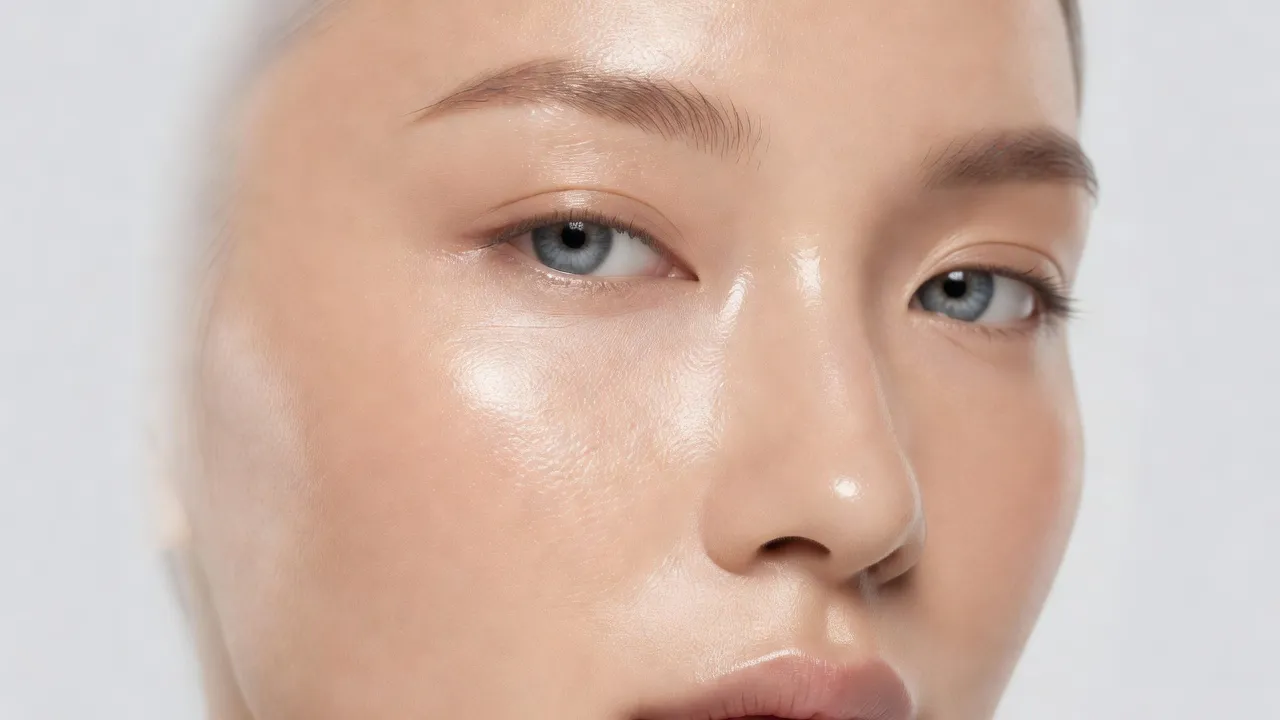
Dull skin is a visual condition where the complexion lacks luster, radiance, and smooth light reflection, primarily caused by accumulated dead surface skin cells, dehydration, and slowed cellular turnover. Unlike naturally matte skin texture, dull skin absorbs light unevenly, making the face appear tired, flat, or discolored even after thorough cleaning.
When light hits healthy, hydrated skin, it bounces back evenly off a smooth stratum corneum (the outermost layer of the epidermis). When that surface becomes rough due to environmental stressors, poor shedding, or moisture loss, the incoming light scatters in multiple directions. This diffusion strips the skin of its natural sheen and healthy bounce.
What causes dull skin?
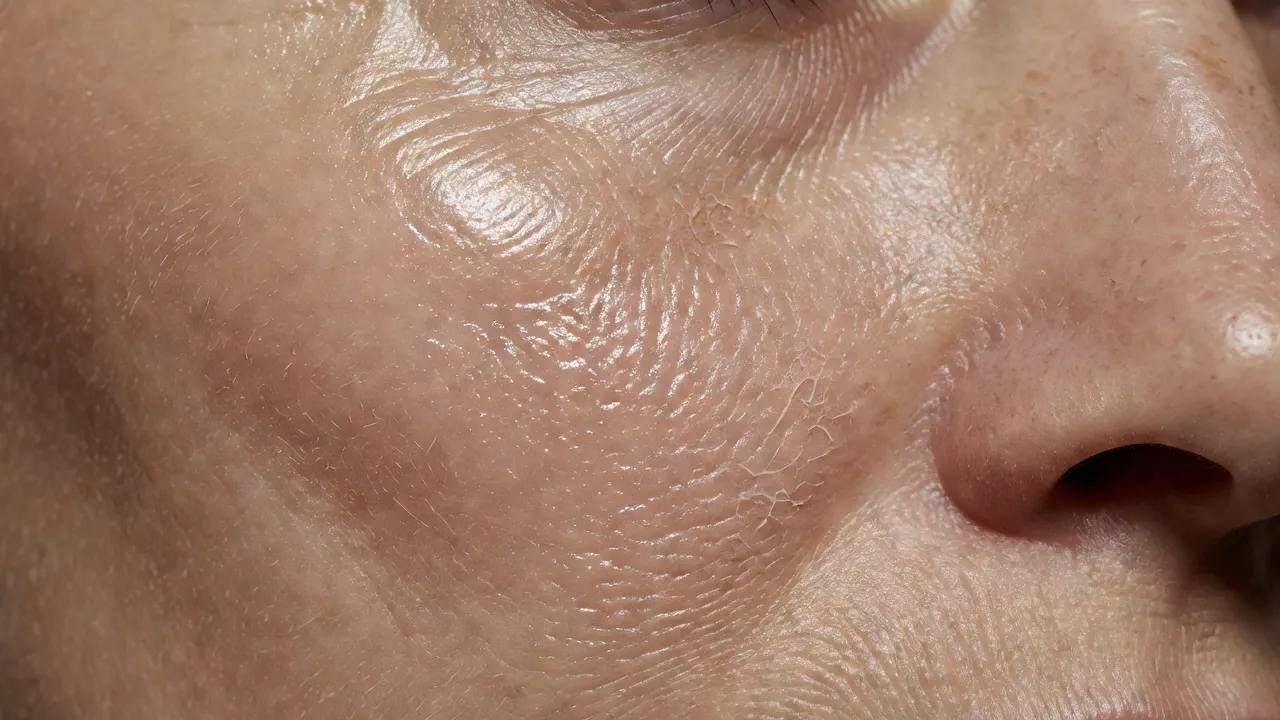
Dull skin occurs when desquamation - the body's natural process of shedding dead skin cells - slows down, leaving a microscopic layer of rough debris that scatters incoming light.
Several biological and environmental variables contribute to this buildup:
- Slow cellular turnover: Young adult skin cells typically renew every 28 days. According to clinical data published by the Cleveland Clinic, this renewal cycle stretches to 45 or 60 days as people age, allowing older, flatter cells to remain on the surface longer.
- Transepidermal Water Loss (TEWL): When the skin barrier lacks lipids or ambient humidity drops, water evaporates quickly from the upper dermis. Dehydrated cells shrink and curl at the edges, creating micro-roughness across the surface.
- Oxidative damage: Exposure to ultraviolet (UV) radiation and airborne particulate matter generates free radicals. These unstable molecules break down collagen and trigger uneven melanin production, resulting in a sallow, grayish tint.
- Poor microcirculation: Low physical activity, stress, or inadequate sleep reduces blood flow to facial capillaries, starving the skin of oxygen and vital micronutrients.
If moisture loss is accompanied by severe flaking or chalky patches on body skin, you might be dealing with classic ashy skin, which requires heavy emollient barriers alongside gentle exfoliation.
What do dermatologists recommend for treating dull skin?
Dermatologists recommend a multi-pronged approach that combines chemical exfoliation, daily broad-spectrum sun protection, topical antioxidants, and barrier hydration to restore epidermal turnover.
Treating dull skin effectively requires addressing both the surface cell buildup and the underlying cellular health. A standard dermatological protocol addresses four core pillars:
- Controlled resurfacing: Removing dead stratum corneum cells twice to three times weekly using mild chemical exfoliants rather than harsh abrasive scrubs.
- Antioxidant shield: Applying L-ascorbic acid or niacinamide under sunscreen every morning to neutralize environmental pollutants.
- Barrier restoration: Using humectants like hyaluronic acid paired with ceramides to lock water inside the epidermis.
- Targeted night repair: Incorporating retinoids into a structured skincare routine at night to accelerate basal cell division while you sleep.
Dermatologists frequently note that consistency matters far more than high ingredient concentration. Over-exfoliating skin in pursuit of an instant shine often ruptures the lipid barrier, leading to redness, inflammation, and worse dullness over time.
What does the American Academy of Dermatology recommend for dull skin?
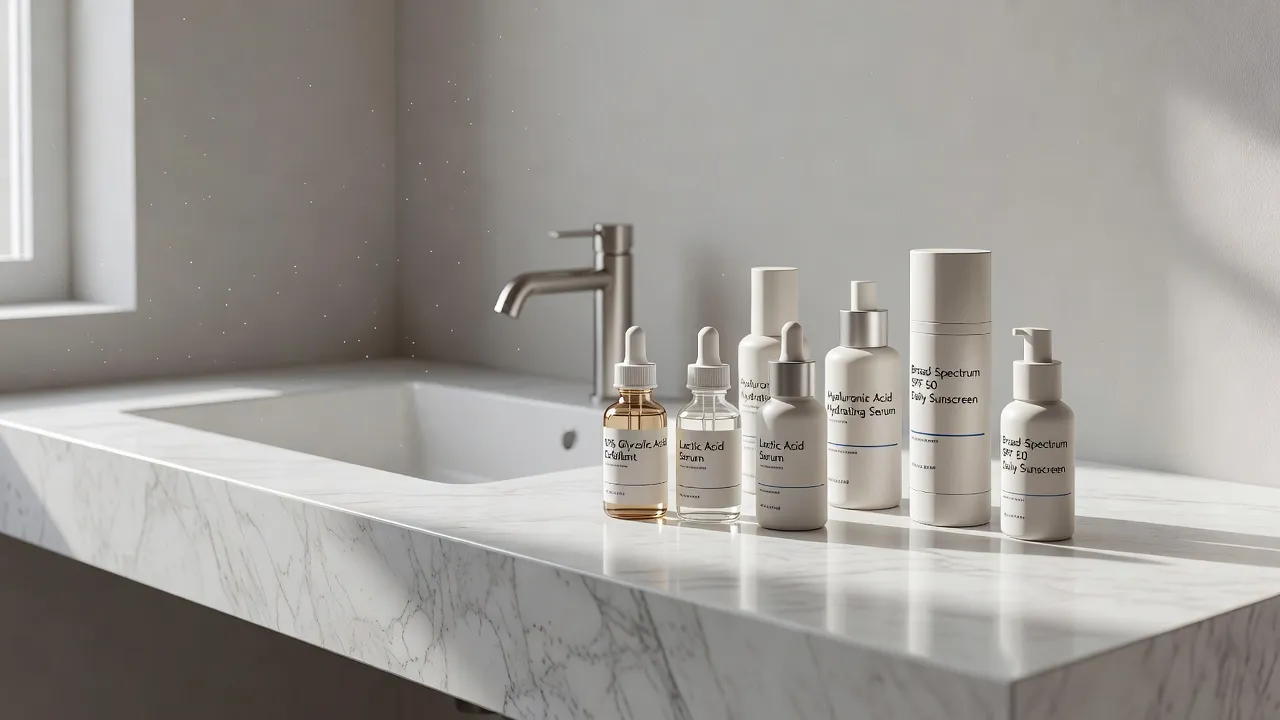
The American Academy of Dermatology recommends selecting exfoliants based on your specific skin type, applying moisturizer immediately after washing while skin is still damp, and using SPF 30+ daily to prevent UV-induced collagen degradation.
Guidelines provided by the American Academy of Dermatology highlight clear boundaries to protect skin integrity:
- Match method to skin type: Mechanical scrubs or strong chemical acids can cause micro-tears and hyperpigmentation in sensitive or darker skin tones (Fitzpatrick types IV-VI). Chemical acids are generally preferred over gritty physical scrubs.
- Moisturize on damp skin: Trapping surface water within three minutes of cleansing increases stratum corneum hydration by up to 30%, instantly softening skin texture.
- Stop active acids if irritation occurs: If skin turns red, stings, or begins peeling excessively, suspend all chemical exfoliants and retinoids until the natural moisture barrier recovers.
- Wear daily broad-spectrum SPF: UV rays break down surface proteins and degrade extracellular matrix components, making daily sun protection non-negotiable for radiant skin.
Adjusting these steps into a simple morning skincare routine ensures your skin remains protected against urban pollutants throughout the daylight hours.
How do chemical exfoliants like AHAs and BHAs help treat dull skin?
Chemical exfoliants break the intercellular ionic bonds holding dead skin cells to the stratum corneum, allowing dull surface layers to shed cleanly without abrasive physical scrubbing.
Unlike physical scrubs that scrape the top layer mechanically, chemical exfoliants work by dissolving desmosomes - the protein glues connecting surface skin cells.
Alpha Hydroxy Acids (AHAs)
AHAs are water-soluble acids derived mainly from fruits, milk, or sugar cane. They work primarily on the outermost epidermal surface:
- Glycolic acid: Features the smallest molecular size among AHAs, allowing deep surface penetration. It works fast but carries a higher risk of irritation.
- Lactic acid: Has a larger molecular structure and acts as a natural humectant, making it the ideal choice for dry or sensitive complexions.
- Mandelic acid: Absorbs slowly due to its high molecular weight, offering a mild option for skin prone to post-inflammatory hyperpigmentation.
Beta Hydroxy Acid (BHA)
Salicylic acid is the primary BHA used in skincare. Because it is oil-soluble, it penetrates lipid-rich pore linings to dissolve sebum and dead cell plugs. It is best suited for oily or acne-prone skin that looks dull due to congested pores.
What are the best ingredients for dull skin: vitamin C, retinol, niacinamide, hyaluronic acid?
The best ingredients for targeting dull skin are L-ascorbic acid (vitamin C) for brightening, retinol for accelerating cellular turnover, niacinamide for evening tone, and hyaluronic acid for immediate surface plumpness.
Each active ingredient targets a specific physiological pathway to restore skin radiance:
- Vitamin C (L-ascorbic acid): Neutralizes reactive oxygen species and inhibits tyrosinase, the key enzyme responsible for melanin synthesis. Research archived by the National Center for Biotechnology Information confirms that topical L-ascorbic acid improves surface light reflectivity while reducing hyperpigmentation.
- Retinol (Vitamin A derivative): Binds to retinoid receptors in keratinocytes to speed up cell division in the lower epidermal layers, pushing older cells off the surface faster.
- Niacinamide (Vitamin B3): Prevents the transfer of melanosomes from melanocytes to surrounding keratinocytes, reducing yellowing and uneven patches while reinforcing ceramide production.
- Hyaluronic Acid: A potent humectant that attracts up to 1,000 times its weight in water, swelling dry skin cells to flatten surface crevices and reflect light evenly.
Active Ingredients for Dull Skin: Specs, Limits, and Skin Type Rules
The table below breaks down practical concentrations, mechanisms, and specific rules that determine who should use or avoid each active ingredient. As of September 2026, these parameters reflect standard clinical formulation limits.
| Active Ingredient | Optimal Concentration | Primary Action | Usage Limits & Contraindications |
|---|---|---|---|
| Glycolic Acid (AHA) | 5% - 10% | Dissolves surface cell bonds | Avoid on compromised skin barriers or active eczema; limit to 2x weekly on sensitive skin. |
| Salicylic Acid (BHA) | 0.5% - 2% | Cleans lipid-filled pore interiors | Avoid if allergic to salicylates (aspirin); can cause dryness on already dehydrated skin. |
| L-Ascorbic Acid | 10% - 20% | Neutralizes free radicals & lightens tone | Highly unstable; avoid using simultaneously with benzoyl peroxide or strong AHAs. |
| Retinol | 0.25% - 1% | Accelerates basal cell turnover | Do not use during pregnancy; requires slow phase-in to prevent retinoid dermatitis. |
| Niacinamide | 2% - 5% | Blocks pigment transfer & boosts ceramides | Formulations over 10% can cause mild flushing, temporary burning, or redness. |
Evaluating skin tone improvements with AI face analysis
Tracking progress against dull skin requires objective measurements rather than quick mirror checks under variable lighting.
Because changes in skin tone and cellular renewal happen gradually over several weeks, judging your complexion solely in a bathroom mirror often leads to premature product switching or over-exfoliation. Using specialized digital tools allows you to benchmark your skin's baseline clarity accurately.
If you want an objective evaluation of your skin's visual appeal and texture progression, the Glow Up & Attractiveness Test app lets you snap a selfie to get an immediate facial analysis. The app uses a fine-tuned AI model to evaluate facial balance, calculate your beauty score, and highlight specific areas for visual improvement.
Integrating regular digital check-ins alongside your skincare adjustments helps you see whether your brightening routine is yielding measurable results over time.
What professional treatments help dull skin: chemical peels, microneedling, laser, microdermabrasion, LED therapy?
Professional clinical treatments accelerate radiance by removing deeper stratum corneum layers or inducing controlled micro-injuries that stimulate fresh collagen synthesis.
When over-the-counter serums reach their limit, in-office clinical procedures offer faster, more pronounced resurfacing:
Chemical Peels (Medium-Depth)
Trichloroacetic acid (TCA) or high-percentage glycolic peels (30%-70%) penetrate into the papillary dermis. They cause controlled shedding over 5 to 7 days, stripping away deep pigmentation and accumulated dead cells to reveal smooth skin underneath.
Microdermabrasion and Hydro-Dermabrasion
Microdermabrasion uses a diamond-tipped wand to abrade the outer stratum corneum while vacuuming away debris. Hydro-dermabrasion substitutes solid crystals with jets of saline or glycolic solutions, exfoliating while simultaneously saturating cells with moisture.
Microneedling
Microneedling uses sterile micro-fine needles to create thousands of micro-channels in the skin. This triggers a wound-healing cascade, releasing growth factors that stimulate fresh collagen production and improve light reflection as the skin heals.
Non-Ablative Fractional Lasers
Devices like Clear + Brilliant or 1927 nm Thulium lasers deliver thermal energy into microscopic zones of the skin. This breaks down stubborn pigment spots and accelerates cellular turnover without stripping away the entire surface layer.
Red Light LED Therapy (633 nm)
Low-level light therapy using red (633 nm) and near-infrared (830 nm) wavelengths stimulates mitochondrial ATP production. Higher cellular energy accelerates tissue repair, reduces background inflammation, and improves microcirculation, giving skin a subtle glow without downtime.
Who should avoid aggressive dull skin treatments?
Individuals with active eczema flares, moderate-to-severe rosacea, compromised skin barriers, or recent isotretinoin use must avoid aggressive chemical exfoliation and clinical resurfacing procedures.
Not every skin type can safely tolerate intensive exfoliation or laser treatments. Specific contraindications rule out aggressive procedures for certain individuals:
- Active oral isotretinoin use: Patients who have taken oral isotretinoin within the past 6 months must avoid chemical peels, dermabrasion, and lasers due to impaired wound healing and an elevated risk of permanent scarring.
- Fitzpatrick Types IV-VI: Deep chemical peels or high-heat ablative lasers carry a significant risk of post-inflammatory hyperpigmentation (PIH) in darker complexions. Superficial mandelic peels or non-thermal treatments are much safer choices.
- Compromised skin barrier: If your face stings upon applying plain moisturizer, your skin barrier is damaged. Introducing AHAs, BHAs, or retinol will worsen inflammation, leading to hyperpigmentation and darker patches.
- Active Rosacea or Erythematotelangiectatic Rosacea: Physical scrubs, high-concentration glycolic acid, and microdermabrasion dilated delicate capillaries, leading to persistent facial redness and broken blood vessels.
Knowing your skin's baseline tolerance prevents costly mistakes. If you are unsure where your visual baseline sits, using the Glow Up & Attractiveness Test provides a clear starting point for evaluating your overall visual aesthetics as you build your routine.
Frequently Asked Questions
Can dehydration cause dull skin?
Yes, dehydration directly causes dull skin by shrinking stratum corneum cells, creating microscopic surface irregularities that scatter light rather than reflecting it smoothly.
How long does it take to clear up dull skin?
Superficial dullness caused by dehydration can improve within 24 to 48 hours after applying humectants, while cell-turnover improvements from chemical exfoliants or retinol take 4 to 6 weeks.
Is daily exfoliation recommended for dull skin?
No, daily exfoliation is generally too harsh for most skin types and often damages the skin barrier. Limit chemical exfoliation to two or three times per week.
What is the difference between dull skin and dry skin?
Dry skin is a skin type characterized by a lack of natural oil (lipids), whereas dull skin is a visual condition caused by accumulated dead cells, poor light reflection, or dehydration.
Can poor sleep make skin look dull?
Yes, inadequate sleep reduces nocturnal microcirculation and elevates cortisol levels, which impairs natural skin barrier repair and reduces facial blood flow.
Does daily sunscreen prevent dull skin?
Yes, daily broad-spectrum sunscreen protects skin cells from free-radical damage and collagen degradation, preventing the uneven tone and sallowness caused by UV exposure.
How do I know if my skin barrier is too damaged for brightening acids?
If your skin stings when applying basic hydrated lotions, appears persistently red, or feels tight and raw, your barrier is compromised and you should pause all active brightening acids.